❌

Lese-Ansicht

Welcome to Our House: Why We Keep Rewriting the Rules of Games We Claim to Love

Every gamer eventually reaches a point where they look at a rulebook, look at the people around the table, and decide that the professional game designer who spent multiple years developing the game is wrong. Not catastrophically wrong. Not necessarily “this game is broken and should be recalled” wrong. Just wrong enough that four people sitting around a dining room table with half a tepid pizza and no formal design experience are apparently qualified to fix it. “This rule is stupid.” “What if we just ignore it?” “Can we do that?” There is a pause. Then someone says the most dangerous sentence in tabletop gaming: “It’s our game.” And technically, they are right. Welcome to the wonderful and irresponsible world of house rules.

A house rule is an unofficial modification to a game's published rules. Sometimes we change something deliberately. Sometimes we misunderstand the instructions and spend thirty years teaching the mistake to our children. Sometimes we decide that rolling three sixes in Risk should trigger a tactical nuclear strike because apparently global thermonuclear war was the thing Risk was missing. But underneath the tinkering is something more interesting than amateur game design: psychological ownership. The moment we start changing a game, we stop treating it entirely as somebody…

The post Welcome to Our House: Why We Keep Rewriting the Rules of Games We Claim to Love appeared first on Meeple Mountain.
  •  

A Board Game for People Who Don’t Exist Yet: The Campaign for North Africa

There are board games that take twenty minutes. There are board games that take an evening. There are board games that require you to reserve a Saturday, warn your spouse, arrange childcare, purchase snacks in quantities normally associated with emergency preparedness, and begin explaining the rules sometime around breakfast. And then there is The Campaign for North Africa: The Desert War 1940-43.

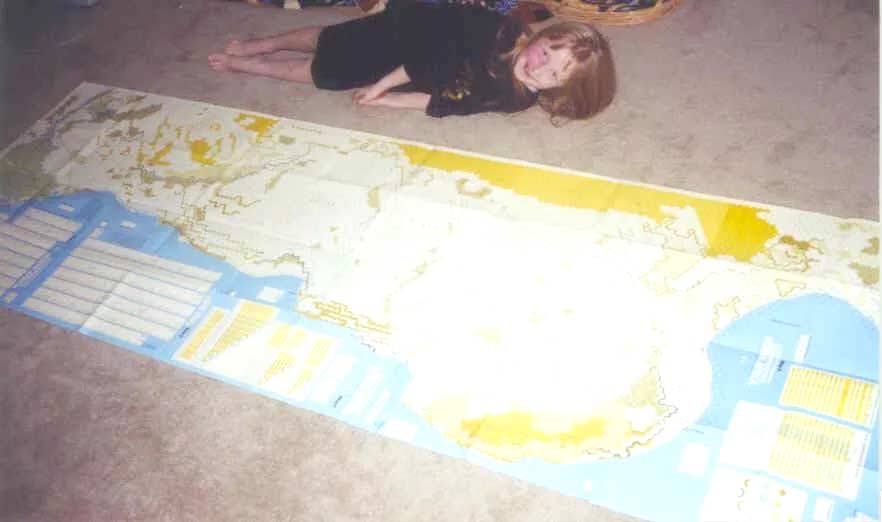
[caption id="attachment_334851" align="aligncenter" width="882"] Photo courtesy of Michael Taylor and his daughter. Used with permission.[/caption]

James Purcell and Andy Taeger, two friends from Newcastle, are preparing to play the famously enormous World War II simulation from beginning to end. The game contains 111 turns, each of which represents roughly one week of the North African campaign. It was designed for as many as ten players, although James and Andy are attempting it with two. Estimates for completing the whole thing run to around 1,500 hours. They think it may take them twenty years. This is obviously ridiculous. I also think it might be one of the most beautiful things I have heard about gaming in a long time.

The BBC story about their project understandably focuses on the absurdity of the undertaking. The Campaign for North Africa has achieved near mythological status in tabletop gaming…

The post A Board Game for People Who Don’t Exist Yet: The Campaign for North Africa appeared first on Meeple Mountain.

  •  

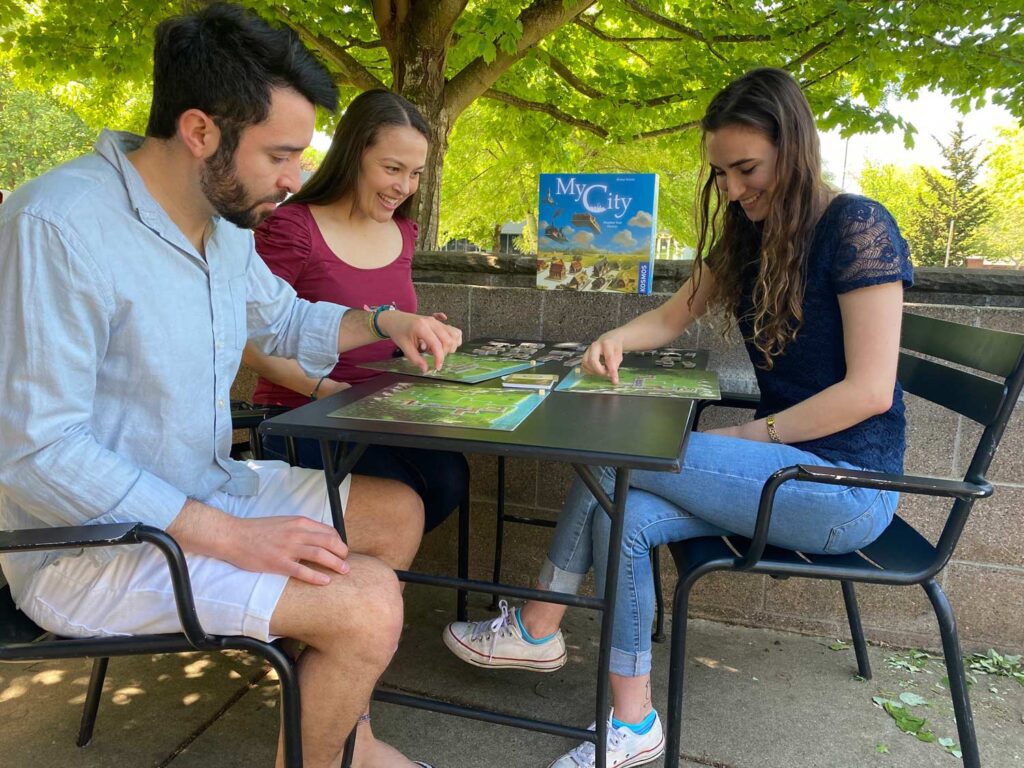
Your Friend Doesn’t Need to Become a Gamer Tonight

There is a dangerous moment in every board gamer's life when a non-gaming friend says, “Sure, I'll try one.” Remain calm. Do not make any sudden movements. And, most importantly, do not immediately disappear into the basement and return carrying a box large enough to contain a microwave.

We have been waiting for this moment. That's the problem. When you love tabletop games, introducing someone to the hobby can feel like being handed five minutes to explain your favorite band, restaurant, television series, vacation destination, and minor religion simultaneously. You want them to understand why this thing matters. You want them to experience the clever mechanisms, impossible decisions, ridiculous betrayals, dramatic reversals, and that beautiful moment three hours into a game when everyone suddenly realizes Dave has been quietly collecting sheep for reasons nobody fully understands. So we get excited. And excitement makes us terrible ambassadors. Or, at least, obviously biased ambassadors to the point of destroying our credibility.

We start explaining. “This one's actually pretty simple.” This sentence is usually followed by eighteen minutes of rules. “You have workers, except they're technically druids, and you're placing them on action spaces to collect resources so you can fulfill contracts, although they're called prophecies, and the purple resource isn't actually a…

The post Your Friend Doesn’t Need to Become a Gamer Tonight appeared first on Meeple Mountain.

  •  
❌