Lese-Ansicht

Knitting Circle Review

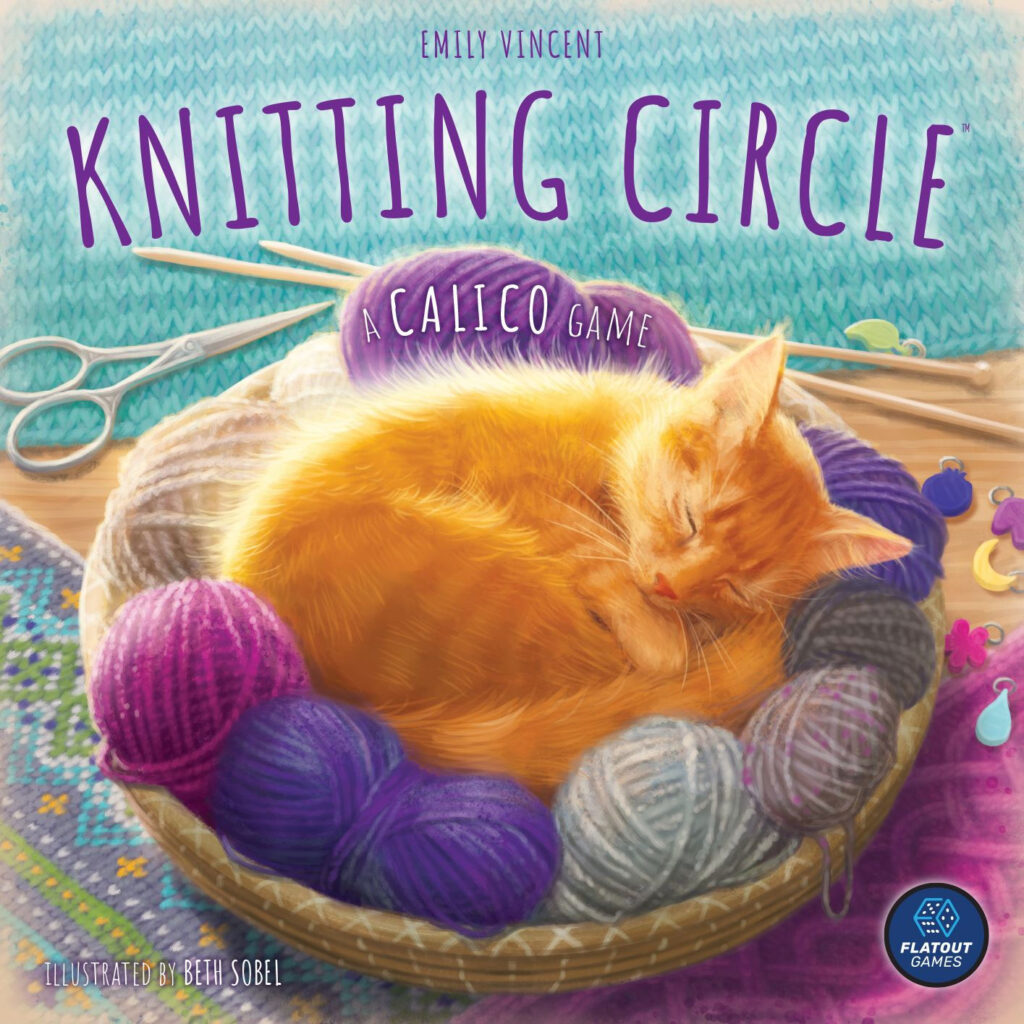
Knitting CircleCalico is a game that looks deceptively cute and cuddly, possessing an adorably floofy kitten on the cover atop a pastel quilted backdrop. Inside the gameplay, however, is a brutal brain-burner of a puzzle where players are challenged to optimize among 36 unique tile types within a slew of overlapping scoring opportunities that all seem […]

Source

  •  
  •  

Designer Diary: The Ground Between

by Felix Sonne


I have been hearing that wargamers are getting “extinct” because nobody has the time to spend half a day playing games anymore and no one wants to play on a sad looking paper map. The thing is, it does not need to be that way. Wargames can be engaging, deep, fun, and yet modern-looking and quick. So I took it as my mission to make a free PnP hex-and-counter wargame that looks decent enough for non-wargamers to try, and simple enough for them to craft and try out.

This undertaking brought us into The Ground Between. It is a free, low complexity, Print and Play (PnP) wargame on the Western Front of World War 1 (WW1). Now that it is done, I can share that it was harder than I expect it to be. It is a whole circus act. I am juggling between fun factor, aesthetics, and educational value, while balancing on simplification and realism.


Cut, Cut, Cut Until There Is No Fat In the Meat
It is easy to do more: do more work, spend more money, use more components, create more rules. But I disagree with this approach because it creates bloat. My principle in design (and perhaps in life) is “to do more in less,” by cutting unnecessary parts and emphasizing what is really important.

1) PnP? Make it easy to craft. I learned this from the Designer Diary of David Thompson (Tactic Skirmish Apocalypse, Warchest, Undaunted). PnP games should be easy to craft ideally, and it has stuck in my head ever since when I designed games intended for PnP. I have crafted a PnP wargame from other designers that has a hundred small size, two-sided counters. I enjoy half of process, but the other half of it just feels like chores, and I do not want to impose this to players. While the game is designed with WW1 theme top-down, it is also designed bottoms-up from component consideration. Since D1 it has been set that the game shall only have large, 15 counters per faction, which can fit in one sheet of paper (actually half).


2) Cards? KISS it! You may have heard of it, it stands for “Keep it Simple and Short.” I had a tendency to make my initial design with a deck of 54 cards, since it fits nicely with a deck of playing cards, it seems to be the “industry standard”, and it takes exactly 6 sheets of paper to make. During the development I managed to halve it, with one sheet of paper per faction (which includes Tactic Cards for Advanced Mode and Solo Mode as well). I tried to eliminate the Command Cards completely, but I ended up keeping it because it gives a better reflection of the battle where each side is trying to maintain a balance between firing and maneuvering.

3) Where are the war machines? Not here! WW1 was the advent for Tanks and Aircraft, they are game changing (pun intended) and may seem like a “must have” in a WW1-themed game. However, sticking to the original intention of making a low complexity introductory WW1 wargame, it is refocused to the 1914-1915 period, where the tanks were still on drawing board, and planes were still mainly used for reconnaissance (machine guns were only equipped into airplanes on the later part of the war). So no killing machines, just good old shooting and hand-to-hand combat, which delivers the extra grit as intended.

Reduce, Reduce, Reduce Until It Is Streamlined
Streamlining is slightly different from cutting. It is about reducing exceptions, steps, and variants with the intention to make the game “flows” better and faster. There is no sane reason to move 20 different pieces 10 times (move active player marker, move turn tracker, play a card, move a piece, spend resources, flip a piece, tap a card, etc.) if we can get the same enjoyment by moving two pieces one time.

1) Secret Deployment. Realistically, on a battlefield you would not be able to tell exactly what Unit your opponent has 5 miles behind the bush. In the original Advanced Mode, Units were supposed to be deployed secretly face down. As much as it raises the excitement and realism, it also raises the fiddliness. So in one stroke to maintain the fidelity to simplicity and suppress the fiddlyness, the secret deployment is secretly deployed to the bin.


2) Blocks variant. As you can guess from the previous point, my absolute favorite games are block wargames where you can keep some fog of war without the fiddliness. Naturally I tried to make an option to play the game with blocks. In such case, it is inevitable to have exceptions and variants, which adds to one page in the rule, which may intimidate some people. So there goes the block rules to the chopping block.

3) Morale Checksss. For those who are unfamiliar, ‘morale check’ is a mechanic to determine the effectiveness of a Unit in some conditions (e.g. retreating, being barraged, etc.). I actually like the concept because it adds realism to the game, but some popular games take morale checks for a lot of things. I shall not name the game, but IFKYK. I adopted the same morale check system, but after a series of playtesting with non-wargamers, the morale checks are reduced to only when you are taking casualty. Works like magic.

True To the Theme
1) Translation. To facilitate immersion, originally the Units are named according to their native names. There were Mortier, Médical, Flammernwerfer, and so on. This looks and feels nice, but apparently it confuses some playtesters and it creates distance to players who do not speak the language. As such, I scaled back the local names only for the Advanced Units and Tactic Cards where they are unique to the country, whereas everything else is reset to English for functionality consideration. Worked like a charm.

2) (Mostly) Symmetrical. Some gamers are obsessed with symmetry, emphasizing for equal chance of winning, and some others are asymmetric who want something uniquely theirs or have different ways to play. This is not the the time to talk about it, but if you look at all the conflicts in the world, you would see that none of them are symmetrical. If everything is in perfect symmetry, there is no reason to start a conflict.

3) Variable Player (Country) Power. The majority of conflicts are won before it started, and in an armed conflict, arms race hold a pivotal role. Before the USA and USSR started their nuclear race, the arms race in WW1 was about machine guns (before tanks and airplanes). This is reflected in the game with a token difference between the German Machine Gunner Unit. The French had a lead in the machine guns race, which ironically causes the German to work harder and surpass the French machine gun development both in quantity and quality. Again, to keep things streamlined, the variable power of Flamethrower and Mortar is cancelled. For those who likes unique units, there are unique Units in Advanced Mode, just like in reality. The Germans were experimenting with Shock Troops, while the French is bringing their Foreign Legion to make up for numerical advantage.


Ready, Cut, Shoot!
New to wargames? You could try this. Just one hour to craft the component, 4 paper for maps, 2 paper for cards, card stock for counter, 2 dice and some tokens from your existing games.

The latest version (v1.2) is just uploaded recently in its BGG file page.
  •  

Designer Diary: Hnefatafl: Valhalla

by Roman Zadorozhnyy


Some games begin with mechanics.
Some begin with prototypes.
And some begin with a place.
For Hnefatafl: Valhalla, everything started with a journey.

Norway, Gods, and a Feeling That Never Left

A few years ago, my wife and I traveled to Norway. Like many people, I had always loved Viking stories: the gods, the sagas, the ships, the battles. But reading about a culture and experiencing it are two very different things. We spent a wonderful week in Oslo. We walked the city, visited the Viking Ship Museum, took a water trip on an old ship, and simply absorbed the atmosphere. Everything felt heavy with history—but alive at the same time.

Yet the moment that truly changed something inside me was our visit to Oslo City Hall. If you’ve ever been there, you know what I mean. The walls, the sculptures, the murals—so many of them depicting Nordic gods and mythological scenes, carved and painted in a way that feels ancient, powerful, and deeply human. Standing there, surrounded by these images, I felt something click. Not excitement. Not inspiration in the usual sense. Something deeper. I bought Viking-themed souvenirs, books, and small artifacts. During the long flight back to the U.S., I couldn’t stop thinking. About Vikings. About gods. About games. And then, somewhere above the Atlantic, I had a clear Eureka moment. I didn’t want to create a new Viking game. I wanted to add new meaning to an old one.

Why Hnefatafl?
Hnefatafl is one of those games that feels eternal. Simple rules. Deep strategy. Easy to learn, hard to master. An abstract game that survived centuries. And that’s exactly why it felt right. The question wasn’t “How do I redesign it?” The question was “How do I respect it and still add something new?”

Exploring the Paths Forward
At first, I explored several possible directions. One idea was to create a solo mode, similar to scenarios in chess puzzle books where players solve positions with specific goals. Interesting? Yes. Exciting? I wasn’t sure. Another idea was to introduce clans, each with special rules or capture conditions. But that approach felt… limiting. Too rigid. Too mechanical. Then I realized something important.

I didn’t want factions. I wanted blessings. Not gods fighting instead of Vikings. But gods guiding, influencing, and rewarding them. And suddenly everything aligned.

Valhalla as a Mechanic
I dove deep into Norse mythology: stories, legends, and symbolism. And that’s when Valhalla revealed itself not just as a theme, but as a mechanic. Valhalla is the place where fallen warriors go after dying in battle: to feast, to celebrate, to stand among the gods. And that solved the entire design puzzle. What if fallen pieces weren’t just removed from the board? What if they became a resource? Captured warriors could now grant blessings from the gods. Loss became opportunity. Sacrifice became strategy. Suddenly, the abstract battlefield gained emotional and tactical depth without breaking its core identity.

Designing the Blessings
I experimented a lot. Hidden cards? One-card-per-turn effects? Triggered abilities when the King moves? I created dozens of effects and began playtesting relentlessly. Some were too strong. Some felt thematic but broke balance. Others were clever but unnecessary. And then another realization hit me. This expansion must stay small. Not a massive deck. Not a bloated system. But something elegant. Minimal. Almost invisible until you feel it. That’s when I decided these should be promo-style cards rather than a huge expansion box.


Small Changes. Big Impact.
A year on the shelf… Until IGNM
The expansion was finished. Balanced. Tested. And then… it waited. Like many prototypes, Hnefatafl: Valhalla spent nearly a year quietly sitting on a shelf. Until this year when it was selected for Indie Game Night Market at PAX Unplugged. That opportunity changed everything. I realized that bringing only an expansion wouldn’t work. Most players wouldn’t already own Hnefatafl. So I made a bold decision: I created Canvas and Postcard editions of the base game, so anyone could jump in immediately. Now the expansion had a proper home.

Art, Collaboration, and Pride
While preparing for IGNM, I was also writing an article about ancient games for Casual Game Insider. I casually asked the team, “What if we also add an expansion for Hnefatafl?” Their response was immediate, “That would be awesome". That was the final push. I contacted my friends Max and Angelita, and they created stunning artwork for the gods. Art that felt ancient, powerful, and respectful — exactly what the game needed. Seeing the final product was one of those rare moments of pure pride.

An Old Game, A New Layer
What makes me happiest about Hnefatafl: Valhalla is not sales or attention. It’s the feeling that we added a new layer to a cultural artifact without damaging it. The rules remain simple. The strategy remains deep. But now, every capture carries weight. Every loss has meaning. It’s still Hnefatafl. Just… alive in a new way.

Maybe I’ll finally publish my book about ancient games. Maybe I’ll add new gods as promos. Maybe I’ll finish my long-planned chess expansion. Whatever comes next, one thing is certain: I want more people to discover how powerful, elegant, and relevant ancient games still are today. Because sometimes the best design work isn’t about inventing something new. It’s about listening to the past and continuing its story.

(C) Roman Zadorozhnyy
  •  

Designer Diary: The Four Doors

by Matt Leacock


Matt Leacock: The design of The Four Doors followed a long, meandering route. It was the result of four different designers working alongside four different publishers to produce no fewer than five different games. I thought it’d be fun and enlightening to show just how much time, energy, and iteration can go into what (on the surface) might look like a fairly straightforward card game.

Please welcome one of the game’s co-designers, Matt Riddle (Matt R). Matt R will join me as we describe these five games below. Each iteration had its own strengths and each successive game improved on the former, until we were able to pull everything together into the final product, The Four Doors.

Believe it or not, our story starts with Matt Riddle and Ben Pinchback’s The Goonies: Adventure Card Game (2016).

Matt Riddle: After we made The Goonies, things did not go as planned (more on this below). I remember saying to Ben, “Now, I understand everyone's stuff is emotional right now. But I've got a Three Point Plan that's going to fix EVERYTHING.

Step 1. We’ve got this guy, Matt Leacock.

Step 2. ???

Step 3. He is going to fix EVERYTHING.”

So really, more of a two-point plan… Goofy movie quotes and false humility aside, I reached out to Matt about the possibility of working together with no expectations. Ben and I aren’t nobody, but still, Matt could have completely ignored me, and I would not have thought any less of him. Turns out, he is actually super cool and was willing to take a look at our design idea that we wanted to squeeze into his world, more on that soon. I did not expect it to be the circuitous journey that it was, but I could not be happier with where it ended up. 

And so, it all started with…

The Goonies: Adventure Card Game

Key dates
• Design started: Early 2015
• Published: 2016

Matt R: Designing games on spec is HARD. “On spec” means that a publisher asked us to work on a game with a specific set of requirements, or to a specification. As engineers (Ben and I are both engineers IRL) we deal with specs all the time. I am pretty sure Ben’s real-life job is to take the spec from the customers and take them down to the engineers. He is a people person. Designing Goonies was hard and easy at the same time. Mechanically, we knew it had to be a co-op, and the spec said it had to be a card game. That was easy, let's just be inspired by the best co-op game on the planet, Pandemic! I mean this, this is not made up, we literally designed a card game based on Pandemic over 10 years ago and then tried to convince Matt L that it should indeed BE Pandemic: The Card Game later on. Life is crazy.

Matt asked me to explain how Goonies works, and I will, I promise. Eventually. We very quickly had the structure of moving between locations and clearing obstacles (cards) using cards from your hand while holding off the Fratellis (threat meter and events). That was the “easy” part. The hard part was making it a Goonies game. We learned a lot when we designed a Back to the Future game that was, well, a game. Again, a card game, mechanically solid, but it did not FEEL like Back to the Future. It didn't deliver the feeling of BTTF that people expected when playing. On Goonies, we worked really hard to remedy that through characters and shared team turns and a general sense of adventure. As much as we could with 100ish cards (again, that pesky spec).


The locations from The Goonies: Adventure Card Game

Fast forward a few years, and Goonies has sold pretty well, but we had yet to receive payment for said project. It happens more than you think. The publisher hit hard times, and the check was in the mail for YEARS. This is a hobby for Ben and me, so it was annoying, not harmful, but it still suuuucckkkeeddd. That all led to the above two to three point plan. I knew we would make DOZENS of dollars to split three ways with Matt L., and they might even put our names on the box under his… but prolly in MUCH smaller letters. 


Pandemic: The Card Game (Pitch)
Matt R & Ben’s Initial Submission

Key dates
• Matt Riddle first emailed Matt Leacock on: 9 November 2018
• Prototype Submitted: 22 January 2019

What elements did you change in The Goonies in order to make it feel more like Pandemic for your pitch?

Matt R: Most of the original Goonies core design elements – locations with accumulating threats that need to be kept under control, the team turn, the card management – made it into the Pandemic redo. 

We changed the way Fratellis (escalation events) worked as many of them made a lot less since in the context of Pandemic, mechanically and thematically. Our design efforts were more around tweaking balance and incorporating any consistent feedback that Goonies received, which we felt could help that game.


The four cards that made up the board in Matt R and Ben’s initial submission.


Matt L: I took their original submission apart, put it back together with input from them, and iterated on it for two years until it was…

Pandemic: The Card Game

Key dates
• First design journal entry: 8 March 2019
• Last design journal entry: 28 January 2020

What from the originally submitted prototype stayed the same?

Matt L: Many of the fundamentals of the original submission carried over into the final version of Pandemic: The Card Game. Players took actions using multifaceted cards to move, treat disease, and meld cards to cure diseases. The same deck of cards was used for both player actions and to track the disease as it spread in the world. Players each had a role-specific power. Disease accumulated in specific regions, and once they passed a threshold, an outbreak occurred. You won the game if you discovered four cures, and you lost the game if you had too many outbreaks.

What changed in the developed version?

Matt R: It was fun going back and forth with Matt and watching our game turn into Pandemic while still seeing the core parts of the Goonies design. I wanted to say one of the hardest things in game design is killing your darlings. You will see in the next section that Matt helped us do that when we moved from a single pawn and “group turn” to individual pawns and turns. While the former could accentuate the master gamer problem, we did our best to design around that. Also, don’t be that guy. All that said, the game was BETTER after the change, it just took some time to get there. No one has ever accused me of lacking confidence, and I do not suffer from imposter syndrome. Neither should you BTW, do that thing you have been thinking about, the world needs your voice too, I promise. BUT still, I couldn’t help but think, why does Matt need us on a Pandemic game? He could totally move on and do it himself, but he did not because he is a good guy. And also, we are pretty dang good at making card games, look ’em up. 

Matt L: In order to increase player agency, I gave each player their own pawn and turn (instead of having the players play collective turns with pooled actions). To simplify things, I also decoupled “Move the team and cure a patient” into two separate actions, Fly and Treat. Giving each player their own pawn also meant they could meet to share cards, leading to the introduction of the Share Knowledge action and the need to coordinate in order to discover cures.

Matt R and Ben had four cards that had “specialist” abilities on them that could be played for a special effect and then removed from the deck. These added a lot of strategic depth, so we developed them into a larger set of event cards. Because these cards were removed from the deck (and not discarded) when used, this opened up a new loss condition: if the draw and discard deck ever ran out when you needed a card, you lost the game.

I removed the Rest option – where you took fewer than the allocated actions in order to draw additional cards. This seemed to reward inaction which felt against the spirit of needing to take urgent action. Instead, I introduced the Research action which simply lets you draw 1 card for an action.

To increase tension, I introduced an infection rate. Each time you reshuffle the deck, you advance a token along a track. At certain thresholds, advancing this token increases the number of cards you need to draw during the Infect step. This led to the third loss condition: if the infection rate marker ever reaches the end of the track, you lose the game.


The four locations from the developed version of Pandemic: The Card Game.


Other Changes

• One of the earliest tasks was renaming most of the nouns and verbs in the game to be consistent with the Pandemic board game. Patients became disease, epidemics became outbreaks, curing became treating, escalate became infect, specialist became event and so on.

• I removed the requirement that forced you to treat all the disease in a given location before you could discover a cure since it felt grindy, didn’t fit the theme particularly well, and wasn’t how the board game worked.

• I removed the idea that when you tried to discover a cure, you’d have a 50% chance of success (a holdover from The Goonies) since that just felt random to me.

• I simplified the way treating became more effective once a cure was discovered.

• I changed discarding so it was carried out as part of each action that required it, rather than a discrete step in the order of play.

Abandoned Ideas

Matt, Ben, and I briefly explored a zombie theme and a realtime version of the game, but quickly abandoned both ideas. Pandemic has always been about “science not violence” so zombies were out and the real time version didn’t feel like a Pandemic game.


Why was the game abandoned?

Matt L: While Z-man was open to the idea of the game, I was really uncertain about how it’d fit into the product line. We already had Pandemic: The Cure (the dice version of the game) and Pandemic: Hot Zone – North America was already planned as a simpler, more portable, entry product. It wasn’t clear that there was enough room for another simplified Pandemic game. As such, we kept kicking it down the road when it came to planning a release.

Matt R: If the game had not ended up being as awesome as it became as The Four Doors, I think I would have flown to Matt’s house and pulled a Say Anything to try and change his mind and get Pandemic the card game in the hopper. Luckily, I didn’t resort to that, and it all worked out in the end. Though Matt and his family missed out on me scream singing IN YOUR EYES THE LIGHT AND THE HEAT. Their loss, really. 

Matt L: A real shame.

Instead of being serenaded, time passed, until one day, I had an idea. If there wasn’t much need for a simplified version of Pandemic anymore, perhaps a simplified version of a more complex game (such as Pandemic Legacy) would work. I pitched the idea to Rob Daviau and Z-Man and they were both excited about the potential and decided to come on board. This could open up a new category of game!

We tentatively called the resulting project…

The Clockwork Initiative
(a Pandemic Legacy Card Game)

Key dates
• First design journal entry: 21 January 2021
• Last design journal entry: 27 June 2022

What changed in this new version?

Matt L: We took Pandemic: The Card Game wholesale and developed a story and campaign to layer on top of it.

Matt R: I have never suffered from imposter syndrome a day in my life. My Midwest white guy confidence is off the charts, my parents did TOO good a job with my self-esteem. That said, I spent months on calls with Matt and Rob, barely contributing. Ben and I would test an iteration and give feedback here and here, but it was Matt’s show. Ben and I are slow, we meet once a week, generally and pick away. By the time Ben and I would test, Matt L likely had fixed anything we found AND made a new build. He was very gracious about that lol.

Matt L: We worked with Rob to craft a story of agents tracking down enemy threats, avoiding toxic vermin, as well as prying locals in a six-chapter genre thriller set in the ’70s. Players basically played Pandemic: The Card Game, but their abilities, equipment, and objectives changed from chapter-to-chapter as the story unfolded.

This led us to explore the design space even more, which increased the number of events in the game.


The Clockwork Initiative was set in a gritty 70s townscape.

Matt R: The Four Doors? More like the four designers, amirite? This part was really cool for me. We were already working with Matt L, and now Rob Daviau as well. Especially because I am not a storyteller. I like theme and I want it to make sense in games, but I don’t read flavor text. I don’t read the paragraph at the front of a rulebook telling me some lore about being a farmer, or ship’s captain, or monster hunter, or post-apocalyptic delivery driver. I want theme in as much as it does not get in the way of rules and my understanding of the game. So to watch Rob develop this whole story system and adjust mechanics and actions to account for that was really, really exciting as a game designer. 


Why was the game abandoned?

Matt L: The game was a lot of work… and we simply weren’t having much fun doing it. We took a hard look at the numbers. Since it was a card game, it would have a fairly low price point and we’d be splitting the design royalty four ways. It would be a really heavy lift for a fairly modest reward. Ultimately, we were happy to put our tools down and move on to other projects.

Rob D: Hi, just wandered in to note that I spent a year of my life on this and then Matt kicked me out of the band. “Creative differences” he said. “Going in a new direction,” he said. There was also murmuring of me “bringing everyone down to my level.”  If you know Matt, or Mr. Leacock as he demands I call him, you know he’s a cruel vindictive person full of spite and I should’ve seen this coming. (Actually, this was fun to work on for a bit, until it wasn’t. It was never going to be a great game in this iteration so I bowed out and wished everyone luck, including Mr. Leacock.)

Matt L: <coughs> The project then lay fallow for some time, until one of the good folks from Gamewright (who had tried the game out at a conference) wondered if it might make a good Forbidden card game.

I took a look. It would. The result became…

The Forbidden Island Card Game

Key dates
• First design journal entry: 15 February 2023
• Last design journal entry: 4 September 2023

What changed in this new version?


I made the game’s card square and arranged them into a 2x2 grid to form the island. Each location had two different “shores” that could be threatened.

Matt L: In order to make the “island” for the game, I removed one of the game’s locations (reducing the number of locations from 5 to 4), made the cards square, and arranged them into a 2x2 grid. Since it didn’t make a lot of sense to Fly around the island (the board was much more compact), I dropped the Fly action and let players simply move to adjacent locations for an action, like they could in the Forbidden Island board game.

Instead of having an improved Treat ability when each cure was discovered, players would find treasures that unlocked a new power for the adventurers who held them.

Matt R: You will notice less and less of my witty repartee in these sections, and that is because, as I mentioned before, Matt L could have dropped us at any time, and we wouldn’t have complained or thought less of him. Sure, the DNA of Goonies has survived and evolved and improved throughout this process, but Matt L’s effort had far outstripped ours at this point. If that game had suddenly been released as Forbidden Island: The Card Game I would not have blinked twice. (I know Matt L. never considered it; he is a man of integrity, honor, justice, and the like, but just saying.) 


Why Was The Game Abandoned?

Matt L: I developed the game fully to spec, turned it in, and eagerly looked forward to its production and release. Then, after reevaluating their plans, Gamewright decided to cancel the game. So it goes. (Remember fellow designers: always be sure you get an advance upfront.)

I put the game into File 13. Perhaps something would come of it someday.

The Four Doors

Key Dates
• First design diary entry: 3 September 2023
• Last design diary entry: 23 March 2025
• Published: August 2025 (Gen Con)

Matt L: I was fortunate that Jason Schneider of Happy Camper (who had originally commissioned the game when he was at Gamewright) remembered the game and asked what had become of it. I was happy to tell him that it was still available. We got to work!

What changed in this new version?

Matt L: Jason suggested a treatment early on: “In the clearing of an overgrown forest stand four mysterious doors. Behind each door lies fantastic treasure, but also imminent peril!”


This cover composition prompted The Four Doors’ setting, threats, and goals.

I ran with it. The shadowy threats could be dispelled by illuminating them. The doors could contain the treasures the adventures needed – but they could be closed off if the players weren't careful. I experimented with the door card layouts and came up with the idea of stacking them into a tower. That opened up the idea of a lighthouse with a magical beacon on top. This in turn led me to change the treasures into the relics needed to light the beacon to dispel the shadows forever.


I stacked the four doors to form a lighthouse. The beacon card (on top) came soon after.

Most of the work in this version was spent trying to make the game as accessible as possible. One of the biggest development tasks was making it abundantly clear where each card goes on the table, how to stack and overlap them, and how to understand them in each of these states. I also spent additional time on all the phrasing of the spell effects and adventurer powers.

Another task was refining the solitaire version. I found the recent work I did on the solo mode for The Lord of the Rings: Fate of the Fellowship rewarding and applied some of that same energy to The Four Doors. I wanted to make sure that the solo mode wasn’t just a patch or afterthought and worked to ensure that every card was usable and balanced when you played the game on your own.


At Last!

Matt L: The game premiered at Gen Con in 2025 and I couldn’t be happier with the final result. The mechanisms were refined over the five different incarnations and the product design really came together in this latest version. If you haven’t seen the shimmer on the lit beacon and the relic cards, you really should check them out – they’re nearly blinding!

So happy that Matt R and Ben patiently came along all the twists and turns. The game is better for it.


The published game, in progress. Photo courtesy of [user=kovray]Ilya Ushakov[/user].


Bonus Material

Some additional odds-and-ends that illustrate the game’s development.


Player card evolution. Left-to-right: The Goonies: Adventure Card Game, Ben and Matt’s initial submission, Pandemic: The Card Game,The Clockwork Initiative, Forbidden Island: The Card Game, The Four Doors , prototype and early proof.


Reference card evolution. Left-to-right: Ben and Matt R’s initial submission (typeset by me), Pandemic: The Card Game, The Clockwork Initiative, The Forbidden Island Card Game, The Four Doors


A relic card (left) and the final reference card (right) from the finished game. Image, courtesy of Board Gaming Crew


A big top with four doors. I briefly considered setting the game in some sort of a building or tent with a door in each corner.

  •  

5 Japanese Ideologies I’m Trying to Follow

Recently an Instagram post about Japanese ideologies appeared in my feed, and I keep returning to it, so I thought I’d share my ruminations with you today.

Kaizen: Improve by 1% every day instead of chasing perfection.

I think about this in two ways: One, I try to acknowledge that Stonemaier Games (and myself) can always improve, and real improvement takes time. Two, big projects are completed only when we make progress in small, incremental steps (a lesson I took to heart when designing Vantage–even if I only found time to design 1 new location on a certain day, that was infinitely better than not making any progress at all).

Shoshin: Keep a beginner’s mind; curiosity makes learning endless.

I love learning about other people, games, companies, etc. You may notice that nearly every article, video, or post I make ends with a question, as I’m genuinely curious about other perspectives. I also love to see people approach a variety of topics–from light to serious–with  real questions grounded in curiosity (not loaded questions).

Ikigai: Find the reason you wake up, as purpose fuels happiness.

This is a tough one. It’s truly amazing to understand your “why”, but what if your purpose is distant from your daily responsibilities? That said, I have found it incredibly helpful to have a clear, guiding principle: To bring joy to tabletops worldwide by serving you. That is the lighthouse for every boat I try to steer ashore.

Nemawashi: Prepare quietly before decisions; success comes from groundwork.

I’m working on this, but it doesn’t come naturally to me. Specifically, when there is a decision to be made, my instinct is to make it and move forward. I think this comes from a previous job when decisions would be deliberated ad nauseum; also, for a long time it was just me at Stonemaier. It’s really nice that I can make decisions without going through bureaucratic stopgaps, but now I’ve found so much value in involving different coworkers when I’m deliberating something.

Oubaitori: Never compare yourself to others–everyone blooms in their own season.

One of the most unhealthy things I’ve done (and sometimes still do) is compare myself, my games, and Stonemaier Games to others. It’s an insecurity, plain and simple. I don’t need to judge myself in relation to someone else, nor is it productive to judge someone else in comparison to me. Rather, I try to learn about others with an open heart and appreciate what they’ve created.

***

Which of these ideologies resonates the most with you? Which one do you struggle with the most?

***

If you gain value from the 100 articles Jamey publishes on this blog each year, please consider championing this content! You can also listen to posts like this in the audio version of the blog.

  •  

Grand Central Skyport Review

Grand Central SkyportWhen I play a board game, I like to pair it with a playlist. Forest Shuffle? There’s a playlist for that (bless you, whoever made it). But, Grand Central Skyport? I’m stumped. Do I go full retro-futuristic? Throw on some Around the World in 80 Days vibes? Still figuring it out. And, honestly, that ambivalence […]

Source

  •  

BGI 408 The one from Australia

BGI 408 The one from Australia

Board Games InsiderJoin our Guild on Board Game Geek Guild | Like us on FB

Social media:

Ignacy Trzewiczek / Portal Games: website | FB | Twitter | Youtube

Corey Thompson / Above Board TV:  website | Youtube

Stephen Buonocore / “The Podfather Of Gaming”: website | FB | Twitter | Youtube

Intro Music: Happy Rock – Bensound.com

💾

  •  

boardgaming in photos: Race for the Galaxy, El Grande, Nippon

I have been playing some Race for the Galaxy (just the base game) on BGA with Jon and Yasmin. This is the game I have the highest play count for, at 2200+ games. Most of these were played against bots on the iPad. However I did play many 2-player games with my wife Michelle, many years ago. It's nice to be playing a stretch with humans again. I find that I am more careful and

  •  

Incredible EPIC Terrain!

Sextus, you ask how to fight an idea. Well I’ll tell you how… with another idea!

Peter showcases the amazing range of epic scale Gothic Sector pre-painted terrain from Gale Force Nine!

I do love a bit of tabletop terrain, and if it’s pre-painted so I don’t have to do any extra work, so much the better! Gale Force Nine just sent me this incredible range of epic-scale terrain from their Gothic Sector range, and I’m blown away. At last, great trees and roads for games like Armoured Clash, Adeptus Titanicus, Epic 40,000, and Legions Imperials, and Epic Warpath. Check it out!

Making high quality tabletop gaming content at the EOG takes time and money. Please consider becoming a Patreon supporter or making a donation so I can continue this work! Thankyou!

  •  

Ra and Write Review

Ra and WriteWhen your spouse is an Egyptologist, it’s hard to pass up an opportunity to play and review the newest Ra iteration—Ra and Write. Even harder when you’re planning a visit to see an art show about Ancient Egypt’s gods. Designed by Reiner Knizia with art by Ian O’Toole, the game pulls forward themes which will […]

Source

  •  

No Man’s Land – historical board games’ position between entertainment and education (Topic Discussion)

Historical board games occupy an awkward space in our hobby. They are usually not designed to teach history in any formal sense, and they are also not entertaining in the sense of being fun. These games stop short of education, offering no syllabus, no claims of being a detailed treatise of their setting, and no obligation to explain themselves. The subject matter historical board games draw on, war, exploitation, inequality, famine, and systemic violence, doesn't suit the lightness or escapism people often expect when playing board games as a leisure activity. The result is a form of play that somehow feels serious but incomplete. In this article, I want to explore this in more detail.

The post No Man’s Land – historical board games’ position between entertainment and education (Topic Discussion) appeared first on Tabletop Games Blog.

  •  

What Up, BGG!

by Justin Bell

Hey hey folks! I’m excited to be a part of the team here at BoardGameGeek as a contributor on the BoardGameGeek News blog. You’ll see me here every week and I’ll pop up with extra content from time to time, between articles and via some of our other internal productions, such as episode 88 of The BoardGameGeek Podcast which posted a couple weeks ago.

A little bit about me: like everyone else who works here, I love games. It’s probably fair to say that I love what games mean to my life a little more than the games themselves—getting friends and family together to chuck dice, talk a little smack, and laugh a whole bunch. Certainly, those nights are more interesting when the games themselves are good, but any chance to sit at a table to experience something together is really hard to beat.

I have been—and will continue to be—a contributor at Meeple Mountain, a gang of gaming fanatics who contribute written content (and a smidge of video content) to the tune of more than 500 articles, reviews, interviews, convention roundups, and more every year. I’ve had the distinct pleasure of delivering material on Meeple Mountain for the last five years, and I’ve been playing hobby games of all shades for the last 40. In addition to appearances on The BoardGameGeek Podcast, I have also appeared on 30+ episodes of The Five By and individual episodes of Five Games for Doomsday, Tabletop Submarine, The Tabletop Merchant Podcast, and Board Game Times.

When I’m not thinking about games, I’m usually doing one of the following three things. I might be working my full-time gig, as a global program manager in the training, learning & development space where I travel a whole heck of a lot. I am possibly eating...and, while I love to cook, the job and the travel mean I get lots of chances to fulfill my personal life motto: “when in doubt, eat out.” I am hopefully spending time at home with my wife and two kids, ages 12 and 9, who seem surprised when I’m not hosting yet another game night.

Speaking of home, I’m based in the Chicagoland area, where I’ve been for most of the last 15 years. Before that, I’ve gotten around a bit: Rochester, NY; San Francisco, CA; Charlottesville, VA; plus, all the parts of the “DMV” (DC, Maryland, Virginia), from Mount Vernon Square to Rockville to Falls Church to Gaithersburg to Crystal City, even a little old place known as Buzzard Point, the area just west of the baseball stadium that the Washington Nationals call home.

And then, there are the games. Mertwig’s Maze holds a special place in my gaming heart, being one of those formative experiences from a billion years ago thanks to friends who were all about games in the Advanced Dungeons & Dragons series. I played a lot of the titles in the “Gamemaster” series from Milton Bradley: Shogun, Axis & Allies, and my favorite from that batch of titles, Fortress America. But I was also playing a lot of the games my parents bought for me, from Monopoly, UNO, and Yahtzee to more specialized titles like Go For It!, Hotels (a Milton Bradley title previously known as "Hotel"), and Fireball Island.

Any chance I could get to play games—board games, card games, video games, baseball, basketball, football—I did it. In college, it feels like I was playing either Spades or Hearts every night before heading out for the evening. As I got older, I got caught up in the magic of Catan thanks to a friend in Chicago who showed me Settlers of Catan: Cities & Knights, which led me down a path of so many modern classics, such as Race for the Galaxy, Puerto Rico, San Juan, 7 Wonders, and a number of other titles that I was thrilled to discover.

That love affair continues today. I put in the work to build up a few different gaming groups—I do games every Monday with a “review crew” at my house, Tuesdays once a month with BGG’s very own [user=LindyBurger]Lindyburger[/user], most Wednesdays with a group of folks I’ve known since I first moved to Chicago, every Friday at home with my wife and kids, some Saturdays with a mix of the deep strategy gamers who I met during COVID, and Sundays once a month with my buddy [user=imaginaryforce]ImaginaryForce[/user] and some of his friends in the Chicago suburbs.

Thanks to this wide range of gaming networks and my industry relationships, I get the chance to play a lot of different types of games. While I would categorize myself as an “omnigamer”, I usually gravitate towards the kinds of games I know I can get to the table consistently. That might range from family-weight games, trick takers, light dexterity games, and straightforward “roll and move” games to your run-of-the-mill medium-weight Euro game (tracks, baby!) to heavier fare, such as strategy titles, 18xx games, and “rules for rules’ sake” games that land in that 4.0+ weight class here on the Geek.

My all-time top five? Man…that’s a moving target. Let’s go with these for now:
1. Chicago 1875: City of the Big Shoulders
2. The White Castle
3. Kingsburg
4. UNO
5. Tiletum

My top five of the last five years? Much easier:
2021: Beyond the Sun (the Geek says it was a 2020 release, but I didn’t play it until 2021)
2022: Tiletum
2023: Hegemony: Lead Your Class to Victory
2024: Dead Cells: The Rogue-Lite Board Game
2025: Vantage

Here’s my goal for the BGG community: write engaging articles and share interesting industry discussions, aimed at both our core audience as well as folks just dropping by to say hello. I’ve got a bunch of ideas, but I’d still ask for your input: what kinds of discussions really get you excited? What parts of the tabletop business intrigue you? Which personalities in this space are you most interested in meeting? What mechanics are you most excited to explore?

I’ve got thoughts, but I have a feeling you do, too…let’s keep the dialogue open. I’m excited to engage with the members of this community!


(it's always brunch time...right?)
  •  

Designer Diary: Treat, Please!

by Courtney Shernan


One day in the summer of 2019, I was sitting on the couch with my little loaf Trixie, watching her lick my hand over and over, so I would keep petting her. It made me think about all of the ways that she would get me to do things for her, like standing by the front door so I would take her for a walk or groaning at her food bowl, so I would feel guilty and feed her an early dinner. And then I thought, “There’s a board game here!”

I thought about different game mechanics and decided to create a deck building game with an inviting and accessible theme of being a silly, spoiled dog. I really enjoyed playing deck-building games, but I knew how intimidating they were for me at first and that a lot of my friends and family felt similarly. My goal was to make a game that introduced deck building as a mechanic and captured the strategy under the guise of a cute, light-hearted dog game where you “learn” new dog behaviors to build your deck. The behavior cards would be things like “Wag Tail” and “Sit on the Human’s Lap” that you could play to gain “cuteness”. With enough cuteness, you could complete objectives like “Get a Treat” or “Get Belly Rubs” as a dog trying to get their human to give them what they want.

I spent the whole weekend brainstorming, typing up cards in Word, and printing them out. There were going to be so many fun elements, like polka dot accessories and little rain booties you could add to your deck to make your dog extra cute. I got everything together for the prototype I envisioned, and then I just couldn’t play it. Not that it was unplayable (although it very well could have been) - I just couldn’t bring myself to play it. I thought to myself that there was no way I could design a board game, and I didn’t feel like I had anything even remotely new to offer. I shelved it, and I felt ridiculous for even trying.


A year later in the summer of 2020, my husband and I were quarantining at home and started playing Gloomhaven regularly. I love how the game makes you determine the optimal time to play specific cards from your hand while having the option to get your cards back by resting. I remembered the work I put into Treat, Please! a year earlier, and I thought it would be fun to implement a similar rest mechanic, where dogs could choose to “Take a Nap” to get their behavior cards back from their discard pile, rather than having to wait until they’ve fully cycled through their deck. At that point, I decided to eliminate the deck element of the game entirely, leaving players with just their growing hand of behavior cards and their discard pile.

At this point in my life, I was looking for any kind of creative outlet to focus my attention, and I figured there was no harm in trying to see this through. The idea of having my own board game on my shelf had been a dream for a long time. I went back to my old prototype and completely reworked all of the cards. I also added a board with a house layout to the game, where you could only play certain behaviors if you were in the corresponding room of the house (e.g., you had to be in the kitchen to “Lick the Dirty Dishes”), and the human was also roaming around doing different things, which impacted your ability to get their attention.

After many iterations of playtesting by myself, my husband happily agreed to playtest. His first piece of feedback: get rid of the board! He was totally right; it was completely unnecessary and overcomplicated the game. Instead, I created an event deck, so I could maintain the feeling of the human doing different activities with implications for you as dog. One of my favorites is "The human is putting away laundry", which gives you the option to "Run away with a sock" for attention.

From there, I had a very rough prototype that resembles Treat, Please! in the form it’s in today:


Playtesting
I knew I needed to start playtesting early and often, but without being able to see my friends and family in person, my options felt limited. My friends and I had been using a digital platform for virtual D&D sessions, and I realized that if I could make my game digitally, my D&D friends would be able to playtest too!


I started off playtesting with my DND friends in August 2020, and it really helped build my confidence with explaining the rules and listening to constructive feedback. I quickly realized that I would need to expand my playtesting circle if I wanted to continue improving the game. My friends suggested that I join the PlaytestNW Discord, the server for a local playtesting group that shifted to virtual playtesting during the pandemic. I was so nervous to join my first Sunday playtesting session and told myself that I would just go to playtest and observe the first time. I reassured myself that if I had a terrible time and felt unwelcome that I could find other opportunities elsewhere. But I couldn’t have been more wrong; I was immediately greeted by the most welcoming community of game designers and playtesters, and it was amazing to see games at all different stages of development. I started regularly attending and eventually got the nerve to sign up Treat, Please! for playtesting in October 2020.

After joining PlaytestNW, my design journey started accelerating, and I was eager for more opportunities to playtest. That is when I learned about the Break My Game (BMG) Discord server, with playtesting events almost every day of the week! After attending my first BMG playtest, I knew it was the perfect place for me. One of the things that stood out to me the most was how well-moderated their playtesting events are and how supportive the community is, which made me feel comfortable sharing my game and receiving feedback from complete strangers. After being a member of the community for awhile, I became a moderator and eventually a playtest event host. Hosting playtests was an absolute blast, and I loved seeing how other designers’ games would progress over time. These online groups also helped me find other opportunities to playtest and network, such as Protospiel Online, Nonepub, and the Tabletop Mentorship Program.

There are countless improvements that I made to the game thanks to input from playtesters, but here are a few of the highlights:
• Removing negative interactions and focusing on positive, communal effects to lean into the idea that this is a household full of dogs that are competitive but love each other.
• Shortening the game from 10 to 7 rounds and structuring it as a week in the life of a dog, providing the opportunity to ramp up gameplay during the last 2 rounds of the game (i.e., “the weekend”).
• Reducing the burden of taking a nap by allowing you to play one of your behaviors if you take a short nap instead of losing your whole turn.

Once it became safe to meet up with others, I was so excited to start playtesting in person. Local conventions like Dragonflight and OrcaCon were amazing experiences to connect with my desired audience: dog lovers!


Pitching
Initially, I planned to self-publish Treat, Please!. However, my plans changed when I was invited to participate in the “Feedback Frenzy” pitching event at the online Nonepub convention in January 2021. I never considered the possibility that a publisher might be interested in my game, so the idea of pitching hadn’t crossed my mind until then.

For the event, I pitched to a panel of publishers and game designers and got immediate feedback on my pitch - all of which was livestreamed during the convention. It was a terrifying but exhilarating experience, and honestly, it felt like I was in my element. It made me wonder why I hadn’t considered pitching previously, and I started to believe I had a chance to successfully pitch to an interested publisher if I could find more opportunities like this.


I sought out other opportunities to pitch directly to publishers, including a speed pitching event on Discord through the Tabletop Mentorship Program and other virtual pitch practice events. During a pitch practice event on the Weird Giraffe Games Discord server in March 2021, I pitched to Chris Solis of Solis Game Studio, who reached out afterward requesting to play. We quickly set up a time to play digitally, and then he requested that I send him a physical prototype. It was immediately clear that he understood what I was trying to accomplish with the game, and I was thrilled that someone believed in me and my vision. After some back and forth, I signed Treat, Please! with Solis Game Studio in May 2021.

Design Development
Once the game was signed, Solis Game Studio took the reins and formed an incredible team to take Treat, Please! from a prototype (with a severe lack of cute dog art) to a polished game. I was responsible for playtesting as we worked on some gameplay changes together. At this point, I was focused on playtesting in person, so I could get detailed feedback from playtesters about all aspects of the game, particularly pacing and how the physical components felt.

I was so fortunate that Solis Game Studio encouraged me to be actively involved in the final development of the game and that I was able to provide input on the art and graphic design as it was being worked on. It brings me so much joy to see many of the dogs in my life shine in the adorable artwork of Kiem Hollis.


A love letter to Trixie, and hello to a new friend…
Trixie crossed the rainbow bridge in February 2024 after a battle with cancer. The day we found out there was nothing else we could do to make her comfortable and that it was time to say goodbye was one of the worst days of my life. I don’t know how else to describe my love for her other than saying she was my doggie soulmate. I am so grateful for all of the memories we made together that will continue to fill my life with joy, and I’m grateful for this game that will always bring me right back to those times with her.


We welcomed a new friend, Louie, to our family last year, and we’ve enjoyed learning his quirks and the unique things he does for attention. Like how he growls quietly and stares at you until you lift up a blanket for him to go under or how he loves to jump onto the window sill and sleep in the sun. He is a silly, sneaky boy with a loving personality that has been so special to see as he has settled into our home.


Trixie and Louie have brought an immeasurable amount of joy and love into my life. One of my favorite parts of playtesting was hearing players talk about their dogs and seeing connections form between complete strangers over their shared love of dogs. My hope is that Treat, Please! will encourage players to reminisce about all of the fun and silly memories they have with the dogs in their lives.

I’m so excited to share that Treat, Please! is now available on Solis Game Studio's website here. And please feel free to share your favorite doggo quirks and stories below - I would love to hear all about your wonderful pets!

And lastly, I just want to say that if you’re toying with the idea of designing your own game, do it. I wish I could go back and tell myself in 2019 to stick with it. Even if Treat, Please! didn’t end up being published, I am so proud of the skills I’ve gained during this journey and grateful for the communities that welcomed me along the way. If there is anything I can do to help you on your journey, please don’t hesitate to reach out.
  •  
❌