
Normale Ansicht

Unmatched Adventures: Tales to Amaze Game Review

Unmatched is a modern classic. Unmatched, you might say, in the genre of miniature combat games. Accessible rules, punchy fights, card art that turns heads. It’s fun, especially for those of us who don’t generally enjoy player-versus-player miniature fighting games.

And then there’s Unmatched Adventures, a cooperative take on the system. The best of both worlds: all the fun of combat but working together to defeat a common enemy.

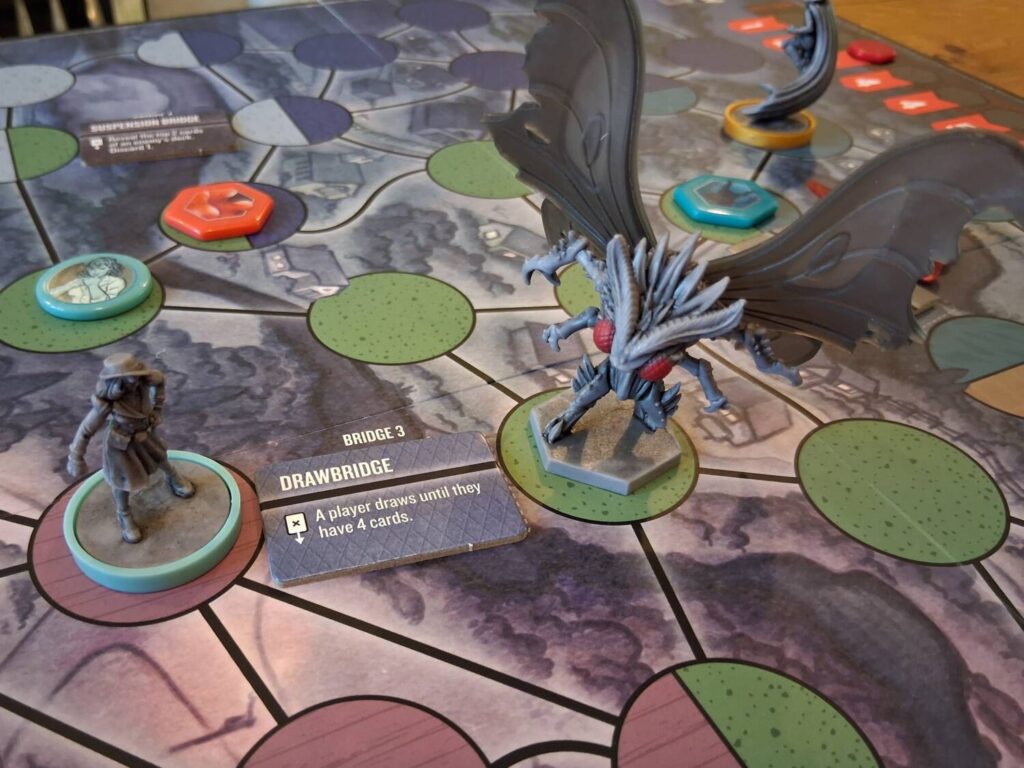
A lazy design studio might simply have created automated opponents and left it at that. Restoration Games is not a lazy design studio. Yes, the bulk of the game is indeed an automated boss and its minions fighting the players until one side is defeated. But the team pushed beyond that basic experience, adding little pressure points that influence how you approach defeating the big baddie.

A downside is that each villain is restricted to its own scenario, tied to a specific board and rules additions. You can’t mix-and-match villains in the same way as you can with the heroes. Mothman always tries to destroy the bridges of Point Pleasant, presumably to cause transportation chaos and highlight America’s overreliance on the automobile. Meanwhile, the Martian Invader is exclusively focussed on dropping aliens into the cornfields of McMinnville…

The post Unmatched Adventures: Tales to Amaze Game Review appeared first on Meeple Mountain.
Circadia Game Review

Hisashi Hayashi is the designer of a quick new card game called Circadia. I was initially interested because Hayashi has done some great work for the Bell household, namely in the form of Yokohama and Railway Boom, the latter of which was on my list of the top 10 games of 2025.

As you may know, lots of publishers are pushing out new card games, for the reasons one might expect: this is a much cheaper way to get a game to market, and it could satisfy the needs of many types of players in an environment where players are apparently spending less on their games.

Enter Circadia. There’s a theme loosely tied to Dreaming Paths, Spirit Creatures, and becoming the “Keeper of the Eternal Cycle” for the person lucky enough to win the game.

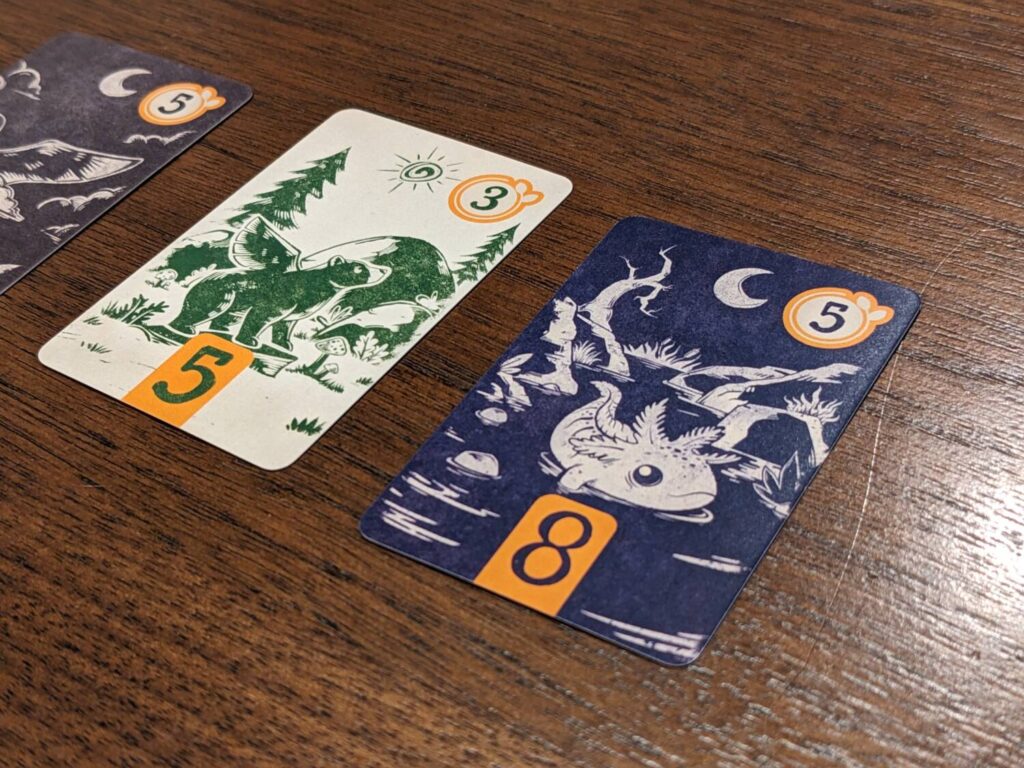
The reality is that Circadia is much, much simpler than even the loose framework. Setup only takes three steps. Players manage a hand of cards (never more than eight), trying to build up sets of cards across three types of Spirit Creatures: bear, axolotl, and goose.

Sets are played from hand based on the value of the cards, so a player who wants to play twos can play any card with…

The post Circadia Game Review appeared first on Meeple Mountain.
Fabled: The Spirit Lands Game Review

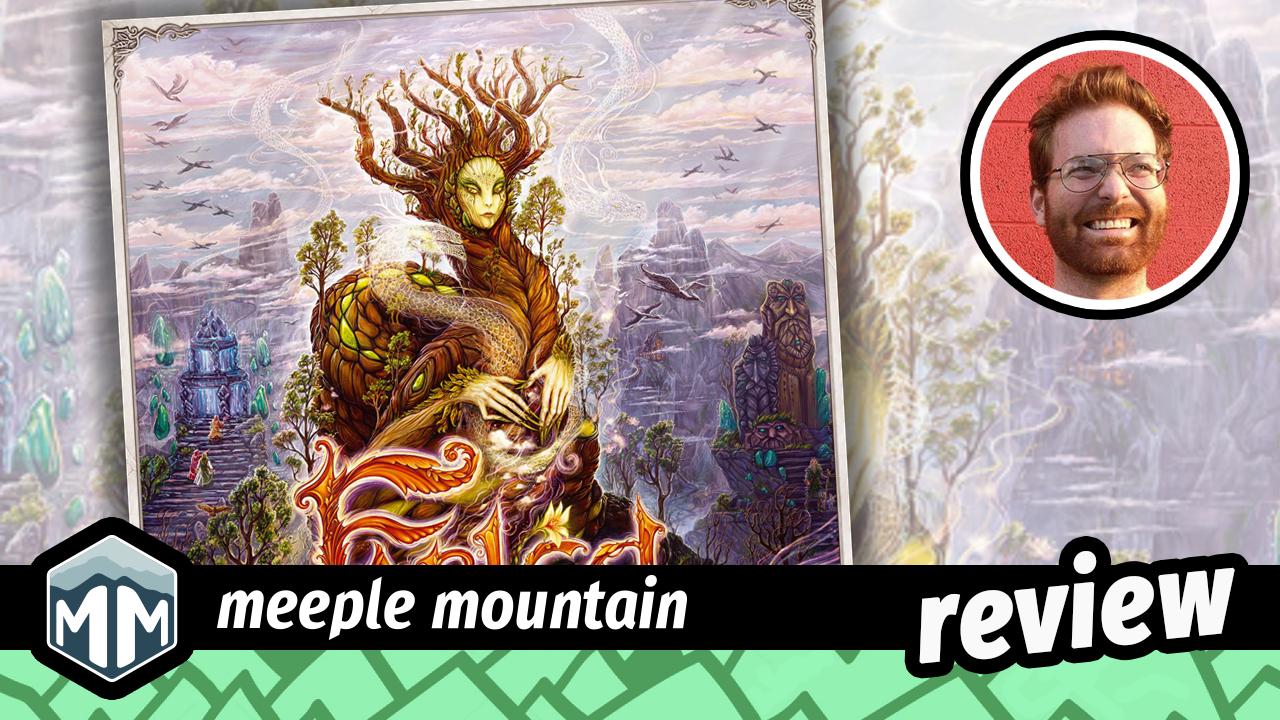
Rarely, I come across a game whose aesthetics overpower my critical sense. Fabled: The Spirit Lands is one of those games. It also makes moving up tracks not look and feel like moving up tracks, which is high praise from a curmudgeon like myself.

Bookington Bear

The object of Fabled: The Spirit Lands is to collect the most red books by the time the game ends. There are several scenarios that alter this formula, but ultimately, it’s a Knizian affair, where if there’s a tie for the red books, you go to the green books, then the blue books, and finally the crummy yellow books.

You can think of the books as cubes of four colors, and what you’re doing throughout most of the game is turning the books from one color to another color. It’s resource conversion at its most basic–two yellow books become a blue, two blues become a green, and two greens become a red.

The game operates with a simple formula, but it has some interesting quirks. Let’s talk tracks.

Take a hike

The game doesn’t call the map cards tracks, but tracks are what you have to work with as a player, so I’m going with it. At the beginning of the game, each…

The post Fabled: The Spirit Lands Game Review appeared first on Meeple Mountain.

❌