❌

Normale Ansicht

Tenpenny Parks: Winter Lights & Spooky Nights Expansion Review

Back for Another Ride

A few years ago, Justin covered the base Tenpenny Parks, praising its simplicity while offering gamers of all experience levels a thinky, Tetris-like puzzle akin to A Feast for Odin, only significantly shorter.

I'm largely in agreement with his assessment. The base Tenpenny Parks is a smooth, quick, and charming ride, which feels appropriate given the theme park setting.

As the leaves change color and the nights grow cooler, it only feels right to inject some holiday-themed fun with the Winter Lights & Spooky Nights expansion. Aside from its wonderfully rhyming name, either or both halves of the expansion can be integrated into the base game alongside any other modular expansions you may have (Innovation, Fast-Pass, etc.).

Bonus points for fitting all the expansion components into the base box. Space is a precious commodity in my small Chicago condo!

What's New?

Both expansions introduce exciting new rides and additional components rooted in their respective holiday themes. From the spooky Pirate Ghost Ship and Ghoulish Grimoires to the holly-jolly Sleigh Ride and North Pole Plunge, these attractions come in unique new shapes for your spatial puzzling enjoyment.

Each seasonal expansion replaces one ride from each attraction type, with the new additions simply shuffled…

The post Tenpenny Parks: Winter Lights & Spooky Nights Expansion Review appeared first on Meeple Mountain.
Railways of the Lost Atlas: Landmarks of the Lost Atlas Game Review

I’m tailor-made to enjoy “weeknight” 18xx-style economic route building games.

I heaped praise on the game Railways of the Lost Atlas in my 2024 review, with the (at the time) new publisher Asterisk Games doing yeoman’s work with a system some people think of as stodgy, tired, and certainly bland-looking. “ROTLA”, as it is known here at home, is one of the best-looking productions in my collection and comes with a heaping amount of variety thanks to its flexible player count, short and long-form play format, and a hex map that is literally built by the players each time the game hits the table.

If you haven’t heard of Railways of the Lost Atlas, please read my previous review. When the game’s first expansion, Landmarks of the Lost Atlas, was announced, I didn’t even reach out for a review copy…I ponied up the cash to get the expansion along with updated versions of the game’s base rules and a solo mode rulebook, developed after the release of the base game.

If you liked Railways of the Lost Atlas, you have already backed and are working through the goodies in Landmarks of the Lost Atlas. And if you have not tried either, my feelings haven’t changed: for anyone who loves a good Euro and wants to wade into…

The post Railways of the Lost Atlas: Landmarks of the Lost Atlas Game Review appeared first on Meeple Mountain.
Mini Rogue: The Council Game Review

Mini Rogue: The Council (2026, Nuts! Publishing) is a dream come true for rogue-like video game fans like me. Sometimes, I just want a quick-playing challenge to table by myself, and I now see why the Mini Rogue series (first released in 2016 as Mini Rogue: A Roguelike Microgame) is so popular with tabletop players who also love rogue-like video games.

I was recently musing about my love affair of rogue-like video games such as Dead Cells, Balatro, Brotato, and The Binding of Isaac in an article on BoardGameGeek. Around the same time, I cracked open my review copy of Mini Rogue: The Council and was instantly hooked. That’s because gameplay in Mini Rogue is so easy to parse.

Players take on the role of one of the four included adventurers: Rat Catcher, Plague Doc, Alchemist, and the Flagellant. A series of rooms (laid out as a 3x3 grid of room cards), an enemy hit point (HP) tracker, and a personal play area that tracks player HP, food, spells, gold, and experience points (XP) are all you need to get rolling.

Across four floors, players must navigate 2-3 “areas” per floor, with each area represented by the 3x3 grid. Starting in the upper left corner, players must first complete that corner room before moving orthogonally from room to…

The post Mini Rogue: The Council Game Review appeared first on Meeple Mountain.

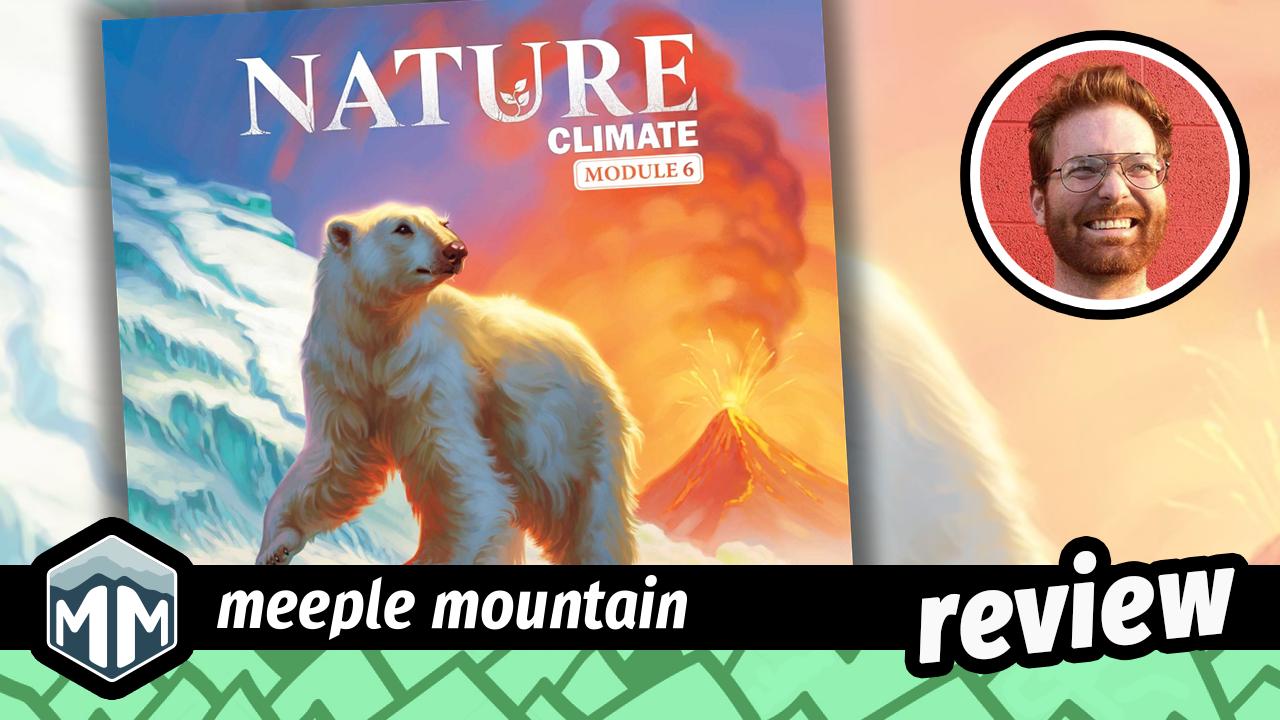
Nature: Climate Game Review

I’m going to hop into this review and almost completely agree with Andrew’s review of Nature. I don’t have that much to add to his assessment. I’ve played Evolution, Oceans, and now this, and I like what this series does mechanically, I think it provides a sharp, competitive experience that scales well with player count, and offers the possibility of drama without requiring players to understand a billion card interactions to jump in and start kicking each other in the teeth.

I’ll cover what the upcoming Climate module adds to the experience, and then I’ll play around in my ivory tower and conclude with some thoughts about edutainment products. I’m going to assume you have a sense of how the game works.

Get cooked (or frozen)

The Climate module for Nature adds variability to the amount of food that appears each round. Because of the game’s modeling of timescale, it’s doing big chunks of time between each round, so you have some pairing of the setting of the game with a mechanism. When the climate tracker moves toward an ice age or a scorching age, there will be less food available for everyone to compete over, and there is a new survival mechanism that every player will…

The post Nature: Climate Game Review appeared first on Meeple Mountain.

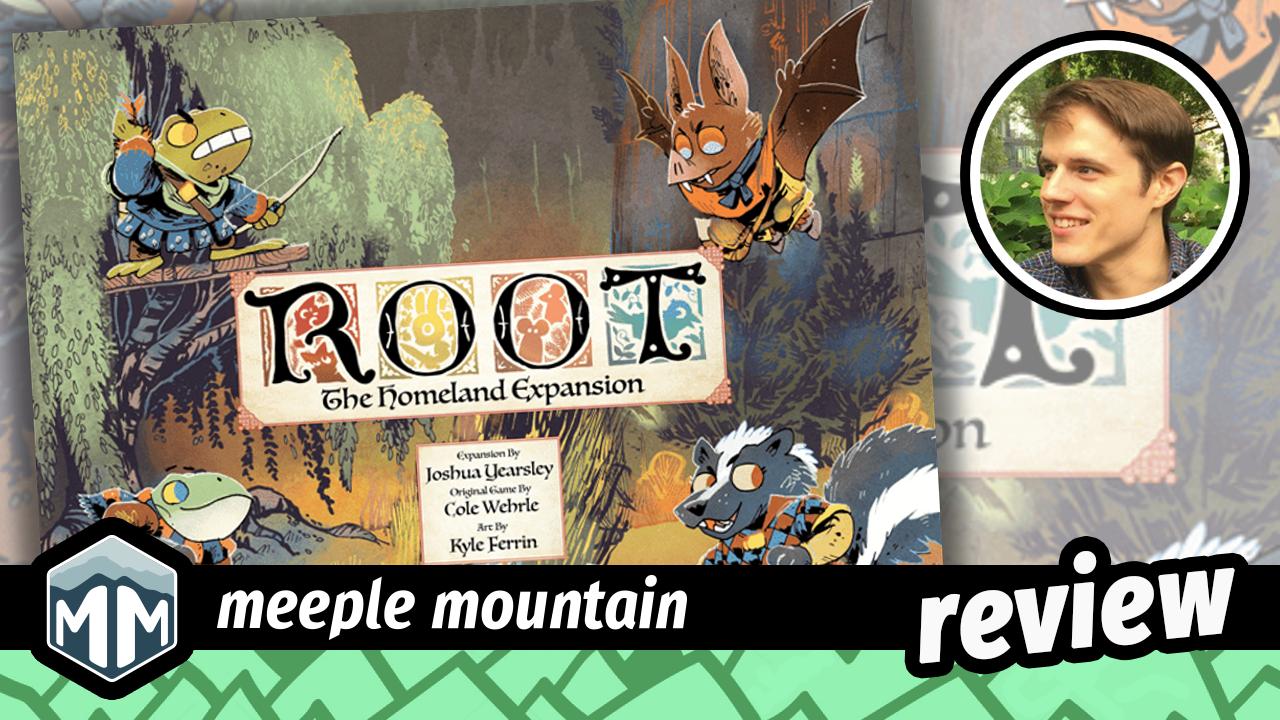
Root: The Homeland Expansion Game Review

I have played my fair share of Root games, lord knows. I have no official play count. I respect the impulse of those who track their plays, but board games are one area of my life where I don’t do that sort of thing. Some back-of-the-envelope math tells me I have played well over 50 games of Cole Wehrle’s juggernaut since I first bought a copy back in the summer COVID lull of 2020. It quickly became, and has remained, one of my favorite board games.

Root’s status as a personal all-timer has never been threatened, but I have found myself moving away from it over the last few years. Since the release of The Marauders Expansion in 2022—an expansion of which I am very fond—I’ve found myself less and less interested in playing. This has nothing to do with the quality of the game. It hasn’t worn on me, nor has it grown tired. If anything, the fact that I haven’t played Root as much as I used to is Root’s fault; it offered early instruction in the idea of board games as strange and ungainly, and I’ve spent the last few years eager to explore new designs, new spaces, and tracking down new experiences. Root became the kind of game I would happily play if suggested,…

The post Root: The Homeland Expansion Game Review appeared first on Meeple Mountain.

❌