❌

Normale Ansicht

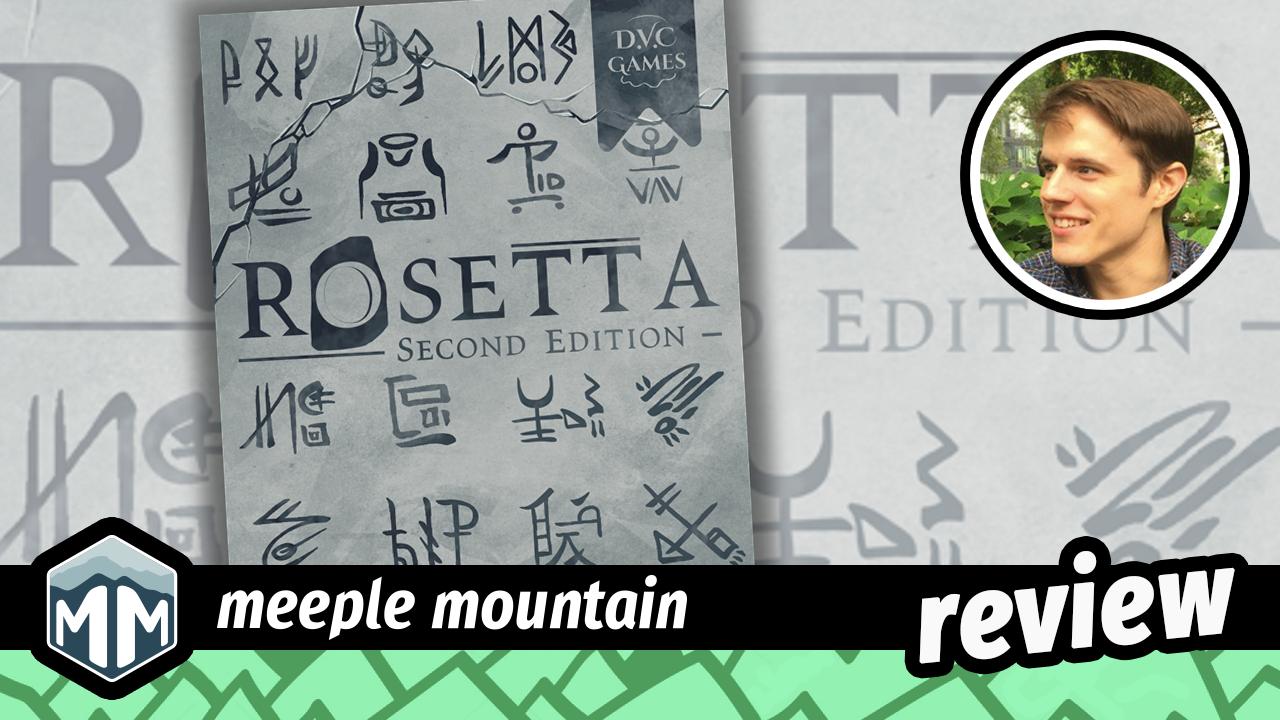
Rosetta: Second Edition Game Review

I’m an easy mark for Rosetta, publisher DVC’s entry in the spontaneous language creation subgenre. It tickles the same part of my brain as Gibberers, which is a brilliant and singular experience, but Rosetta is much more approachable. Gibberers is a game in which you create a language and speak only in that language. It demands a good deal of time and the space for a tremendous cognitive load. Rosetta is significantly faster, and, rather than create and speak a new language, you work together to decode a logographic writing system for a language you never once have to speak.

One player takes on the role of the Author, the voice—albeit a mute one—of the lost civilization with which this writing system originated. They draw a random Inscription and Location, and set both out on the table for all to see. The Location is there for inspiration and to provide a little bit of context and grounding. The Author secretly picks a meaning for the Inscription associated with what they see in the landscape. You can’t pick something that is visible on the Location card, though it’s best to choose something directly related to what you see. A field of wheat may lead the Author to choose “farmer.” A snowy mountain might suggest “avalanche.”

At this point, everyone…

The post Rosetta: Second Edition Game Review appeared first on Meeple Mountain.
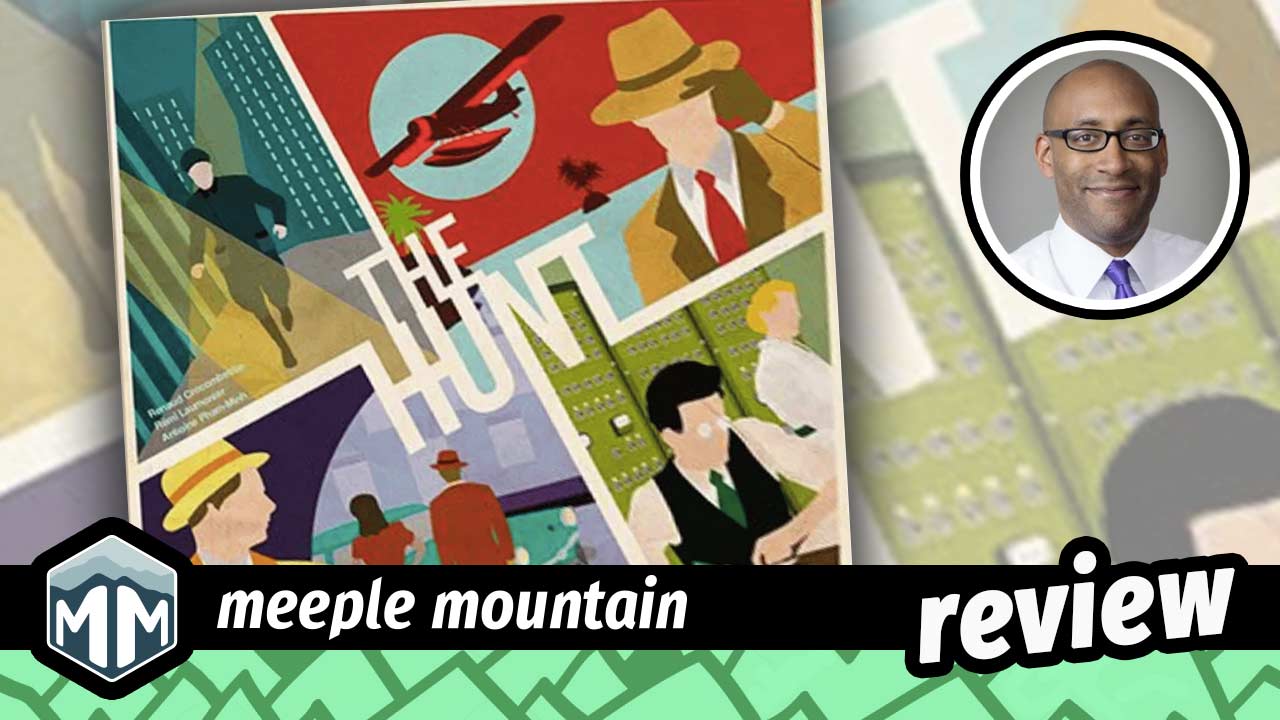
The Hunt Game Review

For most of the last two years, I have had an article in my draft folder titled “I Think I Hate Games Where I Have to Read a Lot of Card Text.” It started years ago with a deckbuilding game where I had to lean over the board’s card market to read every card that hit the conveyor belt.

Understanding not only the card’s cost, but its abilities, was critical to success in that game, but it also meant I had to read a lot of card text before making any decisions.

2025’s The Hunt (designed by Renaud Crocombette, Remi Laumonier, and Antoine Pham-Minh) might have pushed me over the edge. That’s because the game is essentially a recipe fulfillment game with fugitive cards. The Hunt is set in the espionage theaters of post World War II Europe, the Americas, and the Middle East, as players guide one of four unique agencies to chase Nazi war criminals down for capture. Taking 1-3 actions each turn, players will visit “investigation zones” to grab cards that match the requirements of the various criminals that must be hunted down during the game.

I typically enjoy games like this, and The Hunt does a great job of keeping the action speedy by forcing…

The post The Hunt Game Review appeared first on Meeple Mountain.
Stationfall Game Review

The Telepathic Rat Incident

Things were tense. The dreaded countdown clock was getting closer to doomsday. Several shady characters had been taking actions all over the space station that threatened to unleash chaos even earlier, in the form of deploying an antimatter device or unleashing the mysterious Project X. The Doctor was making a mad dash for the escape pods, and the Boarder wasn’t having it. Some players lamented the Doctor’s proximity to the escape. “Don’t worry, I’m going to blow him up with a missile,” threatened the Boarder.

Desperate to get out, the Doctor made a shrewd deal with the space station’s resident sentient AI. He would escape with a copy of the AI’s data on him, allowing the AI to spread to the far reaches of the universe. After all, that’s how the AI’s player scored the most points at the end of the game: having enough people escape the doomed space station with his data on board. But how could the rogue AI stop the Boarder from bombing the escape pod?

“Oh, I know! You can use the Telepathic Rat to force the Boarder to use his own gun to shoot himself in the face!”

There was a moment of brief silence as the table processed what was just said, and realized… yes, that could work!…

The post Stationfall Game Review appeared first on Meeple Mountain.
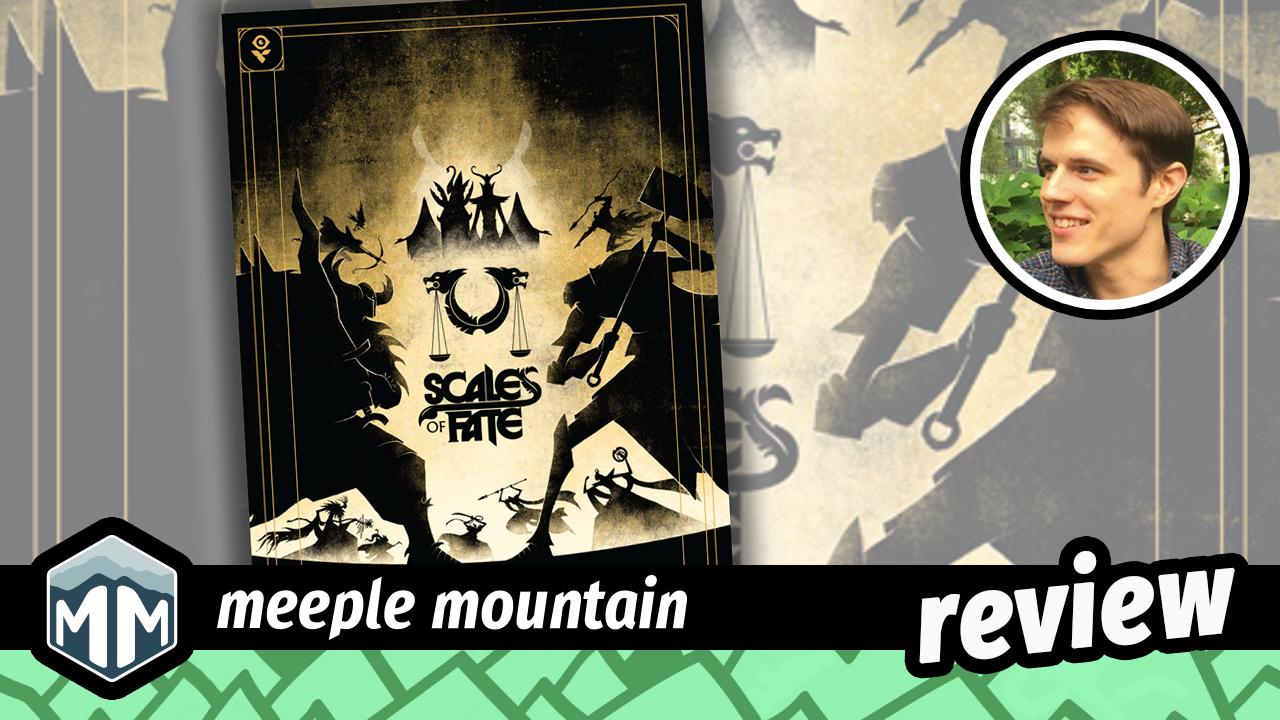
Scales of Fate Game Review

Scales of Fate is a strange beast, an uneasy marriage of strategy, bluffing, and deduction. It gets points for originality, ambition, and aesthetic, but I’m not sold on the whole. It’s like eating a cake in which you can taste the eggs separate from the flower and the sugar. Worse than that, none of the elements feel fully baked.

Each player is secretly assigned two Demigods out of a pool of nine. Your goal, over the course of the game, is to manipulate their Renown through clever use of the Quest and Action tiles on the board. You’re also trying to suss out your opponent’s two assignees, but we’ll come back to that.

Scales of Fate is hard to explain without a visual of the board, so let's get that out of the way:

A baroque game board on a wooden table. A lengthy description of the board follows in the text of the review.The big X-shaped pieces are Quest Tiles. The smaller in-betweeny pieces are Action Tiles. Those golden pieces you see to the lower right of the photo are Servants. I usually shy away from foisting this kind of nomenclature on my readers, but here it’s necessary. As we begin this journey together, remember that everything in the…

The post Scales of Fate Game Review appeared first on Meeple Mountain.
Courtroom: The Noir Trilogy Game Review

Czech Games Edition rolled the dice back in 2022 with the release of Deal with the Devil. It was the most shocking thing I played from a major publisher that year by a country mile. A strictly four-player-only, hidden role, app-driven board game from the people who gave us Codenames? It wasn’t just a departure…it was the biggest creative swing CGE has ever taken with a major release.

Deal with the Devil (and its fantastically twisted box cover art) was a big swing…but also, a big miss. You can find copies of the game online for less than $20 all the time now. The critical reception was a decidedly mixed bag. But I still stand behind CGE for that release, because I am so happy that CGE took the risk.

CGE could make a safe bet every year with their releases, but Deal with the Devil (and releases like their upcoming video game-to-board-game adaptation, Kingdom Come: Deliverance—The Board Game) prove that CGE are willing to take real chances with their biggest productions.

Courtroom: The Noir Trilogy is the newest release under the Mindclash Games’ “Play” line, the publisher’s lighter line of games that pushes a release directly to retail every fall. The previous Mindclash Play games include last fall’s Emberheart and their first release in…

The post Courtroom: The Noir Trilogy Game Review appeared first on Meeple Mountain.
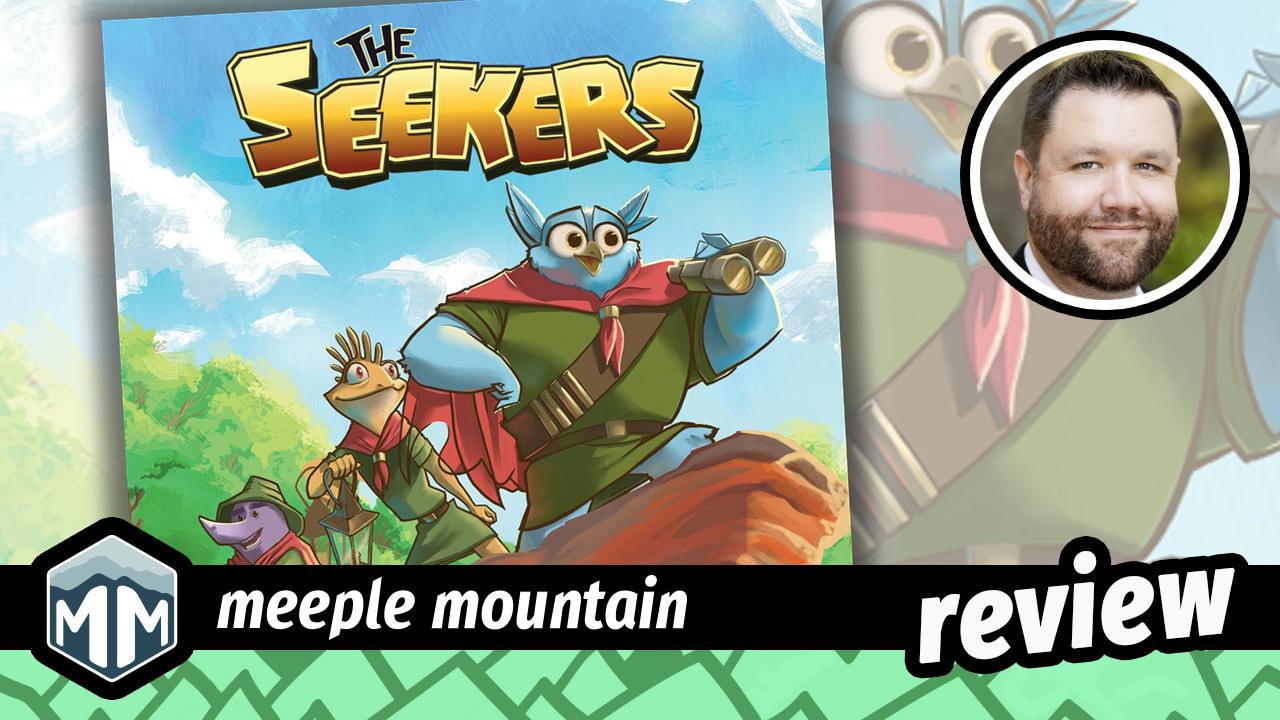
The Seekers Game Review

Being relatively new to the world of modern board games (since around 2022), I’m still regularly amazed by the various elements of games that I play. While artwork and components are often the first thing to grab my attention, I usually leave the table most impressed and surprised by the ways in which a designer implements a game’s mechanics.

When I come across a brand new (to me) game mechanic, my interest is heightened to another level. This is exactly what happened after I played The Seekers, designed by Jay Cormier & Sen-Foong Lim, and published by Off the Page Games. For those familiar with Jay and Sen or Off the Page Games, The Seekers is actually a reimplementation of one of their previous games, Mind MGMT, which Andrew Lynch reviewed for Meeple Mountain back in 2023.

The mechanism in question, in The Seekers, was Hidden Movement, and after four review plays, I’m eager to explore other games in the genre; perhaps even the very first Hidden Movement game, Scotland Yard, which Meeple Mountain reviewed back in 2018. My only fear is that The Seekers set the bar too high for other hidden movement games.

A Twist on a Classic

At its core, The Seekers is a tabletop version of Hide and Seek. One player is…

The post The Seekers Game Review appeared first on Meeple Mountain.
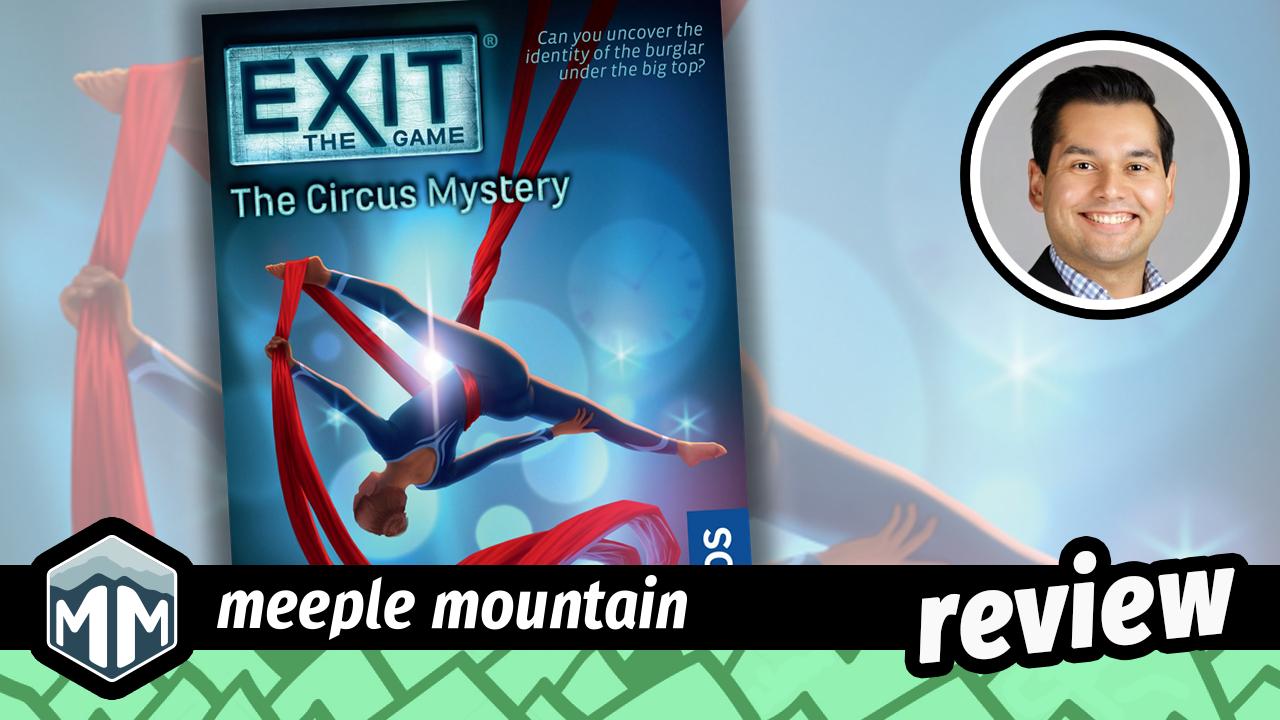
EXIT: The Game – The Circus Mystery Game Review

Exit: The Game has been synonymous with “escape room” in my circle, and though there are many similar contenders (just look at your local Walmart/Target games aisle!), Exit continues to be the gold standard for the experience.

Amazingly, so many can be cranked out so quickly with various themes and still keep the puzzles fresh. At least, I would assume so. I can’t say I’m an Exit die-hard; I’ve only played a few of them, so I can’t attest to every iteration’s uniqueness, but I’ve felt that each puzzle was wildly different from all the others I’ve played.

EXIT: The Game – The Circus Mystery has players solving a string of heists, with the common denominator being that a certain circus is in town. The components immediately jump out at you as you assemble a number of 3D trapeze artists, strange swords, and a foldable magician’s assistant. The premise sends players on a quest to explore the different circus performers’ wagons in hopes of solving the ultimate whodunnit.

Without going into spoilers, I had a great time with the puzzles. It follows the same formula of figuring out a three-digit code and then using a decoder wheel to search the answer deck and test your theories. Like past…

The post EXIT: The Game – The Circus Mystery Game Review appeared first on Meeple Mountain.
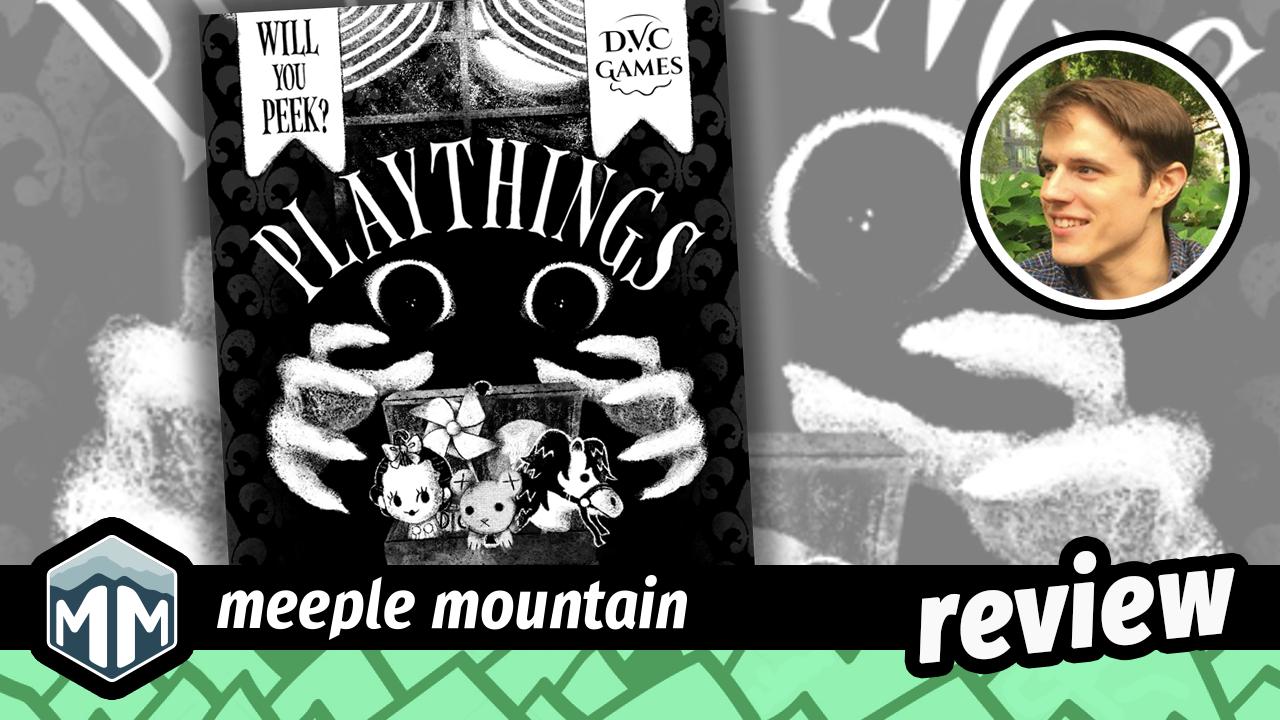
Playthings Game Review

It’s rare that a published game feels organic, but I guess that makes sense. Most authored works, regardless of medium, do not feel organic. The closest most games come is “intuitive,” which is not the same thing. “Intuitive” as applied to game criticism is more about the rules making sense and flowing. You use it when you’re talking about something that’s easy to teach and easy to learn and easy to play, about games that just. make. sense. In order for something to be intuitive, it has to build on what has come before, on a shared cultural reference or two.

That is not the case with “organic,” a word which I cannot say I have ever wanted to apply to a board game before. Strap in, folks. We’re developing a new theory. “Organic” can be as free-form as it wants. That’s probably a key feature, right? I mean, who tells an heirloom tomato how to grow? Nobody, that’s who.

A group of hands and arms float in space above the cloth Playthings board.

When I say Playthings is organic, I mean that it feels like something a group of Victorian children would come up with whilst whittling away the unending hours of the day. It feels improvised, even as…

The post Playthings Game Review appeared first on Meeple Mountain.
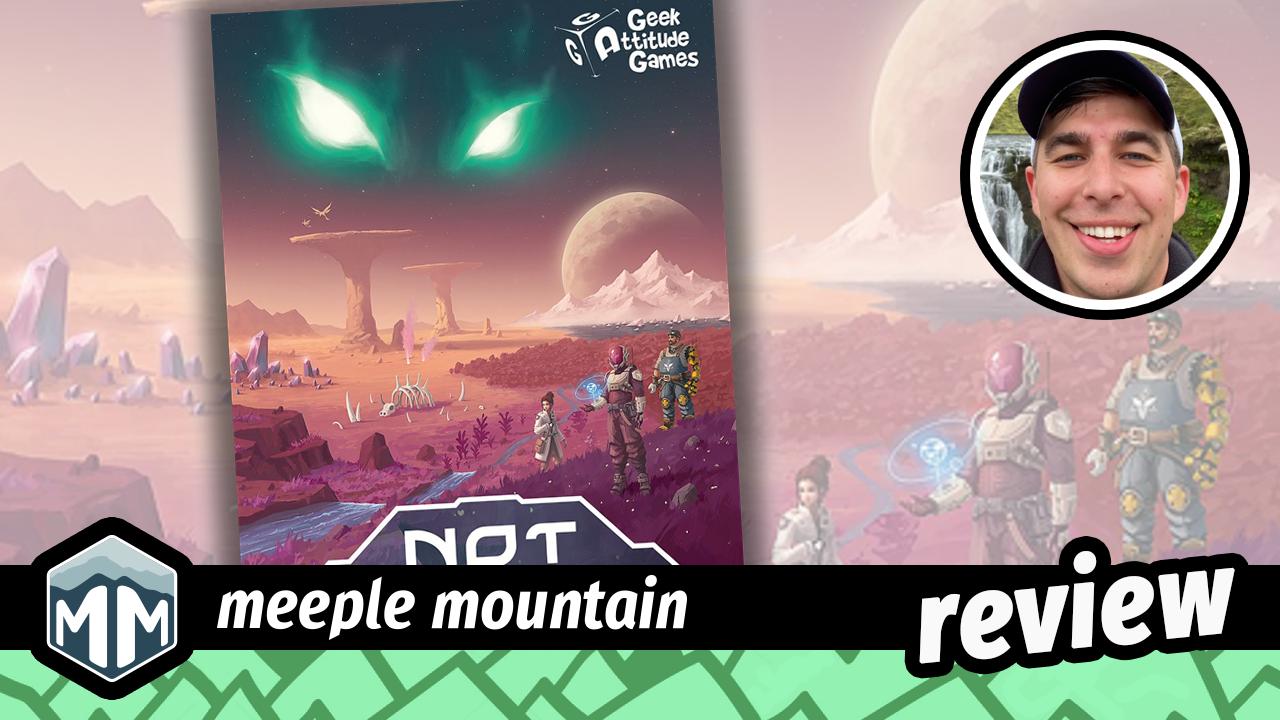
Not Alone: Remastered Edition Game Review

Gen Con 2026 must have been the convention of "alien on the loose" games, because I seemed to be playing them constantly. In fact, in one night we went from This Game Is Killer: Alien on Board to This Game Is Killer: Frozen Horror to Not Alone: Remastered Edition. While the latter is a slightly different flavor, the asymmetry of the Not Alone: Remastered Edition puts one player in the driver's seat of the alien threat while the others try to outlive, outlast, and outsmart them.

Not Alone: Remastered Edition: Hide and Seek

Having never played the original Not Alone, my thoughts are solely based on my experiences with this improved version. In Not Alone: Remastered Edition, the players have evacuated their ship, landing on a mysterious planet called Artemia where it quickly becomes apparent that they are…not alone. Insert DiCaprio meme here. They become the Hunted in a race for survival against one of the other players who assumes the role of the Creature, whose goal is to stymie their efforts.

[caption id="attachment_333875" align="alignnone" width="1024"] Hunted players receive a character card with a unique Skill[/caption]

The main tracker board is set up in the center of the playing area, with the Hunted's Rescue counter on one end and…

The post Not Alone: Remastered Edition Game Review appeared first on Meeple Mountain.
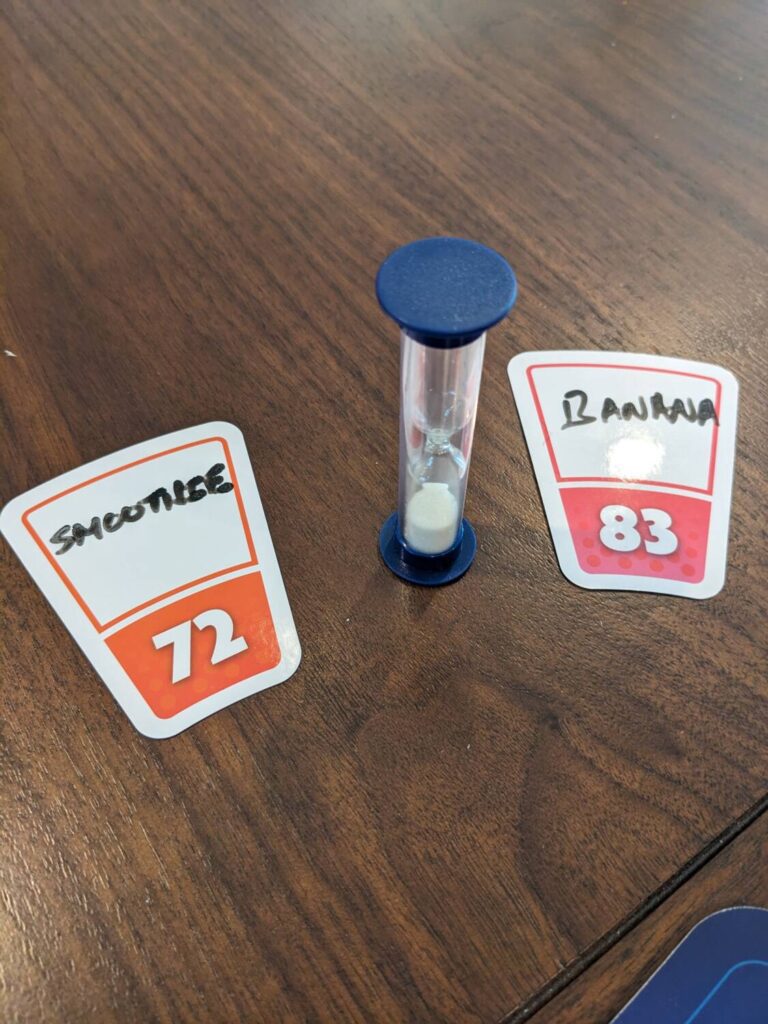
One Round? Game Review

Devir sent a copy of their new party game, One Round?, and I’ll admit that the first pass of the rules didn’t get me all hot and bothered.

In fact, even when I taught the game to three different groups over the course of a week, all of those players also looked at me suspiciously as I finished the teach. “Another word game, eh?” was the response of my wife; One Round? didn’t look like much when I whipped it out for these audiences.

But across three plays (at two, three, and four players), I’m surprised to say that One Round? earned its street cred thanks to a setup that differentiates itself just enough from some of the heavyweights in the genre. If you can find a copy for the right price, I highly recommend adding this to your party game collection.

It’s So Just a Single-Clue Code Word Game

There’s no getting around it: the word association game space is really jammed right now.

If you’ve been in “The Hobby” for the last 10+ years, you’ve already got copies of some, if not all, of the following games in your house: Codenames, So Clover, Just One, Wavelength, Letter Jam, Decrypto, Phantom…

The post One Round? Game Review appeared first on Meeple Mountain.

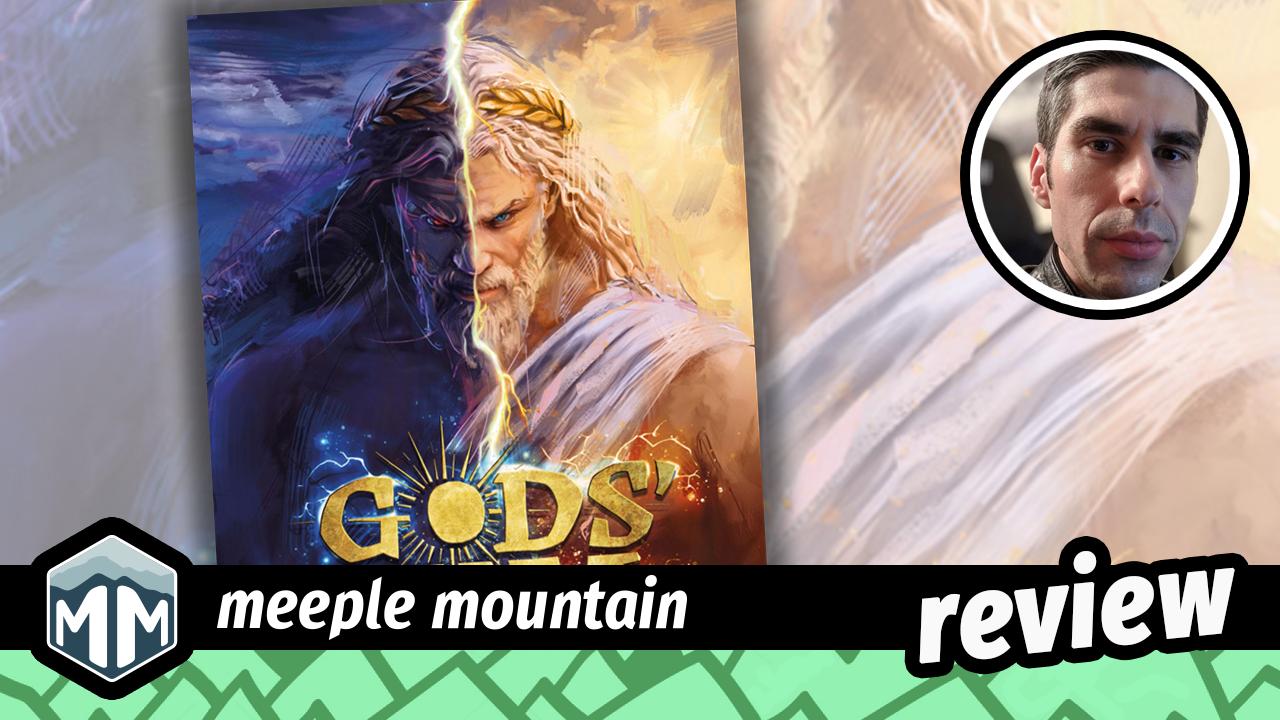
Gods’ Will Game Review

Gods' Will showed up in my social media feed, comparing itself to Resistance: Avalon like a new kid on the first day of school telling everyone he used to be popular somewhere else. I have heard this pitch. I have reviewed this pitch twice, from Witch Hunt and Human Punishment, two games that made the same promises and delivered the same disappointing results. So when Gods' Will came knocking with the same marketing aura, I had to open the door with at least one eyebrow raised. Maybe I’m just addicted to disappointment, who knows.

After half a dozen plays, I can say with a bit of confidence that Gods' Will is doing more right than wrong here. More importantly, it earns it by fixing the real problems with its predecessors rather than just the ones that look good in a Kickstarter pitch.

A Skeptic Walks Into a Kickstarter

Like 90% of social deduction games that have ever existed, there are two teams: Light and Dark. There is also a loner faction, a third party whose goals shift depending on player count and whose presence ensures that the ride from start to finish won’t ever be a smooth one. Every player is a God with a public special ability…

The post Gods’ Will Game Review appeared first on Meeple Mountain.

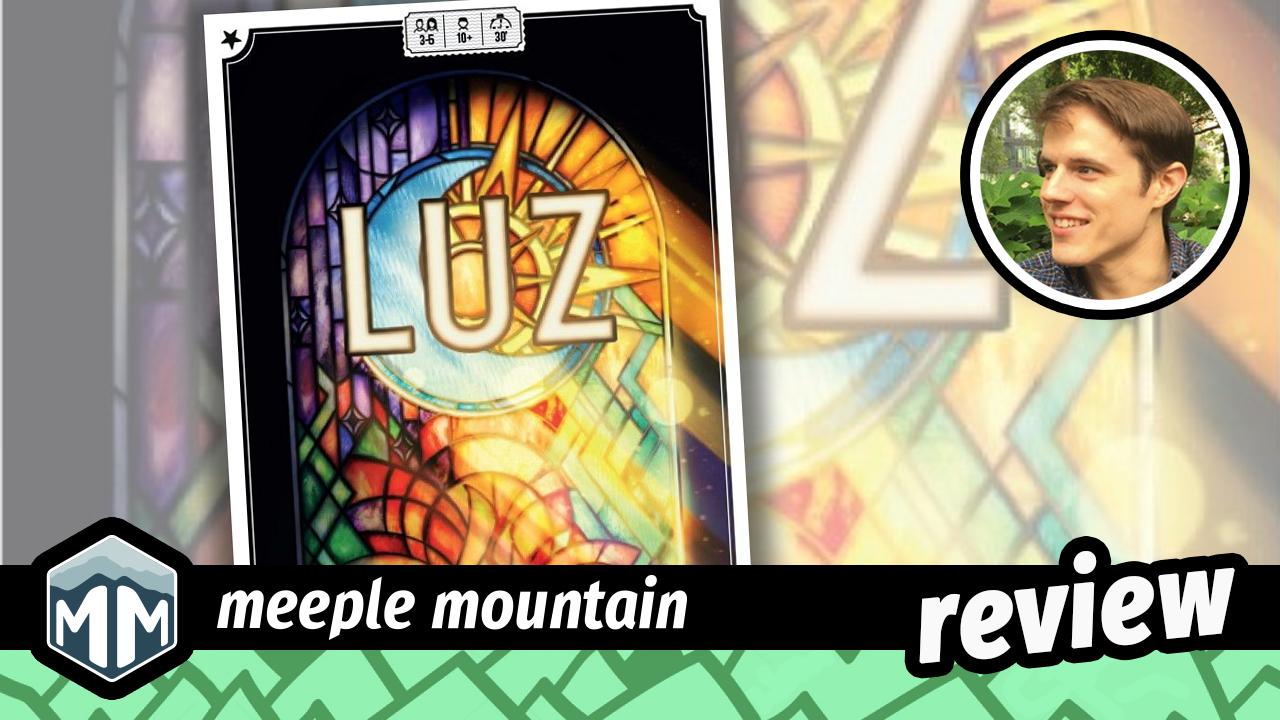
LUZ Game Review

With a title like LUZ, Spanish and Portuguese for “light,” you’d expect this Taiki Shinzawa trick-taking game to have a bit more clarity. Silly you. Silly me! LUZ is a game of shadows and half-knowns, a trick-taker that casts a shadow of uncertainty.

Given that Shinzawa is responsible for the likes of Ghosts of Christmas, a trick-taker in which you play three or four must-follow tricks at the same time while the trump suit shifts with player behavior, I should clarify that LUZ isn’t that opaque. It’s all relative. If Ghosts of Christmas is a few standard deviations outside the mean, LUZ is safely within the bell part of the curve.

This is a must-follow trick-taking game where players bid before the hand begins. You have the choice of making an exact bid, which requires you to hit the nail squarely on the head in order to score, or a more forgiving bid that gives you one trick’s worth of wiggle room in exchange for scoring half the points. Higher risk, higher reward.

This doesn’t sound so different from whist, other than the room for some wiggle in your wager. The opacity comes from the last two rules: the back of each card indicates what suit that card belongs to, and you never know the values of your…

The post LUZ Game Review appeared first on Meeple Mountain.

❌