Normale Ansicht

The Current State of Worldwide Fulfillment (2026)

05. März 2026 um 19:16

Parcel fulfillment methods, options, and best practices have evolved quite a bit over the last few years, so today I’ve updated the information from my previous post on this topic in the hope this will be helpful for my fellow creators.

The Basics

In general, this is the 2-step process that many creators use (see also this infographic):

  1. Freight: A freight company (I work with ARC Global: justin.bergeron@arcglobal.us) ships cartons/pallets/containers of products from a factory to several different fulfillment centers (Australia, Canada, US, and Europe). Depending on your scale, you can potentially freight ship directly to distributors (who sell games to retailers). Here’s my 2023 update on freight shipping.
  2. Fulfillment: A fulfillment center sends orders to customers within their respective region.

This method works well if you know exactly how many products to send to each region. That’s great for crowdfunders but more of a guessing-game for companies like Stonemaier Games who don’t accept orders until the products have arrived at fulfillment centers. We make educated guesses based on past sales and interest gauged from our newsletters.

Top Fulfillment Centers

Whenever I’ve selecting a fulfillment company, I always ask about and test the quality of packaging, speed, communication, customer service, and autonomous problem solving.

I’ve come to believe that consistently high quality is much more important than price when it comes to fulfillment centers. However, you can see a variety of stats (including price estimates, which are updated by each corresponding company) as well as contact information on this master list of fulfillment companies.

Here are my current top picks by region:

  • United States: We work with Miniature Market fulfillment here in St. Louis and have been really impressed by all services they’ve provided. Fulfillrite, Quartermaster Logistics, and Allplay Fulfillment have great reputations, and whenever I receive a package from them, I’m pleased with the quality of packaging.
  • Europe: Spiral Galaxy is great to work with, and they’ve offer a full-service VAT option. They’re extremely responsive, they’re fast, they pack games well, and they even have an optional system where they can confirm addresses with customers before printing labels.
  • Canada: We work with Asmodee Canada to handle fulfillment, and they’re doing a great job with communication, speed, and quality of packaging.
  • Australia/NZ/Asia: Let’s Play Games does a solid job at fulfilling our shipments to customers in Australia, New Zealand, and Asia.
  • Other Areas: Unfortunately, there aren’t any fulfillment centers in other regions I can currently recommend, but I’d love to hear from other creators if you’ve had good experiences in the last few years.

If you plan to sell products through your webstore to customers on an ongoing basis, I recommend setting up different storefronts for each region (or some way to separate inventory by region).

Instructions for Fulfillment Centers

We try to be abundantly clear every time we work with a fulfillment center, informing them well in advance when we have an upcoming launch. Feel free to copy and paste the instructions below (or add/subtract from them):

  1. Ship all packages so they do not require a signature for delivery.
  2. Send customers their tracking number by e-mail on the same day that their order leaves the facility (not when the label is made and no later than the day after the package departs). Also, it’s crucial that backers see their FULL address on tracking notifications, not a partial address that will cause them to wonder if we forgot half of their information.
  3. Either sync tracking numbers with our ecommerce platform or send me a spreadsheet of tracking numbers and couriers within 2-3 days of fulfillment completion. We can answer 90% of customer service questions if we have that data.
  4. If it’s absolutely necessary for an order to ship in multiple packages, please make sure the customer knows that they’re receiving more than one package. That will prevent a lot of customer confusion and frustration.
  5. Please pack the products with plenty of cushioning around the edges, corners, and between differently sized components.
  6. Please use eco-friendly, space-efficient packaging if possible. (It’s generally up to the creator to specify if there is a product that could be shipped in a padded mailer or envelope instead of a reinforced box.)
  7. Let me know in advance what your estimated daily/weekly target is (the quantity of orders they can ship each week). We ask that fulfillment centers increase this quantity for launch periods compared to normal weeks.

Tips and Thoughts

  • Transparency: Most crowdfunders have moved to the method of charging for parcel shipping costs after the project. Parcel shipping is fulfillment center labor, packaging, and postage, which is separate from the landed cost of a product (manufacturing plus freight; this is built into the reward price). Basically, a customer’s assumption when they place a pledge is they’ve now paid for the entire landed cost and only need to pay for the parcel shipping cost later.
  • Responsibility: It is inevitable that some customers will report that a package wasn’t delivered (despite the courier’s “proof” of delivery). We first ask the customer to check with their neighbors–you’d be surprised by how many times the package is next door. If the customer can’t find the package, we confirm that the address is secure (or ask for a more secure address), add a required signature to the delivery (if possible), and ship the package again.
  • Product Size: A certain number of cartons fit on a pallet (18-21 cartons), and your manufacturer will often use the same carton size for everything they send. Smaller box sizes offer a significant competitive advantage given the freight shipping costs, though retailers and distributors typically don’t want to buy cartons with dozens of games inside (6-12 games per carton is ideal).
  • Playmats: Big playmats in cardboard tubes require multiple packages for the same shipment, so we instead have our manufacturer flat-pack them. Fulfillment centers fold them into packages for shipment, saving customers a significant expense (and using a lot less cardboard in the process).
  • Pre-packing: To speed up the fulfillment process, slightly decrease the cost per unit, and ensure a consistent quality of packaging, your manufacturer can pre-package products at the factory. This works best if customers are preordering 1 unit of the product and nothing else. You can even design expansion and accessory boxes so a shipping label can be placed directly on them without the need for a box inside a box.
  • Damaged boxes: Publishers don’t typically have replacement boxes, so if a customer receives a dented or broken box and requests a replacement, there’s no other way than to send them another full game. When we do that, we give the customer a prepaid shipping label to send the ding-and-dent game to a reviewer of our choice (we check with the reviewer in advance to see if they’re fine with this arrangement).
  • Replacement parts: Sometimes components are missing from inside the product, and we have replacement parts helpers around the world stocked with spare parts to send to you if you fill out the form on this page.

Other Tips I’ve Learned Over the Years

  • Bar Codes/SKUs: Fulfillment centers and retailers require bar codes (gs1, then generate codes here); most also need SKUs (stock codes; if you’re in the board game industry, get these from heather.stoltzfus@hmahobby.org). Make sure you have both, and make sure you have a system for ensuring that you don’t use the same bar code on different products (I use a Google Doc with conditional formatting that highlights duplicate cells).
  • Important labels: If you manufacture in China, put “Made in China” on the box (or wherever you made the product). Customs will have a problem if you don’t do this. Also include a choking hazard icon and label (“Warning. Choking hazard. Contains small parts. Not for children under 36 months.”).
  • Add-Ons: The more add-ons and various configurations you offer, the more trouble you’re going to have when you fulfill rewards. Not only does it increase the potential for human error, but it also increases the cost: Some fulfillment centers charge a fee for each item in the package.
  • Fee Precision: When calculating shipping rates on your crowdfunding project, use accurate fees for each country, not one-size-fits-all rates.
  • Europe/VAT/Brexit: If you’re shipping from within Europe, put an address on the back of the box (i.e., your local address plus your fulfillment center address in Europe, though ask for their permission). If your game is CE marked and tested (which it needs to be if you are advertising it as a game for under 14) you need to have an address of an EU-based company that can act as your “authorised representative” and hold your Declaration of Conformity for you. You’ll need to pay VAT, and I recommend shipping DDP (delivery duty prepaid) if you ship to the EU from the UK so customers know that the price they see on your webstore (which includes VAT) is the full price they’ll pay for the product (no surprises upon delivery–and if there is a surprise, it’s a mistake by the courier that can be resolved). I also recommend putting UK and UKCA markings next to the CE markings.
  • Central/South America and Africa: We’ve tried to ship to customers in these regions in the past, but very few packages would actually arrive at their destinations. I know it’s not ideal, but my recommendation to these customers is that they ship to forwarding addresses in regions where we do ship (i.e., to a friend or to a service like Shipito and MyUS).
  • Communication: I’ve found that keeping backers and customers informed with frequent updates throughout the fulfillment process is really helpful for easing their anxiety, even if we have no news to share.
  • Local Pickup: It took quite a bit of coordination, but a few months ago we added a local pickup option here in St. Louis through Miniature Market (for sales made on our webstore). It isn’t something I would want to handle through my home office, but Miniature Market is set up well for option.

***

Hopefully this gives you some ideas for shipping and fulfillment! If you fulfilled a project recently or are shipping products on an ongoing basis, what’s something you learned that can help your fellow creators? Do you have a fulfillment center to recommend?

***

Also read:

If you gain value from the 100 articles Jamey publishes on this blog each year, please consider championing this content! You can also listen to posts like this in the audio version of the blog.

Slay the Spire II

05. März 2026 um 19:05

Magic, L5R, Shadowfist, Bridge — Small potatoes. (Bridge is pretty close though, but although I’ve played it for nearly 40 years, for fifteen of those years I likely only played only a few sessions a year).

I’ve played more Slay the Spire than any other game. Whereas other people would come home and watch TV, I’d Slay the Spire. I am currently in the steam store trying to download Slay the Spire II. Talk amongst yourselves.

(Actually, my transaction got bonked and I can’t buy it! Trying again in a few minutes).

Update — And … we’re off.

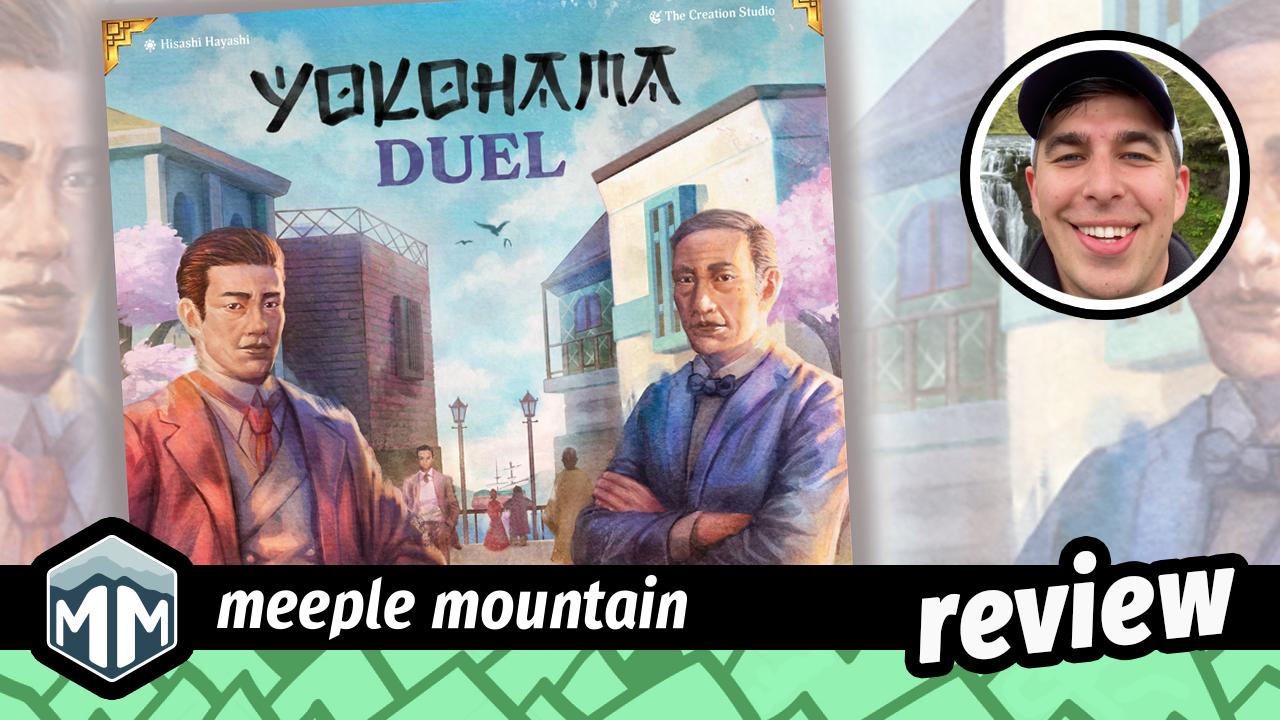
Yokohama Duel Game Review

I first saw Yokohama at Gen Con in 2024 when it was reprinted with updated art and dual-layered boards. My main turnoff was that it seemed quite fiddly with the smaller meeples and felt generally busy with the various worker placement locations. Enter Yokohama Duel which eliminates those issues and presents a similar gameplay wrapped in a convenient two-player package. The question remained: does it stand on its own merits amidst the evergrowing list of 'duel' games? I aim to find out.

Yokohama Duel Overview

Each player in Yokohama Duel assumes the role of a prominent merchant in the Meiji era of Japan, pushing themselves towards prosperity for themselves and the burgeoning port town. Through the acquisition of goods, fulfillment of orders, adoption of technology, and culturally mindful practices over four rounds, players compete to see who will come out on top.

The core of the game is the placement of 'workers' in the form of Power cards. At the start of the game, each player receives a set of Power cards valued 1 to 4. On their turn, a player selects the lowest remaining Power card in their hand and plays it to an unused location on the board. The value of the card played gives an increasing benefit such as more resources, a higher valued Technology…

The post Yokohama Duel Game Review appeared first on Meeple Mountain.

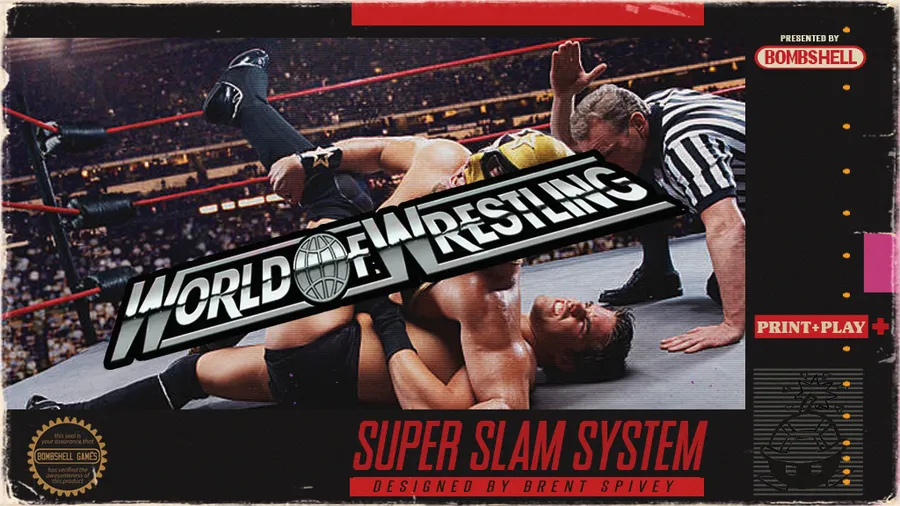
4 Life – A World of Wrestling Review

05. März 2026 um 15:00
It’s 1998. Goldberg is dominating the only wrestling league that matters. The Wolfpac is running wild, and that damn cattle prod is about to make an appearance at Starrcade. But that hasn’t happened yet. Right now, a Totino’s pizza is crackling to life in the oven. My buddy Chris is spending the night, and we…

Read more →

Neko Syndicate Review

05. März 2026 um 14:53
Neko SyndicateNeko Syndicate had me at cat clans. The premise is that a feline-led organized crime clan is vying to take over the sushi trade in Japan. Anyone who has spent any time around cats knows they are diabolical. Cute. But diabolical. Cats are furry little overlords who demand our attention, food, and devotion; on their […]

Source

Spiel Essen expands again to ‘max out’ venue space, now bigger than 15 American football fields

05. März 2026 um 13:05

The world’s largest board game fair, Spiel Essen, says it has reached the limits of its expansion at its long-time home after boosting floor space again this year due to “overwhelming interest” from exhibitors.

Organiser Merz Verlag said it has expanded this year’s exhibition space to fill all eight main halls at Messe Essen, covering an area of 81,200 sq m – larger than 15 American football fields.

That expansion makes the massive game fair more than 50% larger than the exhibition space at US board game convention Gen Con – although its North American peer also boasts a vast, separate expanse of gaming tables, tournaments and live events that Spiel Essen does not.

Soaring interest in the show has now seen Spiel Essen boost its floor space four times in as many years, with this year’s event in October set to be about 30% larger than the already massive 62,500 sq m show which took place in 2023.

Merz Verlag said it had already received an “exceptionally high” number of registrations from exhibitors for the 2026 event, with eight weeks of the sign-up period still to go.

It added that demand had come both from long-term exhibitors keen to “significantly increase” their booth space, as well as an “impressive number” of first-time exhibitors hoping to attend this year.

A statement from the company said, “While the fair traditionally hosts many new small booths introducing their first games, the number of new exhibitors is particularly high this year.”

Spiel Essen’s expansion into a seventh hall last year helped the four-day show to a record 220,000 attendance, outstripping the 209,000 visitor record it set just before the Covid-19 pandemic.

The show might have broken its attendance record in 2024 were it not for a self-imposed visitor cap, which limited the number of attendees each day to about 50,000 – a measure introduced alongside wider aisles post-pandemic to help visitors move around the often crowded halls more easily.

Carol Rapp, the Merz Verlag managing director responsible for Spiel Essen since 2023, said, “The fact that we can already plan the opening of a new hall and the full occupancy of the grounds is fantastic – it’s a sign of both the international importance of our fair and the vitality of the gaming industry.

“Spiel and the industry are growing, and we are creating the necessary space for this development.”

Merz Verlag managing director Carol Rapp

Rapp told BoardGameWire ahead of last year’s show in October that one of the most asked questions of her was whether Spiel Essen would look to expand into Hall 8, which was utilised as an empty area for people to queue while waiting for the show floor to open.

She told BoardGameWire at the time, “If I could, I want to stay having seven halls for at least two more years. But I was also saying that last year [2024] about the six halls, and then we had so many applications that were telling us ‘We want to grow. We are new, we want to be part of that’… ‘OK. But if we do that, we need to open another hall’.

“So who are we to decide for the market, if they want to grow, that we don’t do that – as long as we have the space for that? We want to make the best Spiel possible for everybody, so of course, if we are facing another year with so many applications, so many square metres booked that we should open another hall, we will think about it. But my personal wish is not to do it next year [2026].”

Merz Verlag says it now plans to use the underground Hall 1A for attendees waiting for the show to open each day.

That space was also considered as a potential expansion space for exhibitors, Rapp told BoardGameWire after last year’s show, saying there could be scope to expand its RPG and artists areas into the space.

She said at the time, “It feels a little bit like a dungeon, but a dungeon is quite a cool place for RPGs. So maybe that could be a good idea. That area is growing again, and it was growing from last year to this year [2025].”

But Spiel Essen replied to a Facebook comment this morning to say that it had ruled that out, saying, “We received feedback and realised that Hall 1A was not attractive as an exhibition hall for publishers and visitors. For this reason – and because a waiting hall is a nice thing to have – we removed Hall 1A from the plans.”

Update March 5, 2026: A Merz Verlag spokesperson told BoardGameWire, “There are various reasons that this hall is not suitable for exhibition space: It is lower than other halls and thus booth construction would be more complicated to plan, also hanging banners that give a lot of awareness are not possible there.

“The hall is not part of the overall hall structure, with entrances only in foyer south – apart from not easily usable entrance via stairways – which makes it a sort of cul-de-sac,  impeding the flow of regular visitors.

“That is why this hall is not an option for regular exhibition halls and we might only think of it for special usage, logistics, and as waiting hall.”

Visitors waiting in Hall 8 for Spiel Essen to open in 2025, with show mascot Meeps

Spiel Essen previously implemented a shake-up of how its halls were organised three years ago, in an attempt to make it easier for visitors to navigate an event which Rapp said at the time had become “a little bit of a mess” after 40 years of growth.

That split the fair into separate segments for children’s, family and light-to-medium games, expert games, tabletop and miniature games, roleplaying games and trading card games, with a mix of small, medium and large booths in each zone – a decision which was initially criticised by some publishers, but seems to have ultimately gone down well.

Merz Verlag said the latest expansion would also necessitates “adjustments to the existing hall structure, which the fair team is currently working on at full speed”.

It said, “The team will not overhaul the general hall logic but will optimize certain areas to accommodate the growth wishes of large exhibitors as well as the increase in new, small booths.

“Despite some shifts in sections, the halls will remain divided into clear categories, and the familiar mix of major publishers and small developers will be maintained. The goal is to provide visitors with clear orientation and a first-class fair experience despite the increased size.”

As part of those changes, Spiel Essen will open its north entrance for the first time this year, which leads directly into Hall 5.

Rapp said, “For us, growth also means responsibility. We are working closely with the venue to ensure the experience remains positive for every fan.

“The experience of recent years shows that our planning has led to good visitor flow in the halls and that many routes at the fair have improved overall.

“I am absolutely confident that with the new measures, we will create an even better entry situation, allowing all visitors to enjoy Spiel in a relaxed atmosphere.”

Spiel’s fourth floor space expansion in as many years raises the question of how Merz Verlag will expand the fair further at Messe Essen, its home for the last 40 years, if interest from exhibitors continues to grow.

BoardGameWire has contacted the organiser to ask if other locations are being considered for the event, and will update this article if it receives a reply.

Update March 5, 2026: A Merz Verlag spokesperson told BoardGameWire, “We love Essen – as a venue and the city – and have no intention of leaving. For the foreseeable future SPIEL will remain in Essen as it has for more than 40 years now.”

The post Spiel Essen expands again to ‘max out’ venue space, now bigger than 15 American football fields first appeared on .

Vibin’

05. März 2026 um 02:03

my king

Ah, solipsism. It’s always appreciated when a board game demonstrates that we exist in shocking isolation, our comprehension of the universe siloed from every other human being, loved ones and enemies alike, by an unspannable gulf. Usually it’s Dixit or Mysterium that performs the winnowing, but there are no shortage of titles for transforming everyday people into miniature versions of René Descartes.

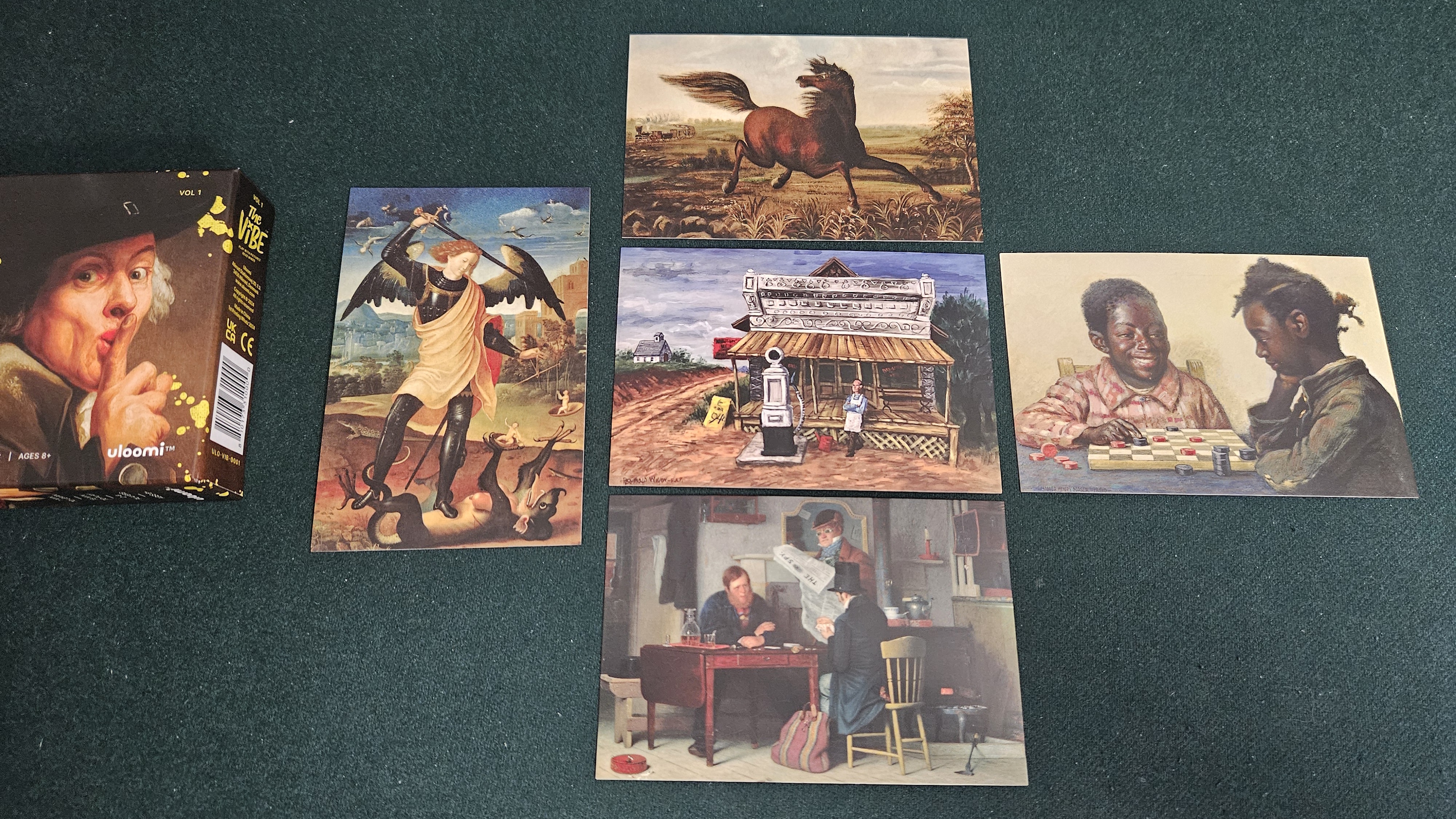
But then there’s The Vibe. Crafted by Jacob Jaskov nearly a full decade after he exploded onto the scene with Fog of Love, The Vibe is… how shall I put this… it contains some really great public-domain artwork. Joseph Ducreux, history’s finest self-portraitist, was a wonderful choice for the cover.

I considered trying to squeeze Ducreux into every image, but the gimmick fell flat rather quickly. A commentary on the game itself? Perhaps.

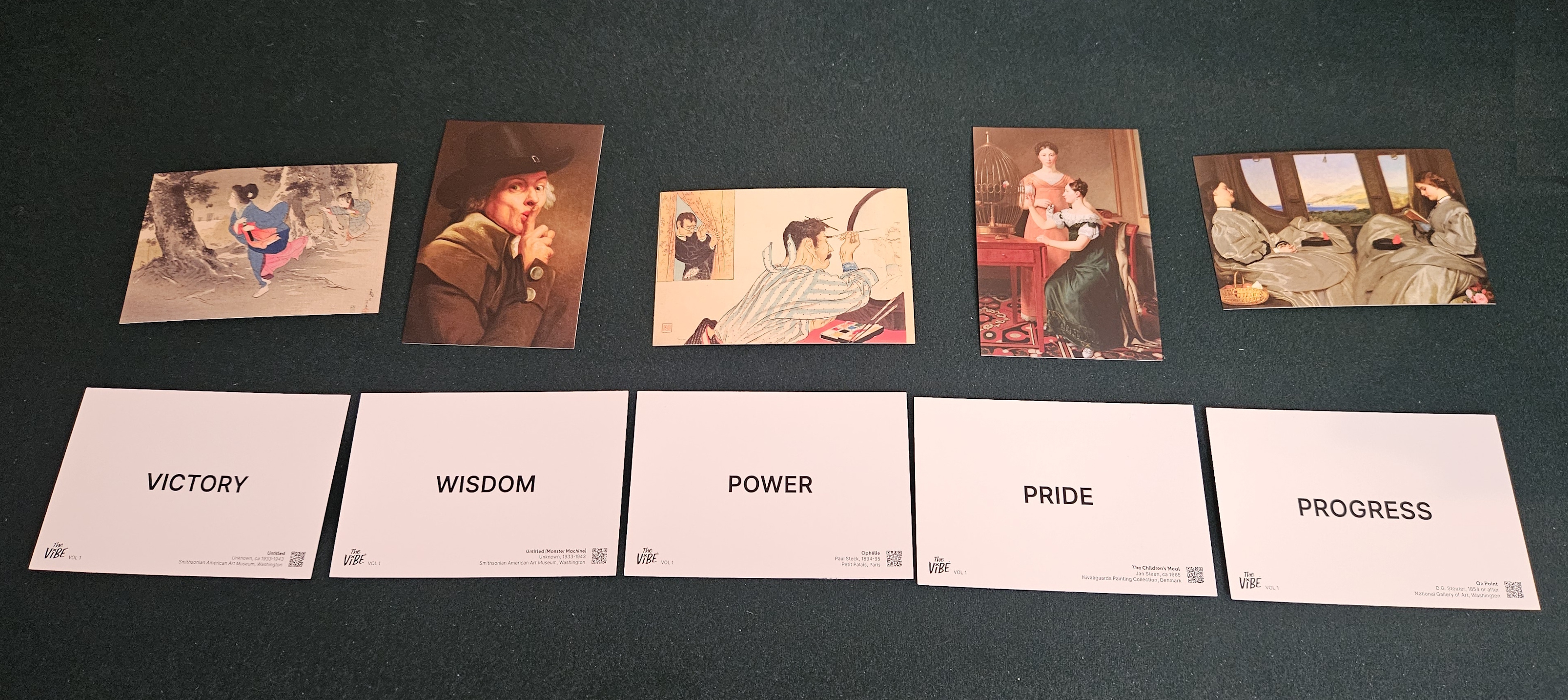
Which descriptor matches this sequence of images?

Really, I cannot applaud the art enough. The Vibe’s sixty-plus cards tour a virtual gallery, covering such works as Jacobus Doyer’s “Jan Van Speijk Debating Whether to Set Fire to the Gunpowder,” Eastman Johnson’s “The Pets,” and Unknown’s “Lover’s Eyes.” Actually, I think Unknown may be over-represented in this set. Give everyone else a chance, Unknown! Point is, opening the box presents the greatest hits from the postcard stands of a dozen art museum gift shops, drawing breathless exclamations of “Ooh, I think I remember this one!” from everyone at the table who took A.P. Art History twenty years ago.

On the back of each card, the art is titled, attributed, dated, and located in its modern museum or collection. There’s even a little barcode that promises to share more info, although at the time of writing they all lead to a generic page announcing that further details are forthcoming. Still, it’s a lovely collection. Poring over each image is a delight, and as a bonus it probably beats out any tourist shop in the world at per-postcard price. The last time I visited the Louvre, each one cost over a euro. What are the odds they’ve gotten cheaper?

But then I have to play the dang thing.

this is a board game picture about a picture about a board game

I’ve spent more time looking at the pictures than playing the game.

Picture this. In addition to the image title and author name and all that, the back of each card reveals a concept. Justice, perhaps. Loss. Passion. Surprise. On the table, you array five images, plus five more cards face-down to reveal a smattering of those concepts. Rebellion. Constipation. Transformation. Now somebody selects one of those ideas — in secret, mind you, in their brains, not aloud — and arranges the images in the order of how much they embody that idea. Left to right for all to see, from most to least. Grief. Relief. Justice. Oops, we’ve done that one. Shuffle it back into the deck. Betrayal. That’s better.

Now everybody else hems and haws and theorizes. Maybe Katsushika Hokusai’s “The Ghost of Kohada Koheiji” symbolizes anger? I mean, of course it does, but I mean right now, here, according to the five concepts on the table. But then we glance at the next image and it’s Brueghel’s “The Children of Planet Mercury.” Not very anger-y, y’know? Unless, perhaps, the arranger is struggling with their childhood faith, so any scene with a rooster-drawn chariots has certain connotations. Anger, then? Or maybe wisdom? The wisdom of the dead, the wisdom of rooster-drawn chariot-riders? Hmm. Humm.

It’s fine. Nothing incroyable, to pretend I know French. Too often it’s painfully obvious what the arranger intended to say; the rest of the time, it’s hopelessly obscure. Dixit was competitive, which ensured there were penalties for either extreme, the vague or the obvious. Mysterium was cooperative but muddied by the contrast between abstract images and concrete player actions. Here, the play is too straightforward to muster the necessary ambiguity.

Sure, there’s some of the usual apprehension that arises whenever we try to draw a box around things, to neatly cluster disparate ideas and images under shared headings. Is One Battle After Another just a social justice Star Wars? Is The Force Awakens just A New Hope for those who’ve misplaced their childlike sense of wonder? Is Star Wars just Vietnam? Are we just the Empire? Yes. I think so. Yes. I think I’m having more fun being discursive than actually talking about The Vibe. What I’m really trying to say is that the game wants to say something profound, only it doesn’t. It mostly prompts the occasional chuckle because somebody didn’t notice a detail when they examined the paintings.

There he is! My man.

The cross-four version is significantly more interesting.

There are sparks of brilliance in this game. Especially in the advanced mode. This sees the arranger making two rankings instead of just one, this time exhibited in cruciform. Now two of those five concepts are superimposed over the images, one of them situated so that it fulfills both criteria, but only as the middle spot in both rankings. This gives the enterprise a greater density, allowing for wider interpretations and broader misunderstandings. It isn’t enough to remake the game into something smarter, more like the artists it admires than the observers who flock to see their work, but it does nudge it a little closer to becoming an engaging plaything.

Sadly, The Vibe isn’t going to redefine the party game as we know it. I wish it would. I wish it had revolution in its bones. That way, we’d be guaranteed another few boxes of sixty postcards adorned with perfect examples of human creation. Instead, The Vibes is one of the finest packs of postcards ever assembled — and a weak imitation of better titles about the wiggly nature of perception and interpretation.


A complimentary copy of The Vibe was provided by the publisher.

(If what I’m doing at Space-Biff! is valuable to you in some way, please consider dropping by my Patreon campaign or Ko-fi. Right now, supporters can read about which films I watched in 2025, including some brief thoughts on each. That’s 44 movies! That’s a lot, unless you see, like, 45 or more movies in a year!)

❌