Lese-Ansicht

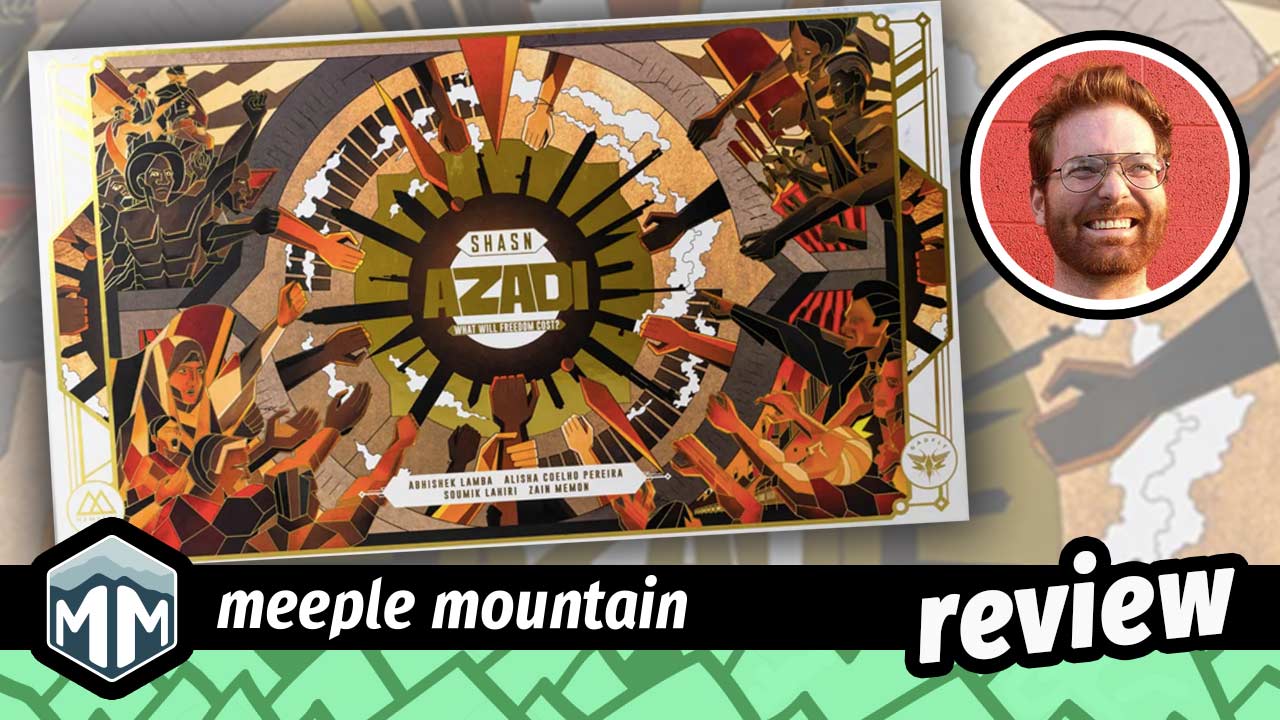
SHASN: AZADI Game Review

SHASN: AZADI is a box full of gimmicks. Those gimmicks are equal parts corny and high-minded, clever and ham-fisted. The area majority mechanism that is used to tally points is, frankly, pedestrian and simplistic. But, in spite of it all, the game is ambitious, and I admire games that are high-minded, even when that highmindedness has flaws.

Hegemony this ain’t

And that’s a good thing. AZADI is trying for something explicitly political—it is about the construction of political blocs more than it is about forcing players to accept the roles and bounds of its simulation. From where I sit, Hegemony: Lead Your Class to Victory’s conception of political economy and class is at best misguided and ignorant. AZADI doesn’t presume to gamify and fragment class struggle, casting players as some fake-o thinktank concept of the “middle class” and the “state.” Instead, players are a political ideologue constructing their own ideology out of what will best get them into the big chair. More on this in a moment.

The way you win AZADI is by forming majorities. In the version that I’m reviewing, you have a modular dual-layered map with holes in it for player pieces. Each map tile has a crosshair hole  (volatile area) and a number reading something like 11/21. Players get points for having majorities, which…

The post SHASN: AZADI Game Review appeared first on Meeple Mountain.
  •  

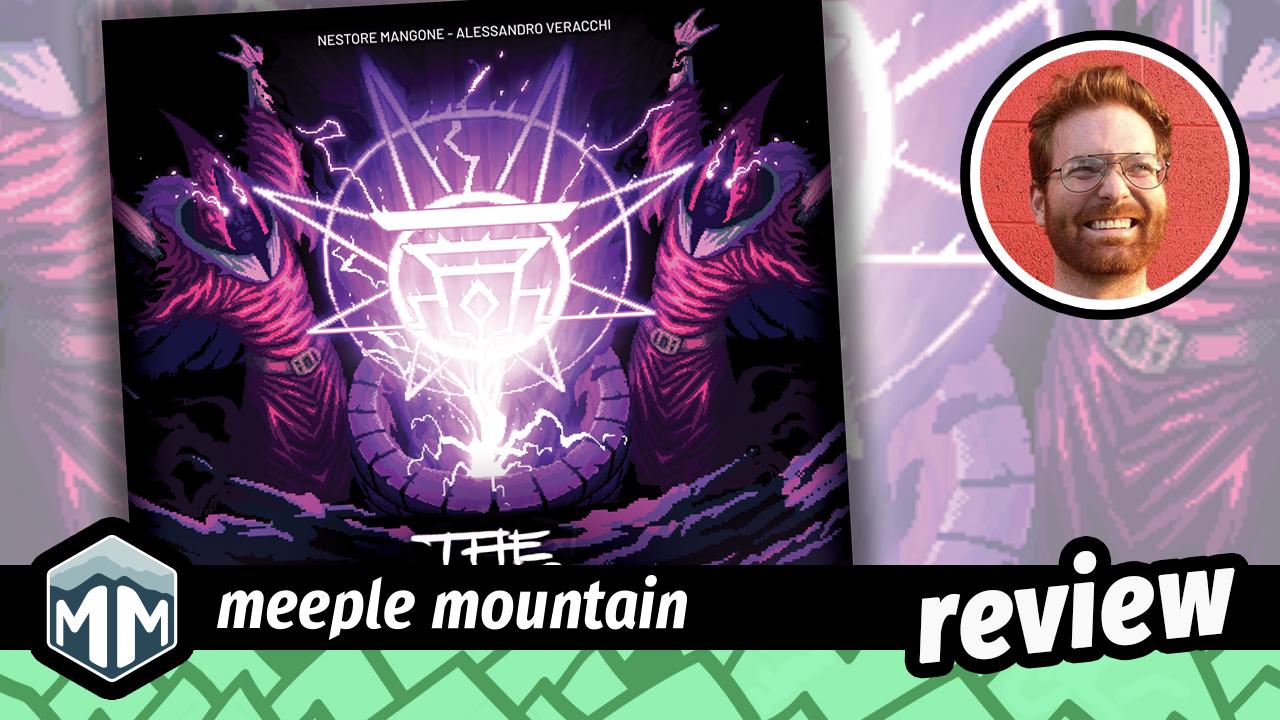
The Last Spell: The Board Game Review

The Last Spell: The Board Game is one of those rare games that I can be unapologetically negative about. Contrary to what you might think reading some of my reviews, while I can be critical, I generally try to understand what the design was attempting to accomplish and if it accomplished that goal.

The Last Spell: The Board Game successfully accomplishes the aim of adapting a video game into a board game at what appears to be a 1:1 level of fidelity. Unfortunately, because of this, there is almost zero reason to play the board game adaptation.

This game is a waste of time.

Is there a good thing, Thomas?

Well, the aesthetics are kinda cool. I guess?

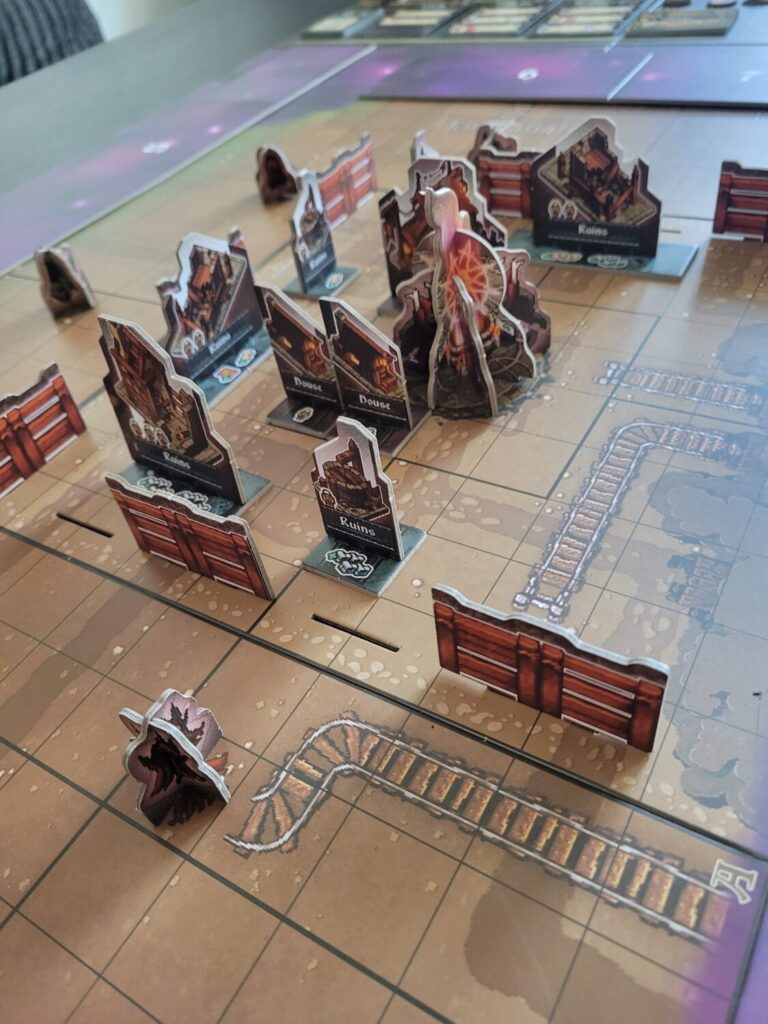
The premise of the game is that some wizards cast a big spell that killed nearly everything in the world, and the remnants group together in small towns bravely defending themselves against the dying of the light or some such thing. There’s purple mist. There’s a pixel art style that is very Dark Super Nintendo. Reminds me a bit of Super Boss Monster, and the text is reasonably easy to read. The miniatures for the player heroes are cool.

Unfortunately, beyond that, everything else is a travesty.

The game is a…

The post The Last Spell: The Board Game Review appeared first on Meeple Mountain.
  •  

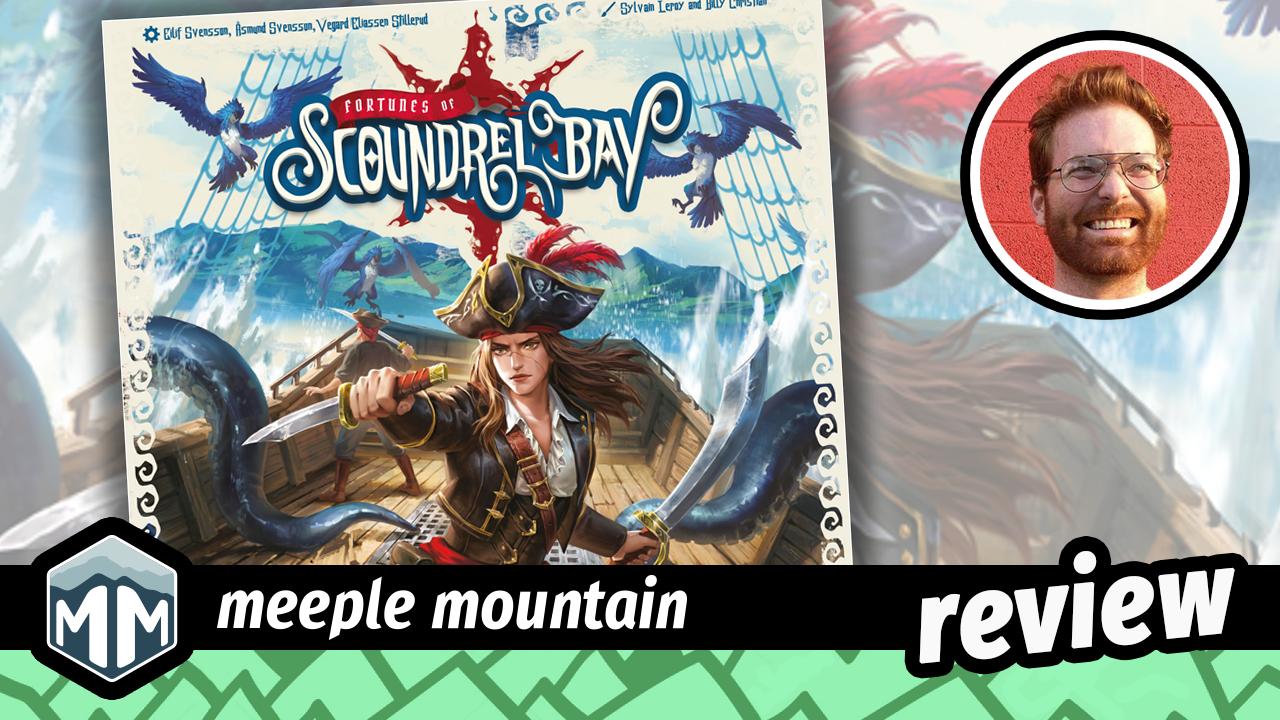
Fortunes of Scoundrel Bay Game Review

Fortunes of Scoundrel Bay has, on the surface, everything that makes me typically dismiss the latest eurogame from the assembly line: It’s clearly inspired by Alexander Pfister’s Maracaibo and Boonlake, it has questionably silly cover art, and maybe one of the most generic and forgettable “this is a pirate game” names of all time (honestly, we accidentally called it “Scoundrels of Fortune Bay, Bay of Scoundrels, Founders of Fortune Bay, etc.)

I was surprised to just have a great time with Fortunes of Scoundrel Bay (FoSB). It’s always a treat to be delighted by the mechanical flourishes in a design, and this one has plenty of thoughtful choices that come together in a surprisingly mid-weight package.

We’re pirates, yar, but we’re also homebodies

Fortunes of Scoundrel Bay has an interesting rhythm compared to many games that feature seafaring as a central theme. Instead of sail, sail, sail, you are often sailing 1 or 2 spaces, then you’re doing a bunch of different activities for several rounds, then you might sail another space. The arrangement of the board is the shape of a bay, rather than a large expanse of ocean, and this is reflected in how the game plays. You’re more of a pirate party barge than a terrifying group of cutthroats. These pirates love to hang.

The post Fortunes of Scoundrel Bay Game Review appeared first on Meeple Mountain.
  •  

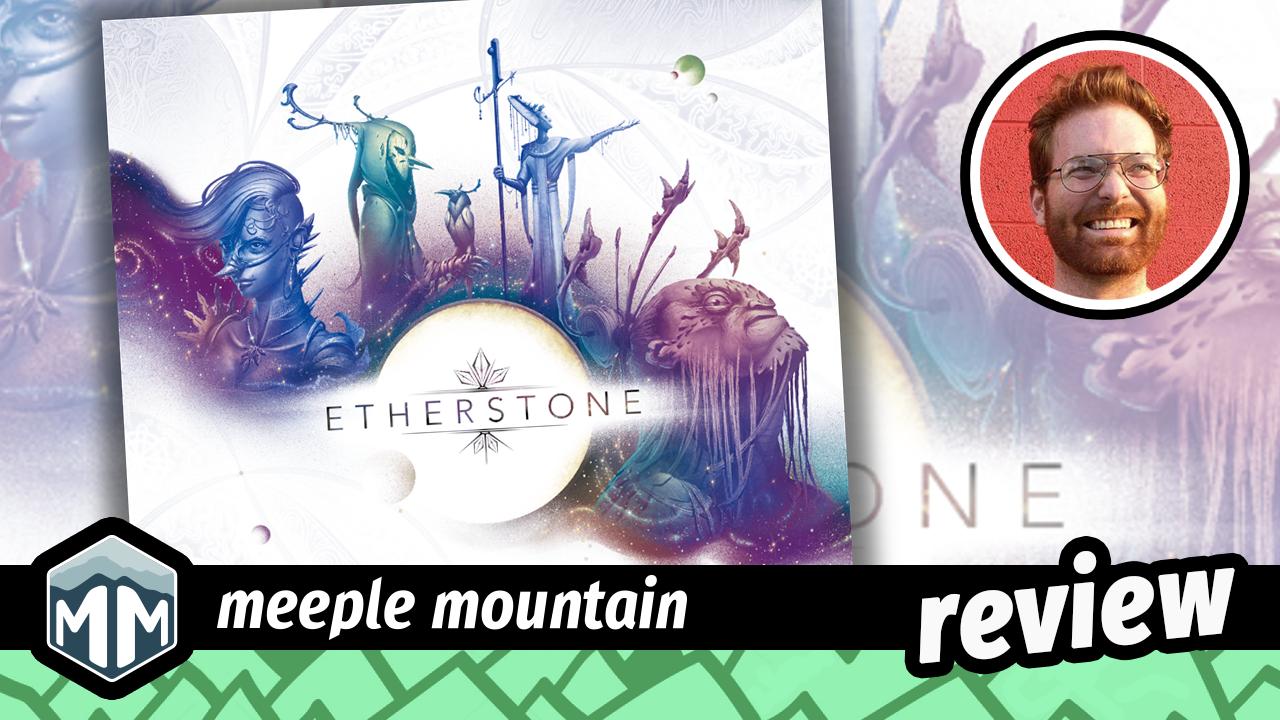
Etherstone Game Review

I’m a big fan of weird dueling games—Ortus Regni is one of my all timers—and if they allow for multiplayer silliness, all the better. Etherstone manages to be a complete product, thoughtful, novel, and at times, surprisingly clever. If nothing else, it gets props for not just being a blatant money-grab, instead offering a self-contained and compelling game that has a lot of depth.

The conceit

The lore of Etherstone is not that compelling, mainly because the art is so expressive that I don’t really end up caring much about whatever the story is. It’s evoking druids and biopunk—wild and crazy characters collecting various blobs of mana and using them to bring in more characters so you can battle shared threats, etc., etc.

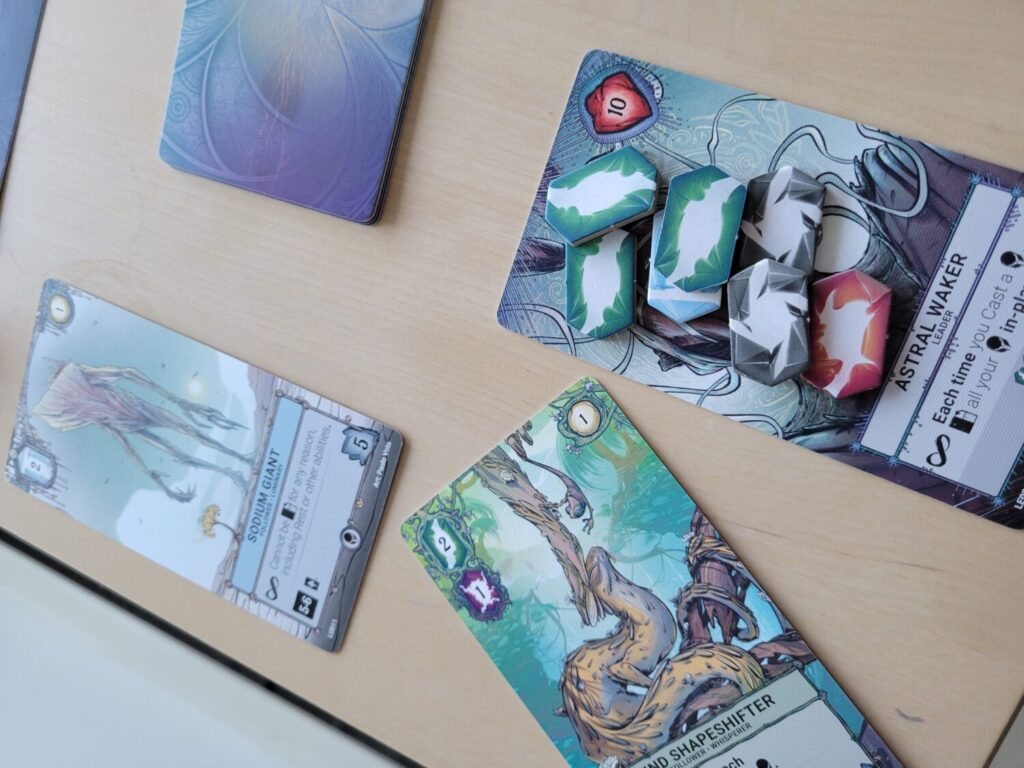
Mechanically, at the beginning of the game you’ll select a leader card from two that you’re dealt randomly. This will give you a starting distribution of resources. From there, you’ll draft seven cards from a large deck. Once you’ve done both of these things, it’s time to duel.

Etherstone captures one of my favorite underutilized mechanisms in gaming—the point buy. Though it’s a standard card draft that you see in many games, the fact that you’re only getting seven cards to play the entire session with…

The post Etherstone Game Review appeared first on Meeple Mountain.
  •  

Xenology Game Review

When I saw Xenology, I was immediately piqued because it reminded me of a friend’s prototype, a game about studying humanity from the perspective of an alien race. I wanted to see the track a different design mind might do with a similar idea—one of my favorite pastimes.

Unfortunately, Xenology doesn’t capture the weirdness of my friend’s game, nor does it capture the magic of the foundational eurogame elements it deploys across its own design. It’s a “do A so you can acquire C so you can do B and score some points” sort of game, nothing more, nothing less. It has the trappings of a much more interesting game, that resolves into something whose end result feels arbitrary and mushy, and ultimately just fades in with a broad swathe of other games in spite of the unique setting.

Alien bureaucrats demand RFPs

In the game, you’re an alien trying to advance in the alien hierarchy by studying human beings. The process by which you do this is reasonably straightforward.

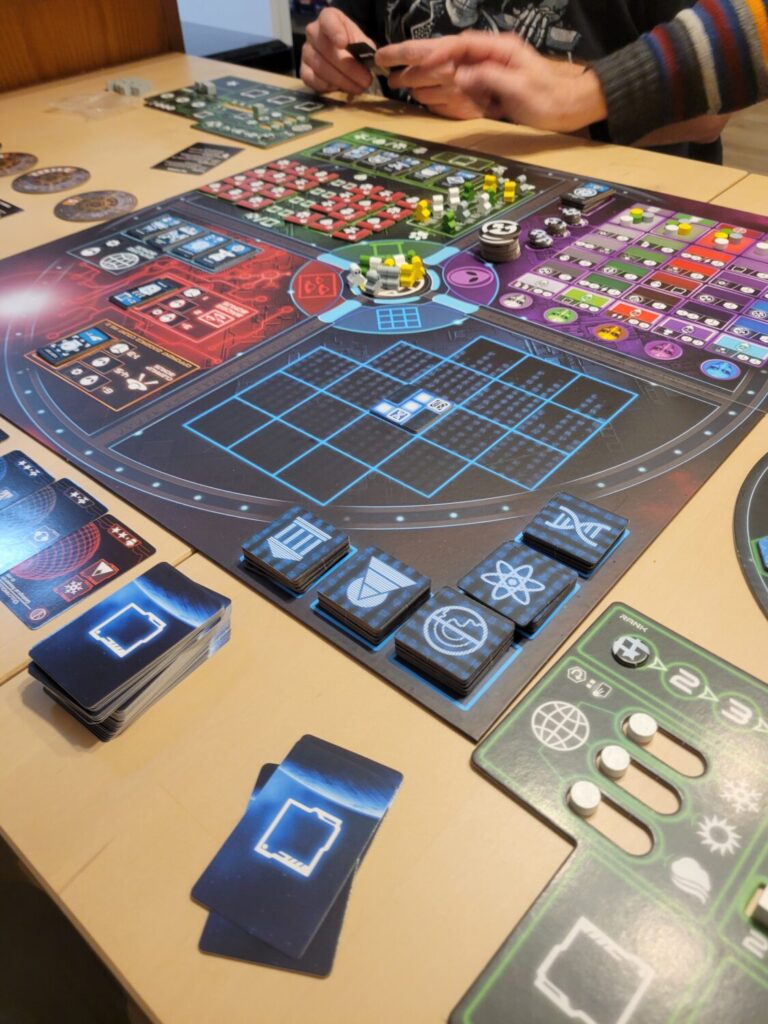
In the center of the board there’s an action cross of sorts, at the intersection a center action (Mission Control) with four actions that are arranged around it in an offset cross. You start with three alien meeples (cute)…

The post Xenology Game Review appeared first on Meeple Mountain.
  •  
❌