Lese-Ansicht

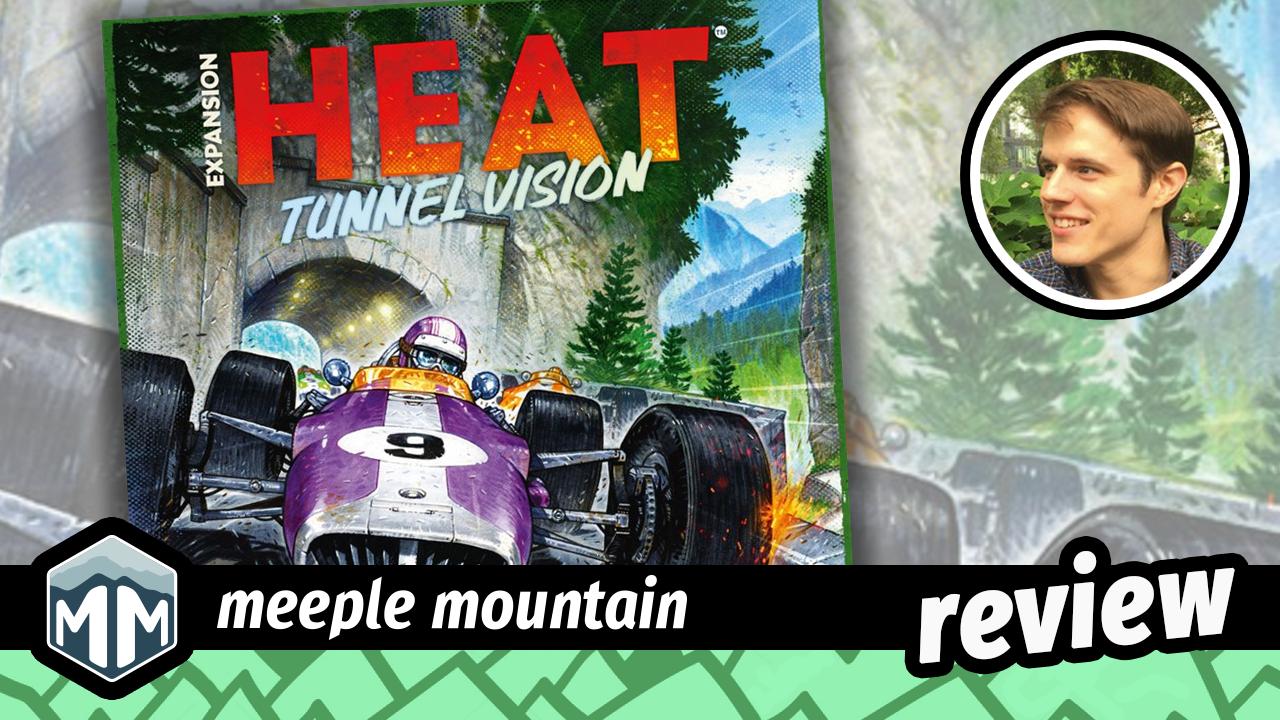
Heat: Tunnel Vision Expansion Review

I’ve always enjoyed Heat: Pedal to the Metal, Asger Aleksandrov Granerud and Daniel Skjold Pedersen’s smash racing game. It is a smart system. Managing the ebb and flow of your cards to suit the layout of whatever track you’re barreling down comes as close as I imagine a board game can get to feeling like a race. Any time I think about Heat, I imagine tapping the clutch and recklessly shifting up a gear as I head into a monster corner.

If I’ve always enjoyed Heat, it wasn’t until recently, when I finally got to play with car upgrades, that I came to love it. I agree with Mark’s review, the base game is a little too easy, a little too canned. When everybody has the same cards, the figurative course of a race feels predetermined. With the upgrades, that’s no longer true.

Consider my last race in España, where my friend Boris had drafted upgrades for a car that could make massive gains on straightaways, and I had taken a gamble on aggressive turns. I was worried that I had over-leveraged my position, since España has two mid-race stretches that I would need time to get through and Boris could cruise through in a matter of seconds.
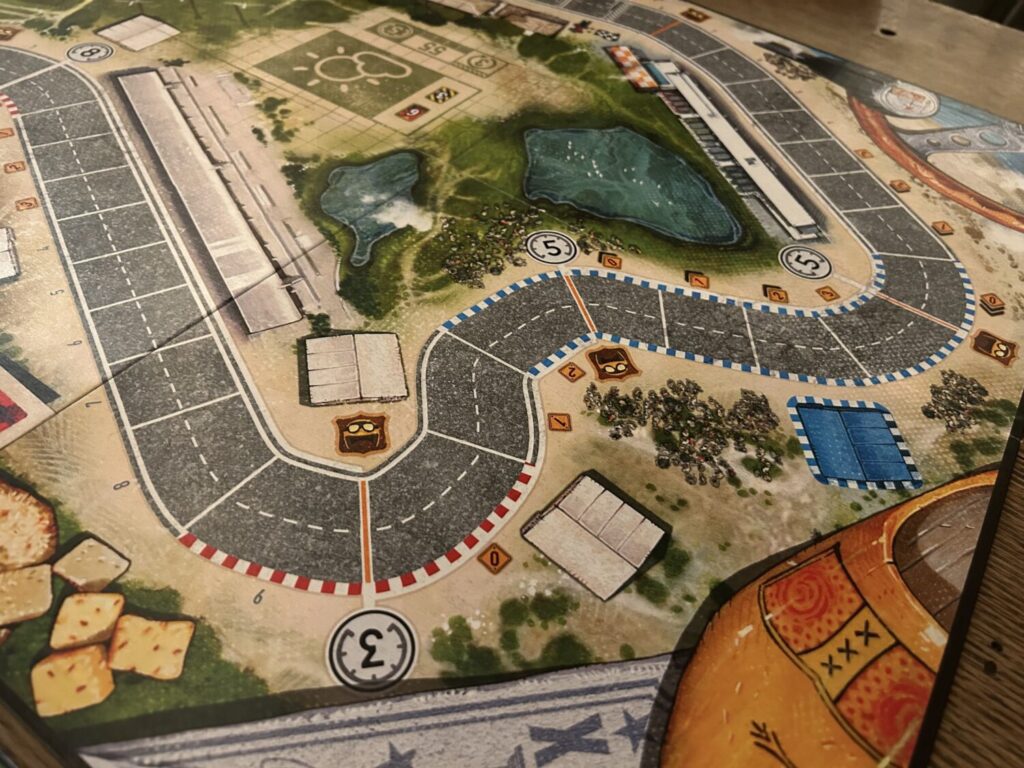
A board depicting a race…</p>
<p>The post <a href=Heat: Tunnel Vision Expansion Review appeared first on Meeple Mountain.
  •  

Ichor Game Review

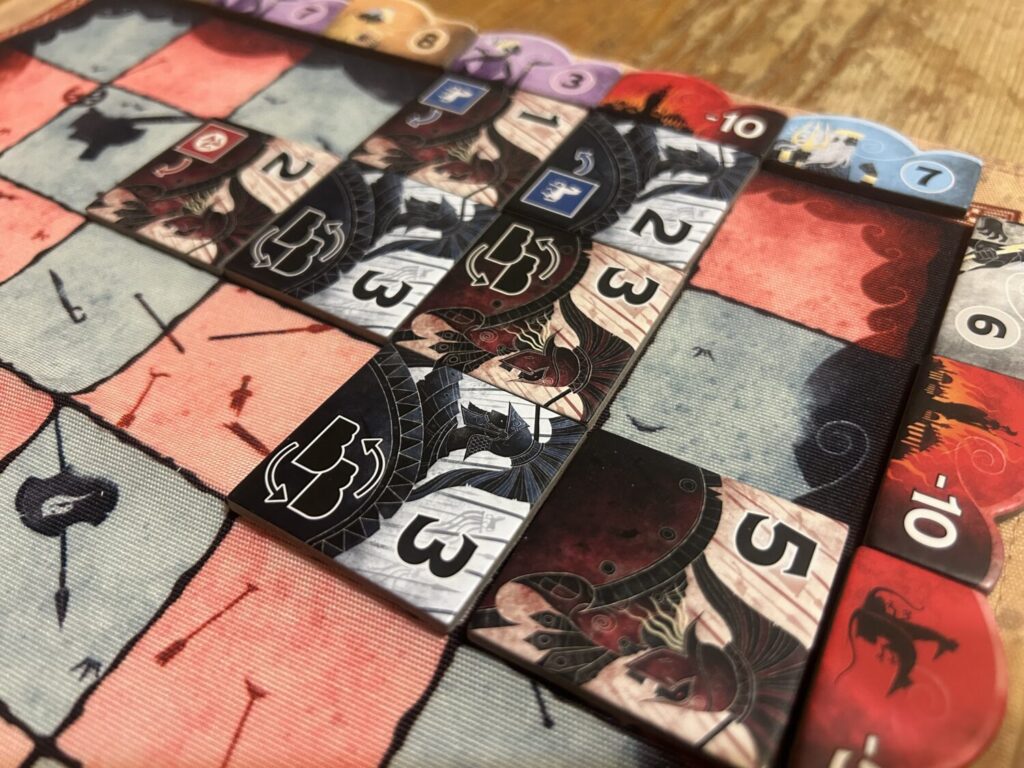
I went on a bit of a journey as I considered the place of Ichor in designer Reiner Knizia’s oeuvre. My first thought, the one that came to me instinctively, was “Knizia doing an abstract game? Interesting.” My operating definition of an abstract game is relatively narrow. Rather than considering any game that does not have an explicitly implied—I’m not sure “explicitly implied” is possible, but I’ve said it, so here we are—story or setting “abstract,” I only refer to games in the wide family of things like chess, mancala, or Santorini as “abstract.” For my personal heuristic, there seems to have to be determinism, movement of pieces, and some heavy spatial reasoning.

My second thought was, “What a stupid thought. If anything, it’s surprising he hasn’t done more of them.” Knizia’s games are nearly always abstract, or at least abstracted. We could get lost in the weeds of “All board games are abstracted,” but I’m not interested. Application denied. Some games strive for a relatively representational approach to their setting. Terraforming Mars has you accrue resources to develop technology and build settlements on Mars. Other games don’t. Lost Cities is about playing cards in increasing order. It is also somehow about archaeological expeditions.

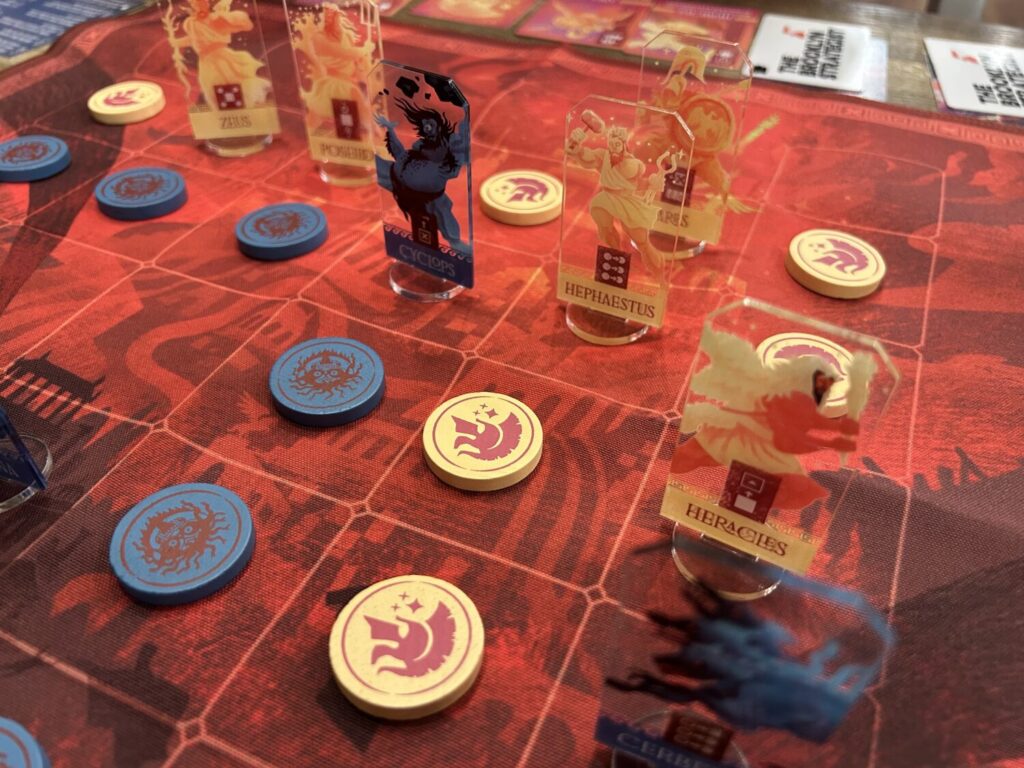
A red cloth board, divided into a 6 x…</p>
<p>The post <a href=Ichor Game Review appeared first on Meeple Mountain.
  •  

Iliad Game Review

Boy, what a game.

You’d think straightforward tile-layers would be tapped out by now, after thirty or forty years of design, but then you sit down and play something like Iliad, which feels as fresh as the day Carcassonne was born. It manages to be fresh and exciting while comfortable and familiar. That’s a hard combination to pull off.

Each player starts with an identical deck of tiles, which vary in value from [input needed] to 5. You take turns choosing a tile from your hand of two and placing it on any contiguous space in your color on the 5 x 5 checkerboard playmat. Whenever a row or column is filled up, the values of each player’s tiles are added together, and the winner chooses from one of the two bonus tiles that sit on either edge of the relevant region. The other player takes whatever is left. The game ends the moment both players have played all of their tiles.

A selection of square titles in red and blue on a cloth mat. Each tile includes an illustration of a Bronze-age soldier and a number.

That, believe it or not, is that, as far as the broad strokes are concerned. With just a little more information, you’re ready…

The post Iliad Game Review appeared first on Meeple Mountain.

  •  

Tango Game Review

Tango.

What a great name for this trick-taking game. It is, of course, a cute name, given that Tango is exclusively for two players. It takes two to tango, and Tango takes two. But it takes more than a cute joke to make a title great. “Tango” is also apt. David Harding and Matt Sims have designed a game that is all about coordination. Also, frankly, there is something a little sexy about this game when you and your opponent are both locked in.

Let’s get into position. Both players are dealt two hands of cards. One hand is subject to the usual standards, by which I mean you hold it in your hand. This is the hand-hand if you will, the pie activo. The other hand, the pie soporto, is set out on the table in front of you in five stacks of two, with the top cards face-up and the bottom cards face-down. This we will call the table-hand.

Now we can begin the footwork. A Basic to the Cross isn’t so complicated, so let’s try that: I play a card from my hand-hand, you play a card from your hand-hand that follows suit if possible, I play a card from my table-hand that follows suit if possible, and finally you play a card from your table-hand…

The post Tango Game Review appeared first on Meeple Mountain.

  •  
❌