
Normale Ansicht

Published — 05. September 2026 Meeple Mountain | The summit of board gaming

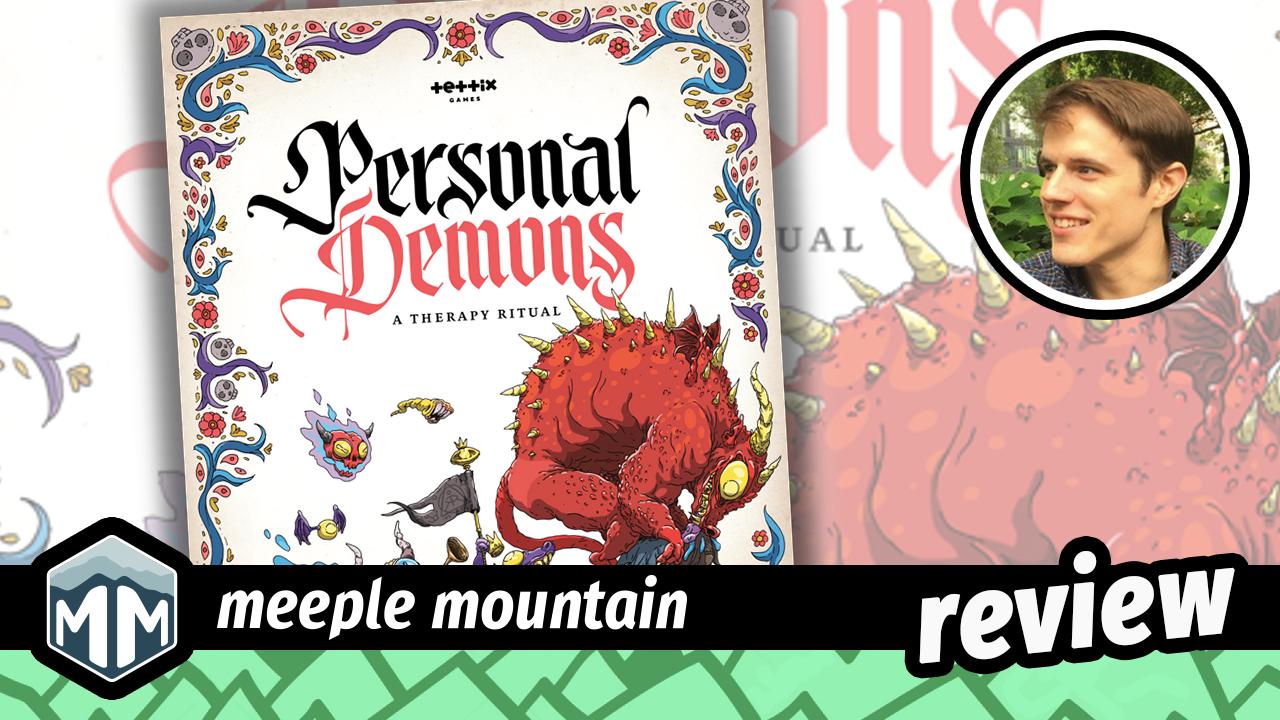
Personal Demons Game Review

When I first got into hobby gaming, Sushi Go was a hot new release, and it became a quick favorite. In the subsequent decade and change, I and millions of others have spent hours planning the perfect sushi plate. The game for which Philip Walker-Harding will be remembered is an easy game to love, especially for individuals to whom the frontiers of modern gaming are all but unknown. Sushi Go is just hooky enough to get people in, but simple enough that they can chat, smack-talk, and perform. Though I and many other hobbyists feel that we have moved beyond that game, it remains a dominant commercial force for a reason.

Be honest with me, my fellow hobbyists; don’t you miss it? Don’t you find yourself wishing you could get that same early buzz back, to revisit the times when something as simple as Sushi Go could set your brain alight? I do. I loved loving Sushi Go. I loved having that quick and reliable source of dopamine.

Personal Demons, from designer Judson Cowan of Deep Regrets fame, won’t quite take you back to those days, but it’ll get you close. The frictionless drafting of Sushi Go and its numerous imitators has been swapped out for something a little grittier, something gnarlier. Or maybe that’s just the illustrations?

The post Personal Demons Game Review appeared first on Meeple Mountain.
Published — 04. September 2026 Meeple Mountain | The summit of board gaming

Rush Hour Duel Game Review

The new Rush Hour puzzle entry, Rush Hour Duel, arrived at my doorstep recently. I know that, because I got a confirmation by e-mail that a package had just arrived. A couple hours later, I came up from my office cave in the basement to find that the game had not only arrived, but had already been opened and played three times by my wife and 12-year-old.

Yes, friends…Rush Hour Duel was reviewed before I could even open the box myself. This has never happened before, across more than 500 review copies received since I arrived here at Meeple Mountain.

“Dad, we got a new Rush Hour Duel game, and it’s great! I beat Mom three times,” said the 12-year-old when I came upstairs.

“Well, that is a review sample that came from the publisher.”

“Really? OK. Still, it’s great, I’m glad you picked it up.” Then they ran upstairs to slip into another evening activity.

I looked around, shocked, as if someone had just made off with my wallet. Those guys got Rush Hour Duel to the table before I could, I thought. What kind of respect is that?

For the uninitiated, Rush Hour is a game series from the Ravensburger toy puzzle arm known as ThinkFun. If you have kids and regularly visit your local Target, there’s…

The post Rush Hour Duel Game Review appeared first on Meeple Mountain.
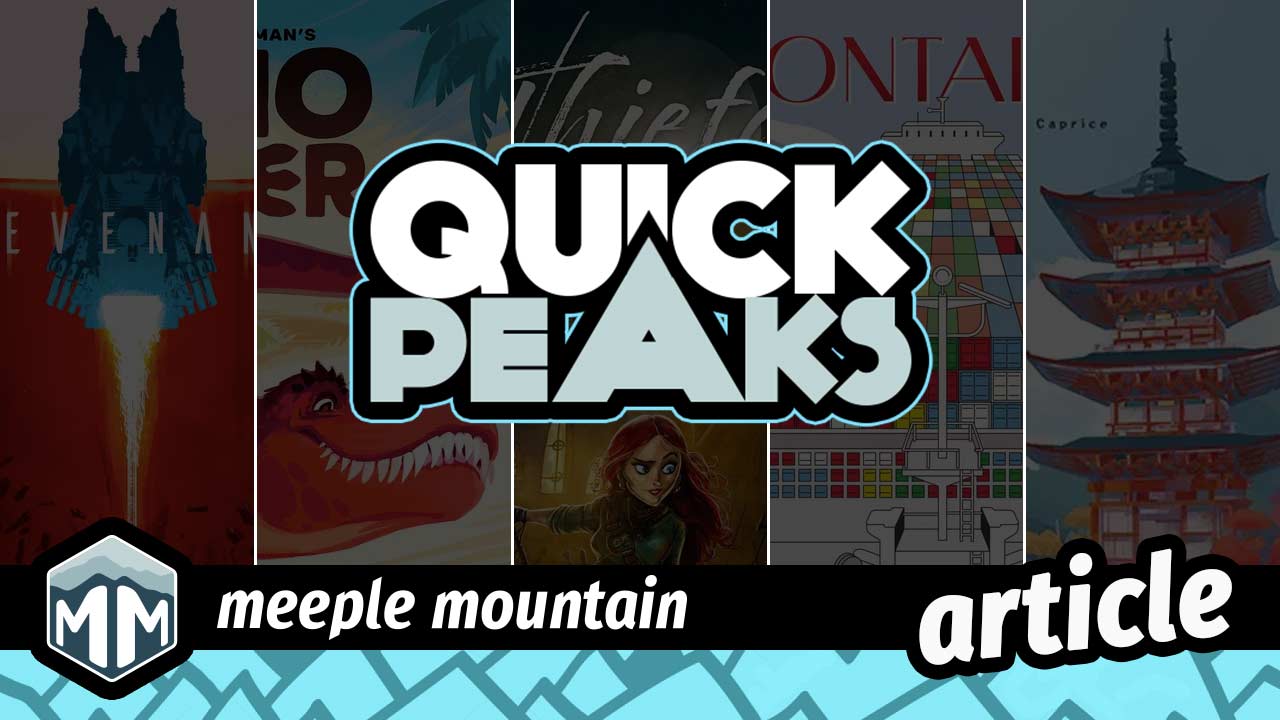
Quick Peaks – Revenant, Dino Racer, Thiefdom, Container, Four Gardens: The God’s Caprice

Revenant  - Thomas Wells

I’m a big fan of euros with a little bit of investment/stock game flair. Revenant seemed like a slam dunk. A Battlestar Galactica-esque (TV show, not board game) flotilla of ships flying through space, trying to survive whilst arguing ideology? Boom! Shared board space that is growing and shrinking as you play? Awesome! Tons of interesting and oblique powers? Yeah!

Each subsequent play of Revenant got me less excited to try again. I was teaching the game each time, and while the core systems are well-designed, the sheer volume of iconography and rules grit that gets granularly layered over each game system results in a near-impenetrable miasma of choices. Just during setup you have to parse icons on 8 different cards and determine how they’ll interact with your choices. On top of this, as the game goes on, player engines become more and more elaborate, and even at 3 players, turns can really drag. I just got tired of pulling the thing out to teach it. My running theory of Mindclash Games’s output is that they take a simple concept and layer so much procedural busywork over top that it gives the impression of complexity, rather than actually requiring complex thinking. Most of the decisions in the game…

The post Quick Peaks – Revenant, Dino Racer, Thiefdom, Container, Four Gardens: The God’s Caprice appeared first on Meeple Mountain.

Published — 03. September 2026 Meeple Mountain | The summit of board gaming

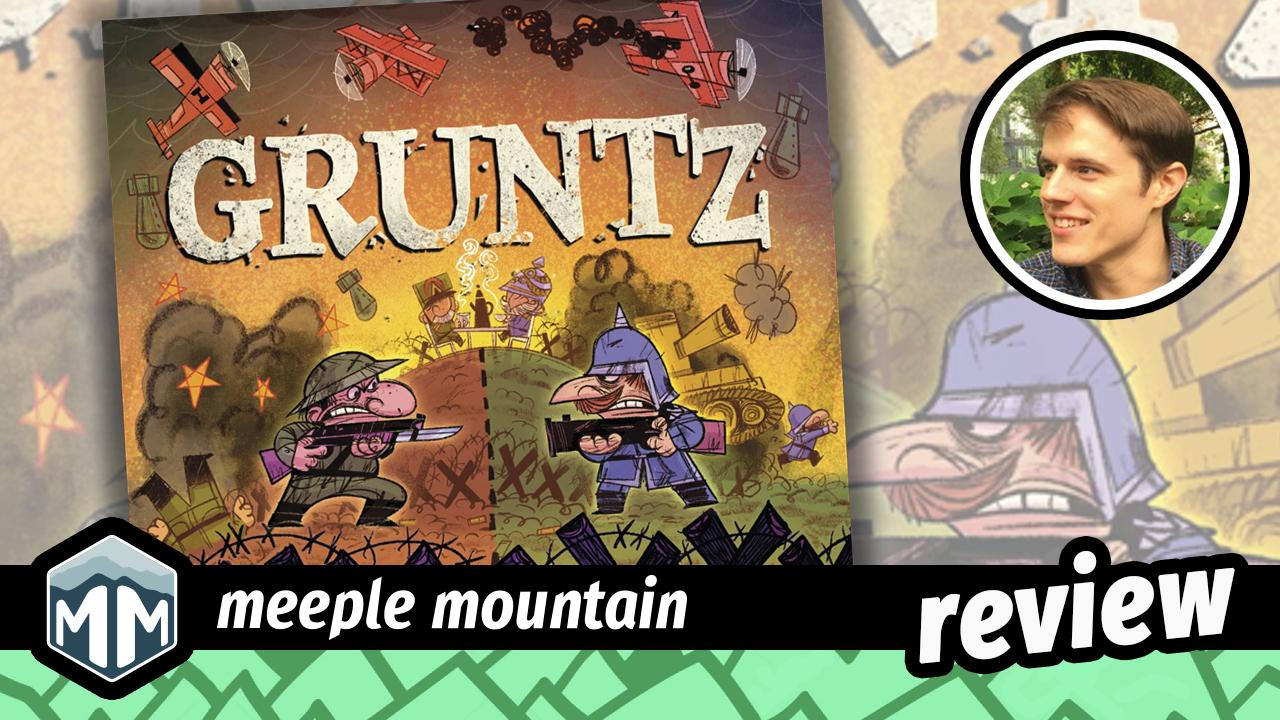
Gruntz Game Review

I didn’t quite know what to expect when I sat down with Gruntz, a small-box game for two from designer Carter Scott and publisher Allplay. I generally try to go into games as blind as possible so my expectations don’t affect my response, but I had gotten the idea somewhere that Gruntz would be a spiritual cousin to Warhammer 40k or Kill Team rather than in the lineage of chess. I was ready for something messier, muckier. Gruntz, it turns out, is dazzlingly clear and transparent.

You and your opponent take turns moving units and adding units, in that order, with the goal of controlling the three indicated spaces in the middle of the board. Controlling two at the end of your turn nets you a point. Controlling all three, should you be able to manage it, nets you two. In a brisk race to three points, either is a significant gain.

Units come in a variety of shapes and sizes, each with different capabilities. In order to capture those center spaces, you have to use your Gruntz and your Captain, humble units that can only move one space at a time and are defenseless in the face of enemy attacks. The vehicles, Tanks and Trucks and two types of airplanes, present a veritable rainbow of options.

The bulk…

The post Gruntz Game Review appeared first on Meeple Mountain.
Published — 02. September 2026 Meeple Mountain | The summit of board gaming

Shape It Game Review

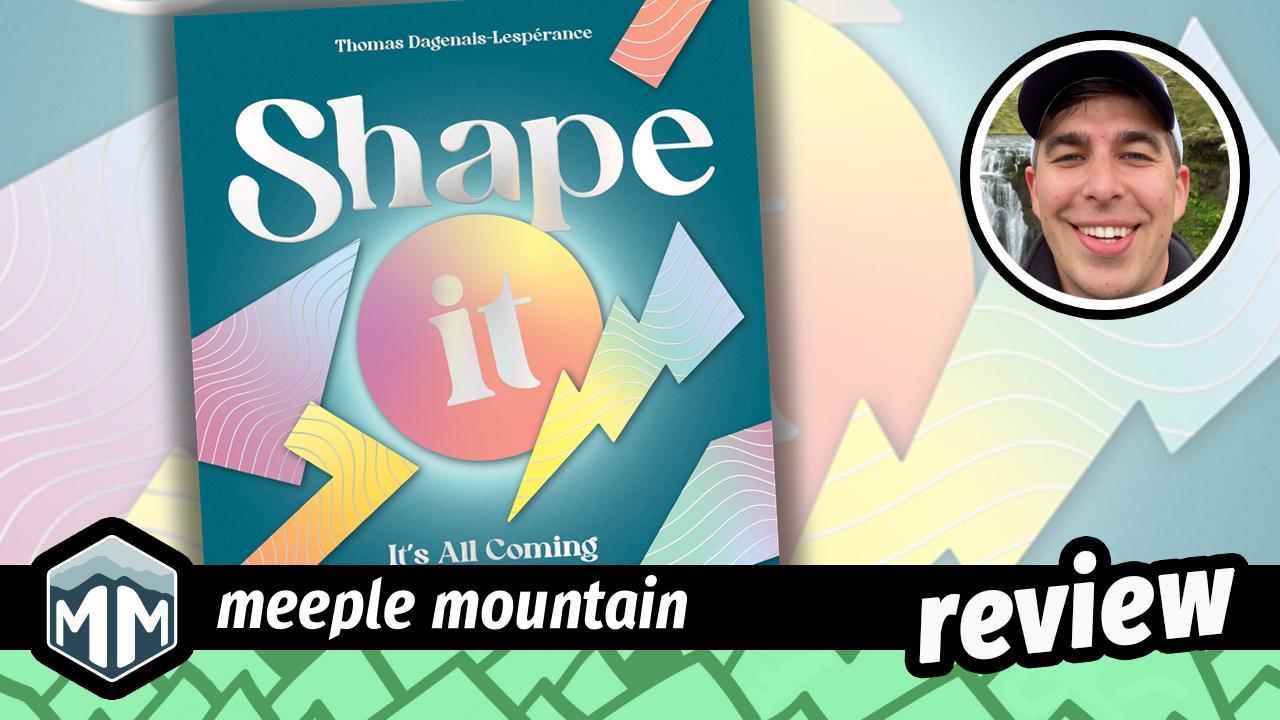
Cooperative games where the players can't discuss strategy aren't anything new, but they only work if everyone figuratively signs the social contract to make it work. In Shape it, published by Randolph, players move cardboard shapes around the table in hopes of everybody seeing the same artistic vision. Without speaking about the look you're going for, this can be a Herculean feat. But does it shape up to be a game worth bringing to the table? Let's find out.

Shape It: Taking Shape

In Shape it, players move seven abstract shapes to communicate a concept listed on one of the Word cards laid out on the table. The trick is that all the words could be correct; it's a matter of unified consensus among the group. If everybody can collectively earn 5 cards for guessing the same Word card before flipping the third Life/Failure token, they win!

To set up the game, players arrange 7 shapes in a circle in the center of the playing area. Starting with the green deck, 5 Word cards are drawn and laid out to form the starting Word pool from which inspiration will be drawn.

Every round, players may move a single shape. Pieces can be placed on top of other pieces or rotated around, but pieces that are underneath other pieces are…

The post Shape It Game Review appeared first on Meeple Mountain.
Published — 01. September 2026 Meeple Mountain | The summit of board gaming

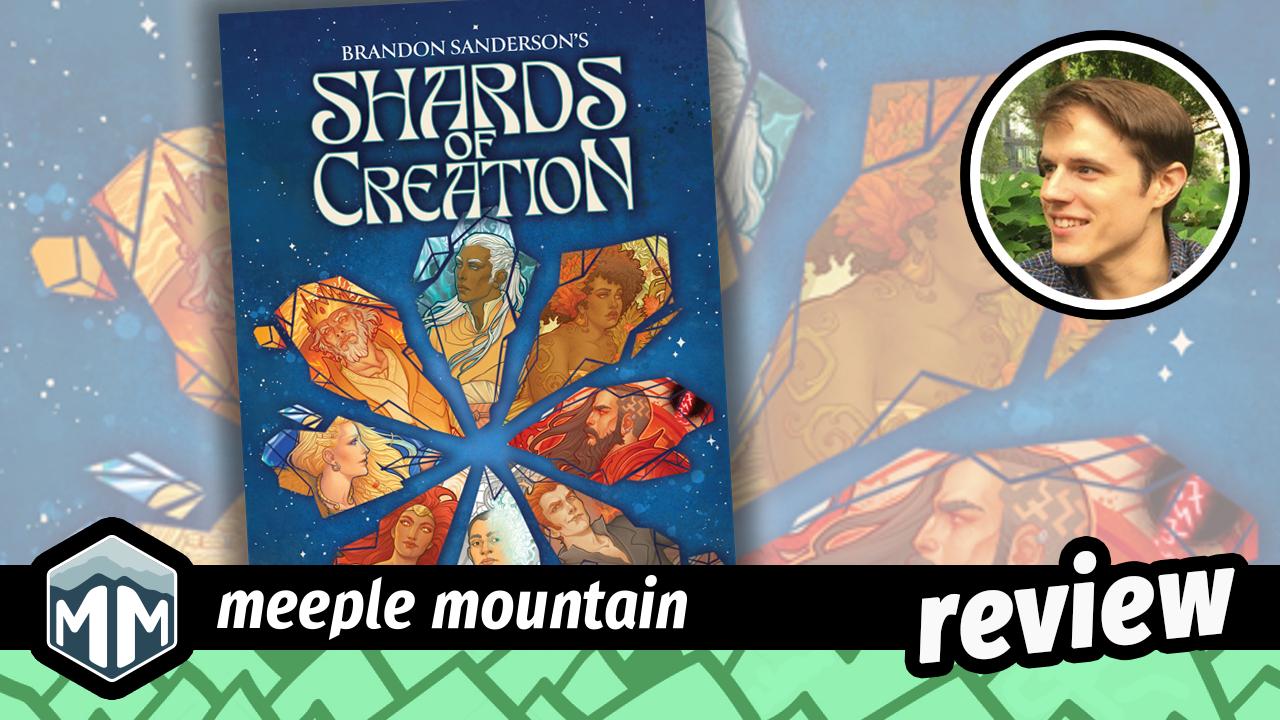
Shards of Creation Game Review

Shards of Creation is a great idea. I haven’t read any Brandon Sanderson, and my understanding of his magic system can be charitably described as patchwork—“There are…metals?”—but from what little I do know a trick-taking game in which each suit corresponds to a shard—don’t ask—is spot-on. That’s a wide-open design space that invites exploration and could result in some great ideas. It really could.

Shards of Creation is a trick-taking game with set collection tendencies. This immediately sets the game up for an uphill climb in my experience. There are eight suits in the box, five of which are randomly chosen for each game, and the winner of each trick selects one card to add to their scoring tableau. You score points for complete sets of the five suits and for numerous copies of the same suit.

The trump suit changes across each of the game’s three rounds, and each trump suit brings with it a corresponding rule. Autonomy cannot be led if you have any other choice. Cultivation allows players to draw extra cards at the start of the round before discarding back down to a normal hand size. Dominion forces the winner of each trick to score the highest rank. Many of the cards in each suit have their own powers as well. Some get…

The post Shards of Creation Game Review appeared first on Meeple Mountain.
Published — 31. August 2026 Meeple Mountain | The summit of board gaming

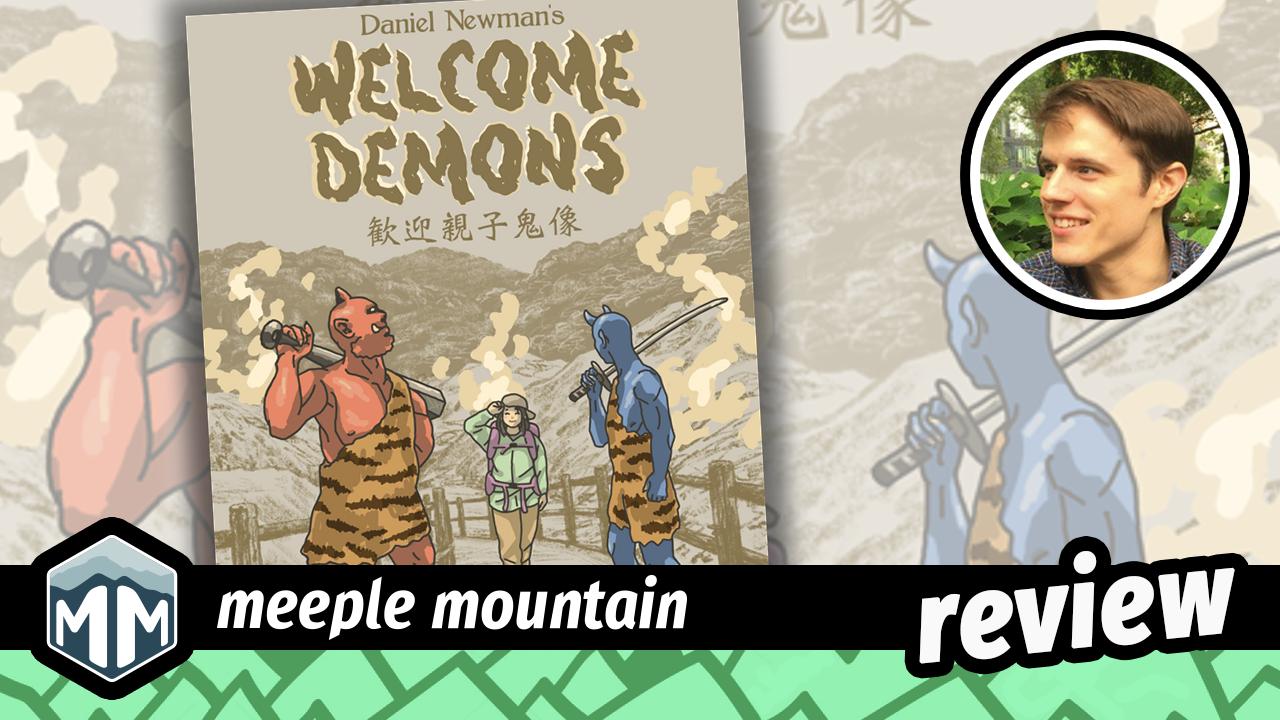
Welcome Demons Game Review

Welcome Demons is the latest game from designer Daniel Newman, who has a wide variety of titles under his belt. Some of you may also be familiar with his publishing company, New Mill Industries (NMI), which specializes in small and limited print runs of unusual card games. In the last couple of years, he and NMI have focused almost exclusively on shedding and trick-taking games. It is in that genre that he has created his two best-known designs, Gachapon Trick and the exquisite Mori.

I always think of NMI releases—and, by extension, Newman’s more recent designs—as equal parts game and formal experiment. The games don’t always work, but you’re unlikely to forget them. They’re always trying something. NMI’s catalogue of li’l weirdos runs deep, and with the release of Welcome Demons, it grows deeper still.

A basic meld, with a Visitor and two oni.

Oni Oni Oxen Free

Japanese mythology is full of stories concerning oni, these hulking demons that often live in caves and like to terrorize unfortunate people. You know ‘em. If I asked you to picture a typical Japanese demon, the picture that’d most likely pop in your mind is an oni. Most of the time, they’re evil. But the onsen town of Noboribetsu has…

The post Welcome Demons Game Review appeared first on Meeple Mountain.
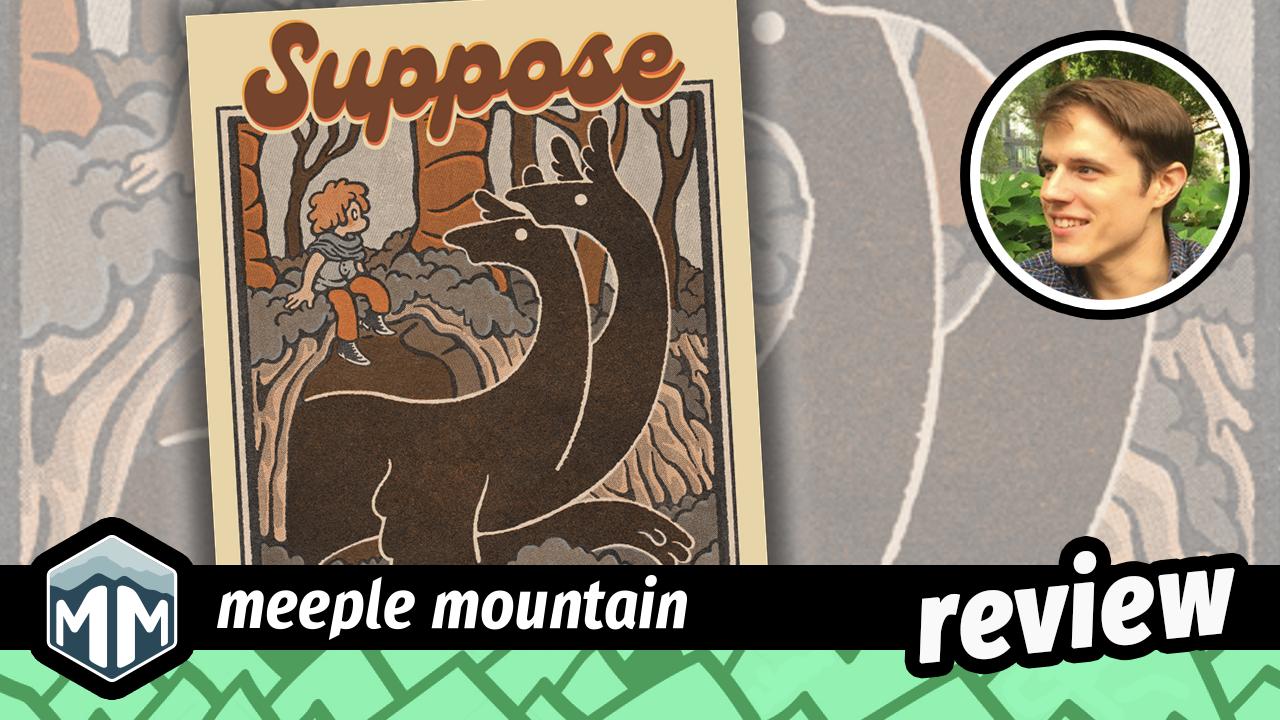
Suppose Game Review

I don’t feel entirely ready to talk about Suppose. I’ve played it the appropriate number of times (three or four), with different numbers of people (three or four), but I can’t seem to form an opinion of it. I’d spend more time with the game, but deadlines are what they are and here we stand on the precipice of a review in which the reviewer is uncertain. Maybe that’s a good thing.

Suppose, published in the U.S. by New Mill Industries, is a trick-taking game designed by Akinori Hagiwara. It is part of that strange subset of trick-taking games called may-follow, in which following the led suit is entirely optional. Here, that’s born out of necessity; you don’t know what most of your cards are.

During setup, each player is dealt a hand of cards. There is now careful—nay, meticulous—work to be done. First, if this is your first time playing, you have to gawk at H.B. Tyson’s gorgeous art. These wonderful surrealist concoctions have yet to go without comment in any of the games I’ve played. Once you’re done with the gawking, no rush, arrange the cards by suit, with the suits in whatever order you want. Within each suit, arrange the cards from highest to lowest.

There are a few games that incorporate these steps, minus the…

The post Suppose Game Review appeared first on Meeple Mountain.
Published — 30. August 2026 Meeple Mountain | The summit of board gaming

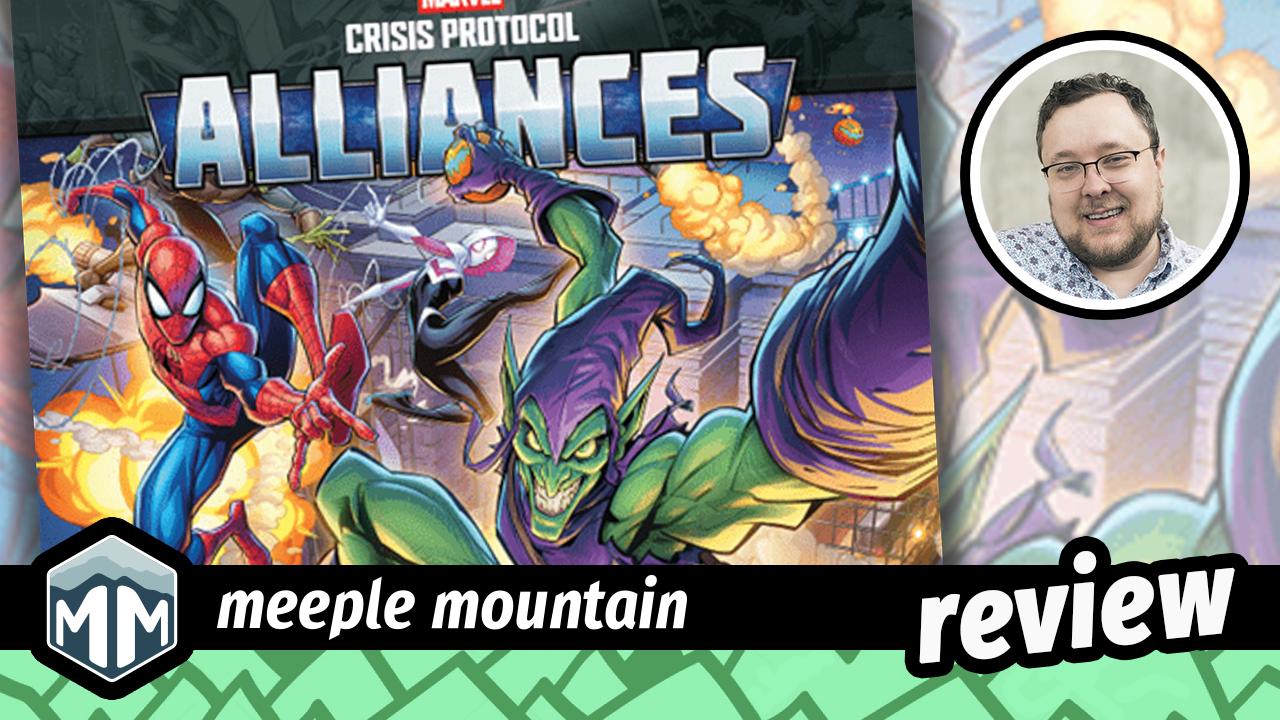
Marvel: Crisis Protocol Alliances – Night of the Goblin Review

Green Goblin Crashes the Party

When AMG first announced their foray into the world of board games with the Alliances line as a spinoff from Marvel: Crisis Protocol, I was… skeptical. After all, could they really take a game I love like MCP and spin it off into a team-based co-op experience? Could they capture what makes MCP work? I was dubious. While it’s not a perfect experience, I was completely pleasantly surprised by just how fun the game turned out to be. It’s just an absolute blast.

The quick idea is that each Alliances game brings together a team of four heroes, all with varying superpowers, to take down an iconic villain and their army of goons. Here, we get both Spider-Men (Peter Parker and Miles Morales) along with Black Cat and Ghost-Spider, teaming up to take down the Green Goblin. Together, they’ll fight him across three different chapters (two objective-based chapters and a final boss fight), each lasting roughly 90 minutes each. 

Getting started is simple - each player picks the character they want to be and picks a level 1 upgrade, and then you’re off. It’s worth noting that if you’re a solo player, this game is very easily playable in solo mode with you controlling all four characters, though I can’t speak to that experience…

The post Marvel: Crisis Protocol Alliances – Night of the Goblin Review appeared first on Meeple Mountain.
Published — 29. August 2026 Meeple Mountain | The summit of board gaming

Perennial Game Review

Growing Your Garden

In Perennial, your job is to grow the best prairie garden using tools and tiles. It's a tile-placement game with set collection, drafting, pattern building, and end game bonuses tied to how well you've placed your tiles. Are you thinking you've seen this before? Maybe in Cottage Garden, or Pergola

You haven't. 

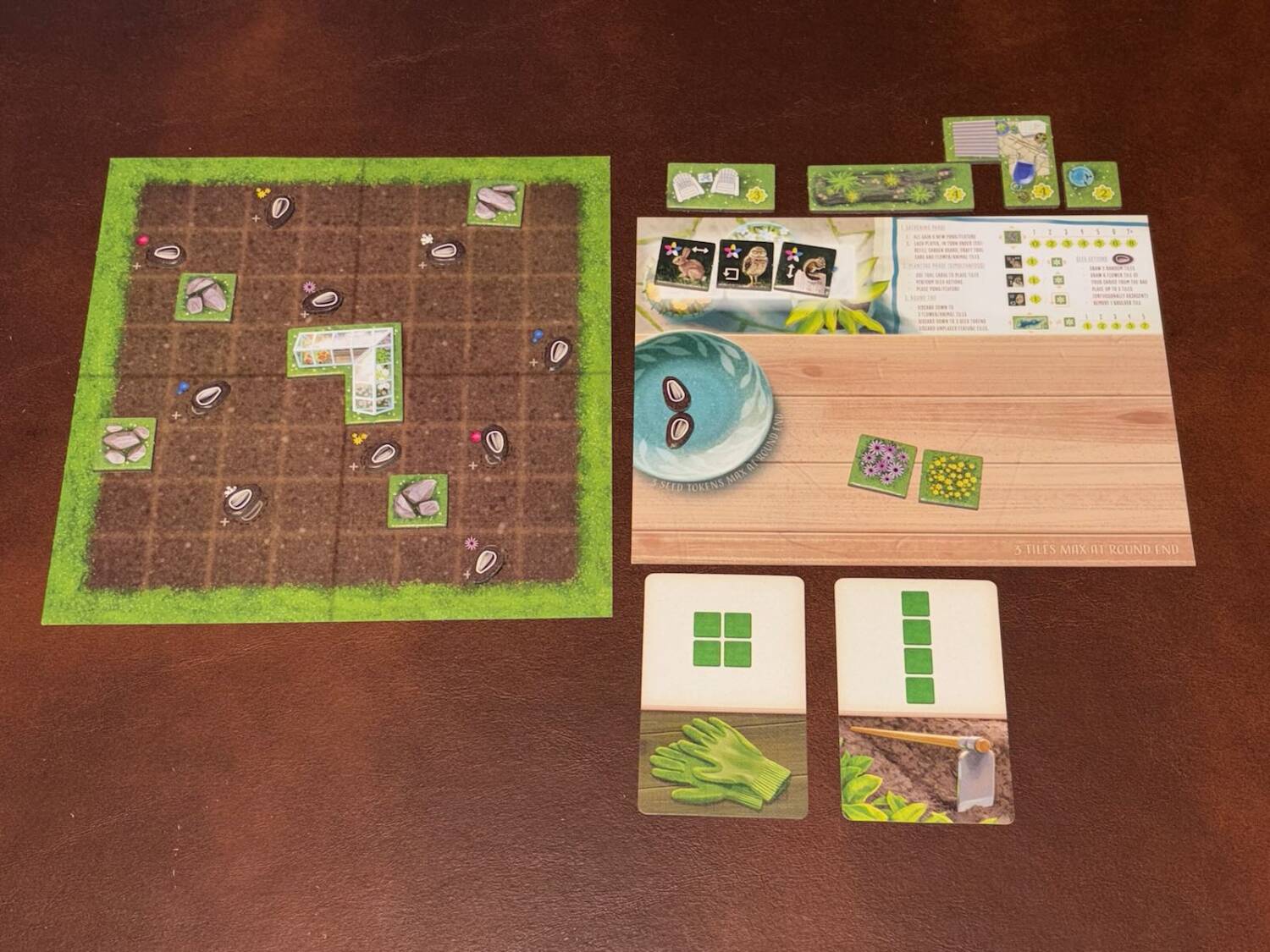
Oh, sure. The game starts in a standard fashion: Each player is given a Garden Board on which to place tiles, and a Workshop Board to store resources. The Garden Board is seeded with boulders which act as obstacles that you must build around, and actual seeds which can give you benefits later in the game. A greenhouse polyomino is placed in the middle as an anchor point for your first tile placement (and it acts as another obstacle). A square Central Drafting Board is randomly filled with Flower Tiles and Animal Tiles. Four Tool Cards are placed around the edges of the square. The Pond/Feature cards are shuffled and placed near the board, and the top one is turned over to reveal the first tile. Each player is given four Pond/Feature polyomino tiles that must be placed, one per round according to the card drawn from the deck. 

[caption id="attachment_333238" align="aligncenter" width="1500"]Individual Player Components

The post Perennial Game Review appeared first on Meeple Mountain.
Published — 28. August 2026 Meeple Mountain | The summit of board gaming

Witch Hunt 1649 Game Review

A number of cards on a wooden table. Some show items, some show health and reputation tracks.Witch Hunt 1649 is a bit of an unusual subject for Meeple Mountain. It is more of an educational game than anything else, which makes sense coming from Central Michigan University Press. This is not a game most are going to sit down and play with their families, nor is it likely to come up at a hobbyist night. Like Dan Bullock’s The Gods Will Have Blood, Witch Hunt 1649 is more concerned with creating a specific and rich emotion than it is with creating opportunities for decision making or laughs.

Martha McGill’s design is set during an outbreak of witchcraft accusations that plagued Scotland in the mid 17th century. Each player is a member of the community, and on every turn, some variety of misfortune befalls you. Your life is unpleasant, difficult, and neither McGill nor the event deck wants you to forget it. Even when things go well, they don’t. Your livestock have fared unusually well during a recent disease outbreak? Congratulations, people now suspect you of witchcraft. This is a game in which a lucky turn is one where it’s raining out and you decide to stay home.

After resolving an…

The post Witch Hunt 1649 Game Review appeared first on Meeple Mountain.

Published — 27. August 2026 Meeple Mountain | The summit of board gaming

Tales of the Arabian Nights Game Review

Very few games fall into a gray area for me, but Tales of the Arabian Nights does. It's easily one of the most random games I've played, and it often makes no sense at all. Still, it's given me some of my most memorable gaming moments, especially when my friends and I end up laughing at the absurd stories, like getting rewarded for beating up beggars.

​With so many old games coming back after years out of print, it's not surprising that Tales of the Arabian Nights is returning with a 40th Anniversary Edition. It's a clear sign that we're all getting older.

A New Genie in Town

​But this isn't just a basic reprint, a phrase that gets slapped on far too many of these revivals. Now there's a solo mode, some status cards have been changed or removed, and getting thrown in prison is no longer a death sentence. Many of the passages have been rewritten, though they still hold on to the harsh themes the original Arabian stories were built.

​Even with the updates, the main gameplay is still about earning destiny and story points by exploring, finding encounters, and interacting with them. City cards give you some direction by offering bonuses if you visit them, and…

The post Tales of the Arabian Nights Game Review appeared first on Meeple Mountain.
Published — 26. August 2026 Meeple Mountain | The summit of board gaming

One Round? Game Review

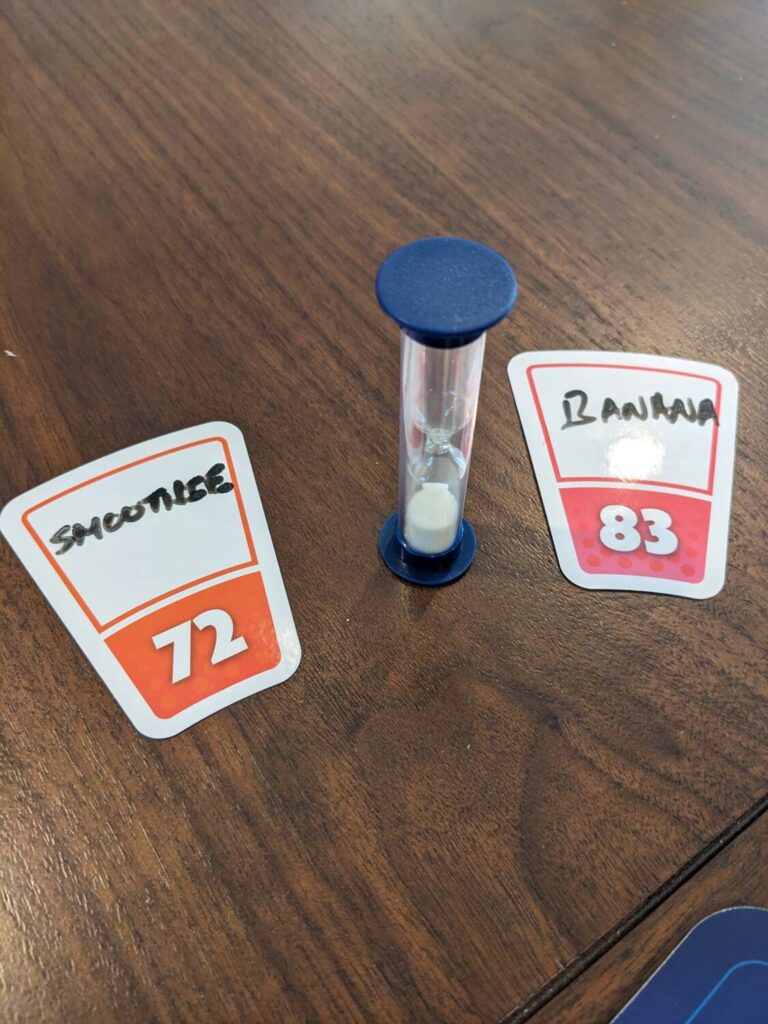
Devir sent a copy of their new party game, One Round?, and I’ll admit that the first pass of the rules didn’t get me all hot and bothered.

In fact, even when I taught the game to three different groups over the course of a week, all of those players also looked at me suspiciously as I finished the teach. “Another word game, eh?” was the response of my wife; One Round? didn’t look like much when I whipped it out for these audiences.

But across three plays (at two, three, and four players), I’m surprised to say that One Round? earned its street cred thanks to a setup that differentiates itself just enough from some of the heavyweights in the genre. If you can find a copy for the right price, I highly recommend adding this to your party game collection.

It’s So Just a Single-Clue Code Word Game

There’s no getting around it: the word association game space is really jammed right now.

If you’ve been in “The Hobby” for the last 10+ years, you’ve already got copies of some, if not all, of the following games in your house: Codenames, So Clover, Just One, Wavelength, Letter Jam, Decrypto, Phantom…

The post One Round? Game Review appeared first on Meeple Mountain.
Published — 25. August 2026 Meeple Mountain | The summit of board gaming

Ipso Game Review

I appreciate that the game Ipso (2026, Gigamic) reveals itself immediately…because it is not great.

That’s not to say that it’s a complete negative, though. A deck of 90 cards, spread across five suits (and, importantly, NOT in numerical order) is used to seed the play area. Each player gets 14 cards dealt face down, which are then used to build a pyramid. A 15th card, represented by a single, bright, very large star, sits at the top of this pyramid. A market of two cards from the deck is built in the center of the play area, then the game begins.

On a turn, players select one of the two face-up market cards to replace one of their face down pyramid cards. That replaced card is never technically owned by the pyramid’s owner; it is simply moved, face-up, into the market, so that the next player always has two cards to choose from.

Choose your face-up card wisely, because scoring is tied to three simple elements. The first is the easiest: at the end of the game, only rows that feature cards in ascending order will score any points. Second, if the row is eligible to score, each card is worth a single point, but if the entire row is made up of only one color, each card…

The post Ipso Game Review appeared first on Meeple Mountain.
Published — 24. August 2026 Meeple Mountain | The summit of board gaming

Haunted Mouse Game Review

Haunted Mouse is a hard game to write about, because it falls perfectly into the gap between the good, about which there is much to say, and the bad, about which there is often even more to say. Jonathan Cox’s shedding game, a reimplementation of his own Spring Cleaning, is a perfectly alright time at the table. People talk about their days, the weather, the latest gossip. The game goes on quietly around this, undemanding and unobtrusive.

The goal of the game is to empty your hand by playing sets of increasing size and strength. Every trick-taking and shedding game has its gimmick(s), and Haunted Mouse is no exception. It joins the rapidly expanding field of shedding games in which you cannot rearrange the cards in your hand, and are forced to make sets out of adjacent cards. This has been used to marvelous effect in Scout, Jungo, and dnup, and works just fine in Haunted Mouse.

Cards on a wooden table.

A common mechanic between these games, though it works differently in each, is the ability to add cards to your hand, putting them anywhere you want. In Haunted Mouse, this idea is combined with allowing players to shed troublesome singletons from their hands to make…

The post Haunted Mouse Game Review appeared first on Meeple Mountain.
Published — 23. August 2026 Meeple Mountain | The summit of board gaming

Rocking Raft Game Review

“I wish we still had our copy of Flotsam Float.”

This was the response from one of my kids after my third and final review play of the new family-weight title from our friends at Horrible Guild, Rocking Raft. Flotsam Float—a game so nice we actually reviewed it twice—was a big hit at my house for a couple years, in part because it was so much fun to stack things on raft and play through one of the best dexterity challenge games I’ve had the chance to review here at Meeple Mountain.

Both my kids and I thought that Rocking Raft might recreate some of that fantastic Flotsam Float magic. Sadly, we were wrong.

Gemboree

Rocking Raft is a dexterity-based order fulfillment game for 2-4 players that plays in 10-20 minutes. For this review, I played Rocking Raft once at four players with my review group, then twice with my 12-year-old, the latter because our two games took about 15 minutes in total.

The raft in question is a 3x3 grid of space on a square cardboard raft, supported by a plastic base with four flat edges. It stands comfortably in the middle of any play area. In the grid, a number of small gems in four…

The post Rocking Raft Game Review appeared first on Meeple Mountain.
Published — 22. August 2026 Meeple Mountain | The summit of board gaming

Maestro Game Review

The cover for the new strategy game Maestro is a fun one: it’s the early 1500s, and the painter Leonardo Da Vinci is staring menacingly at the sculptor Michelangelo as they work in their respective workshops. The game’s manual details more about this famous feud between star artists, and in the game, players take on roles in the workshop of one of these two Renaissance geniuses as they compete to get centerpieces into Italy’s most famous galleries.

I learned about Maestro during our meeting last year with the team at publisher Board&Dice, admittedly one of my favorite publishers because they have released a string of bangers over the course of their company’s history. A few are some of my all-time favorites—Tiletum, Nucleum, and Teotihuacan: City of Gods—while a half-dozen others include titles I am happy to play, from Reef Project to Tabannusi: Builders of Ur to last year’s Tianxia.

This means that any time a new Board&Dice game is announced, I have to at least know if it will eventually make my “shelf of fame.” Maestro had a great cover, and it was designed by Andrea Robbiani, the co-designer of ANTS and Timeless Journeys: The Italian Grand Tour. On its own, that’s not an endorsement; I was not a fan of…

The post Maestro Game Review appeared first on Meeple Mountain.
Published — 21. August 2026 Meeple Mountain | The summit of board gaming

The Monolith Game Review

We did it, folks. Humanity has invented—nay, perfected—time travel. They said it couldn’t be done. They were wrong. The scientists at publisher Plaid Hat Games figured it out. It’s less complicated than I’d have expected time travel to be, requiring only that you set up a copy of The Monolith and sit down. The technology also seems to be fairly limited in its applications, since The Monolith only has the ability to transport players back to the summer of 1993.

Picture it: Fireball Island is in the rearview mirror, the Euro revolution is but a faint glimmer on the horizon, and sweet sweet Ameritrash rules the roost. There’s wood panelling on the walls, left over from when your parents had the basement finished in ’86. Breathe in the aroma of freshly-toasted Bagel Bites, taste the corona of blue Squeezeit around your lips. Hear the faint sounds of “I’ve Been Thinking About You” and Mary Chapin Carpenter’s cover of “Passionate Kisses” waft in from a nearby radio. That’s The Monolith.

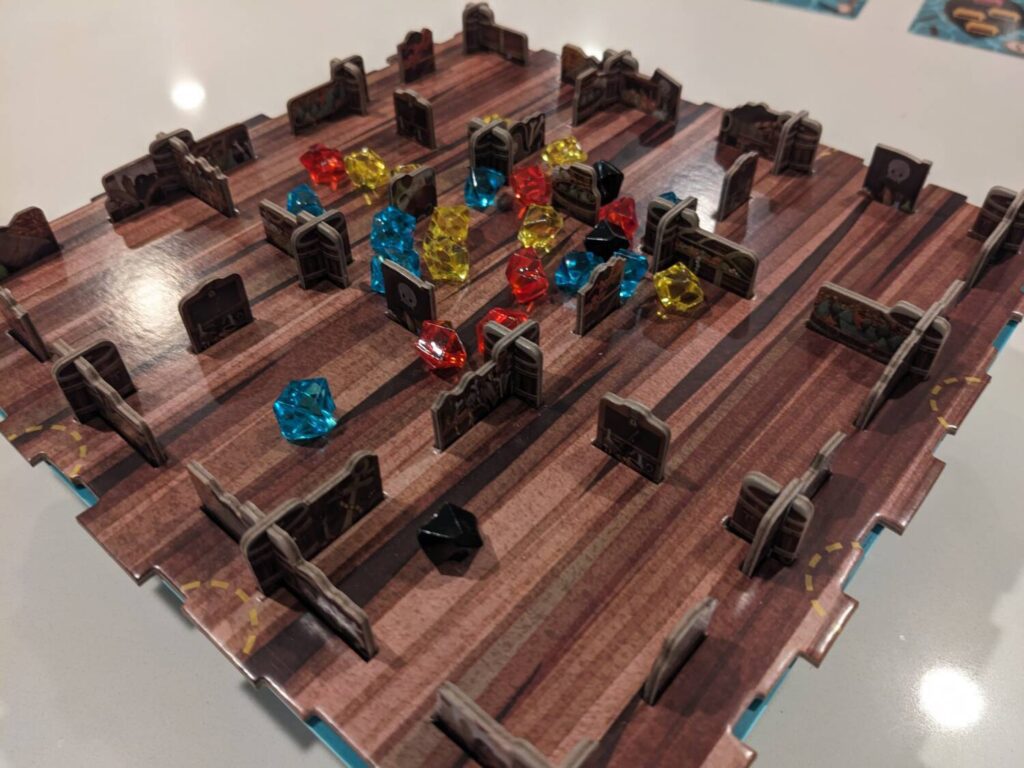
A board covered in minnies, with a giant black tower in the middle.

Everything about The Monolith as an object was seemingly designed to evoke a previous era, if not always the same one. The table presence is the maximalism of…

The post The Monolith Game Review appeared first on Meeple Mountain.

Quick Peaks – Inca Empire: The Card Game, ARDEVUR: The Game of Resources, Exactly as Planned , Grimcoven, Vanuatu (first edition)

Inca Empire: The Card Game - Thomas Wells

At some point I’ll have to review Inca Empire, as it’s a pretty neat take on a cube rail, shared incentive track-building game. Inca Empire: The Card Game, in the storied tradition of X: The Card Game, is less than a pale imitation of its predecessor. It’s a game with some novel mechanisms, but because of turn order problems and really uninteresting cardplay, because essentially Inca Empire: Munchkin Edition

You have a hand of multiuse cards, which can be used for four things. You expand the shared card tableau, using cardboard chits to mark routes you claim. You’re limited by available chits, Hansa Teutonica style. You can play one-shot cards, you can add cards to an income tableau for yourself (called terraces) or you can play a trade agreement card between you and another player, which give you both a special rule and you an extra action at the end of the round. To win, you’re trying to plot down tons of chits and score the best 3 of 5 secret goal cards at end of game. 

The rules for expanding the card tableau are pretty restrictive, and the goals arbitrarily reward players who’ve drawn ones that don’t interfere with…

The post Quick Peaks – Inca Empire: The Card Game, ARDEVUR: The Game of Resources, Exactly as Planned , Grimcoven, Vanuatu (first edition) appeared first on Meeple Mountain.

Published — 20. August 2026 Meeple Mountain | The summit of board gaming

Gazebo Game Review

A cloth board partially covered by dominoes and plastic gazebos.I’ve spent much of my time with Gazebo, publisher Bitewing Games’s update of Reiner Knizia’s cult release Qin, appreciating the humble domino. Why is it so good? Is it the heft? Unexpectedly heavy tiny objects are disarming, after all. There’s the abnormally smooth texture and the rounded corners, the clack—not a click, but a clack—every time you put one down on a hard surface. Maybe it’s a shared cultural memory of the nearly 1,000 years we’ve been playing with them. 

Whatever the reason(s), dominoes are enchanting. They’re one of the few objects that suggest and immediately invite play of all sorts for people of all ages. The youngest children know to construct with them. A love of dominoes seems to be hardwired into us from the jump.

While Gazebo is one of the thinkier applications of dominoes I’ve ever come across, the magic is still very much there. Rather than two sets of pips, these dominoes—or regular-degular cardboard tiles if you don’t opt for the upgraded components—show two squares of color. Players take turns placing one tile down on the cloth board with the goal of creating groups of the same color. Well, that’s not entirely true.

The goal isn’t to…

The post Gazebo Game Review appeared first on Meeple Mountain.

❌