
❌

Normale Ansicht

Published — 23. September 2026 ⏭ Meeple Mountain | The summit of board gaming

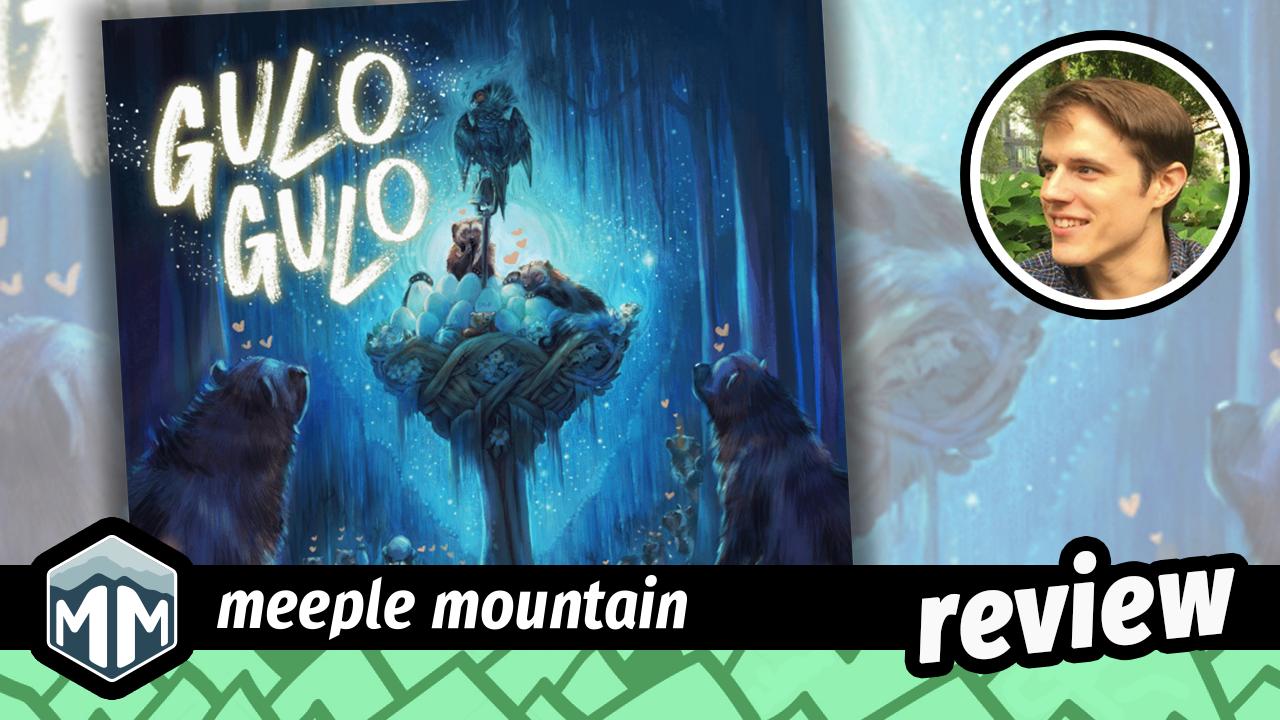
Gulo Gulo Game Review

In Gulo Gulo, players compete to rescue a young gulo—a wolverine—from the evil swamp vulture. I say “evil,” but that’s unfair. The wolverine pup was trying to steal one of the bird’s eggs, after all. Is the vulture really evil, or simply a participant in larger systems that force us into binary rolesl? If the game were from the vulture’s perspective, would the gulos not be the evil ones? You could reframe Gulo Gulo as a tower defense game in which the vulture fends off a hoard of ravenous gulos and not have to change any of the facts on the ground. Games really can teach us things, if we have the heart to listen.

Philosophical implications of this exercise and its framing aside, Gulo Gulo is Candy Land with dexterity elements. To move to a new space, you pull a matching egg out of the nest, a wooden bowl full of the colorful ovoid ova. This wouldn’t be much of a challenge at all were it not for the tall and precarious stick that pokes out above the nest, its weighted end causing it to weave and wobble and constantly threaten to fall over. If the stick does fall or if you cause any eggs to fall out and hit the table, you move back to the previous…

The post Gulo Gulo Game Review appeared first on Meeple Mountain.
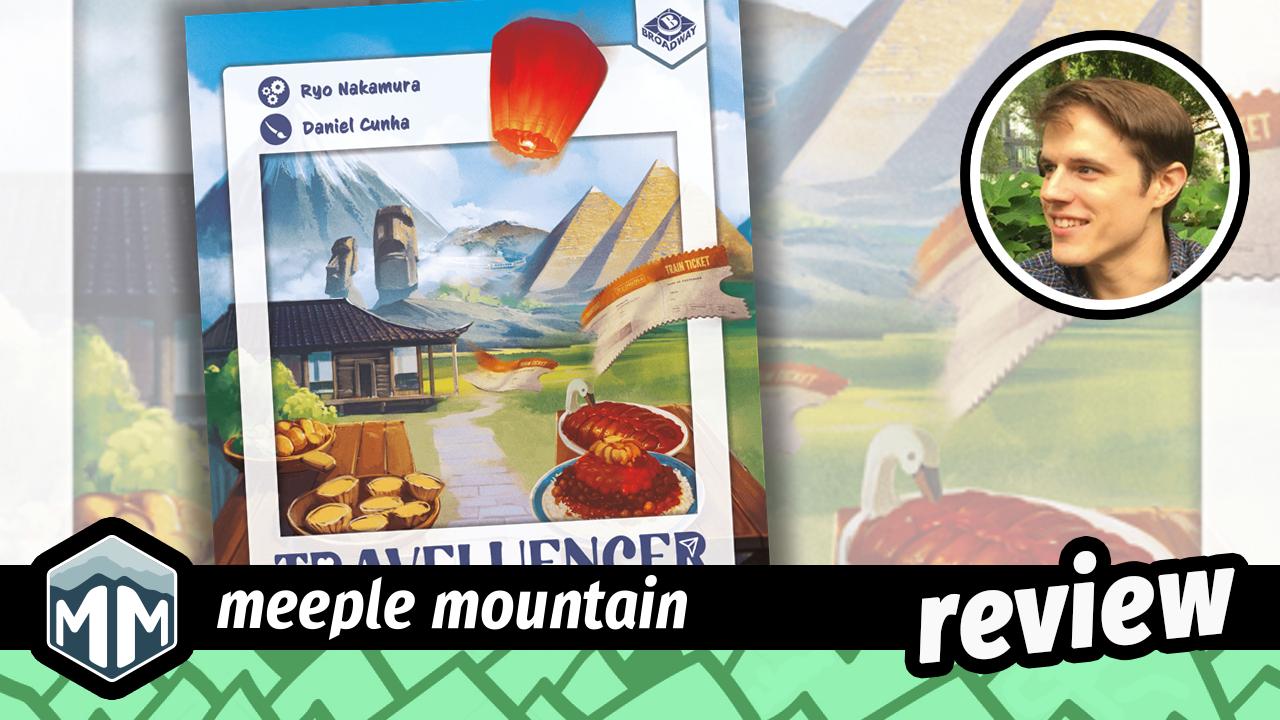
Traveluencer Game Review

To design a meaningfully thematic trick-taker is no small accomplishment. Other than Traveluencer, Daniel Newman’s Gachapon Trick is the only other one I can think of off the top of my head. In Traveluencer, the players are social media stars, and the cards they play represent both their posts and their view count. The trump suit is whatever topic is trending. The winner gains likes as points. It’s good. It’s thorough.

Mechanically, designers Ryo Nakamura, Zhonghao Yang, and Kai Zu have drawn from an unlikely source: Taiki Shinzawa’s 2019 charmer Inflation!. In both Inflation! and Traveluencer, you can play as many cards into the trick as you want, chaining them to create a single high number. If I play a blue 2, 5, and 7, I’ve played 257. There’s no limit to how many cards you can chain, but you do want to avoid both running out of cards too early and having any cards left at the end of the hand. Tricks missed due to a lack of cards represent periods of inactivity, death itself in the world of social media.

A set of four cards laid out to create the number 1,890.

The risk of you running out of cards is minimal. Almost non-existent. There is no…

The post Traveluencer Game Review appeared first on Meeple Mountain.
Published — 10. September 2026 ⏭ Meeple Mountain | The summit of board gaming

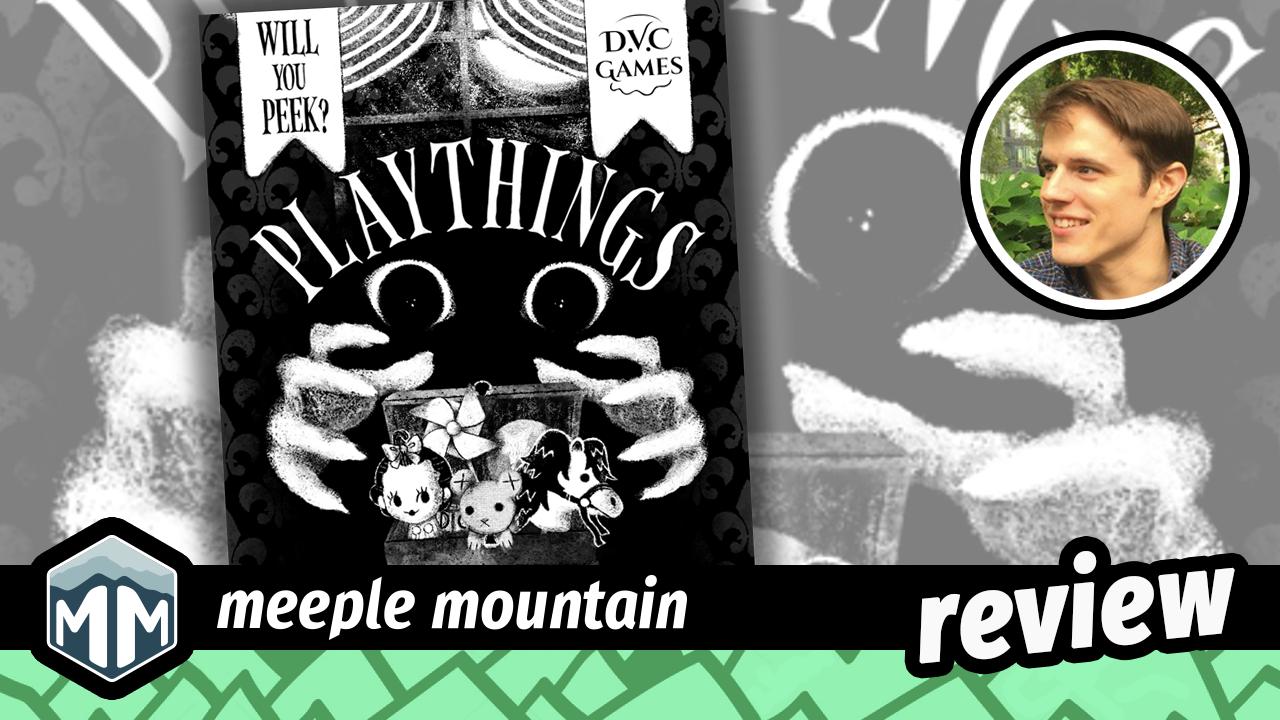
Playthings Game Review

It’s rare that a published game feels organic, but I guess that makes sense. Most authored works, regardless of medium, do not feel organic. The closest most games come is “intuitive,” which is not the same thing. “Intuitive” as applied to game criticism is more about the rules making sense and flowing. You use it when you’re talking about something that’s easy to teach and easy to learn and easy to play, about games that just. make. sense. In order for something to be intuitive, it has to build on what has come before, on a shared cultural reference or two.

That is not the case with “organic,” a word which I cannot say I have ever wanted to apply to a board game before. Strap in, folks. We’re developing a new theory. “Organic” can be as free-form as it wants. That’s probably a key feature, right? I mean, who tells an heirloom tomato how to grow? Nobody, that’s who.

A group of hands and arms float in space above the cloth Playthings board.

When I say Playthings is organic, I mean that it feels like something a group of Victorian children would come up with whilst whittling away the unending hours of the day. It feels improvised, even as…

The post Playthings Game Review appeared first on Meeple Mountain.
Published — 05. September 2026 ⏭ Meeple Mountain | The summit of board gaming

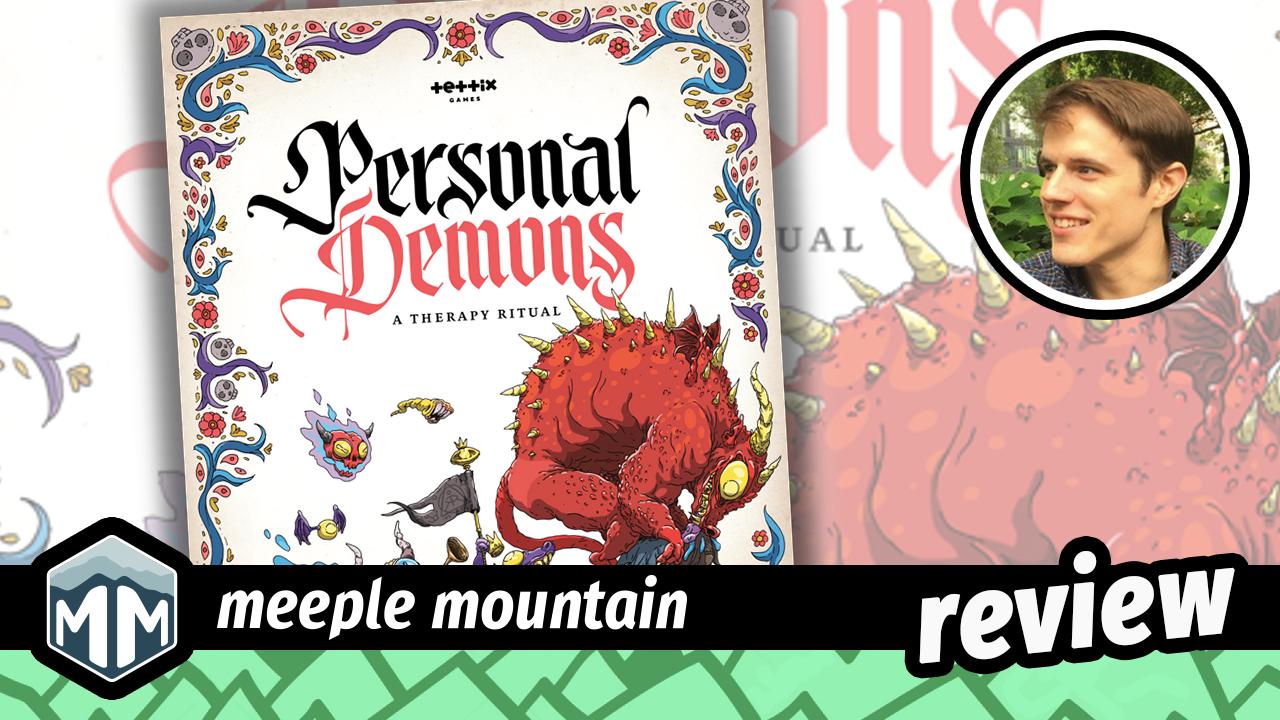
Personal Demons Game Review

When I first got into hobby gaming, Sushi Go was a hot new release, and it became a quick favorite. In the subsequent decade and change, I and millions of others have spent hours planning the perfect sushi plate. The game for which Philip Walker-Harding will be remembered is an easy game to love, especially for individuals to whom the frontiers of modern gaming are all but unknown. Sushi Go is just hooky enough to get people in, but simple enough that they can chat, smack-talk, and perform. Though I and many other hobbyists feel that we have moved beyond that game, it remains a dominant commercial force for a reason.

Be honest with me, my fellow hobbyists; don’t you miss it? Don’t you find yourself wishing you could get that same early buzz back, to revisit the times when something as simple as Sushi Go could set your brain alight? I do. I loved loving Sushi Go. I loved having that quick and reliable source of dopamine.

Personal Demons, from designer Judson Cowan of Deep Regrets fame, won’t quite take you back to those days, but it’ll get you close. The frictionless drafting of Sushi Go and its numerous imitators has been swapped out for something a little grittier, something gnarlier. Or maybe that’s just the illustrations?

…

The post Personal Demons Game Review appeared first on Meeple Mountain.
Published — 03. September 2026 ⏭ Meeple Mountain | The summit of board gaming

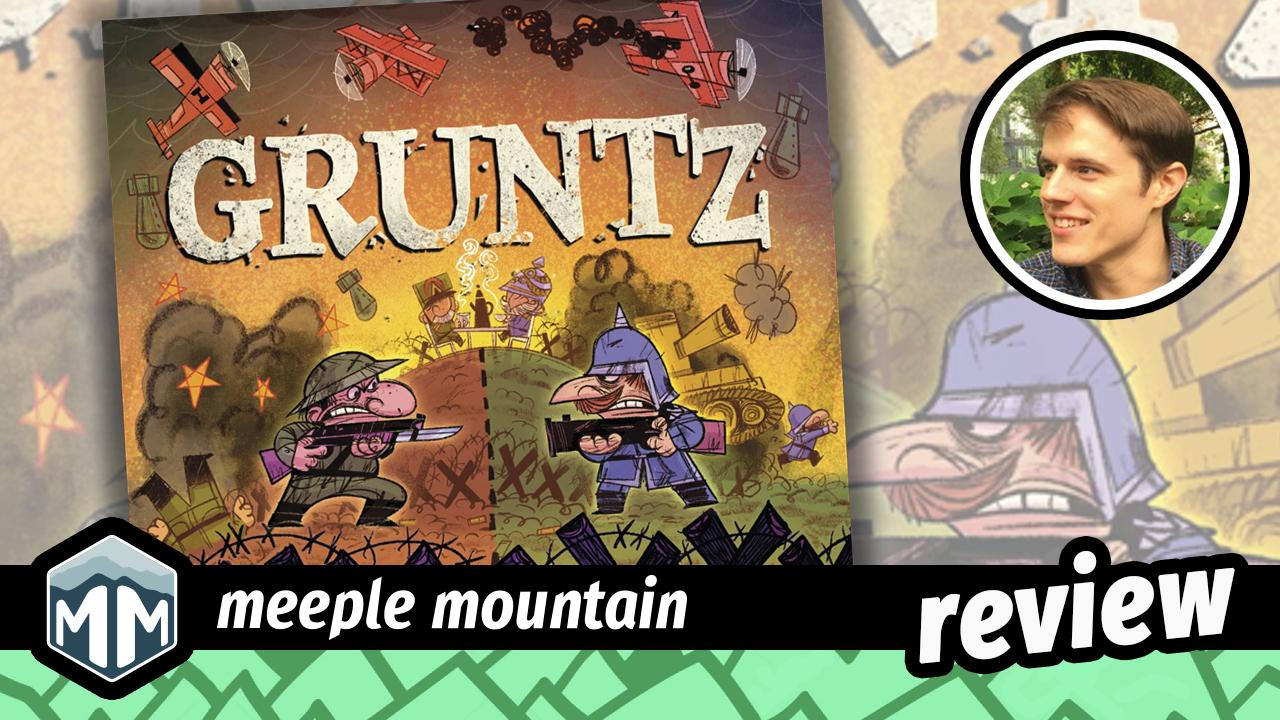
Gruntz Game Review

I didn’t quite know what to expect when I sat down with Gruntz, a small-box game for two from designer Carter Scott and publisher Allplay. I generally try to go into games as blind as possible so my expectations don’t affect my response, but I had gotten the idea somewhere that Gruntz would be a spiritual cousin to Warhammer 40k or Kill Team rather than in the lineage of chess. I was ready for something messier, muckier. Gruntz, it turns out, is dazzlingly clear and transparent.

You and your opponent take turns moving units and adding units, in that order, with the goal of controlling the three indicated spaces in the middle of the board. Controlling two at the end of your turn nets you a point. Controlling all three, should you be able to manage it, nets you two. In a brisk race to three points, either is a significant gain.

Units come in a variety of shapes and sizes, each with different capabilities. In order to capture those center spaces, you have to use your Gruntz and your Captain, humble units that can only move one space at a time and are defenseless in the face of enemy attacks. The vehicles, Tanks and Trucks and two types of airplanes, present a veritable rainbow of options.

The bulk…

The post Gruntz Game Review appeared first on Meeple Mountain.
Published — 01. September 2026 ⏭ Meeple Mountain | The summit of board gaming

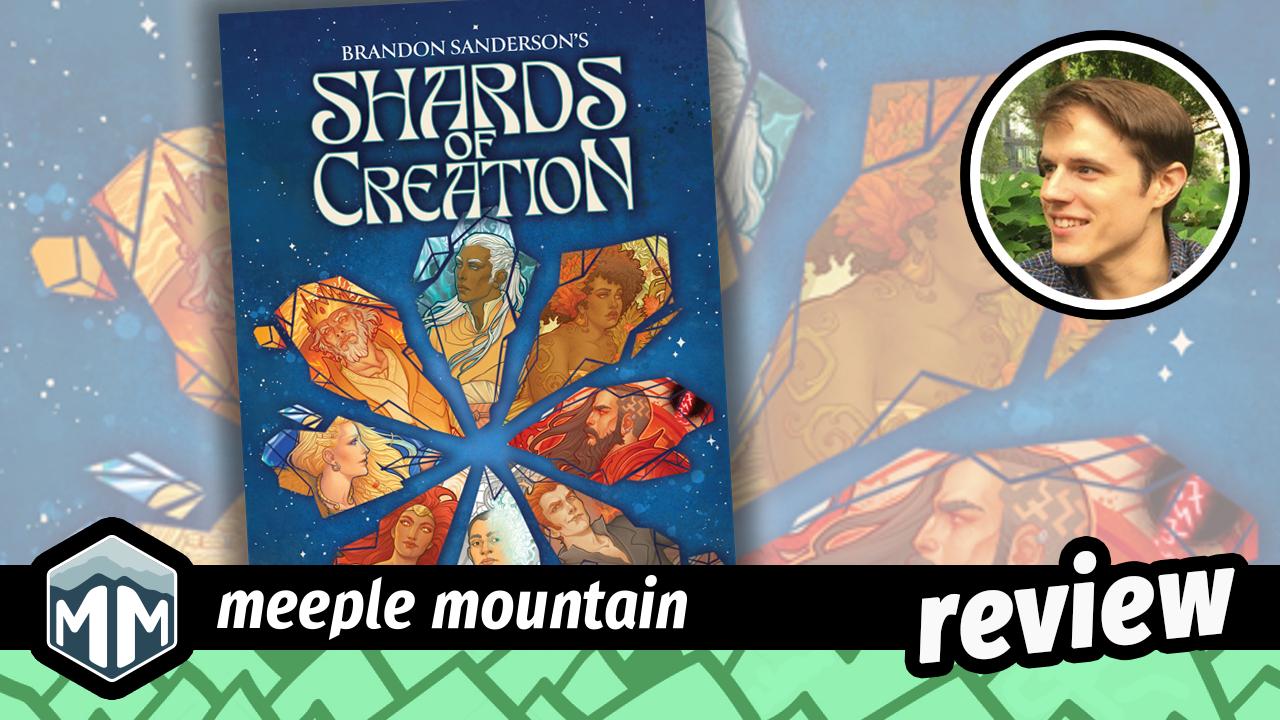
Shards of Creation Game Review

Shards of Creation is a great idea. I haven’t read any Brandon Sanderson, and my understanding of his magic system can be charitably described as patchwork—“There are…metals?”—but from what little I do know a trick-taking game in which each suit corresponds to a shard—don’t ask—is spot-on. That’s a wide-open design space that invites exploration and could result in some great ideas. It really could.

Shards of Creation is a trick-taking game with set collection tendencies. This immediately sets the game up for an uphill climb in my experience. There are eight suits in the box, five of which are randomly chosen for each game, and the winner of each trick selects one card to add to their scoring tableau. You score points for complete sets of the five suits and for numerous copies of the same suit.

The trump suit changes across each of the game’s three rounds, and each trump suit brings with it a corresponding rule. Autonomy cannot be led if you have any other choice. Cultivation allows players to draw extra cards at the start of the round before discarding back down to a normal hand size. Dominion forces the winner of each trick to score the highest rank. Many of the cards in each suit have their own powers as well. Some get…

The post Shards of Creation Game Review appeared first on Meeple Mountain.
Published — 31. August 2026 ⏭ Meeple Mountain | The summit of board gaming

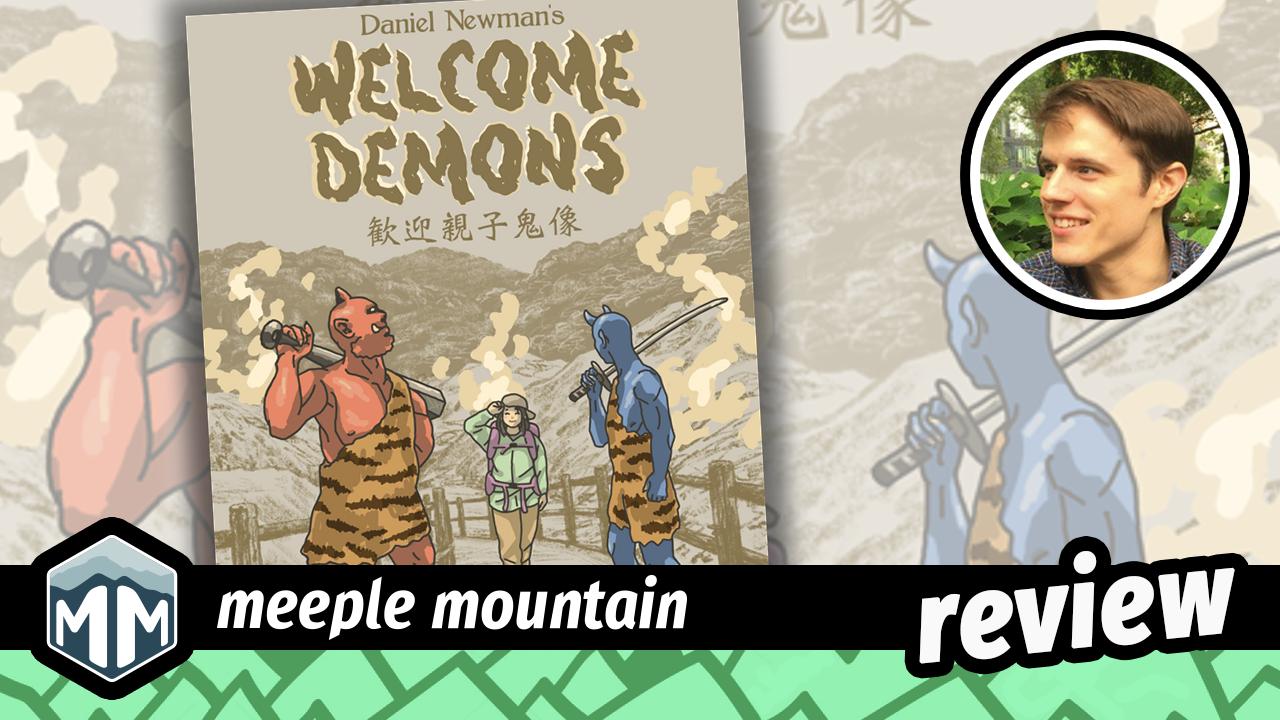
Welcome Demons Game Review

Welcome Demons is the latest game from designer Daniel Newman, who has a wide variety of titles under his belt. Some of you may also be familiar with his publishing company, New Mill Industries (NMI), which specializes in small and limited print runs of unusual card games. In the last couple of years, he and NMI have focused almost exclusively on shedding and trick-taking games. It is in that genre that he has created his two best-known designs, Gachapon Trick and the exquisite Mori.

I always think of NMI releases—and, by extension, Newman’s more recent designs—as equal parts game and formal experiment. The games don’t always work, but you’re unlikely to forget them. They’re always trying something. NMI’s catalogue of li’l weirdos runs deep, and with the release of Welcome Demons, it grows deeper still.

A basic meld, with a Visitor and two oni.

Oni Oni Oxen Free

Japanese mythology is full of stories concerning oni, these hulking demons that often live in caves and like to terrorize unfortunate people. You know ‘em. If I asked you to picture a typical Japanese demon, the picture that’d most likely pop in your mind is an oni. Most of the time, they’re evil. But the onsen town of Noboribetsu has…

The post Welcome Demons Game Review appeared first on Meeple Mountain.
Suppose Game Review

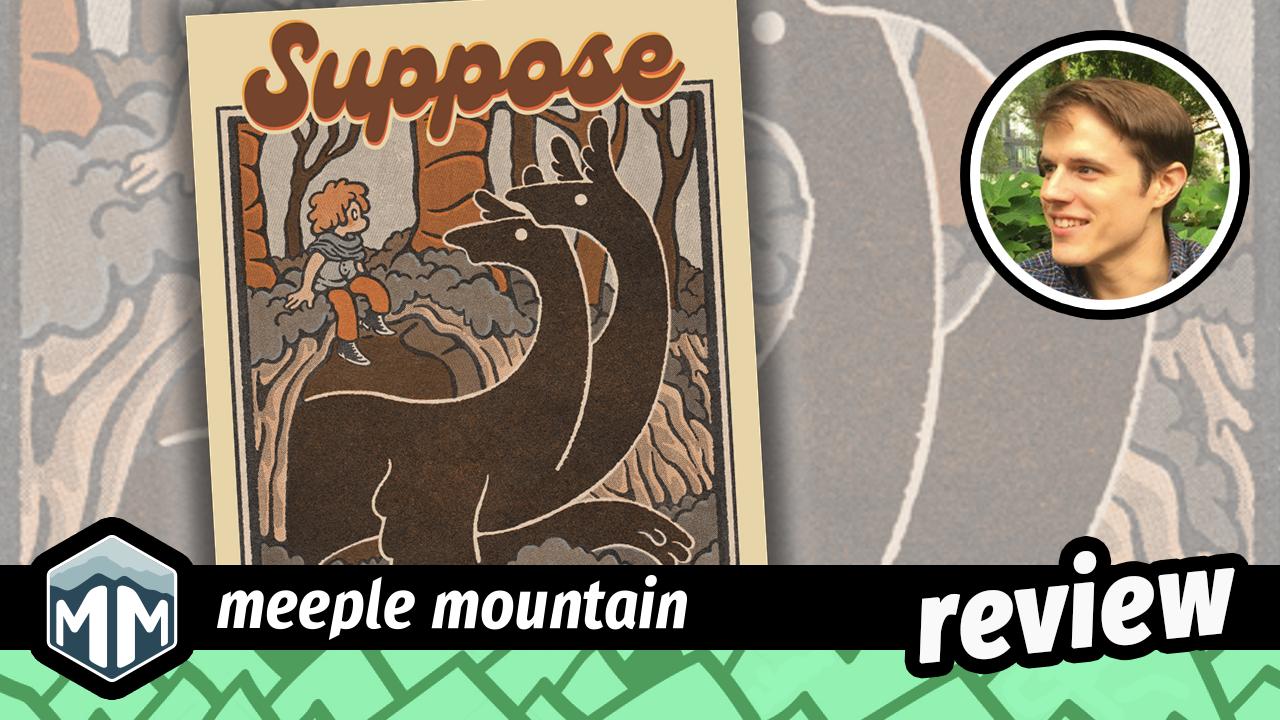
I don’t feel entirely ready to talk about Suppose. I’ve played it the appropriate number of times (three or four), with different numbers of people (three or four), but I can’t seem to form an opinion of it. I’d spend more time with the game, but deadlines are what they are and here we stand on the precipice of a review in which the reviewer is uncertain. Maybe that’s a good thing.

Suppose, published in the U.S. by New Mill Industries, is a trick-taking game designed by Akinori Hagiwara. It is part of that strange subset of trick-taking games called may-follow, in which following the led suit is entirely optional. Here, that’s born out of necessity; you don’t know what most of your cards are.

During setup, each player is dealt a hand of cards. There is now careful—nay, meticulous—work to be done. First, if this is your first time playing, you have to gawk at H.B. Tyson’s gorgeous art. These wonderful surrealist concoctions have yet to go without comment in any of the games I’ve played. Once you’re done with the gawking, no rush, arrange the cards by suit, with the suits in whatever order you want. Within each suit, arrange the cards from highest to lowest.

There are a few games that incorporate these steps, minus the…

The post Suppose Game Review appeared first on Meeple Mountain.
Published — 28. August 2026 ⏭ Meeple Mountain | The summit of board gaming

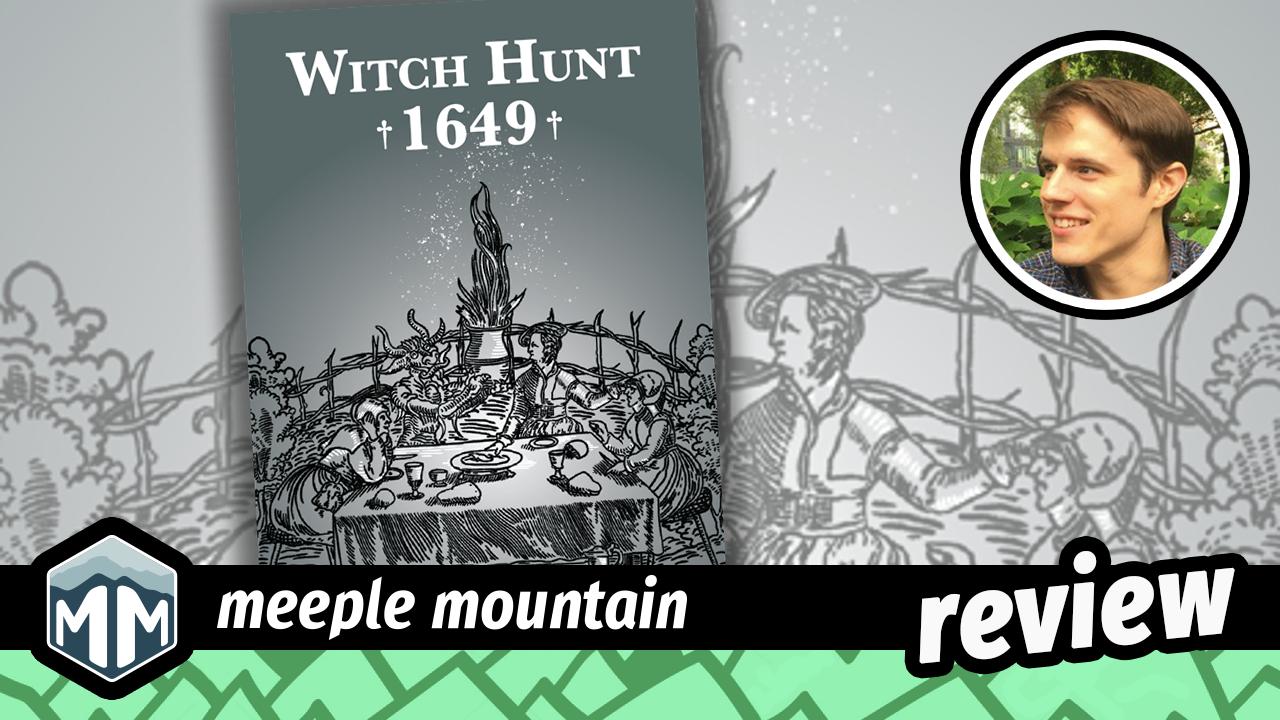
Witch Hunt 1649 Game Review

A number of cards on a wooden table. Some show items, some show health and reputation tracks.Witch Hunt 1649 is a bit of an unusual subject for Meeple Mountain. It is more of an educational game than anything else, which makes sense coming from Central Michigan University Press. This is not a game most are going to sit down and play with their families, nor is it likely to come up at a hobbyist night. Like Dan Bullock’s The Gods Will Have Blood, Witch Hunt 1649 is more concerned with creating a specific and rich emotion than it is with creating opportunities for decision making or laughs.

Martha McGill’s design is set during an outbreak of witchcraft accusations that plagued Scotland in the mid 17th century. Each player is a member of the community, and on every turn, some variety of misfortune befalls you. Your life is unpleasant, difficult, and neither McGill nor the event deck wants you to forget it. Even when things go well, they don’t. Your livestock have fared unusually well during a recent disease outbreak? Congratulations, people now suspect you of witchcraft. This is a game in which a lucky turn is one where it’s raining out and you decide to stay home.

After resolving an…

The post Witch Hunt 1649 Game Review appeared first on Meeple Mountain.
Published — 24. August 2026 ⏭ Meeple Mountain | The summit of board gaming

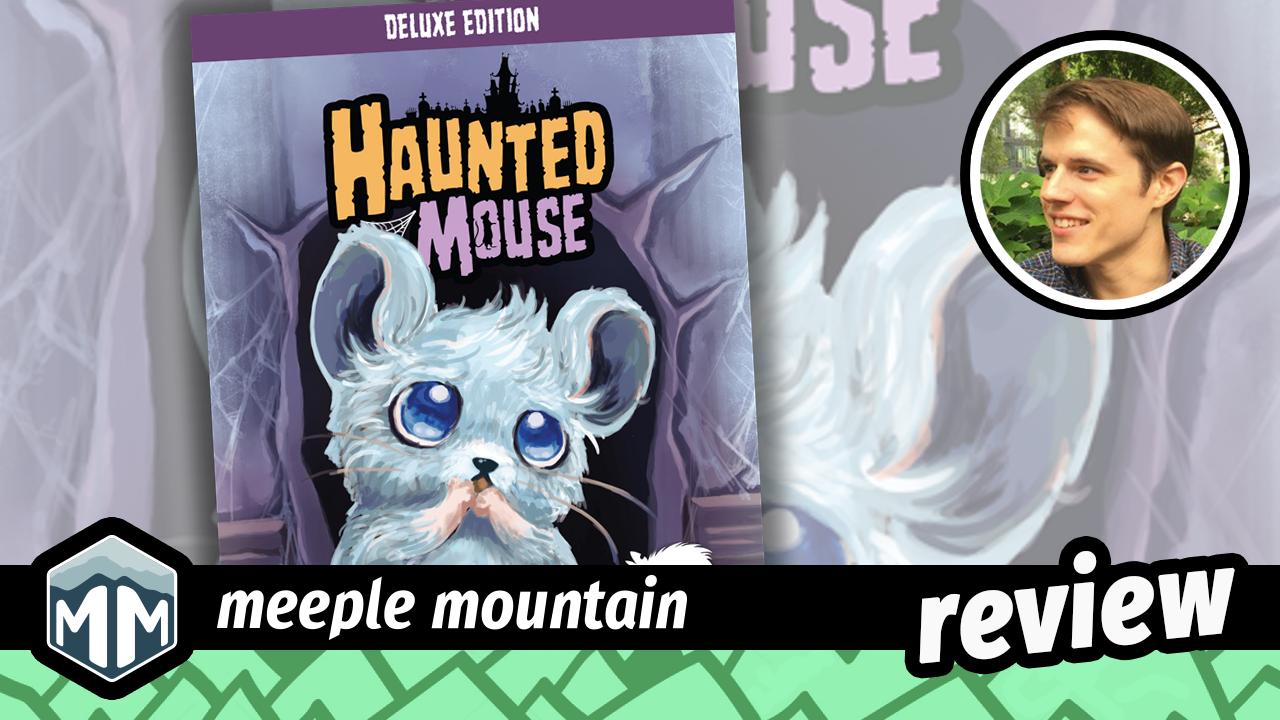
Haunted Mouse Game Review

Haunted Mouse is a hard game to write about, because it falls perfectly into the gap between the good, about which there is much to say, and the bad, about which there is often even more to say. Jonathan Cox’s shedding game, a reimplementation of his own Spring Cleaning, is a perfectly alright time at the table. People talk about their days, the weather, the latest gossip. The game goes on quietly around this, undemanding and unobtrusive.

The goal of the game is to empty your hand by playing sets of increasing size and strength. Every trick-taking and shedding game has its gimmick(s), and Haunted Mouse is no exception. It joins the rapidly expanding field of shedding games in which you cannot rearrange the cards in your hand, and are forced to make sets out of adjacent cards. This has been used to marvelous effect in Scout, Jungo, and dnup, and works just fine in Haunted Mouse.

Cards on a wooden table.

A common mechanic between these games, though it works differently in each, is the ability to add cards to your hand, putting them anywhere you want. In Haunted Mouse, this idea is combined with allowing players to shed troublesome singletons from their hands to make…

The post Haunted Mouse Game Review appeared first on Meeple Mountain.
Published — 21. August 2026 ⏭ Meeple Mountain | The summit of board gaming

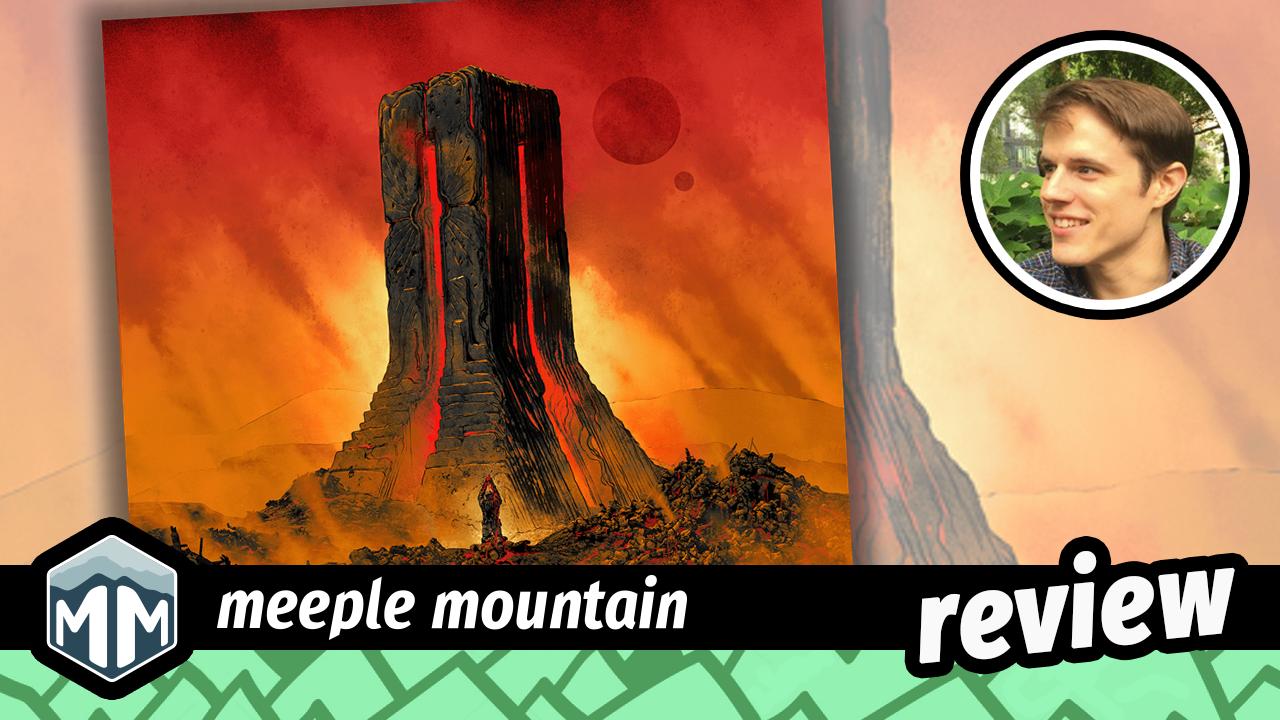
The Monolith Game Review

We did it, folks. Humanity has invented—nay, perfected—time travel. They said it couldn’t be done. They were wrong. The scientists at publisher Plaid Hat Games figured it out. It’s less complicated than I’d have expected time travel to be, requiring only that you set up a copy of The Monolith and sit down. The technology also seems to be fairly limited in its applications, since The Monolith only has the ability to transport players back to the summer of 1993.

Picture it: Fireball Island is in the rearview mirror, the Euro revolution is but a faint glimmer on the horizon, and sweet sweet Ameritrash rules the roost. There’s wood panelling on the walls, left over from when your parents had the basement finished in ’86. Breathe in the aroma of freshly-toasted Bagel Bites, taste the corona of blue Squeezeit around your lips. Hear the faint sounds of “I’ve Been Thinking About You” and Mary Chapin Carpenter’s cover of “Passionate Kisses” waft in from a nearby radio. That’s The Monolith.

A board covered in minnies, with a giant black tower in the middle.

Everything about The Monolith as an object was seemingly designed to evoke a previous era, if not always the same one. The table presence is the maximalism of…

The post The Monolith Game Review appeared first on Meeple Mountain.
Published — 20. August 2026 ⏭ Meeple Mountain | The summit of board gaming

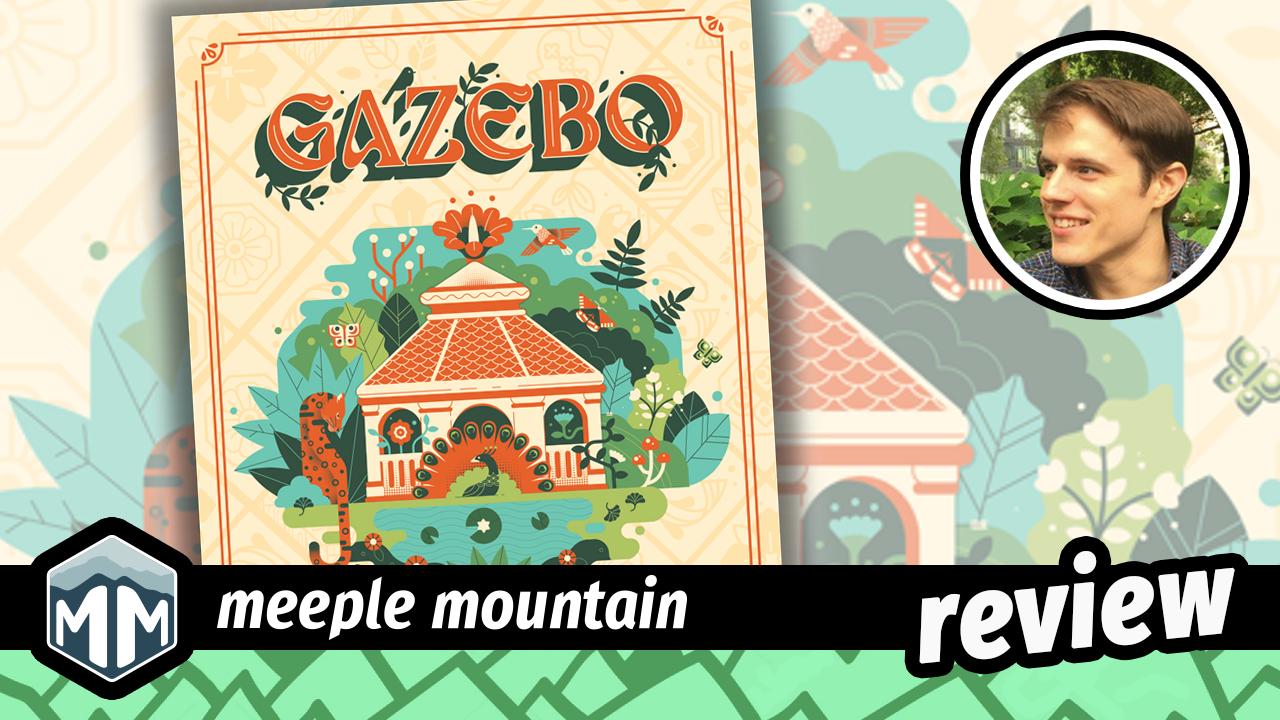
Gazebo Game Review

A cloth board partially covered by dominoes and plastic gazebos.I’ve spent much of my time with Gazebo, publisher Bitewing Games’s update of Reiner Knizia’s cult release Qin, appreciating the humble domino. Why is it so good? Is it the heft? Unexpectedly heavy tiny objects are disarming, after all. There’s the abnormally smooth texture and the rounded corners, the clack—not a click, but a clack—every time you put one down on a hard surface. Maybe it’s a shared cultural memory of the nearly 1,000 years we’ve been playing with them. 

Whatever the reason(s), dominoes are enchanting. They’re one of the few objects that suggest and immediately invite play of all sorts for people of all ages. The youngest children know to construct with them. A love of dominoes seems to be hardwired into us from the jump.

While Gazebo is one of the thinkier applications of dominoes I’ve ever come across, the magic is still very much there. Rather than two sets of pips, these dominoes—or regular-degular cardboard tiles if you don’t opt for the upgraded components—show two squares of color. Players take turns placing one tile down on the cloth board with the goal of creating groups of the same color. Well, that’s not entirely true.

The goal isn’t to…

The post Gazebo Game Review appeared first on Meeple Mountain.
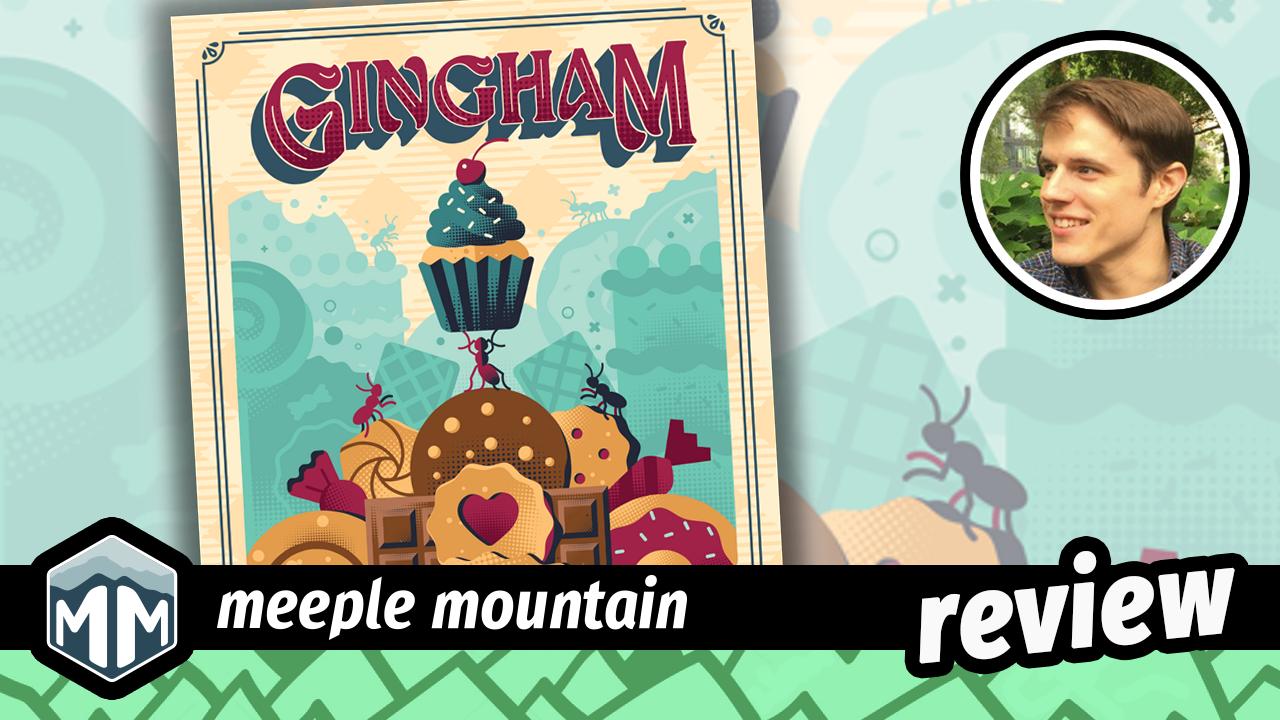
Gingham Game Review

Human memory is a funny thing.

Every time I sit down to play Gingham, the latest collaboration between designer Robert Hovakimyan and publisher Bitewing Games, the song “Teddy Bears’ Picnic” rises like a leviathan from the depths of my memory. “If you go down to the woods today, you’re sure for a big surprise,” I sing as I lay out the checkerboard picnic blanket and organize the ants. “If you go down to the woods today, you’d better go in disguise,” as I set out the sweet treats across the map and set my score counter to 0.

My only exposure to “Teddy Bears’ Picnic,” a popular children’s song in the U.K., was a 1986 VHS tape documenting a live concert on Boston Commons by the musical duo Rosenshontz. I have not seen, let alone thought about, that VHS tape in over three decades. Nevertheless, here we are. Again, and again, and again.

But what of Gingham? We can’t speak of obscure regional concert films forever, though I could probably pitch that to Pitchfork as a series. What about Gingham indeed. It’s a bit of a funny game to describe. I would call it an abstract game centered around route-building with a clever sort of auction system for figuring out turn order. The BGG entry suggests the publisher more…

The post Gingham Game Review appeared first on Meeple Mountain.
Published — 18. August 2026 ⏭ Meeple Mountain | The summit of board gaming

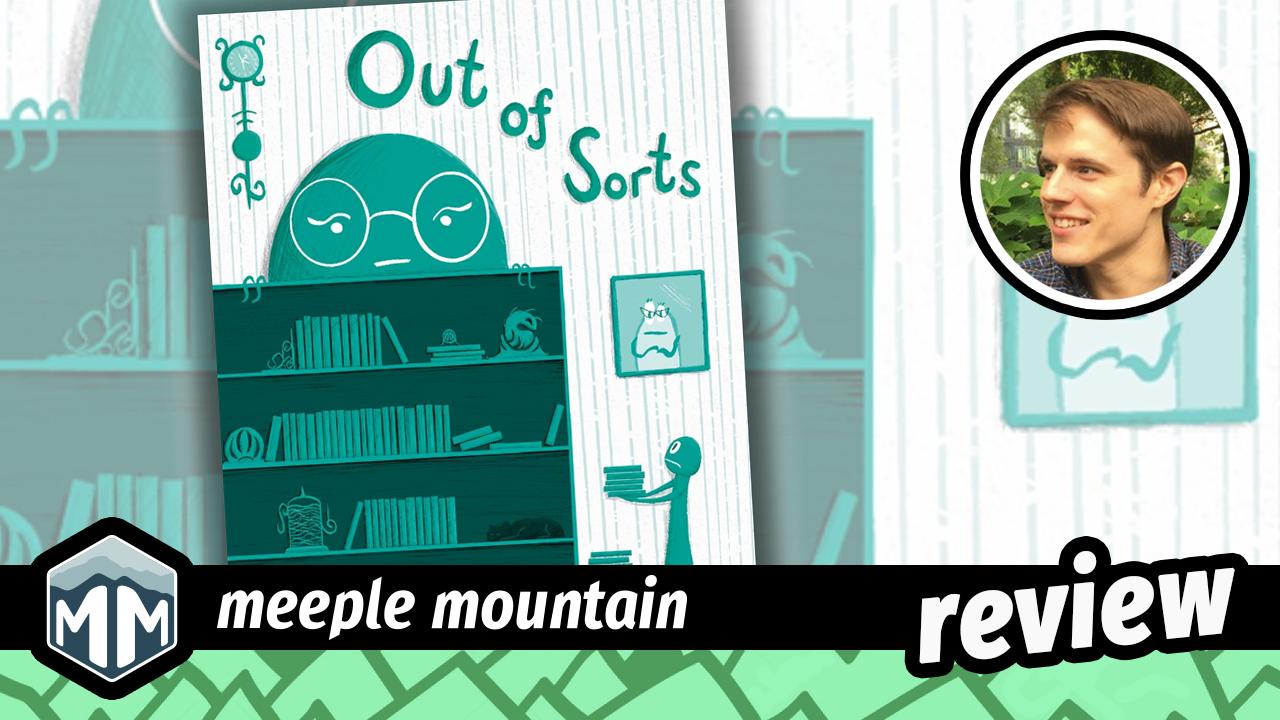
Out of Sorts Game Review

Out of Sorts is now the second memory game I’ve played in the last few years that isn’t really a memory game at all. Like Wilmot’s Warehouse, which uses the façade of memorization to trick players into collaborating on a story, the memorization in Out of Sorts is a distraction, a means to an end rather than the end itself. Do you want to spend twenty or thirty minutes memorizing the order of numerous abstract symbols? No, of course you don’t. That sounds awful. Do you want to spend twenty or thirty minutes in passionate debate with your friends about how a set of abstract symbols relate to one another based on three arbitrary criteria, to argue about whether and why that set of squiggles with a line through it feels more like a Reptile than it does Travel? Of course you do. That sounds joyous, and it is.

Out of Sorts is a cooperative game in which players work together to organize an alien’s library. The lot of you have been abducted for the purpose by this seafoam green monstrosity, who sits in a chair reading while you do all the work. The alien starts out not paying much attention to you…

The post Out of Sorts Game Review appeared first on Meeple Mountain.
Published — 14. August 2026 ⏭ Meeple Mountain | The summit of board gaming

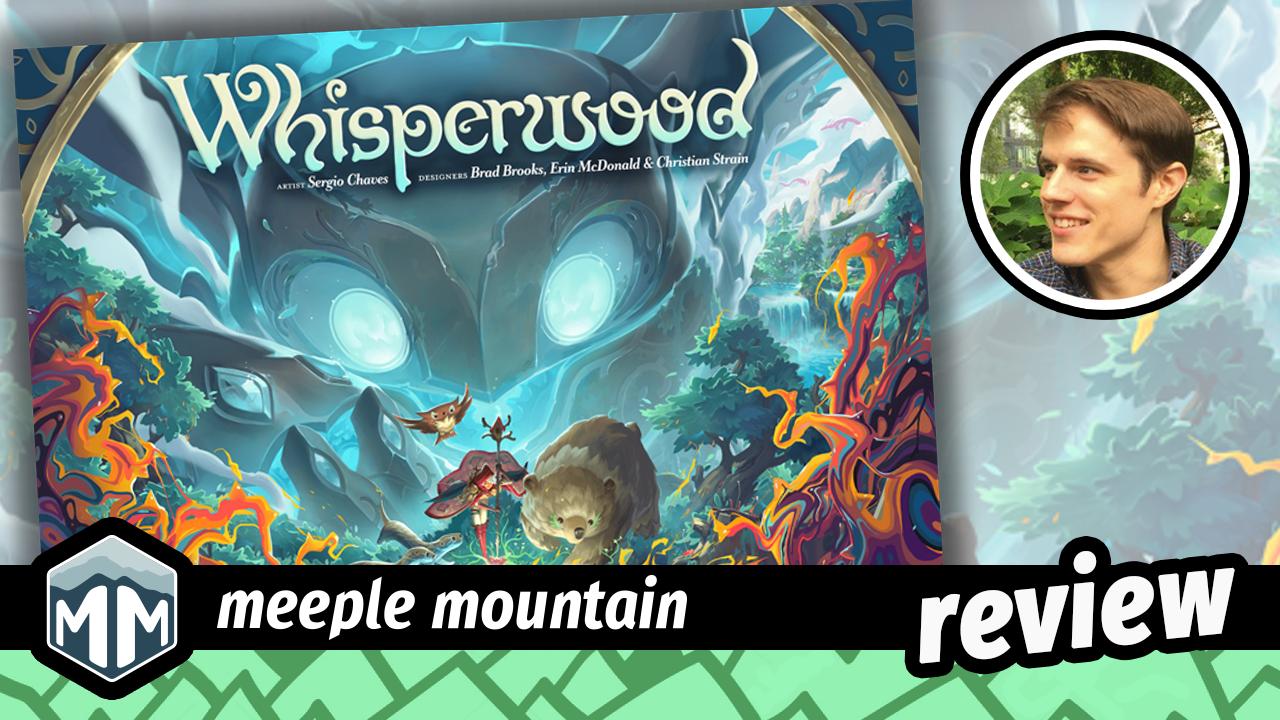
Whisperwood Game Review

About four years ago, I wrote a negative review of the game Lacrimosa. I’d never written a major pan before and, while I stand by the diagnoses in that review, I have come to believe that the review itself was too much. In trying to capture the feelings of exasperation and bloat that Lacrimosa brought up in me, the review itself became exasperating and bloated.

 I’ve played more than my share of unsuccessful games in the years since Lacrimosa, but Whisperwood is the first to evoke similar negative feelings. They are not similar games: Lacrimosa was dry as could be, an efficiency Euro with combos galore. Whisperwood, with its massive table presence, multiple tracks, and plurality of tokens, gives off the impression of a sandbox game. I think that was the goal, anyway.

The board for Whisperwood, a large collection of interlocking tiles with various terrains.

If designers Brad Brooks, Erin McDonald, and Christian Strain had pulled that off, it might have suited the setting. As members of the Council of Druids, players compete to best restore the magical Whisperwood, clearing away Corruption and gaining the favor of ancient Golems. That made manifest as a wide open space in which you can more or less do what you want…

The post Whisperwood Game Review appeared first on Meeple Mountain.
Published — 11. August 2026 ⏭ Meeple Mountain | The summit of board gaming

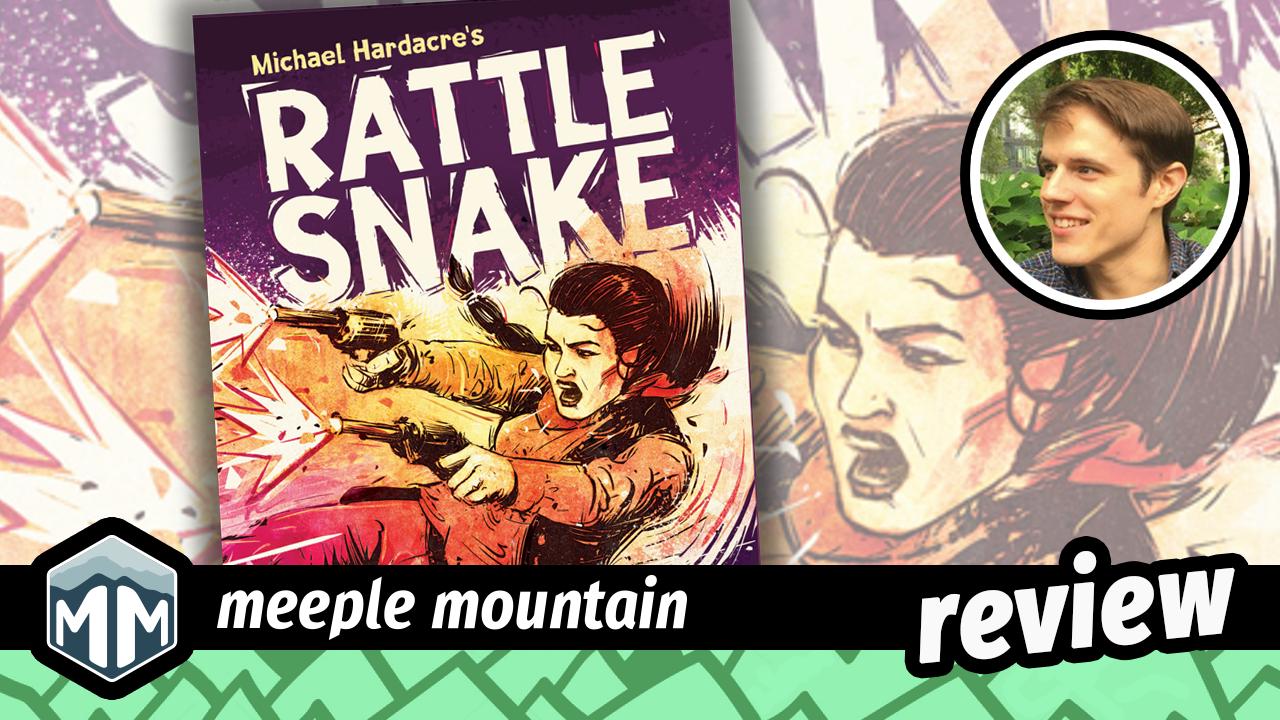
Rattlesnake Game Review

Michael Hardacre’s Rattlesnake, a two-player card game about a gun fight in the wicky-wicky-wild Wild West, is a fabulous marriage of setting and mechanisms. This thing is lean, mean, and jumpy. More sting than a scorpion and more bite than a…well, you know. It is tense enough that the components list should include brow sweat. And it’s so small! For form factor, this no-frills set of cards—with a gun token for flavor—is my favorite thing to come along since High Tide. There’s nothing quite like a big game in a small box.

The goal of the game is simple enough: kill your opponent. Well, I shouldn’t say “kill.” Pokémon has taught us that death isn’t always the end result of [checks notes] running out of health. Strictly speaking, your goal is to hit your opponent four times. Death is not the dictated outcome. Maybe all those hits grazed you. Maybe they missed organs. Maybe your opponent rushes you off to a hospital, where the gangrene can do its slow, ante-antibacterial work. I’m not a historian.

A hand holding three cards, numbered 1, 4, and 5. Each card has an illustration across the center, with several lines of text at the bottom.

The post Rattlesnake Game Review appeared first on Meeple Mountain.

Published — 06. August 2026 ⏭ Meeple Mountain | The summit of board gaming

LUZ Game Review

With a title like LUZ, Spanish and Portuguese for “light,” you’d expect this Taiki Shinzawa trick-taking game to have a bit more clarity. Silly you. Silly me! LUZ is a game of shadows and half-knowns, a trick-taker that casts a shadow of uncertainty.

Given that Shinzawa is responsible for the likes of Ghosts of Christmas, a trick-taker in which you play three or four must-follow tricks at the same time while the trump suit shifts with player behavior, I should clarify that LUZ isn’t that opaque. It’s all relative. If Ghosts of Christmas is a few standard deviations outside the mean, LUZ is safely within the bell part of the curve.

This is a must-follow trick-taking game where players bid before the hand begins. You have the choice of making an exact bid, which requires you to hit the nail squarely on the head in order to score, or a more forgiving bid that gives you one trick’s worth of wiggle room in exchange for scoring half the points. Higher risk, higher reward.

This doesn’t sound so different from whist, other than the room for some wiggle in your wager. The opacity comes from the last two rules: the back of each card indicates what suit that card belongs to, and you never know the values of your…

The post LUZ Game Review appeared first on Meeple Mountain.
Published — 01. August 2026 ⏭ Meeple Mountain | The summit of board gaming

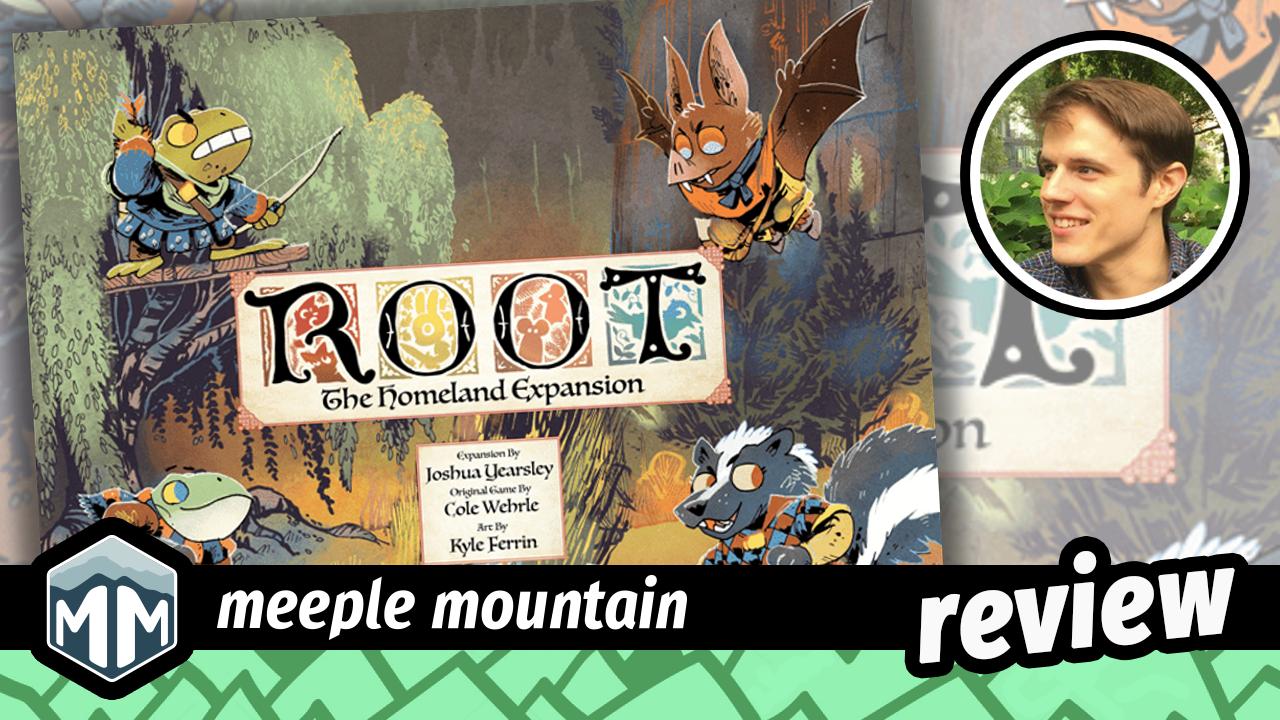
Root: The Homeland Expansion Game Review

I have played my fair share of Root games, lord knows. I have no official play count. I respect the impulse of those who track their plays, but board games are one area of my life where I don’t do that sort of thing. Some back-of-the-envelope math tells me I have played well over 50 games of Cole Wehrle’s juggernaut since I first bought a copy back in the summer COVID lull of 2020. It quickly became, and has remained, one of my favorite board games.

Root’s status as a personal all-timer has never been threatened, but I have found myself moving away from it over the last few years. Since the release of The Marauders Expansion in 2022—an expansion of which I am very fond—I’ve found myself less and less interested in playing. This has nothing to do with the quality of the game. It hasn’t worn on me, nor has it grown tired. If anything, the fact that I haven’t played Root as much as I used to is Root’s fault; it offered early instruction in the idea of board games as strange and ungainly, and I’ve spent the last few years eager to explore new designs, new spaces, and tracking down new experiences. Root became the kind of game I would happily play if suggested,…

The post Root: The Homeland Expansion Game Review appeared first on Meeple Mountain.
Published — 30. Juli 2026 ⏭ Meeple Mountain | The summit of board gaming

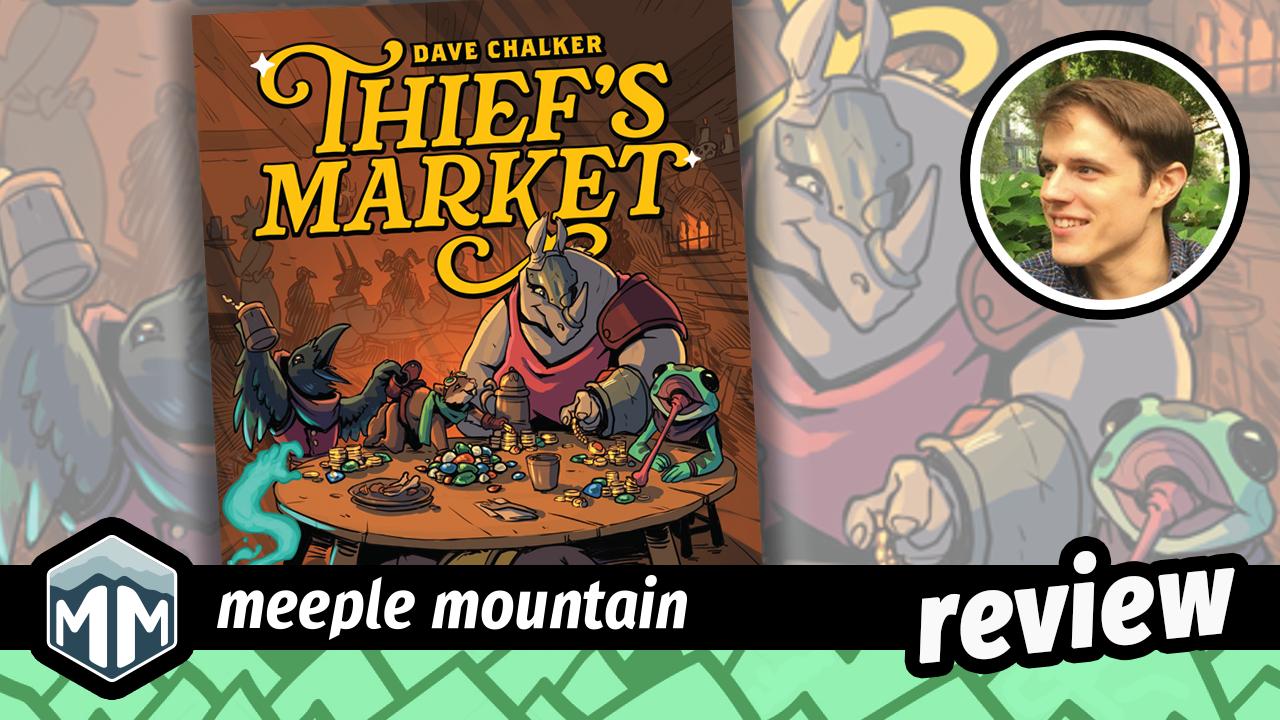
Thief’s Market Game Review

There are times, engaging with this hobby of games, when one is confronted with the very real possibility, regardless of one’s self-esteem, that one is in fact stumbling through this harrowing and at times magnificent experience we call life with a dearth of cognitive capacity.

Put another way, there are games that make you wonder, “Am I a dumdum?”

A table with two rows of cards, a large number of purple wooden owl tokens, and a large pile of dice.Thief’s Market, from publisher PickPocket Games and designer Dave Chalker, is just such a game. This is surprising for a few reasons, not least of which is because Thief’s Market is, mechanically, a breeze. It’s a challenge to think of something simpler without tipping over into party games. Each round is divided into two phases: grab some loot, then spend said loot on resource conversion powers and points until someone wins. This is not, in theory, the stuff analytical types tend to lose much sleep over.

The starting player rolls all the dice, which are then placed in the middle of the table along with the first player token. Players take turns drafting dice by either staking a claim from that middle or picking the pocket of a fellow player. If…

The post Thief’s Market Game Review appeared first on Meeple Mountain.
Published — 24. Juli 2026 ⏭ Meeple Mountain | The summit of board gaming

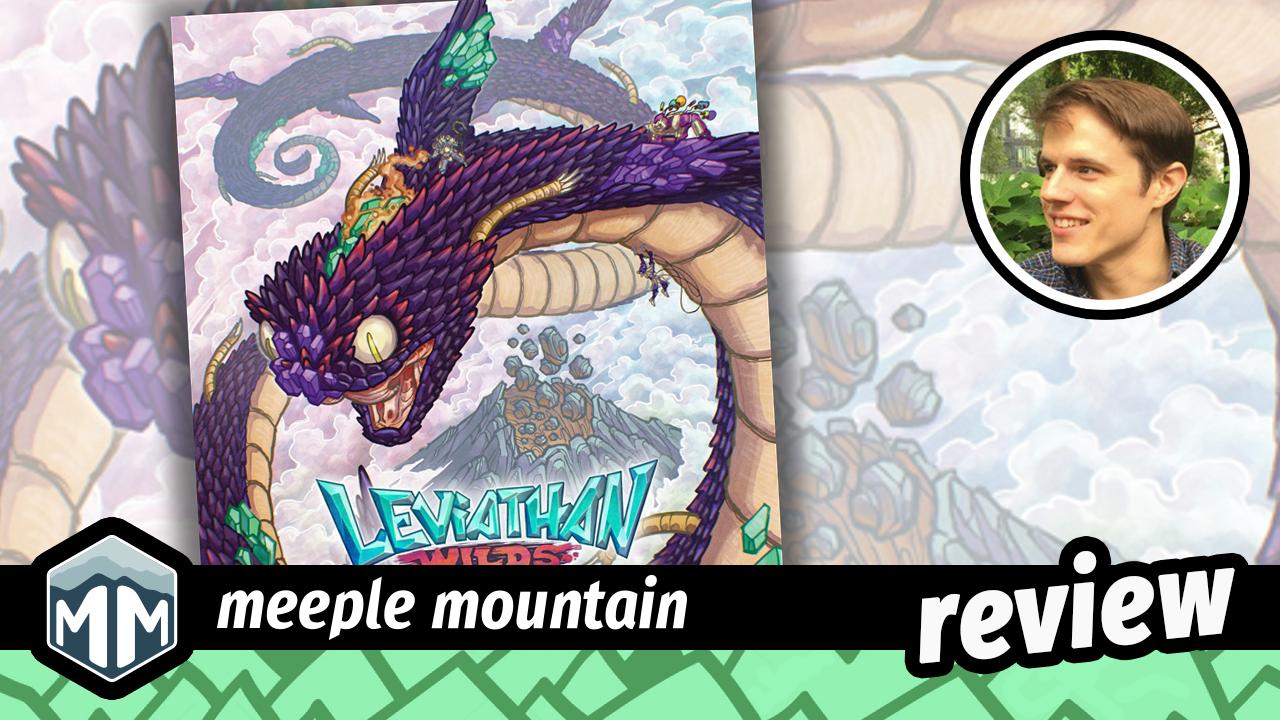
Leviathan Wilds: Shattered Peak Expansion Review

Part of the fun of engaging with a system built around different characters, classes, species, or any other mode of substantive differentiation, is finding the build that’s right for you. Everyone who likes Root has a favorite faction, everyone who plays Magic has a favorite color, and the wonderful thing is that these preferences are almost always deeper than mechanics. If you’re lucky, if everything clicks, your chosen avatar feels ‌like an extension of yourself. There is something about playing as the Lizard Cult that elicits a deeper joy for me. Am I going to win? Probably not, but boy I’m going to have a great time. Blue may leave me with no friends, but I’m enjoying myself.

Leviathan Wilds has been my favorite cooperative game for a while now, and while I was equally fulsome in my praise of the first expansion, it is only now with second expansion Shattered Peak that I can say I have found the Class for me. The Geomancer, one of three new Classes that join three new Climbers and eleven new Leviathans in this box, feels like home. All the builds in Leviathan Wilds are about running around and smashing infectious crystals, but the Geomancer is the first to mess with those troublesome fungal blooms. He can manipulate their values…

The post Leviathan Wilds: Shattered Peak Expansion Review appeared first on Meeple Mountain.

❌