❌

Normale Ansicht

The Portal Has Rapidly Become Even More Useful

02. November 2026 um 21:32

I love when technology helps us better serve customers!

That’s the case with Portal, a web app created by Will Conover, a very talented and responsive developer. Portal started as a teaching/tutorial tool, and then we initially started using it as an option for people who want instant answers to questions (it also tracks the questions so we can improve rulebooks in reprints).

But over the last 45 days, Will has rapidly added some features that exponentially expand Portal’s utility for Stonemaier Games (and, I suspect, other publishers–hence why I’m writing this). To highlight the extent of its positive impact, I appreciated Portal so much that last I week I asked Will if Stonemaier Games could start pay for the service (he said yes).

Availability

With 4 regional webstores and hundreds of SKUs, getting a quick glance at stock levels is quite difficult. Portal offers a quick, sortable view of how many of our webstores have products in stock, along with Amazon, Walmart, and a few other sample hobby stores.

Back-in-Stock

This section combines several difference data sources in one place. It displays the total units we have in stock of each product (the sum and per webstore), how many units we have in our US warehouse (pulling from an inventory sheet), the number of requested units (pulling from a back-in-stock request sheet), and it shows how long products have been out of stock in each region’s webstore.

Our ongoing goal is to send the right amount of inventory to each webstore for new products and reprints, and when necessary, restock from the US when our other fulfillment centers are out of stock (and if there are back-in-stock requests). This page allows us to easily identify the quantities for reprints and restocks. Will even added a built-in way to to notify customers when a product has been restocked–sometimes we want to customize this message, there’s still human contact in the notification.

Pricing

We try our best to keep prices consistent across our 4 regional webstores, accounting for legal guidelines (e.g., VAT must be included in the listed price in Europe), MSRPs, and currency conversions. That last part is tricky, as currency values fluctuate over time, and we have hundreds of SKUs to track.

To help us identify products with significant differences in listed prices compared to other regions, Portal pulls information from each of our Shopify stores, accounts for VAT, and sorts by price variance. I’m actively using this to keep our worldwide prices as level as possible.

Notifications

With all of this added utility comes more information for us to check on, so Will added a customizable notification system. Within that weekly report I have various options; currently my version includes all questions asked in the last week and a list of any products that have gone out of stock.


In a short amount of time, the capabilities Will has added to Portal have made a big difference in our ability to serve customers worldwide. While your specific needs may not be exactly the same as ours, Will seems very well-equipped to improve and customize Portal to help various types of publishers.

I’m recommending Portal with full transparency and authenticity–Stonemaier doesn’t get any kickbacks or bonuses if you sign up. If anything, we can all benefit from each other’s Portal improvements.


If you gain value from the 100 articles Jamey publishes on this blog each year, please consider championing this content! You can also listen to posts like this in the audio version of the blog.

Top 7 Big Conclusions from Your 800+ Comments

29. Oktober 2026 um 22:26

Your generosity of insights, feedback, and ideas is truly amazing: I’ve learned so much from the 800+ comments you’ve made over the last week on the Facebook and website versions of my article about ready-to-ship launches vs crowdfunding. Thank you!

Before I delve into the input that resonated the most with me, I want to share a small call for action: If you are interested in the games we make at Stonemaier Games and don’t want to depend on an algorithm to keep you informed, please subscribe to our monthly newsletter. I heard from SO many people who reported that they didn’t hear about our new game, Braided Skies, during the 25-day window between reveal and launch, a time period during which I was constantly sharing information about it on this website, newsletters, YouTube, BoardGameGeek, and social media.

Fortunately, Braided Skies is still fully produced and available. It’s on all four of our region-friendly webstores, all of which offer flat-rate shipping to most countries. We’ve already started shipping in the US and Canada, with Australia and Europe following over the next 2 weeks.

Here are my top 7 big conclusions from your comments:

1. The launch is about serving early adopters. At least, this is the point of me talking about our ready-to-ship launches vs crowdfunding projects. My goal in this discussion isn’t to sell more games during the launch; rather, it’s to ensure we’re doing everything we can to serve a variety of customers, and we have room for improvement specifically for early adopters. I have no interest in fear as a motivator (no FOMO tactics, no exclusives), but I think we could more often include something special for free in addition to the game for early adopters during our launch period. I have a few ideas for what that might be, and it will always be something small that consumers and retailers can purchase post-launch.

2. People rely on ads to hear about crowdfunding projects. As I mentioned above, I was truly surprised by the number of people who said they were just hearing about Braided Skies for the first time as a result of the article. I’ve been talking about this game nonstop for the last month on YouTube, Instagram, Facebook, BoardGameGeek, our newsletters, and this blog, and 10 different content creators showcased advanced copies before the launch (over half a million subscribers between them). We also ran ads, though our ad spend is very low ($1,000 or less) due to our organic reach. However, clearly it isn’t enough. For me, the takeaway is that I need to pay to boost posts to reach more people who already follow us on Facebook and Instagram, and we need to increase our ad spend to try to reach the same people who are seeing crowdfunding ads. This isn’t just for the launch; it’s also for the reveal, the shipping process, and the retail release. Last, I’m going to experiment with more vertical videos.

3. Discovery on crowdfunding platforms is way higher than I thought. It’s clear from your comments that a significant number of people visit Kickstarter and Gamefound on a regular basis to find new games. While I think we can best serve you via our current method–we invest in our games up front so they’re ready to ship to you very soon after you pay for them–it is also clear that some people are happy to wait. So I’m pitching a partnership to Gamefound that involves us launching a second printing preorder on Gamefound simultaneously with a Stonemaier Shopify ready-to-ship launch of the first printing. This allows us to serve Champions, early adopters, and retailers (all from the first printing) while increasing our visibility for those who primarily discover new games by browsing Gamefound (for the second printing).

4. Include more people in the process. Currently, the only people who have a hand in shaping our games are the designers, playtesters, proofreaders, my coworkers, and me. That typically adds up to around 100+ people, which is already a lot of cooks in the kitchen. However, what I would like to try is revealing a few key decisions via surveys before production begins, as well as some teasers at the PPC and MPC stages. If you enjoy this type of involvement, please subscribe to our monthly newsletter.

5. Feature more reasons to visit the Stonemaier website on a regular basis. Approximately 5,000 people visit our homepage every week, but they see the exact same content. You have to go digging around to see the content I post every day on Instagram, nearly every day on YouTube, twice weekly on the blog, regularly via the general and game-specific newsletters, and via design diary posts during a new game reveal, not to mention the reviewer links I add several times each day to various games’ media pages. So I’m working with our web developer to feature the 3 most recent updates across all of those categories right at the top of our website homepage, a list that will update every day based on the newest content.

6. Many backers are drawn to deluxe games. This is actually great news for us, because we try to make every game feel deluxe while still offering a compelling price. The problem is that I simply haven’t done a great job at conveying the deluxe nature of our games in anything other than my unboxing/tales-from-production videos. So I’ve created a new template for showcasing each game’s deluxe components in a single social-media friendly image, and I plan to share that image early, often, and everywhere.

7. Make our product pages more like project pages. It seems that people like the long scroll of crowdfunding project pages, especially when the images are mobile friendly. So for Braided Skies I’ve redesigned existing infographics and added some new images, along with some videos, with links to more content interspersed throughout the page. You can see many of these reworked images in this article.

Again, I genuinely appreciate your feedback and insights, and I hope you follow along to see how I continue to implement these changes for our next game (including a newsletter survey next Wednesday about a critical component in that upcoming game, a big 2027 release): https://stonemaiergames.com/e-newsletter/


If you gain value from the 100 articles Jamey publishes on this blog each year, please consider championing this content! You can also listen to posts like this in the audio version of the blog.
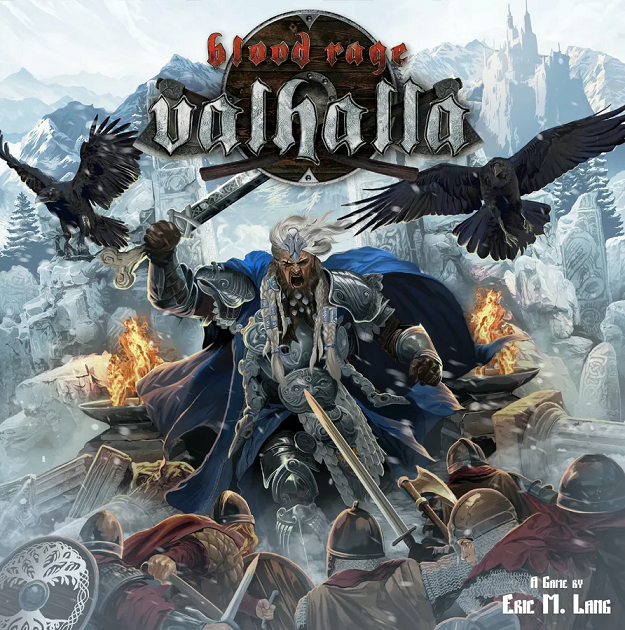
Scream Bloody Gore – A Blood Rage: Valhalla Review

29. Oktober 2026 um 14:00
There are moments in life that are intractably written into my consciousness like images chiseled into bedrock. These are important things like the day I married my wife and the first time I saw my child. Some are less important – but still meaningful – like the first time I watched The Matrix or held…

Read more →

This Doesn’t go to 11 – A Wavelength 1-10 Review

27. Oktober 2026 um 14:00
Wavelength is an elite party game. It features energetic team play, interesting discussion, and a monolithic plastic dial that generates a random position along a spectrum. All of these contribute to its success. I was intrigued when I heard that publisher CMYK was issuing a diminutive card-based version of this game. I wondered how it…

Read more →

Random Booster Packs: Is There Any Way They Serve Customers?

26. Oktober 2026 um 15:47

I’m not surprised that collectible card games are booming, but I am baffled by them. In nearly every way, random booster packs in CCGs do not serve customers as well as the standard tabletop method of including all cards in the game.

Imagine an alternate universe in which Ark Nova–the #2 game on BoardGameGeek, featuring 255 unique cards–was a CCG. Instead of just buying the game and getting those 255 cards, the only way to get those cards is by buying random booster packs (or by turning to the secondary market). All you want is the cheetah card, but you keep opening farm animals that you already have.

If I’m pitching that game to you, it makes no sense, right? When the customer buys the game, just give them the game–how does it serve them to only have some cards and not others via random booster packs?

Yet it’s clear that people like CCGs. That includes me! I’ve played Magic off and on since 1993–I literally hosted a Reality Fracture draft a few weeks ago. I’ve also dabbled in a few other CCGs (enough to make a top 10 earlier this year; most are tabletop, and a few are digital).

So in the list below I look at the reasons why CCGs justify the use of random booster packs as a way to serve customers, accompanied by tabletop counterpoints. I talk about several of these in yesterday’s YouTube video.

  • discovery: you can’t just see everything right away (counter: Ark Nova, Wingspan, Earth)
  • draft: get a random hand of cards, pick one, pass the rest (counter: 7 Wonders, Sushi Go, Blood Rage)
  • collectability: you can spend $5 on a pack of cards that contains a $50 card (counter: non-random games can be collectible and resellable too)
  • uniqueness: my deck is different than yours (counter: Root, Scythe, Star Wars Deckbuilding)
  • rarity: helps players value cards in a draft and it feels good to open something rare, like a treasure hunt (counter: games like Fliptoons note the quantity of each card on the card itself and Falling’s random shiny VP cards)
  • community: encourage people to interact with each other through trading, organized play, and tournaments (counter: Catan, Dice Throne)
  • self expression: highlight your creativity via deck construction (counter: any game with multiple paths to victory, plus living card games for deck construction)
  • thrill of opening a pack: it’s exciting to reveal the unknown (counter: drawing a hand of cards in deckbuilding games like Clank and opening boxes in legacy games like Charterstone)
  • cost: random boosters offer a cheaper buy-in when the customer doesn’t actually need everything (counter: any game with expansions, like Mindbug, Star Realms, Rolling Realms)
  • retailer support: CCGs can comprise a significant portion of a local retailer’s revenue stream (counter: there are successful retailers who solely focus on non-CCG games)

In addition to these counterpoints, there are also some straight-up cons for random booster packs: duplicates and waste, scalping/tampering, and gambling issues. For so many newer, smaller CCGs I see announced, they just as easily could have been standard tabletop games with all cards included in a single box.

I also have a few edge-case examples, games that try to offer the feel of random booster packs while avoiding the cons:

  • KeyForge: You don’t know what you’re getting when you open a KeyForge deck, so there is a sense of discovery. However, the cards in each deck have a unique back from all other decks, so there’s no rarity or trading of individual cards.
  • Gudnak: This dueling card game offers deck construction and strong asymmetry. When you buy a Gudnak set or faction, you get everything. However, the publisher is experimenting with also offering random packs for draft, and those packs feature cards with alternate art.
  • Skirm (Vantage spoiler): Each copy of my cooperative open-world game, Vantage, includes a randomized pack of a CCG played by the people of the Vantage planet.

Now, I know there’s one big obvious aspect I haven’t mentioned here: CCGs have made publishers a lot of money. But I don’t care about that. I care about serving customers and bringing joy to tabletops. That’s the only lens I care about for this discussion: Are there any ways that random booster packs serve customers better than their tabletop counterparts?

I’m genuinely asking, because random booster packs resonate with a lot of people. That much is clear. There is probably a viable way to offer them as an optional add-on for some tabletop games that (a) removes the cons of CCGs, (b) doesn’t impede the core, complete experience of the game, and (c) is truly fun for customers. What do you think? Have you seen this?


Also read:

If you gain value from the 100 articles Jamey publishes on this blog each year, please consider championing this content! You can also listen to posts like this in the audio version of the blog.

Can a Ready-to-Ship Launch Ever Capture the Magic of Crowdfunding?

22. Oktober 2026 um 22:18

I’m struggling to fully understand something, and I’d love to hear your perspective.

It’s actually two different sides to the same coin:

  1. Is there something inherently magical about crowdfunding for consumers that cannot be captured by a newly revealed, ready-to-ship product?
  2. If there is a sacrifice in attracting early-adopter consumers via the ready-to-ship model, is it vastly outweighed by the positive impact on retail customers (the vast majority of our sales)?

Since 2018, our model at Stonemaier Games has been that we invest our time, creativity, and resources into designing, developing, fine-tuning, producing, and freight-shipping new products before we reveal them–along with reviews and playthroughs of the 100% final version–and then we finally ask customers to consider buying them. We then ship to customers (consumers and retailers) over the weeks following the launch, and soon after there is a retail release.

This is done entirely in service to both consumers and retailers. By having such a short gap between reveal, launch, shipping, and release, we cast a strong spotlight on our new products, which increases the chances that the excitement from the reveal will sustain through the retail release and beyond. Customers aren’t left speculating on incomplete games with uncertain timelines (even as an avid backer myself, by the time I receive most crowdfunded games, I can’t remember why I was excited about them in the first place).

I’ve run crowdfunding campaigns (my last was Scythe in 2015), and I admire how creators and platforms have evolved over the years. I learn from them every day. But I have zero interest in returning to crowdfunding, as I truly believe our method better serves customers. We don’t need crowdfunding to build and engage community, gauge demand, improve our products, raise awareness, and allocate quantities to region-friendly fulfillment centers.

However, despite all those pros for ready-to-ship launches, I can’t ignore the data: Many crowdfunded games of a similar weight, aesthetic appeal, polish, quality, price, and region-friendly fulfillment–even from less-established publishers with a much smaller reach than Stonemaier Games–have attracted more early-adopter customers than our launches. Why is that? And does it highlight a problem or an asset?

Here are a few data points from our ready-to-ship new games sold over the last year:

  • Braided Skies recently earned around $200,000 from around 4,000 customers.
  • Wingspan Pocket earned around $255,000 from around 16,300 customers.
  • Duel of Meloch earned around $250,000 from around 7,100 customers.
  • Origin Story raised around $92,000 from around 4,200 customers.

Those are perfectly fine numbers, and I’m happy as long as our games bring joy to those who buy them. But relative to our overall reach–55,000 newsletter subscribers, 59,000 YouTube subscribers, a combined 100,000+ followers on Facebook and Instagram, and even 15,000 Champions who get a discount on all webstore purchases–it’s fair to say that quite a few potential early-adopters are missing out on our launches.

What elements of successful crowdfunding campaigns are missing from our ready-to-ship launches?

  • focus: My favorite crowdfunding campaigns are those where there are 1 or 2 core products at most, plus a few related add-on options. Conversely, for many recent Stonemaier launches, we often offer a bunch of new accessories and expansions (most unrelated to the core product) that happen to be ready at the same time. We do this so people can consolidate shipping and reach free-shipping thresholds, but I think there’s value in a more focused approach.
  • super-deluxe versions: Crowdfunding campaigns seem to be thriving on deluxe and super-deluxe versions of games. Our approach is to try to offer a deluxified experience in the standard version of each game, though we’ve never made a super-deluxe version of any game (at least not by modern standards).
  • duration: Our launches are 5 days; crowdfunding campaigns average around 25 days. Why so short for us? I view it as a concentrated spotlight during that time, after which we’re typically ready to start shipping to customers. The products remain available on our webstore after the launch, just without the launch discounts. We typically see around 80% of consumer launch orders on the first day. That said, from the day of the reveal through the end of the campaign, we’re looking at 3-4 weeks–the same length as a crowdfunding campaign.
  • visibility of funding and backer totals: There’s undeniable power in the visibility of funding and backer totals on crowdfunding platforms. If I check out an active campaign and see that it’s raised $500,000 from 6,500 backers, I have increased confidence and curiosity. We display launch units sold on each Stonemaier webstore product page, but it’s so spread out and you may not even see it.
  • sense of urgency: Even crowdfunding campaigns that don’t use FOMO tactics (I have zero interest in using fear as a motivator) still have a sense of urgency to them, as there’s a good chance the game might be difficult to find for a while after the campaign delivers to backers. Aside from a small launch discount and a desire to be the first to play a new game, there’s almost no urgency to our launches. If you don’t buy from us now, you can easily buy from a retailer in about a month, and if the product sells out, we’ll make more.
  • platform-driven discovery: I’ve always been a little dubious about the numbers reported by crowdfunding platforms for platform-driven discovery. However, there’s definitely a difference between hubs for a wide variety of projects compared a publisher-specific webstore in how people are more likely to browse and stumble across products they weren’t aware of.

Do you think a few of those elements add to the “magic” of crowdfunding? Of course, there’s also the aspect of helping to create something that doesn’t exist yet, but I still believe we can best serve our customers by making the product before asking customers to pay for it.

As much as I want people to get excited about our games from the start, our commitment to the ready-to-ship method seems to yield great results for our retail customers and localization partners, which is great! Here’s the data: If I add up the consumer webstore launch sales of new games since the beginning of 2024 (starting with our most recent retail releases, Wingspan Pocket and Duel of Meloch, and going back to Wyrmspan), the total is 72,462 units. Compare that to the total units in print for those games: 1,320,000 units.

That’s right: Over time, only 5% of our games are sold to consumers during the 5-day launch period. Close to 95% of our new games are sold by retailers and localization partners (plus some via our consumer webstore on an ongoing basis).

So it seems to me that in de-emphasizing the launch itself and offering a tight gap between reveal and release, we vastly increase the long-tail of our games. I think this is a worthy sacrifice, though I would still like to add a little more crowdfunding magic to our ready-to-ship launches. What do you think?


Also read:

If you gain value from the 100 articles Jamey publishes on this blog each year, please consider championing this content! You can also listen to posts like this in the audio version of the blog.

Pricing: Launch Secrecy and Convention MSRP

19. Oktober 2026 um 21:48

We’ve had two long-standing pricing practices that often raise questions, so today I thought I’d consolidate both into a post about pricing. One is about why we don’t reveal the exact price for new products before they launch on our webstore, and the other is about why we charge full MSRP at conventions. I don’t think we are alone among publishers for these practices due to the reasons explained below.

Launch Secrecy

Since 2017 we have not announced the exact price in advance of a launch for the following reasons:

  1. There are three different prices (MSRP, launch discount price, and Champion price) across multiple currencies (USD, CAD, AUD, GBP, and Euro). This greatly increases the potential for confusion about which price is being discussed online (i.e., if you hear me say, “The game’s price is $50,” there are 15 different ways that could be interpreted). But it’s very clear when you’re looking at your price in your currency on your webstore.

  2. Sometimes I make small adjustments to the discounted price leading up to the launch based on the continual influx of industry information: Products that other publishers launch around the same time, reviews, buzz, instinct, and the many other random inputs I try to observe during this critical time.

  3. As soon as the MSRP is made public, some retailers will start to list the game for preorder even if they don’t have other important pieces of information. We want our games to do well in retail, and I think it’s fair for retailers to wait until the publisher has launched a new product before they start to sell it. Withholding the MSRP helps to facilitate that goal.

People have asked for a rough estimate of the price in advance, so I’ve come to provide a high-threshold answer. For Braided Skies, I said that if you set aside the equivalent of $100 USD, you would have more than enough to order the game on our webstore. As you now know–the game launched last week–Braided Skies has an MSRP of $75 USD.

Convention MSRP

We charge full MSRP for our products at conventions, including the products we’ll have at Essen Spiel this week. Here’s why:

Selling games at a big convention like Gen Con or Essen is a huge investment. There are personnel costs (travel, lodging, and food for my coworkers and payments to all demo team members), booth fees, and freight shipping/logistics expenses to get the products to the convention hall. On a per-product basis, these costs triple the landed cost of most products.

It’s for this reason that every cent matters when we have a booth at a convention–this is why we charge MSRP. The silver lining is that customers don’t pay shipping fees when they buy games at a convention, and there are other perks as well: You can learn a new game from our demo team and sometimes get it signed by the designer or artist (both designer Dan Germain and artist Andrew Bosley will be at our Essen booth).

Also, even more importantly, this is why we don’t offer free games at conventions to content creators. I really appreciate reviewers–we send thousands of review copies each year–but if you want to see publishers invest in conventions, please consider buying a game from their booth instead of asking for a complimentary copy. I promise that we’ll have review copies for our new Essen games available later in the year.


I hope this helps to answer some questions around our pricing practices. I’d love to hear from other publishers–is there anything I’m missing here?


Also read:

If you gain value from the 100 articles Jamey publishes on this blog each year, please consider championing this content! You can also listen to posts like this in the audio version of the blog.

Unboxing Video: Empire of Grass: The Conquests of Genghis Khan from White Dog Games

Von: Grant
18. Oktober 2026 um 14:00

Empire of Grass: The Conquests of Gengis Khan is a solitaire card-wargame of the Mongol invasion of Eurasia in the twelfth century under Genghis (Chinggis) Khan. You play the Great Khan, commanding his armies as he conquers territories, recruits other nomads into his army, and either garrisons or razes cities.

The map of your conquests is made through placing cards which represent the regions of Eurasia that the Mongols conquered (or tried to). As you expand you have to take care as neighbouring kingdoms may appear to challenge you and your allies can desert or even rebel. An optional game allows for an uncertain world with the cards randomised.

We posted an interview with the designer David Kershaw and you can read that at the following link: https://theplayersaid.com/2025/09/08/interview-with-david-kershaw-designer-of-empire-of-grass-the-conquests-of-genghis-khan-from-white-dog-games/

-Grant

The Stonemaier Strategy Magazine

15. Oktober 2026 um 15:57

In the early ‘90s, I was fascinated by a magazine called Nintendo Power. It was mostly a strategy guide for Nintendo video games, complete with vibrant visuals showing levels and hidden areas in games like Mario Bros., Zelda, and TMNT. Despite not even owning a Nintendo gaming console, the magazine made me feel like I had access to dozens of hidden worlds.

Little did I know that many years later I would have a hand in creating some hidden worlds at Stonemaier Games. Our tagline is literally, “Which world will you visit today?” So I thought it might be fun to create a strategy magazine in the style of Nintendo Power, allowing you to explore our tabletop worlds in a different way.

While I’m either the designer or the developer of all Stonemaier games, I’m certainly far from the foremost expert on how to play them well. So I posted a survey to Stonemaier Ambassadors (people who actively welcome people to our worlds on a regular basis) to see if I could find someone with deep knowledge for each of our games.

The result is the Stonemaier Strategy Magazine, a guide for each of our games, including mini-guides for 3 new games of 2026 (Duel of Meloch, Wingspan Pocket, and the just-launched Braided Skies, which were not revealed at the time of this magazine’s creation).

If you’re like me, you might enjoy discovering strategies as you play instead of learning how others play the game. I think you’ll find that this single-issue magazine is just a tiny taste of what you can do in these games—most of the discovery is entirely up to you. You might also learn something new about a game you know well, or you might be inspired to try a game you’ve never played.

The 52-page, full-color Stonemaier Strategy Magazine is $5, we will donate all proceeds from each copy purchased during our annual charity auction to these charities (divided equally). The auction is live now and will end tomorrow.

Thank you so much for exploring the worlds of Stonemaier Games! I’m so grateful to you for playing our games, the experts for authoring this guide, Alessio Paniccia for turning text into beautiful layouts, and all the amazing people—my coworkers, playtesters, proofreaders, artists, designers, etc.—for creating these games.


If you gain value from the 100 articles Jamey publishes on this blog each year, please consider championing this content! You can also listen to posts like this in the audio version of the blog.

Is Growth Good?

12. Oktober 2026 um 18:41

I’ll never forget a brief conversation I had with a friend in the game industry around 10 years ago. We were talking about a publisher with 20 employees, and they were looking to hire more people. I asked my friend, “Is having more employees inherently better?”

His answer–a resounding YES–was memorable because (a) it wasn’t even a debatable answer for him and (b) I actually don’t agree. I think there’s a big difference between purposeful growth and growth for the sake of growth, whether it applies to the number of employees, products, infrastructure, revenue, etc.

This was perhaps the biggest topic I broached with Joe of Allplay and Nick from Bitewing in our recent conversation. Early in the chat Joe mentioned an exit interview with an employee who had concerns about the complex web of internal systems resulting from Allplay having 30 employees and publishing around 25 games per year.

I was already curious about this, as Allplay and Bitewing both have quite a few unfulfilled crowdfunded games (14 total between them at the time of the recording). I asked them how they felt about that quantity and how it serves their customers. We also talked about overhead (Allplay owns a warehouse) and the general concept of growth (Joe mentioned the size of Asmodee as an aspiration for Allplay).

Bitewing is a little more similar to Stonemaier in that both companies have less than 10 employees and rely heavily on outsourcing to independent contractors, facilities, and services. We incur different risks than Allplay: We have less control and might be forced to pivot (this happened recently when our fulfillment partner in Canada told us they no longer wanted to be a fulfillment center). Conversely, the risk of high overhead is that if you have a bad year, you might struggle to pay salaries and leases.

Here’s my take on growth for each category:

  • Personnel: I believe in hiring based on need. If there are enough responsibilities for a new coworker to have and sustain a full-time position that will serve customers better, that’s when I start to think about a hire. The first place I turn to is this form. Also, importantly, if I hire someone, it’s because I believe in them and the position so much that it’s a long-term commitment that Stonemaier can commit to supporting through good years and bad years.
  • Products: I believe in quality over quantity; I don’t think more is better. I think we can best serve customers by spending a lot of time, effort, resources, and love to release only a few new games at most each year rather than casting a wide net, especially when there are so many other companies also making great games. We can really shine the spotlight on each game when we do this, which also gives each game a better chance of long-term success.
  • Infrastructure: We’ve never invested in infrastructure at Stonemaier Games. I view our core competency as game publishing, not warehousing, manufacturing, fulfillment, or retail (i.e., selling our own games via a storefront). We all work from home from 5 different states rather than maintaining a shared office space.
  • Revenue: I literally don’t care at all about growing revenue year to year. In my opinion, the pursuit of increasing revenue doesn’t have any connection to serving customers (at best it is one of many metrics for gauging customer satisfaction). As long as we have the funds to generously support our personnel and fairly pay independent contractors, we have what we need. “Number go up” is simply not a goal for us.

For what it’s worth, I feel similarly about events and conventions: To me, the goal is for everyone to have a great time in a specific shared experience. An event that works well with 100 people may feel completely different if it grows to 400 people.

Those are my thoughts on growth! I’d love to hear your perspective: Is more inherently better? When is growth good?


Also read:

If you gain value from the 100 articles Jamey publishes on this blog each year, please consider championing this content! You can also listen to posts like this in the audio version of the blog.
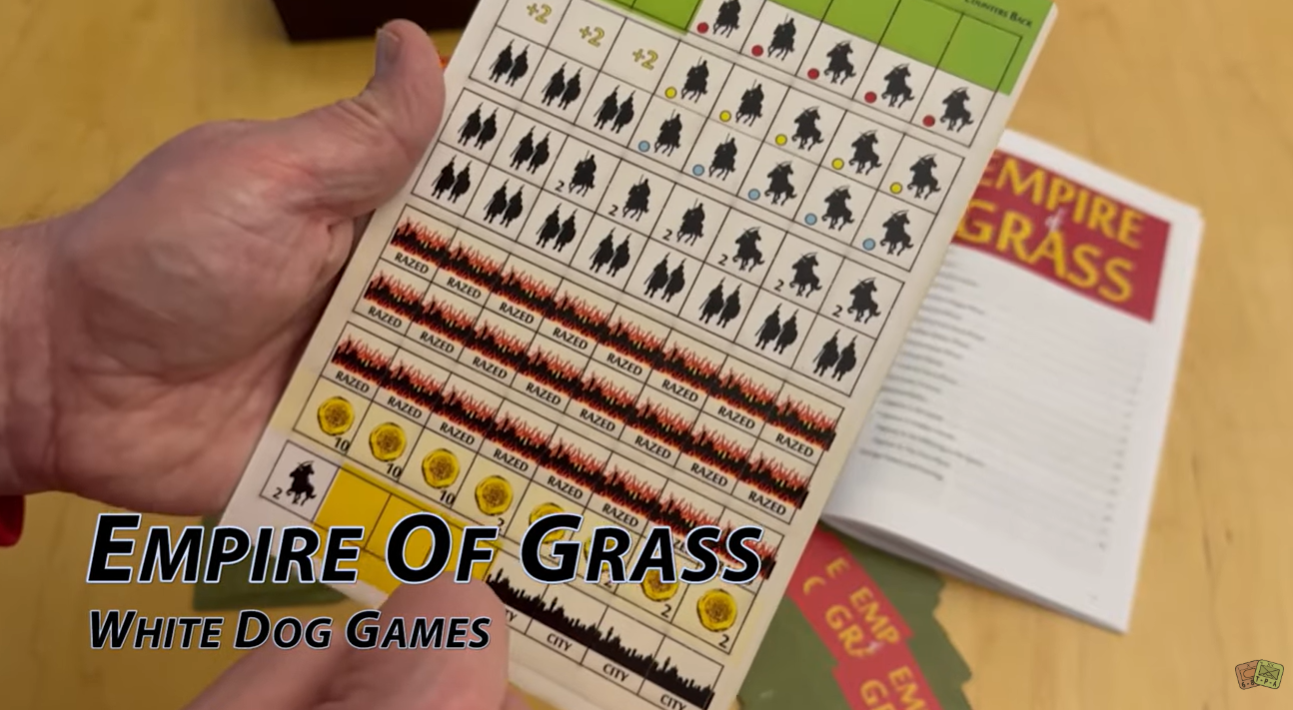
Euro Trip – An Abroad Review

12. Oktober 2026 um 15:00
Abroad gives off a vibe. It presents as a pleasant little outing, maybe something akin to Parks or Trekking the World. This is deceiving. It is not a cozy travel game. It’s a stout mid-weight fella that’s more robust than it appears. In fact, it wanders in the region of burgeoning modern tableau builders like…

Read more →

Questions for The Bits: My Answers (Part 2)

08. Oktober 2026 um 21:50

A few days ago I posted an article with my answers to some of the questions I asked Joe from Allplay and Nick from Bitewing on their podcast (The Bits), and today I’m back with a few more responses. Also, the podcast is now available–check it out to hear their fascinating answers!

4. What’s a recent piece of constructive criticism you heard from a customer, coworker, or contractor that made you rethink your position?

I think there’s great courage in listening, learning, and evolving, and I think it’s important that I give others the grace to do the same. It’s okay to change your mind or a process.

Here’s a little thing, but I heard it and will act on it: I recently wrote a post about our announcement trailers (Braided Skies and Namiji), and a reader–Tom–commented that they found it a little jarring that the text for each “scene” was in a different position on the screen. So in future trailers, I’ll request that the text always be in the same position.

Here’s one more, as that first example isn’t really about me changing my mind. I had a plan to print on the inside of our box lids small images from all of our games and a QR code to learn more, as I thought that’s a place that would ensure the information is always in the game (even if it passes hands over time). A coworker said that people really don’t like promotional content printed on their game boxes–their theory is that people like the choice to keep or recycle such content. So I changed it to a loose sheet of paper that will start to appear in some games in 2027.

5. What’s a game by another publisher you recently played from which you learned something about product design?

I can’t possibly narrow this down to one game, so I’ll mention some quick observations from recent plays:

  • Jisogi: I love how different tile shapes fit together to form each anime.
  • Hellas: The box lid folds out to become the board, and the bottom of the box is the score track.
  • Sky 5: A different quantity of cards is used for each player count, but instead of requiring that you count out that exact amount, you hold up a card like a ruler to determine the approximate height of the deck.
  • Kano: I love the use of a canvas material for the board and the resin paint jar tokens.
  • Torchlit: Certain special cards are foil-embossed, which really makes them stand out.
  • Aqua Garden: The sheer volume and beauty of the fish meeples in this game is staggering.
  • Eldur: Another game that uses the box as a board; the box also acts as a tug-of-war track and a place to display active ability cards.
  • Falling: I love that Falling only has a 10-VP track, and when you reach 10, you gain a random card valued at 10 VP with a small surprise bonus on the back.
  • Askalotl: This adorable game uses multiple lidless boxes to speed up setup, make cards easy to pass around, and to conceal information on cards.

6. What’s an experiment you tried recently? What about it went well, and how would you adjust it if you did it again?

A little over a month ago I had a chat with a friend in which I expressed a desire to engage more often with our customers. I do this publicly on many platforms, but gone are the 2012 Viticulture Kickstarter days when I thanked every backer individually in a private, personal message. Due to the scale of our webstore sales, this is no longer possible, but it also didn’t feel true to send customers a generic, fill-in-the-blank message.

The friend pointed out that this doesn’t need to be an all-or-nothing proposition. Sending a few notes is better than sending none. So for the last 6 weeks, every week I pick a few random customers who recently placed orders, and I send them a message thanking them for the order. I often share something I love about the product they bought, a short design story, or a recommendation for the first time they get it to the table. I’ve been delighted by the responses, and it’s a great reminder of the power of something real, genuine, and personal in an era of AI slop. Honestly, there isn’t really anything I’d adjust about it at this time, but I’m curious to see how it evolves.


I’ll be back next week for my final answers. In the meantime, here’s the video with Joe and Nick’s perspectives!


If you gain value from the 100 articles Jamey publishes on this blog each year, please consider championing this content! You can also listen to posts like this in the audio version of the blog.

Questions for The Bits: My Answers (Part 1)

05. Oktober 2026 um 18:06

I love listening to publishers speak publicly, frankly, and openly about their business decisions. Two such publishers are Joe from Allplay and Nick from Bitewing, both of whom share their thoughts and often field questions from guests on a podcast called The Bits.

I also love asking questions, so I reached out to Joe and Nick to see if they might consider me as an inquiring guest. They were very kind to accept, and we recorded the episode recently. It hasn’t aired yet, but I thought it would only be fair if I answered the same questions I asked. So here’s part 1, and when the episode airs, I’ll share it here and add my answers to the remaining questions.

  1. I really appreciate that you two take the time to make this podcast. Does it continue to bring you joy, and what’s a game-related podcast you enjoy?

I’m fortunate to have a few platforms on which I share my thoughts on publishing from different angles: this blog (which is also available as a podcast), our game design YouTube channel, and the Posivitely Board Gaming podcast (with cohost Mitchell Whitfield). All of these formats absolutely continue to bring me joy, especially when I get to hear your thoughts in the comments; if they weren’t, I wouldn’t keep making them week after week, year after year!

I listen to a lot of podcasts about games, but I’m only aware of a few that are recorded and regularly posted by fellow publishers. There’s The Bits, Lens and Veil (by Shem, Sam, and Zach from Garphill Games), Decision Space (one of the hosts is Paul from Gamehead Games), Think Like a Game Designer (Justin Gary from Wise Wizard Games), Nerdlab (Marvin at Nerdlab), and Crowdfunding Nerds (Andrew Lowen at Lowen Games).

2. What’s the best way you currently serve customers? What’s the #1 area of improvement for serving your customers?

This is a slightly difficult answer to question, because at the heart of literally every decision we make at Stonemaier Games is, “Does this serve our customers? How can this better serve our customers?” We don’t always get those answers correct or execute them perfectly, and what’s best for one customer may not be what’s best for another hundred customers, but this is our guidepost every day.

So what’s the best way we serve you? I’m actually more interested in your answer to that than my answer. But if I were a customer of Stonemaier Games instead of the co-founder, I think I might say that I appreciate the sheer abundance of art (all created by humans) in each of our games. I love when every card or tile in a game has unique art, and I don’t take that for granted–it is a significant expense, and one that takes time, trust, and project management. A close second might be how accessible we are (mostly publicly, but also privately for confidential questions/requests), but it’s really quite rare that I ever have a direct question even for my favorite publishers.

As for our #1 area of improvement, I think it’s first-printing perfection. We put so much work into creating, testing, and proofreading our games, expansions, and accessories, yet we all-too-often falter late in the process with something that ends up sticking out like a sore thumb. While only some of these errors are my fault, they are all my responsibility. We’re currently using an app called PageProof for proofreading that seems to be helping significantly, and our PPC playtests over the last few years really help too. But we can do better, and we will do better.

3. For people who don’t already follow you, what is the number 1 way they discover your newest product?

Honestly, it’s far more important for me to serve people who already follow us or our games than it is to entice newcomers (whether it’s via organic marketing, our content, advertising, etc). However, I also strongly believe in the power of actively and inclusively inviting people into the world of Stonemaier Games. I want to welcome people who haven’t tried one of our games, especially if there’s a game we make that might bring joy to their tabletop.

Again, it’s difficult to pick a true #1; rather, I have a top 5. However, of those 5, I think if I had to choose one, it would be word of mouth from people who either play our games and share them with friends (one of the perks of making games/expansions that always play up to at least 5 players) or follow our content and share it publicly. This is followed by reviewers (we send thousands of review copies each year), retailers (it’s hard to measure if people are discovering our games through retailers or if they’re learning about them elsewhere and going to the retailer for the purchase), digital games (Board Game Arena in particular is a great discovering platform, though I’ve heard from many people who discovered Wingspan via Wingspan Digital), and play-and-win at conventions (thousands of people play our games for the first time via play-and-win, but I’m not sure how many of them are learning about those games for the first time via play-and-win).

I’ve rambled enough for today, so I’ll save the remaining 7 or so questions for future articles. I’d love to hear your thoughts about all three, whether they’re in relation to Stonemaier Games or if you’re a publisher who would like to share your answers!


If you gain value from the 100 articles Jamey publishes on this blog each year, please consider championing this content! You can also listen to posts like this in the audio version of the blog.

Jump in the Pit – A Grabble Review

05. Oktober 2026 um 15:00
Grabble sounds dumb. You take it off the shelf, remove the lid, and put the game box in the middle of the table. The box is the playing arena, so yes, I’m hitting you with the “place the board in the center of the table” instruction. In the box is a bunch of junk. Shiny…

Read more →

Why? Why? Why?

01. Oktober 2026 um 16:55

Over the last 14 years at Stonemaier Games, many times we’ve asked ourselves why things are the way they are (both in the game industry and within our company). This led to us being one of the first publishers to offer region-friendly shipping, to Stonemaier leaving behind crowdfunding in 2015, and eventually to me hiring my wonderful team of coworkers starting in 2020.

“Why?” is such a powerful question. So why only ask it once?

This is an insight from Mehul Nariyawala, co-founder of Matic Robots. On his recent appearance on the Unit Economics podcast, Nariyawala shared that a common practice at Matic is to ask “why” three times in a row to get to the heart of a problem or question.

An example of this came up recently with the success of Wingspan Pocket. Both externally and internally, people have asked if we should make an expansion or a spinoff. “Why?” I asked. Well…that’s what publishers do when a game sells well. “Why? Is the game missing something?” Well…no, but I’ll always take more cards. “Why aren’t there more cards?” Wingspan Pocket’s abilities are depicted as icons, not text, and with icons there’s a limit to the number of unique abilities. “Why not add more text?” That’s counter to the accessible, approachable concept of Wingspan Pocket; rather, Wingspan is already there if you’re looking for a lot of unique, text-heavy powers.

Sometimes the answers might reveal information but need more time. For example, a number of people have recently asked if we will sell games on our webstore for pickup at Essen. The answer is no, but why? We use InsideUp’s POS at Essen, and it doesn’t sync to our Shopify. Why do we use their system? We share a booth with them, and it’s more customer-friendly if customers can buy products from both companies at a single checkout. Why value efficiency over preorder convenience? It’s partially economics: It’s much more expensive to sell games at a convention than on our webstore. Why? Booth rental and personnel costs. Why not find a way to make it work financially? If it best serves customers, I think that’s a worthy goal to pursue.

I really like this concept not only for business discussions, but also for processing playtest data. “This card was useless.” Why? “I never used its ability.” Why? “The ability was too expensive to activate.” The best playtesters provide the third answer right from the start, but even then I sometimes dig deeper to best understand the problem so I can try to identify the best solution.

Why? Why? Why? I’m going to use this approach for more questions in the future. Have you tried something like this?


If you gain value from the 100 articles Jamey publishes on this blog each year, please consider championing this content! You can also listen to posts like this in the audio version of the blog.

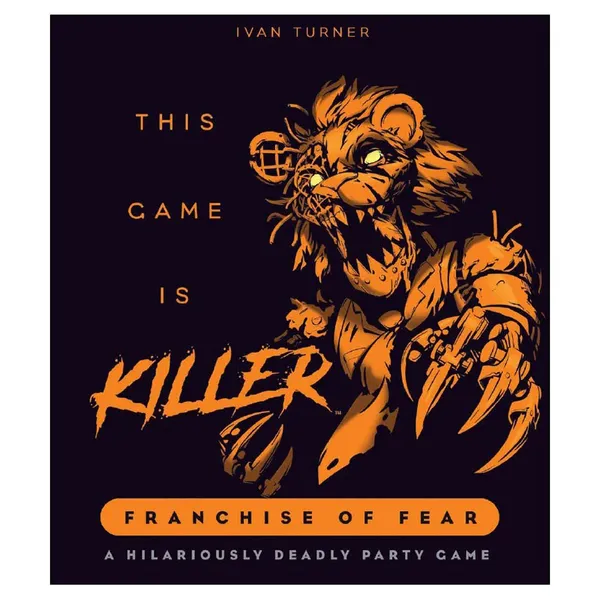
This Game is More KILLER – Franchise of Fear in Review

28. September 2026 um 15:00
Ivan Turner is digging deep to bring us the third installment in his This Game is KILLER franchise. I was pleased with the initial offering, a riff on Ridley Scott’s Alien that took the form of a half hour semi-cooperative party game. Players slink about their ship, attempting to stave off death and kill the…

Read more →

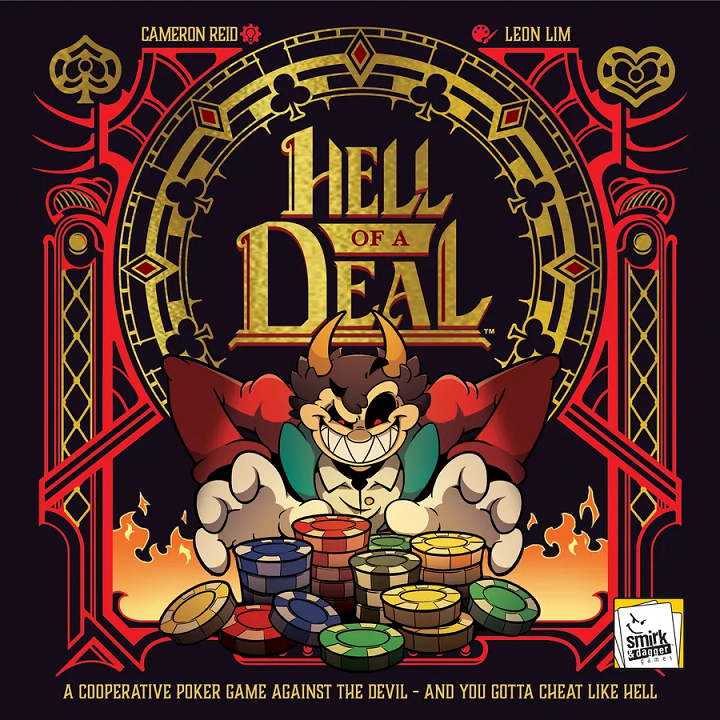
I Met Death Today – A Hell of a Deal Review

21. September 2026 um 15:00
You can pinpoint moments where things change, where ripples meet ripples and creativity shifts. Dominion concocted deckbuilding. Love Letter gave the microgame sex appeal. The Crew pulled trick-takers from the ground like a necromancer. Now, Balatro is whispering in the minds of designers, calling forth Ace of Spades, Rolling Deep, and the subject of this…

Read more →

Star Wars Deck Building Game Rebels & Empire Reinforcements Expansion

18. September 2026 um 15:39

This expansion is a great addition to the Game. This expansion adds so much to the play including a campaign mode, mission cards, reinforcements as well as adding new base cards to expand your gaming experience even more.

First up is the new mission system.  Unlike with the original game where there was a shared Galaxy Row, now there missions to complete that allow you to claim the relevant reinfroceent card and add it directly to the top of your deck.  This means you can plan around unlocking units rather than hoping for a lucky galaxy row flip.

The new Campaign Mode means that rather than just playing one game  you play five games back to back to work out the winner.  Each of the 5 parts repesent a major phase of the galactic conflict. You complete missions in each game.  Then between games you can use points from the previous mission to buy as many of the new starter cards as you can afford to replace the old ones with so that you always have 10 starter cards in play.


This adds so much to the Game and I hope that you enjoy it as much as I did.  You can order it at: https://www.bgextras.co.uk/products/star-wars-the-deck-building-game-rebel-and-empire-reinforcements-expansion

The post Star Wars Deck Building Game Rebels & Empire Reinforcements Expansion first appeared on Board Game Extras.

How Do You Ask Rule Questions?

14. September 2026 um 20:36

Over the weekend I was playing a game, Takenoko, which I hadn’t played in a while. I had a rule question about gardener and panda movement, and I did what I often do if I can’t find a question in the rulebook: I pulled out my phone and Googled the question.

These days, Google shows the AI answer at the top of the page, so I see that first before scrolling down to look at the sources, most of which are BoardGameGeek threads. 99% of the time when I have a rule question and use this method, I find the answer, which is made possible by people who ask questions in permanent public places (versus private messages).

At Stonemaier Games, we’ve found that the AI answers aren’t always correct (this is why I look at the sources too). We rarely have a good way of replicating the question and/or fixing incorrect answers, so we found a web app that enables those features.

On Portal, we feed our rulebooks (and other applicable files) into the app, ensuring that it sources the official files. Anyone can choose a game and ask a question, and Portal will find the answer in the rulebook, including visual citations. You can try it right now.

As a publisher, I have access to the back-end dashboard for our games on Portal, where I can see a list of questions all in one place. I can improve answers and use the “confidence” metric to improve rulebooks for reprints. I see a lot of potential value in it, and the developer (Will) is very responsive.

However, many questions about games are less urgent and more geared towards discussion. Sometimes they’re not even questions. The community around our games is driven by threads about specific cards, house rules, fan-made components, opinions, and photos. For those, we recommend using any of the following:

For the first time, all of these options are now found in one convenient location on our website (“Rule Questions”, at the top of the page).

How do you ask rule questions? Are you satisfied with the answers? What other types of questions or posts do you make about tabletop games (when you’re hoping for other perspectives)?


If you gain value from the 100 articles Jamey publishes on this blog each year, please consider championing this content! You can also listen to posts like this in the audio version of the blog.

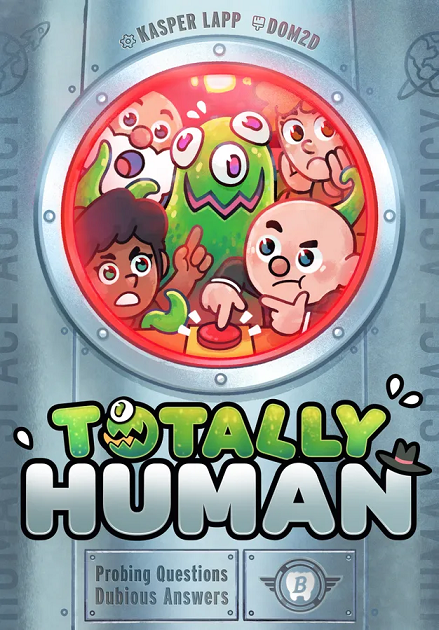
They’re Just Questions, Leon – A Totally Human Review

14. September 2026 um 15:00
Kasper Lapp, Voight-Kampff test, 10-minute social deduction game is the kind of pitch I hope to hear when riding the elevator. Lapp previously designed quirky hits like Magic Maze and That’s Not a Hat, so his brand of silly seems uniquely appropriate for this sort of nonsense. When it works the playful interrogation is both…

Read more →

❌