Lese-Ansicht

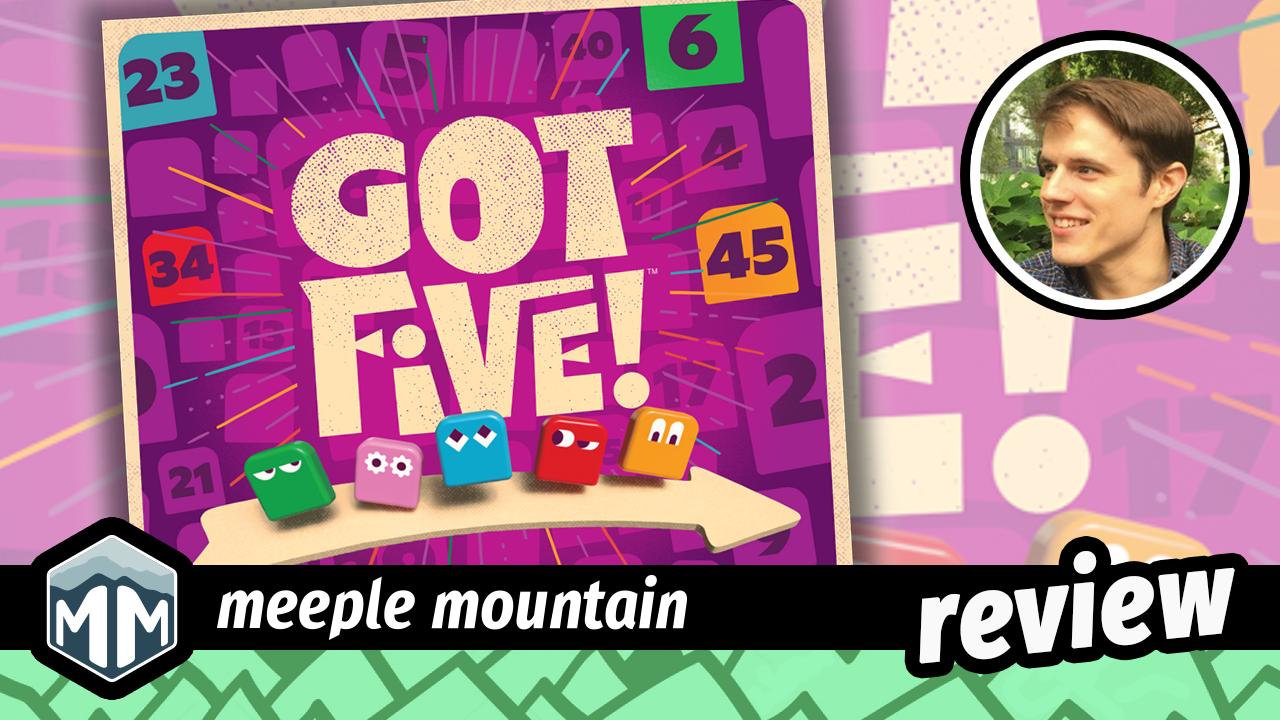
Got Five! Game Review

Every now and then, I sit down to play a game with no expectations whatsoever. I anticipate neither excitement nor despair. I am absolutely ambivalent, a perfect blank slate. I think of this as a true neutral response, but it occurs to me that I generally enjoy trying new games, so ambivalence is in fact a moderately negative response. I’ll process this on my own time.

Ambivalence was very much the case with Got Five!, a deduction game from designer Yoann Levet and publisher Blue Orange. I picked up a review copy because it was the slow season, I knew it wouldn’t take long to play, and I liked the tiles. I don’t know which of the two credited artists, Mathieu Clauss and Simon Douchy, is responsible for them, but those colorful bakelite tombstones with expressive eyes are hard to resist.

Don’t be fooled. Their friendly exteriors harbor terrible secrets, by which I mean numbers between 1 and 60. If you think that doesn’t sound so bad, you probably like math. During setup, each player takes one tile in each of the five colors and stands them up so the numbers are visible to everyone else at the table. It is extremely important that you not see the numbers on your own tiles, since the goal of the game…

The post Got Five! Game Review appeared first on Meeple Mountain.
  •  

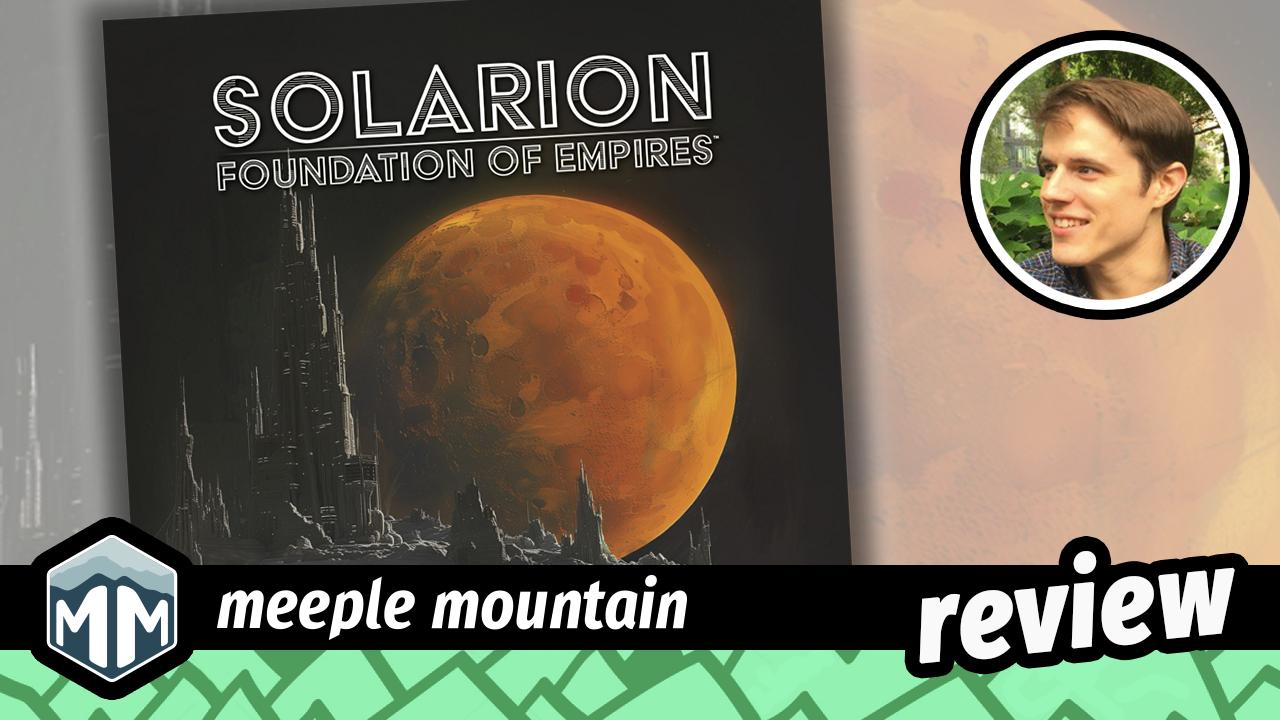
Solarion: Foundation of Empires Game Review

Several years ago, my friend Nathan introduced our group to Tyrants of the Underdark, a deck-building game that used Dungeons & Dragons lore for its setting. My initial response was dubious, as often happens with licensed product. The art, which Nathan had warned us about in advance, didn’t help. Dozens of artists are credited on the game, and many of their illustrations are not…good. The hodgepodge of styles did not promise a robust play experience.

Fortunately, first impressions can be wrong. Tyrants of the Underdark is an excellent, taut marriage of deck-building and area-control. It is wonderfully interactive, encouraging players to step on one another’s toes at every turn. The modular deck system, which changes the cards in play from game to game, ensures a good amount of variety. The game is both immediate in its pleasures and rewards deeper exploration.

Tyrants of the Underdark is exactly the kind of game that I would expect to be a cornerstone of The Hobby™. And yet. Despite the quality of its reputation amongst those who’ve played, Tyrants remains somewhat obscure. I can’t even tell if it’s currently in print or not. It is often hard to find. It begs for expansions, but it only has one, which is both long out of print and heinously expensive. For a game that threatens…

The post Solarion: Foundation of Empires Game Review appeared first on Meeple Mountain.
  •  

Counterpoint Game Review

I have never before given much thought to the ways in which music composition and game design are similar. Like all creative arts, both share the goal of trying to communicate and share an experience with their audience. As disciplines, music has notes and rhythms while game design has rules and mechanisms, but both are about taking those disparate ingredients and making them cohere into something whole, something that vibrates with inevitability.

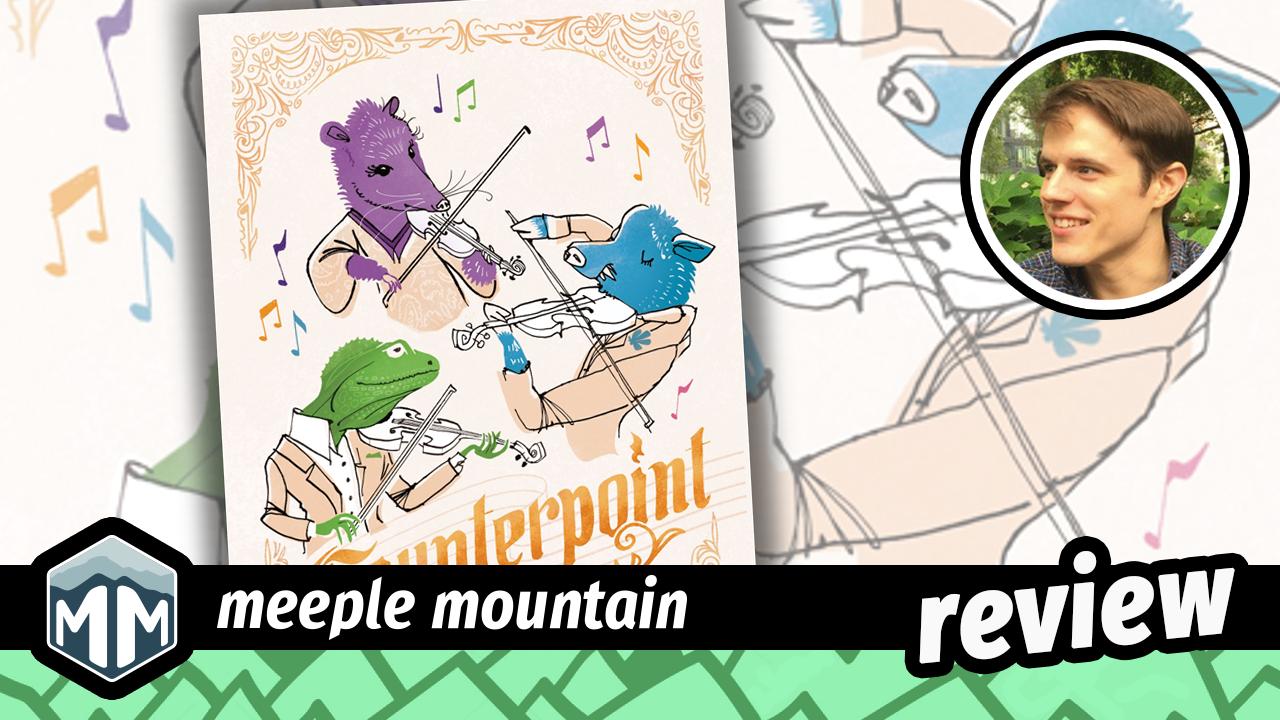
Ted Mann Schaller’s Counterpoint is a must-follow cooperative trick-taker with bidding and a trump-suit. A blessing, to live to see such times as those in which I can write that sentence and assume much of the audience will understand. Each player is a member of an animal chamber trio–to-quintet, be they an iguana violinist or an armadillo pianist. Such is the quality of Brandon Campbell's illustration work here that fights will break out over who gets to be what. The cooperative nature of the game follows the template laid out by blockbuster predecessors The Crew and The Lord of the Rings: The Fellowship of the Ring - Trick-Taking Game: over a series of performances, scenarios named after pieces in the chamber music canon, players attempt to complete certain challenges while also ensuring that everyone makes or exceeds their bid.

There are a few twists on the formula,…

The post Counterpoint Game Review appeared first on Meeple Mountain.
  •  

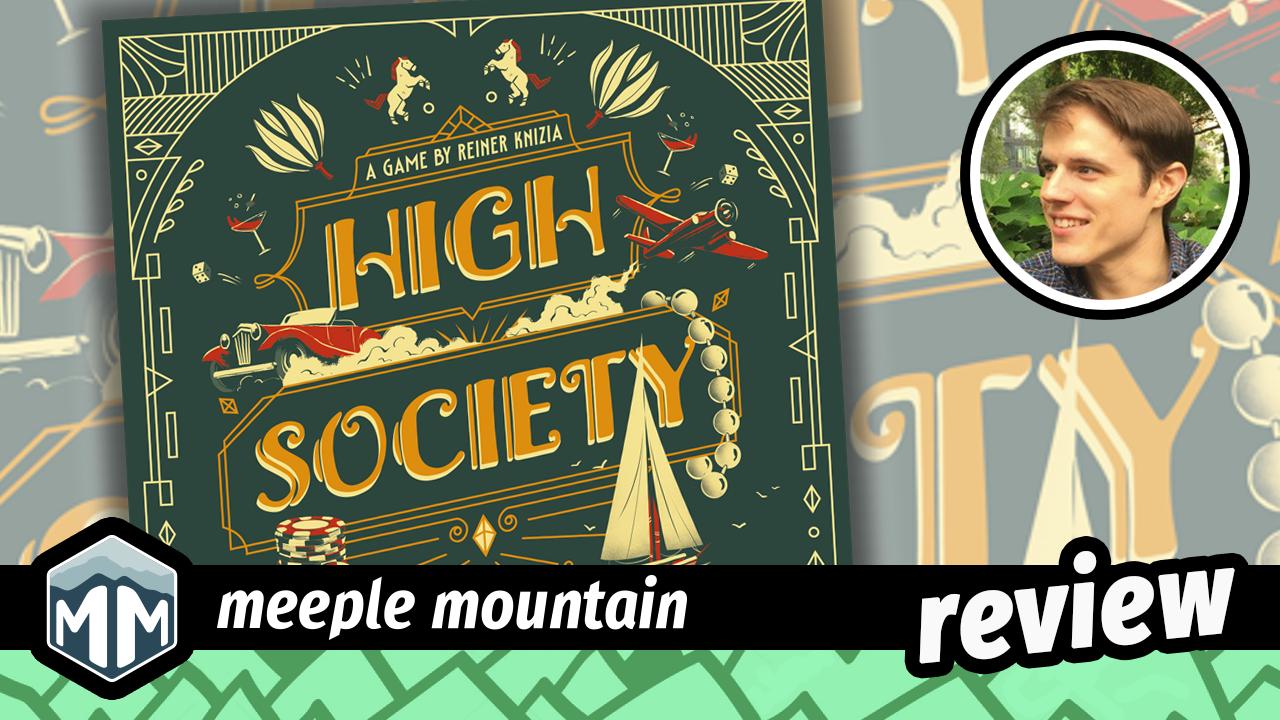
High Society Game Review

In the broadest possible strokes, games are created out of three or four things: what you can do, what you can’t do, what you want, and, occasionally, what you don’t want. Not every game includes something you don’t want as a category unto itself. You don’t want to end up with few resources in Catan, sure, but that’s just the inversion of what you want: resources with which to build things. I’m talking about things like running out of food in Agricola, where there is a specific punishment meted out by the rules.

In High Society, a fabulous auction game for three-to-five players by designer Reiner Knizia and recently out in a new edition from publisher Allplay, those four categories are crystal clear. That’s never a bad thing. Many of the best games provide clear, succinct definitions for each of them. High Society is a masterpiece not only because it provides ready definitions, but they work, delightfully, at cross-purposes.

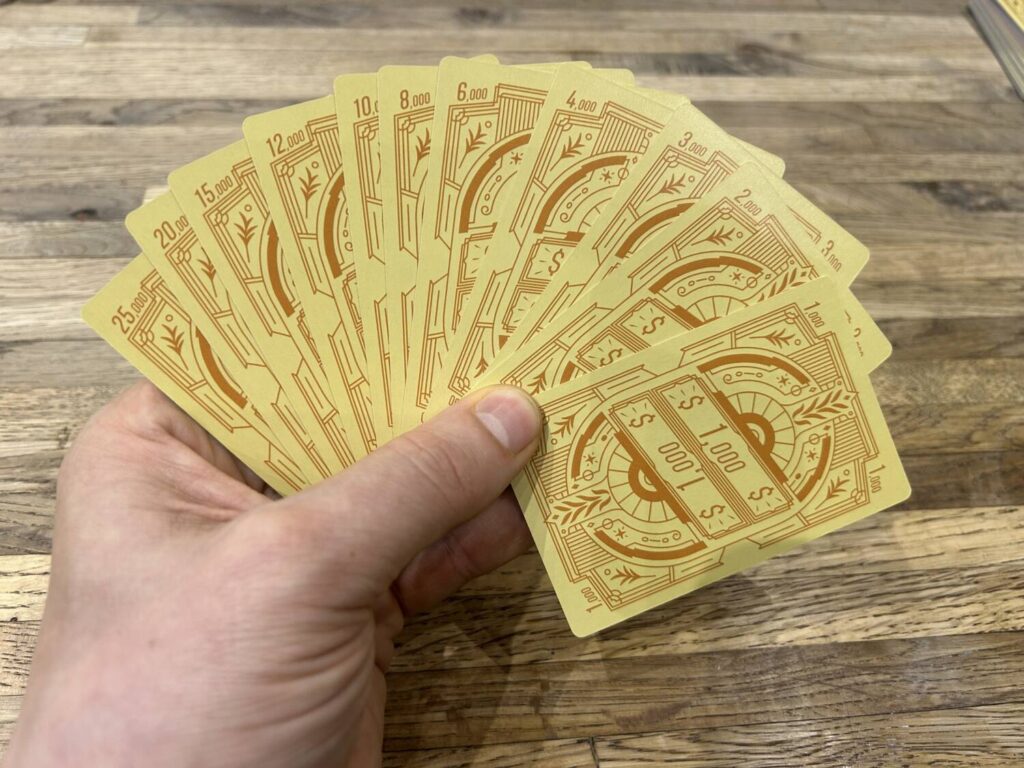
A handful of money cards.

The goal of High Society is, of course, to have the most points at the end of the game. There we have our first definition:

What do you want? To have the most points.

Points are accrued through the purchase of various cards, revealed from the…

The post High Society Game Review appeared first on Meeple Mountain.
  •  

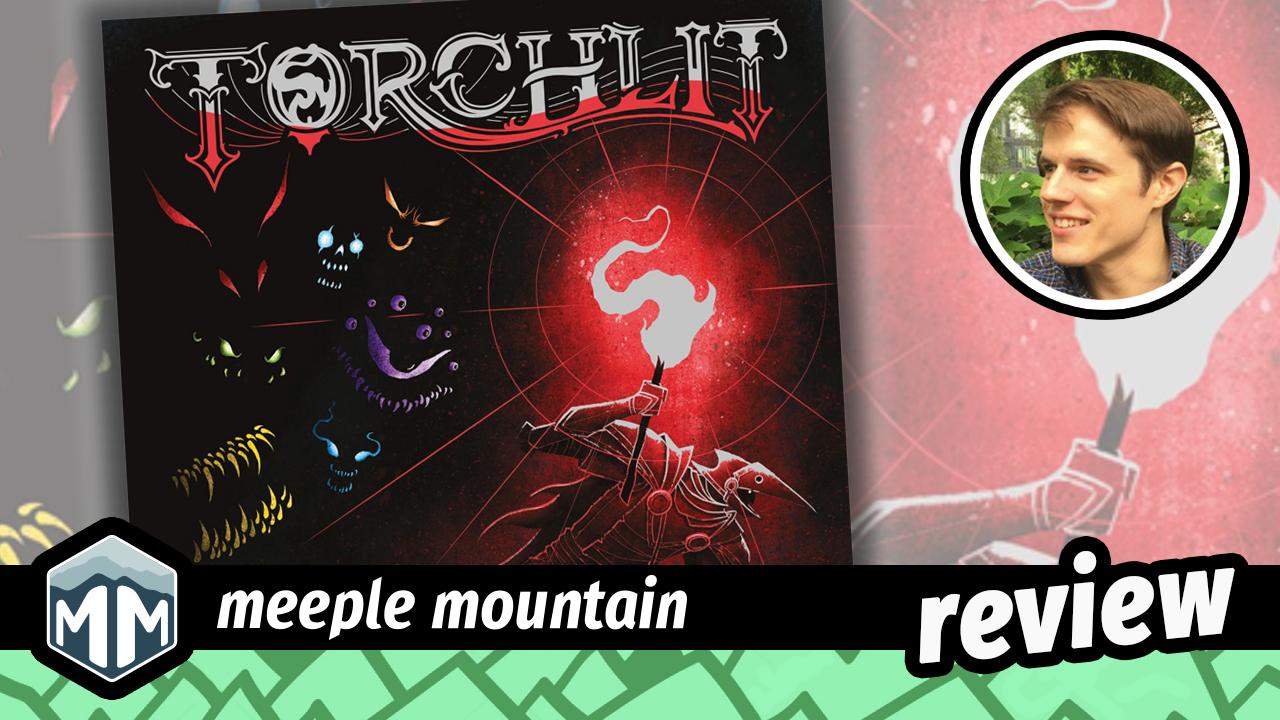
Torchlit Game Review

Whoever walked away from a hand of trick-taking and thought, “Hey, you know what would make this better, is if we had to guess how many tricks we would win beforehand,” has my eternal gratitude. I like to think bidding came about as a party trick. “Françoise is really good at tarot, I bet he can guess exactly how many tricks he’ll win. Guess, Françoise, guess.”

However bidding started, it has long been a cornerstone of trick-taking, and is reliably my favorite way to engage with the mechanic. Card games are inherently subject to tremendous amounts of luck, of course, but bidding shifts the balance a bit closer to skill. More skill means more agency. More agency means more investment. More investment means more fun for everyone.

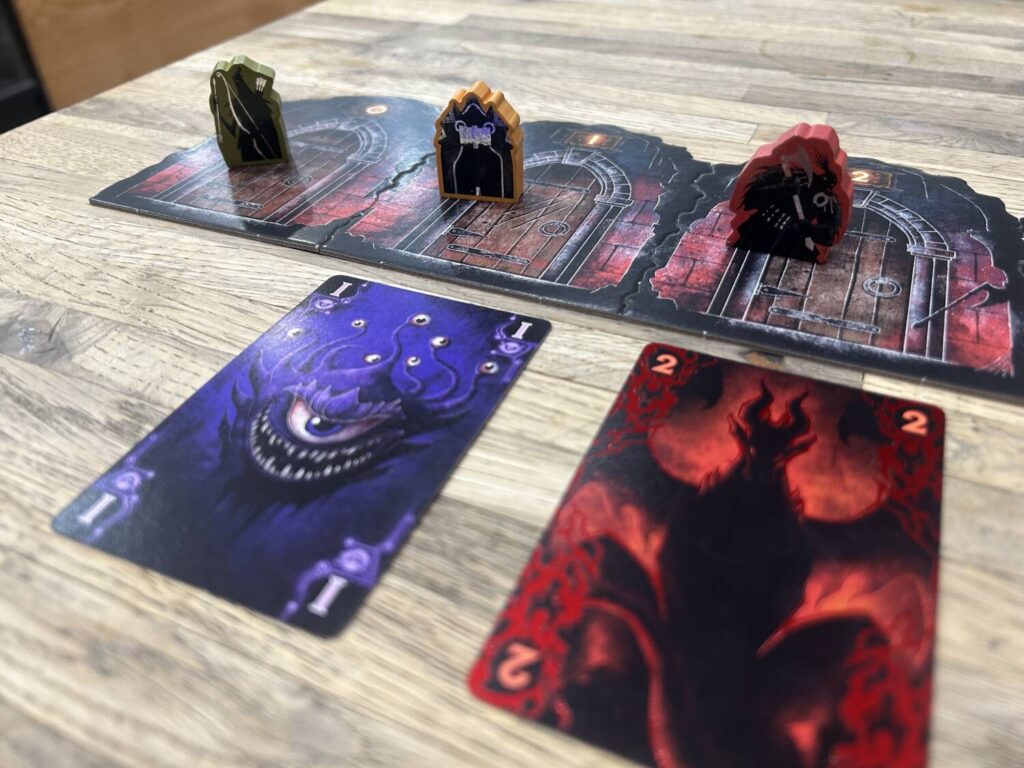
Torchlit is, above all, a bidding game, though it’s a strange one. The deck is dealt out, and every player chooses a card from their hand to put face-down on the table in front of them. The numbers on those cards, which run from 0-7, correspond to a series of dungeon door tiles placed out in the center of the table in numerical order. Whichever card you put down, the matching door is where you want to end up by the end of the hand.

A series…</p>
<p>The post <a href=Torchlit Game Review appeared first on Meeple Mountain.
  •  
❌