A little under 2 weeks ago, we arrived as part of a group of 7 at port in Reykjavik to check into our cruise. This process is very similar to checking into a flight, except at the final step before boarding, there was a surprise: The attendant informed Megan and me that we had VIP status. We were swiftly shepherded into a lounge where we would wait for the ship (instead of standing in line).
As it turns out, the travel agent who arranged the trip for our group (the sister of a friend with whom we were traveling) had received a free VIP upgrade, and she was very nice to apply it to our room. It mostly meant that when the cruise ship docked at various ports around Iceland, we could skip the line to get off and on the boat.
When I heard this from the concierge in the lounge, while I appreciated the ability to save some time, I didn’t want to leave behind the rest of our group. But the concierge continued with the following: Those with VIP status could include other members of their party when skipping lines.
Oh. I see. That felt different. Yes, there was a still a little unease about going to the front of a long queue (which only happened once during the trip), but if we could use the VIP status to help our friends and family… well, yes please. I love positive player interaction!
So as we enjoyed this perk during the trip, I wondered if there were other forms of VIP status that avoided the feeling of exclusion, gatekeeping, or elitism. Here’s a list of some examples, many of which were shared during yesterday’s livecast:
Stonemaier Champion program: For $15/year, Champions support this blog and our YouTube channel while receiving a 20% discount on every Stonemaier webstore purchase and prioritized shipping before non-Champion orders. This has proven to be a good value for over 15,000 Champions without hurting the experience of everyone else.
Convention early access: Various conventions offer early access to the expo hall or hotel blocks for volunteers and those with special ties to the industry (e.g., FLGS owners). Accessing the expo hall an hour early feels great but isn’t so much time that you’ve cleared the shelves.
Theme parks: I went to Universal Studios last year and stayed in a hotel connected to the new Epic Universe, so we could enter the park an hour early early (time we used to have a quiet breakfast). We didn’t pay to jump to the front of the lines for rides, but in hindsight I regret that decision, as we spent hours waiting for our turn.
Birthday perks: Everyone should feel like a VIP on their birthday! Many coffee shops and bakeries will reach out to customers with a birthday treat, which seems like a win-win for the shop and the customer.
Speakeasies: Modern speakeasies (like NOTA in St. Louis) make you feel “in the know” with their hard-to-find doors and passwords to enter, but really anyone is welcome.
Loyalty systems: Some companies offer points to those who purchase products from them, and over time those points can result in some special privileges. The Lego Insider program is an example of this.
Backstage passes at concerts: Some people pay for backstage access while others gain it by knowing the right person. I don’t mind this mild form of gatekeeping because the backstage has an actual capacity limit (unlike an most early bird crowdfunding rewards).
Restaurant regulars: Have you ever been to a restaurant so many times that they know your favorite dish or sometimes serve you a special off-the-menu item? I haven’t, but it sounds amazing. I like that this is an organic, personalized version of a loyalty program.
Corporate perks: Some companies make their employees feel like VIPs by giving them access to suites at sporting venues (and invite friends and family to join them, like the cruise VIP status).
Airport lounges: My credit card gives me access to some airport lounges, and it was really nice to relax in one of them during a trip earlier this year. I wouldn’t say this fully qualifies for the list, as the other way to access them is to pay for expensive plane tickets, but I thought it might be worth mentioning.
I want our customers to feel like very important people (even if they aren’t Stonemaier Champions), so I appreciate the variety of these VIP techniques.
Is there a VIP status or perk you’ve experienced that avoids the feeling of exclusion, gatekeeping, or elitism?
I spent the last 9+ days in Iceland and the Faroe Islands, which I briefly touched upon in last week’s post and will continue to revisit in articles over the next few weeks. I had minimal internet access on the trip and fell behind in highlighting links that content creators sent to me (as I typically do each Friday on Facebook), so today I’ll catch up via this post.
I hope you discover some great reviewers from this post!
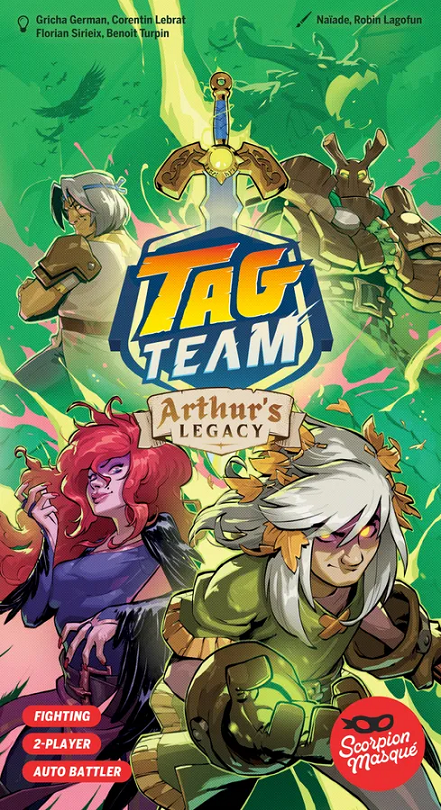
Tag Team was a noteworthy competitor in 2025. Its combination of smooth card play with the unpredictable drama of auto-battling forms a compelling build. So compelling in fact, that it seized my affection previously allocated to games like Unmatched and Dice Throne. Anyone with eyes could see this new Scorpion Masqué title was not a one-off.…
I’m traveling in Iceland right now, and I despite doing lots of touristy things (while trying to be a respectful tourist), I’ve had nothing but amazing experiences with every Icelander. This ranges from tours to cafes to shopkeepers, among many others.
One of the best all-around experiences I had was at the Blue Lagoon hotel springs outside Reykjavik. My good impressions started at the entrance, a winding walkway lined by piles of volcano rock. It created a literal passage between the rest of the world and this relaxing escape.
At check in, we’re were each given a multi-use wristband. It gave us access to the faculty, it unlocked and linked to any available locker (as well as a panel that would remind you of your locker number if you forgot), and a quick scan informed the bartender of any drinks for which you prepaid (it also created a frictionless checkout if you wanted to add anything extra).
The hot spring area itself was essentially a massive wading pool through otherworldly milky blue warm water. I’m someone who greatly prefers land to water, but this felt really nice just to walk around in. There were a few interconnected pools, saunas, and other areas, as well as mud mask stations (another part of some prepaid packages; a quick wristband scan was all it took). The sheer volume of compatriots whose faces were also covered in green paste made the made for a delightfully silly shared experience.
At the end, there were swimsuit drying machines in the locker area and of course a gift shop to walk through on the way out (in case we wanted to buy more fancy mud). It was well positioned but not pushy.
I’ve heard there are many variations of this type of geothermal spring experience in Iceland, and I went to something similar (but much smaller) at a ryokan in Shibu Onsen in Japan a few years ago. I’m curious if you’ve tried anything designed to relax and rejuvenate while traveling—what stood out the most?
In today’s flashback post, we’ll look at articles about effectively communicating a timeline, what type of project to start with, being a project manager, making sure your project creates a splash, and the technical aspects of adding reward levels mid-campaign.
The Project Timeline (#171): Every time I see a timeline image on a project page, I feel better about the project. A good timeline tells the creator has carefully though over upcoming steps, sets clear expectations, and makes me look forward to updates as each milestone is reached. Creators can even take the timeline to the next level by not only showing the future, but also the past. This increases my confidence in the project, because it shows the amount of work they’ve already put into the product. Check out some examples in the full article.
Should Your First Project Be Epic or Humble? (#172): There are pros and cons to both. Here’s my overall recommendation to new creators: Choose the product that will sustain your interest, excitement, and passion for the next 1-2 years. You have to want this product to exist more than anything in the world. Some considerations include: A humble product is easier in almost every way, provides a lower barrier of entry for the backer, and can be a great teaching tool for a new creator. While an epic product typically has a great chance of capturing peoples’ hearts, imaginations, and wallets, as well as possibly aligning your fledgling company for future success and having a great chance attracting media attention.
The Hidden Job of Every Kickstarter Creator (#173): Even if you’re working alone (like I did), you’re still managing a whole slew of people tasks. That’s why the hidden job of a Kickstarter creator is Project Manager. For me, keeping track of different people and tasks requires a lot of different tools, including email, Basecamp, Discord, and Google Sheets. All the while, trying to communicate clear expectations, limiting needless meetings, testing the waters with someone new, consolidating communication, always compensating fairly, and not hiring unless I have to. Check out the full explanation for all of these in the article.
Creating a Spectacle (#174): I think we creators can learn about the idea of spectacle from the Super Bowl. Here are a few things to consider: Build up excitement in advance. Keep it short (a long campaign and reduce spectacle). Add live commentary (i.e., project updates). Keep the press informed. Emphasize your brand (a Kickstarter is the best possible time for you to let people know what you and your company are all about). And finally, implement amazing art direction: the analogue for a well-choreographed sporting event is a Kickstarter campaign that communicates itself with effective imagery.
Adding New Rewards During a Campaign (#175): I have three cautionary tales on this subject. For Euphoria, I added a new reward level to include additional cards and dice. Due to minimum order quantities, just by having this option I was committed to making 1,000. And, I also risked human error by making such a large change midstream. The second tale is from my original Viticulture campaign: I offered a limited reward level related to art in the game. Adding more of this limited reward can be tricky, but there are multiple methods, the best of which is adding more of the same reward level within the campaign so you don’t clutter and confuse the rewards sidebar. And lastly, the third tale is adding more “early bird” rewards (a type of reward I generally don’t recommend): This is something Isaac Childress did this for Forge War. Adding more of this reward can diminish the perceived value of the earliest pledges. Luckily in all 3 of these tricky situations, they worked out well, but it’s easy to cherry pick the successes. They definitely could have gone a different direction.
***
If you have any questions or thoughts about these topics, feel free to share in the comments!
I follow Games Unlimited PGH (@gamesunlimitedpgh) on Instagram, and Kylie frequently offers really helpful retailer perspectives for publishers to consider.
One of his recent videos (actually a repost from a few years ago) was both surprising and insightful in a few different ways, as Kylie reveals that he–a very successful retailer–does not like promos.
Even as a publisher that doesn’t make promos (it was something we tried up through Scythe’s release in 2016 and then stopped pursuing), I was really curious to hear his reasons. Especially since a survey I ran of retailers in 2017 indicated that 79% of friendly local game store (FLGS) owners liked promos at the time.
Kylie’s reasons are:
A lot of publishers send promos to his store, but it takes a lot of work to match them with the game (stores juggle a lot of different games, and promos aren’t always labeled well).
Many promos just end up in a general bin, making them hard to find and difficult for store employees to remember to pair with a game.
“A large part of our customers are not actually gamers,” so the idea of a promo is confusing to them. (This revelation was particularly interesting to me. Who are the majority of people who shop at local game stores, if they’re not into games?)
Even a well-meaning, FLGS-focused publisher who tries to encourage customers to go to a game store using promos as an incentive can actually create an awkward situation if the retailer doesn’t have or can’t find the promo for the customers.
Kylie concludes by simply asking publishers to put promos inside the game box. This seems viable in most cases: Even if you make a special promo card for an existing game to offer at a convention, a content creator, or any circumstance, you can include it in future printings of the game.
I really like that Kylie ends with this: “We’ll do the work of selling your game because it’s awesome, not because we have some rare or exclusive promo.” That 100% echoes my beliefs about actively welcoming people into our games instead of using FOMO/exclusivity tactics.
What do you think about this opinion about promos?
On Sunday afternoon I received an email with a question that stumped me. I knew the answer, but I was at a complete lack of resources to provide an adequate response.
The question was, “Do you make any games other than Wingspan?”
There’s more context to the question: The person enjoys Wingspan and is looking for other competitive, engine-building games with lots of replayability. It was clear in the message that they were genuinely curious, and they simply didn’t know that we’ve published 25+ games over the last 14 years.
Now, of course they could have looked on the Stonemaier Games website or Googled the question. But I’m glad they asked, because I realized while responding that we don’t really have a single page that easily describes all of our games to someone who is completely unfamiliar to them. Here are the resources I ended up sharing:
The gift guide is probably the best resource for someone who wants to discover our games (for themselves or someone else), but I still found it lacking as I replied to this person. If you want to know the one-sentence summary for all of our games, you currently need to click through every single game page to see it. That’s a lot to ask someone to do–it isn’t particularly welcoming.
I think I’m going to approach this problem a few ways:
Tomorrow I will film a video in which I talk about our games for a maximum of 1 minute each.
I will write/compile a one-sentence summary for each of our games.
I’ll talk to our web developer about creating an all-games page that uses a similar format to our third-party accessory showcase, which combines a user-selected filter with images and links about each product. This page is where the video and the one-sentence summaries will live.
What do you think about this solution? Any thoughts on how to group the games in the video (chronologically, alphabetically, weight, etc)? Have you seen other publishers implement something like this that provides a quick introduction to all of their games and is easily editable as they add new games?
I recently read an interesting announcement on Board Game Wire that Scott Brady (co-designer of one of my favorite party games, Caution Signs, along with some others I really enjoy like Boop and Hues & Cues), is trying a new “proof-of-play” model of publishing through his company, A Game Studio. Their goal and methodology is to make a single, small print run of selected games “to generate real-world sales, player feedback, and retail validation before presentation to larger publishing partners.”
In the interview, Scott mentions a few problems he is trying to solve through this model:
Publishers are passing on great games because they already have a full schedule for the next few years.
Publishers are wary of taking on risk for a big print run without knowing how people will respond to the game.
Mass-market games aren’t a good fit for crowdfunding.
I agree that those are all legitimate problems facing publishers (and designers). This certainly isn’t the only solution or approach, but I appreciate Scott for trying something different. He’s aiming for a single print run of these games at smaller quantities (1500-3000 units), then try to license the game to a studio that wants to invest in a bigger print run.
Of course, like any publisher, A Game Studio has limits as to how many games they can publish, so they may quickly run into the same issue that any publisher faces when they are inundated by submissions. Scott is starting with two games, and he says in the interview, “I am personally staking my reputation on the games I choose to help.”
I have some questions about the model, and I’m genuinely curious to see how it plays out.
If a game does extremely well in the proof-of-play model, wouldn’t A Game Studio prefer to keep it in house?
Are publishers actually looking for more games than they already have in their crowded release schedules?
Is this actually similar to a publisher signing the worldwide rights to a game that’s currently only found in one language or that had a single successful crowdfunding campaign?
Given the slim margins on selling games into distribution and retail, will publishers be willing to decrease their margins on these licenses? In this model, a publisher would pay both the designer and A Game Studio based on the sales they generate.
I 100% applaud Scott for trying to create a win-win-win situation for designers, publishers, and his studio, and I genuinely hope it works. I’m sorry I don’t have a link to his website or where publishers can submit to this process–I can’t find it on any of the articles, and web searches for “A Game Studio” aren’t providing accurate results.
Welcome to Gen Con week! In a similar way to Essen Spiel, the games, announcements, and events at Gen Con attract attention well beyond the tens of thousands of attendees (which is both a lot of people and also a very small percentage of people who play games worldwide).
Stonemaier Games and Meeple Source have again joined forces at Gen Con to share a booth (#2909). Wingspan Pocket, Duel of Meloch, Origin Story: Heroes & Villains, Wingspan Americas, Finspan: Sharks & Reefs, Viticulture Bordeaux, Euphoria Essential, and more will be available (see the full list of products here). You can walk up to the booth to buy any of those products, or you can place an order with Meeple Source now for pick up at Gen Con.
I was hoping to make a day trip over to Gen Con like last year, but a few circumstances–including a recent slipped disc in my back–have led me to decide that I won’t make to Indianapolis this year. However, you’re in great hands with the demo team at our booth and the events area, and you can also find designers for some of our games (Wingspan’s Elizabeth Hargrave on Thursday from 3-6pm and Finspan’s David Gordon on Thursday, Friday, and Saturday from 2-3pm) and even my podcast co-host, Mitchell Whitfield.
In addition to our games, I wanted to highlight two hidden gems that I highly recommend seeking out at Gen Con:
Kano by Matagot: This is one of the best abstract games I’ve ever played, largely because it doesn’t feel abstract thanks to how the theme (Japanese scroll painting) and components (resin painting jars, cloth board, stunning art on the tiles) intertwine with the mechanisms. Kano is the perfect combination of extrinsic motivations (goals presented by the game) and intrinsic motivations (creating a beautiful painted scroll), with each type of motivation feeding into the other. This is the type of gateway plus game that I would play with anyone. It’s brand new and has flown under the radar, but I think this will be a big hit once people see it and start to play it.
Trick to the Future by Gamehead: I love time travel fiction, and I love trick-taking games. Trick to the Future combines those two genres by structuring the card numbers in the format of a digital clock and giving players “fuel rods” to modify those numbers (e.g., with one rod, a 3 could become a 9). It’s such a clever system to increase player agency and immersion, and I highly recommend it to anyone who likes time travel fiction and/or trick-taking games.
If you’re attending Gen Con, I hope you stop by the Stonemaier booth, even if it’s just to say hi to the amazing demo team. If you’re not attending Gen Con, all Stonemaier products there are already on our webstore, and I hope you play some great games this week.
Do you have a recommendation for anyone who is attending a big convention for the first time?
Have you ever been on the fence about buying or backing a game? You’re following along, you’ve watched some playthroughs and reviews, you have trust in the publisher, and you can afford the price. The game intrigues you, but you’re just not sure yet. What questions do you ask to put you over the edge?
For example:
Who will play this game with me?
Will I be able to learn, teach, and retain this? Does the setup look cumbersome?
If the game costs more than $25, will I play it more than once?
Will I actually enjoy playing this?
Will this fill a desired niche in my collection?
Am I missing out on the next big thing if I don’t buy this?
Among my friends, am I the only person local to me who will have this?
Am I excited to have this on my table, or could I just play it digitally or at a convention?
Recently I’ve faced this conundrum with a few games. Sometimes simply being on the fence is indicative to me that the game might not be the right fit. But there are plenty of games that I was hesitant to explore and ended up loving, so I try to keep an open mind.
This type of decision is highly subjective, but I’m curious if publishers can do certain things to help on the product page:
Who will play this game with me? –Showcase photos of people playing the game, potentially in different situations if the game scales well to various player counts (or focus on the most common situation in which this game will be played).
Will I be able to learn, teach, and retain this? Does the setup look cumbersome? –Use a 3-step infographic to convey the core steps of the game and mention rulebook length and setup time.
If the game costs more than $25, will I play it more than once? –Mention the strongest asset for replayability without overwhelming the customer with too many modes or options.
Will I actually enjoy playing this? –Share playthrough videos and offer demo versions online and even pre-production copies at local game stores (IV Studios does this well).
Will this fill a desired niche in my collection? –Accentuate 3 truly unique elements about the game.
Am I missing out on the next big thing if I don’t buy this? –Direct attention toward social proof (i.e., the number of backers, if it is high).
Among my friends, am I the only person local to me who will have this? –I’m not sure a publisher can answer this question.
Am I excited to have this on my table, or could I just play it digitally, at a convention, or at a local game cafe? –Highlight great art and the component hook(s), and don’t offer the full version digitally until well after the tabletop release.
I try to do a few of these things in our infographics (see below), but I’m realizing that there’s a lot of “over the edge” questions not answered in this format. What do you think about these questions and how publishers can help to answer them when you’re on the fence?
Following up the earlier post, I’ve now played a twice (once just the Frontier game, once the full Counterstrike game).
The Frontier Game (aka “only the regular cards, mostly”)
“A little bit more race” — 15 tableau, 15 VP/player and the frontier worlds.
The Counter Strike Game (Fight the Aliens!):
A wild dancing bear Ginger Rogers, doing everything a normal dancing bear does but in heels and backwards. Frankenstein’s monster splitting a hookah hit with Flash Gordon, fighting crime with Snoop Dog, tastes great AND less filling. Yet more filling.
In all seriousness, this has flaws. Race is fast enough that snowballing happens and sometimes you just shrug, but this version is long enough that it’s a problem. In my first game I easily beat the other two players …. only counting my VP chips and awards. Not even counting my tableau of 20-ish cards.
I agree that you are heavily incentivized to go military (for your start world), but hey, it’s the military Arc.
But I would happily play, and if I get snowballed, so be it.
After a decade of work, Jenna Felli continues to evolve and shirk a single design style. One continuing trait that has stuck around since her origin is an embracement of the bizarre. But even that is possibly on the chopping block. From Shadows of Malice to Zimby Mojo to Cosmic Frog, I’d dare to say,…
Taking a note from Hollywood, the tabletop game industry has been enamored with sequels for the last decade. It makes sense: If people already like X game, a way to serve that audience is to make X2.
I’m specifically talking about sequels, not new editions, spinoffs, or duel versions. Different game with the same core mechanisms and core theme. There’s a blurry, debatable line between sequels and spinoffs, but here’s a potential guidepost: I consider Wingspan Pocket a sequel to Wingspan, but I consider Wyrmspan and Finspan to be spinoffs.
Here are a few well-known sequels:
Frosthaven is a sequel to Gloomhaven
The 7th Citadel is a sequel to The 7th Continent
The Queen’s Dilemma is a sequel to The King’s Dilemma
Dune Imperium: Uprising is a sequel to Dune Imperium
Great Western Trail: New Zealand is a sequel to Great Western Trail
Age of Innovation is a sequel to Terra Mystica (as are, arguably, Gaia Project and Terra Nova)
Azul Summer Pavilion is a sequel to Azul
Ticket to Ride Europe is a sequel to Ticket to Ride
Mysterium Park is a sequel to Mysterium
Between Two Castles is a sequel to Between Two Cities
The Isle of Penguins is a sequel to The Isle of Cats
I could go on and on. There are way more new games than sequels, but there are still plenty of sequel examples to draw from.
This leads me to two questions:
How does a publisher/designer know which games to select for sequels?
What do people really want from a sequel?
How does a publisher/designer know which games to select for sequels?
I think there are a few overlapping factors here. One is the customer response to the original game. If your game brings joy to thousands of tabletops and those customers are still asking for more, that’s a good sign. Of course, you still have a choice between a sequel, a spinoff, or an expansion.
That’s where the second factor enters play: What are you excited to make, if anything? If you’re completely done with a game after creating it, that’s perfectly fine. Or maybe you’re only excited to make an expansion. Or perhaps you want to explore the same world but with new mechanisms (e.g., Expeditions as a spinoff of Scythe). You are the driving force behind this creation, and I think it’s worth listening to what you’re excited to make.
What do people want from a sequel?
This is the question I’m puzzling over the most, and I’ll say this up front: I don’t have a clear answer other than “it depends on the game.” A big reason for this uncertainty is the impact of the original game’s popularity on the data available for the sequel. In fact, I’m not aware of any sequels that have higher ownership stats on BoardGameGeek than the original game. Higher ratings offer some guidance, but I’m unsure as to how much weight to put on them. I’m interested in what people are actually playing time after time.
Here’s my experience: I’ve found in most cases that the sequels I play that offer bigger gameplay end up getting to the table much less than the original game. Rather, it’s the sequels with similar or streamlined gameplay that I enjoy time after time (and that don’t replace the original game).
I think there might be a tendency for designers to think they need to go big if they make a sequel. Going back to the first question, if you have more fun designing a bigger game, go for it. But please don’t overlook the option to offer a sequel of similar weight (as that’s what people gravitated towards in the first place) or even a lighter weight sequel (since the original weight already exists).
I’d love to hear what you think. What are a few of your favorite sequels that you actually play more frequently than the original games? And what’s one game you love for which you really want a sequel (and what do you want from that sequel)?
Y’all know the difference between a bilge rat and a man-eater? I’m talking ’bout the bad fish. One that will swallow you whole. Roll you ’round in its jaws and squeeze the life out a ya. This cutter, in the year of our lord 2019, was a fierce gnawer. Still is! She’s among the best…
Wir waren im Juni (vor der Hitzewelle) mal wieder ein paar Tage in Hamburg und es hat uns wie immer sehr gut gefallen. Angereist sind wir von Frankfurt/Main mit dem ICE und der war sogar 15 Minuten zu früh in Hamburg-Harburg, wo wir dann allerdings auf die Weiterfahrt warten mussten, da der Zug ja nicht vor der fahrplanmäßigen Abfahrtszeit weiterfahren konnte.
Am Hamburger Hauptbahnhof angekommen sind wir dann noch 2 Haltstellen mit dem Bus zu unserem Hotel an der Außenalster gefahren. Im Hotel Bellevue von der Relexa-Gruppe sind wir auch bei unseren letzten Hamburg-Besuchen immer abgestiegen. Es ist sehr gut gelegen, die Zimmer sind okay und es gibt ein gutes und reichhaltiges Frühstücksbüffet. Leider hat während Corona das gute Restaurant im Hotel geschlossen und nicht wieder aufgemacht, aber in der näheren Umgebung findet man genug Möglichkeiten, um Essen zu gehen.
Blick vom Dach des Hotels auf die AußenalsterUnser Zimmer (mit Fenster zur Außenalster)
Hier ist unser Favorit die Gasstätte Frau Möller, in der Langen Reihe, die man vom Hotel aus in 5 Minuten erreicht. Das Essen dort ist gut, reichlich und wirklich günstig. Es gibt täglich wechselnde Tagesgerichte und auch Vegetarier haben hier genügend Auswahl. Sollte man jedoch erst gegen Abend dorthin gehen, dann kann es vorkommen, dass ein Tagesgericht nicht mehr verfügbar ist.
Hier findet ihr u. a. die Speisekarte (unbedingt einen Blick auf die Wochenkarte werfen) https://www.fraumoeller.com
Da die Gaststätte immer sehr gut besucht ist, kann es von Vorteil sein zu reservieren. Wenn man etwas Geduld hat, bekommt man aber auch mit etwas Wartezeit einen Platz. Um so eher, wenn man kein Problem damit hat, den Tisch mit anderen Gästen zu teilen, was ich persönlich sehr gerne mache, da ich da schon oft ins Gespräch gekommen bin.
Ein weiterer Tipp für einen Hamburg-Besuch ist die Nutzung der Hafen-Fähren der HADAG, da diese auch mit dem 63 Euro Ticket genutzt werden können und man so kostengünstig durch den Hamburger Hafen schippern kann. Pläne findet ihr auf deren Webseite: https://hadag.de/de/
Wir sind mit der Fähre von den Landungsbrücken nach Finkenwerder und zurück gefahren. Leider nicht am Wochenende. Dann hätten wir nämlich noch von Finkenwerder mit der Linie 65 weiter bis nach Blankenese fahren können.
Eine weitere Empfehlung ist der Besuch von Planten & Blomen. Das ist eine große Parkanlage, die sich durch das Zentrum von Hamburg zieht. Von Anfang Mai bis Ende September kann man hier am Parksee mittags zwischen 16 und 18 Uhr die Wasserspiele bewundern und abends ab 22 Uhr (im September ab 21 Uhr) die Wasserlichtkonzerte. Die kostenlose 30-minütigen Vorführungen werden live von zwei Künstlern begleitet – einer steuert die Wasserfontänen, der andere spielt das sogenannte „Lichtklavier“ passend zu klassischen, jazzigen oder modernen Klängen. Leider hatten wir das Pech, dass bei uns die Lichtanlage ihren Dienst verweigert hat.
Wir hatten uns frühzeitig (gegen 21 Uhr) einen Platz im Café Seepavillon gesichert und hatten von dort einen tollen Blick auf die Wasserspiele.
An einem Abend war ich auch im Würfel und Zucker. Wenn ich schon mal in Hamburg bin, dann muss ich auch das WuZ besuchen. Ich hatte mich dort mit Bekannten verabredet und wir haben Bounce it und Chimera Station gespielt.
Chimera Station mit Magnus (rechts) und Jope (links)
Bei Chimera Station bauen wir gemeinsam mit unseren Aliens an einer Raumstation. Wir können dabei unsere Aliens mit verschiedenen Körpermodifaktionen verstärken (Klauen, Tentakel, Gehirne und Blätter).
Bounce it
Bounce it ist ein Geschicklichkeitsspiel, bei dem es darum geht möglichst oft seine 3-4 Bällen in die Mitte der Spielschachtel zu werfen. Dabei müssen sie vorher 1 mal auf dem Tisch auftippen.
Was ich auch empfehlen kann ist ein Besuch der Elbphilharmonie. Der Besuch der Plaza (Balkon rund um das Gebäude) ist hier kostenlos. Man muss sich vorher nur ein Ticket am Ticketschalter vor dem Eingang besorgen. Vom Balkon aus hat man einen sehr schönen Rundumblick auf den Hamburger Hafen, die Innen- und die Speicherstadt .
Ausblick auf die St. Pauli Landungsbrücken (von der Elbphilharmonie aus)
Wir haben während unseres Hamburg-Aufenthalts auch noch 2 Bootstouren gemacht, eine 1-stündige Hafenrundfahrt und eine 1-stündige Alsterrundfahrt, außerdem sind wir einen Tag mit dem Roten Doppeldecker durch die Stadt gefahren. Das Kombiticket „Entdecker Tour“ hat 62 Euro gekostet.
Blick von der Außenalster in Richtung Innenstadt/Hafen
Erst später haben wir den Hamburg All-in-Pass entdeckt, der hier vielleicht noch die bessere Wahl gewesen wäre, da er mehr beinhaltet: Hamburg All-In-Pass Bei dem Pass sind all die genannten Touren auch drin, aber auch noch einiges mehr. Man muss sich hier nur entscheiden wie lange der Pass gelten soll, wovon dann der Preiss abhängt. Ich denke hier wäre der 3-Tage-Pass eine gute Wahl.
Dinge, die wir dieses Mal nicht mehr unterbringen konnten, da wir uns auch nicht stressen wollten, die ich aber jedem empfehlen kann sind:
Ein Besuch des Miniatur-Wunderland (am besten die Tickets vorher online buchen). Ich war schon 3 mal hier und könnte es immer wieder besuchen. Ein Tag reicht hier auch nicht aus, um sich alles genau anzuschauen und das Miniatur-Wunderland wird auch ständig erweitert.
Ein Besuch des Spicys Gewürzmuseum in der Speicherstadt. Hier kann man Gewürze entdecken und einiges über die Geschichte der Gewürze (Anbau, Handel …) erfahren. Man kann viel der Gewürze auch probieren und am Ende natürlich auch kaufen.
Ein Besuch des Planetariums. Hier gibt es viele interessante Shows (Tickets für 12,30 Euro) und man hat von der Aussichtsplattform (Eintritt 2 Euro) einen tollen Blick über den Stadtpark bis zum Fernsehturm, dem Michel und der Elbphilharmonie.
Besuch eines Konzertes in der Elbphilharmonie. Das hätten wir uns früher überlegen müssen, da es sehr schwierig ist hier kurzfristig noch Karten zu bekommen. Während wir in Hamburg waren hätten wir aber die Chance gehabt ein kostenloses Konzert in der Laeiszhalle. Hier haben nämlich an einem Tag Absolventen der Musikhochschule gespielt. Weitere kostenlose Konzerte findet man auf der Webseite der Stadt Hamburg: https://www.hamburg.de/freizeit/kostenlos-musik-333640
Ein Besuch des alten Hamburger Elbtunnels. Auch dieser Besuch ist kostenlos. Man kann hier von den St. Pauli Landungsbrücken 426 Meter unter der Elbe hindurch zur Elbinsel Steinwerder laufen.
Zu guter Letzt will ich auch unbedingt mal in die Mittelalter und Rollenspiel Taverne Zum tanzenden Einhorn. Eine Nerd-Bar für Rollenspieler und Mittelalterfans in der man auch Brettspiele spielen kann. Leider hat die Bar am Montag und Dienstag geschlossen, was dazu geführt hat, dass es nicht mehr in unseren Zeitplan gepasst hat. So wird ein Besuch bis zu meinem nächsten Hamburg-Aufenthalt warten müssen. Der aber sicherlich kommen wird.
Alter Elbtunnel (Foto von meinem Besuch in 2019)
Hamburg und seine Plakate
Zum Abschluss noch etwas was ich an Hamburg auch immer wieder mag sind die Plakate die man dort immer wieder entdeckt. 2 davon musste ich auch einfach fotografieren. Okay, das zweite ist natürlich eine Werbung, aber da steckt viel Wahres drin
Nahverkehr in Hamburg
Wir haben in Hamburg sehr viele Strecken mit dem Bus zurückgelegt, was ich auch durchaus als sehr gut empfand. Dank 63 Euro-Ticket muss ich mir da auch keine Gedanken um einen Fahrschein machen.
Ich musste leider mehrfach feststellen, dass die HVV-App nicht immer die besten Verbindung heraussucht. Vor allem gibt es leider keine Option, eine Fahrt so zu planen, dass man möglichst viel von der Strecke mit dem Bus, der U- oder S-Bahn zurücklegt und nicht immer wieder größere Strecken zu Fuß, obwohl dies durchaus möglich wäre. Vielleicht habe ich die Option aber auch nicht gefunden.
Ich habe mich dann oft damit beholfen, dass ich erst eine Teilstrecke zum Hauptbahnhof (ZOB oder Steintordamm) gesucht habe und dann von dort eine weitere Teilstrecke zu meinem Ziel. Das hat oft besser funktioniert als direkt die gesamte Strecke zu suchen. Auch fand ich, dass die DB-App oft bessere Ergebnisse geliefert hat. Sehr hilfreich finde ich auch den Plan des Hamburger Busliniennetzes parat zu haben: https://www.nimmbus.de/frame.php?doc=busliniennetz.htm
Man kann dann auch immer sehr gut erst einmal in Google Maps nachschauen, welche Haltstelle dem Ziel am nächsten ist und dann im Netzplan schauen, wie man am besten dorthin gelangt.
Nachtrag: Katzencafés
Da hab ich doch glatt noch was vergessen. Wir haben in Hamburg auch noch 2 Katzencafes der Kette Katzentempel besucht. Eines in der Hafencity und das, zu diesem Zeitpunkt, gerade frisch eröffnete am Holstenwall, welches uns besser gefallen hat. Das ´Konzept der Katzentempel ist es vegane Speisen anzubieten und Katzen eine Heimat zu bieten. Die Katzen entscheiden selbst ob sie zu einem kommen oder nicht. Sie haben in dem Katzencafe einige Rückzugsmöglichkeiten, die man auch unbedingt respektieren sollte.
Die oberen beiden Bilder sind aus/vom dem Katzentempel in der Hafencity, die unteren beiden aus dem am Holstenwall.
Die Preise im Katzentempel sind jetzt nicht gerade günstig, aber die Katzen müssen ja auch noch versorgt werden. Es gibt in Hamburg auch noch ein weiteres Katzencafe, das Cat Café in der Wandsbeker Chaussee. Das steht für unseren nächsten Hamburgbesuch auf der Liste.

 Anmelden