Normale Ansicht

4 Examples of Good, Bad, and Mixed Communication from Our Iceland Trip

24. August 2026 um 18:22

A huge part of my job at Stonemaier Games is communicating information via this website, our newsletters, Facebook groups, the weekly YouTube livecast, etc. I’ve tried to hone my communication skills through lots of practice, plus the consumption of other creators’ newsletters, crowdfunding updates, videos, and more.

I’m always fascinated by how someone handles communication when things don’t go as planned, and we had a few such situations arise during our recent Iceland trip. Here’s what happened, how the communication was handled, and what I learned from it as a creator.

Please Get Off the Plane

We boarded the plane for our Baltimore to Reykjavik flight late in the evening, and then we sat on the plane for around an hour while mechanics came and went. The captain kept us informed during this time that there was a minor mechanical issue that would be fixed soon. When the issue was resolved, the plane continued to sit at the gate for around 20 minutes before the pilot shared that the airport runways were now undergoing scheduled maintenance, and we would need to get off the plane and wait until the next day at 2:00 to reboard.

It was a rough way to start the trip, because we missed an entire day in Iceland as a result. In this case, I think the communication between the plane and the passengers was fine, but I have to think that better communication between the airline and the airport could have gotten us out of Baltimore without disrupting the runway maintenance.

In publishing, communication about timing in the short-term can have big implications. For example, we have a game we’re trying to launch on our webstore right before Essen Spiel (and then have copies at the convention), but to make that possible, we needed to work with our manufacturer to split the print run into two halves.

The Eclipse Is Cancelled

A small part of the reason we chose this particular week to go to Iceland is that they were in the path of totality for a solar eclipse due to happen on August 12. The weather was sunny and clear the entire trip…until the afternoon of the eclipse, when the boat was surrounded by a thick layer of fog.

Throughout the day, the communications officer on board gave updates and set expectations for the eclipse viewing. She told us that the captain was doing his best to find a clear area, but the chances of finding one were increasingly low. While I’m sure some people were disappointed that they missed a clear view of the sun, these updates ensured that no one was completely caught off guard by the lack of visibility.

I appreciate this approach to crowdfunding updates. Even if things aren’t going as planned, I’d rather know (and to hear what the creator is working on) than be kept in the dark.

We Now Live on This Bus

After a fun visit to an Icelandic horse ranch, our excursion bus struggled to pull out of a steep driveway. The driver kept trying, time after time, and each time the bus drifted a little further down the hill. This went on for around 20 minutes without a word of communication from the driver or tour guide.

Did we need progress updates? I don’t think so. We could all hear what was happening, and we knew the driver was doing his best. No one complained, and when the driver finally got it to work, we all cheered.

However, I think there was probably an opportunity for one update 10 minutes in to ease any future concerns. Something along the lines of, “If we’re still here in 20 minutes, we’ll call for a backup bus and everyone can wander around the ranch in the meantime.”

Sometimes people just need to hear that everything will be okay (and how it will be okay). It’s why we send a shipping update and post in a game’s Facebook group about a week into the shipping process–we want to assure people that it’s normal for some orders to have shipped but not others, and that we’ll take care of them if their order doesn’t arrive exactly as they’d hoped.

There Is No Line (Until There’s a Line)

We went on a few excursions, and we found the lack of signage at port to be a bit bewildering. For example, when we arrived to go see puffins in the wild, there were several lines, but the only guidance anyone had from the excursion coordinator was to either wait in a specific line (as directed by her) or to wait literally anywhere else until further instructions were provided. It was confusing for the hundreds of people who had excursions at different times, and probably frustrating for the coordinator to get the same questions over and over.

Similarly, for any future product, I think it’s helpful for customers to have a place to “wait” (i.e., a prelaunch signup page or a game-specific launch notification newsletter). That way they don’t have to wonder if they’ll miss out–they’ll get a notification when the product launches.


Have you learned anything about communication recently from travels, crowdfunding, or other experiences?

If you gain value from the 100 articles Jamey publishes on this blog each year, please consider championing this content! You can also listen to posts like this in the audio version of the blog

Tribute – A Realm of Reckoning Review

21. August 2026 um 15:00
Releasing an album that consists entirely of cover songs is a risky proposition. For every Renegades of Funk there’s also a Thank You. IV Studio’s Realm of Reckoning is such a perilous venture, excising slices of ingenuity from some of the area control genre’s most prolific entities. The originality and expression exist in how these…

Read more →

10 Ways to Offer VIP Status Without Exclusion, Gatekeeping, or Elitism

20. August 2026 um 23:14

A little under 2 weeks ago, we arrived as part of a group of 7 at port in Reykjavik to check into our cruise. This process is very similar to checking into a flight, except at the final step before boarding, there was a surprise: The attendant informed Megan and me that we had VIP status. We were swiftly shepherded into a lounge where we would wait for the ship (instead of standing in line).

As it turns out, the travel agent who arranged the trip for our group (the sister of a friend with whom we were traveling) had received a free VIP upgrade, and she was very nice to apply it to our room. It mostly meant that when the cruise ship docked at various ports around Iceland, we could skip the line to get off and on the boat.

When I heard this from the concierge in the lounge, while I appreciated the ability to save some time, I didn’t want to leave behind the rest of our group. But the concierge continued with the following: Those with VIP status could include other members of their party when skipping lines.

Oh. I see. That felt different. Yes, there was a still a little unease about going to the front of a long queue (which only happened once during the trip), but if we could use the VIP status to help our friends and family… well, yes please. I love positive player interaction!

So as we enjoyed this perk during the trip, I wondered if there were other forms of VIP status that avoided the feeling of exclusion, gatekeeping, or elitism. Here’s a list of some examples, many of which were shared during yesterday’s livecast:

  1. Stonemaier Champion program: For $15/year, Champions support this blog and our YouTube channel while receiving a 20% discount on every Stonemaier webstore purchase and prioritized shipping before non-Champion orders. This has proven to be a good value for over 15,000 Champions without hurting the experience of everyone else.
  2. Convention early access: Various conventions offer early access to the expo hall or hotel blocks for volunteers and those with special ties to the industry (e.g., FLGS owners). Accessing the expo hall an hour early feels great but isn’t so much time that you’ve cleared the shelves.
  3. Theme parks: I went to Universal Studios last year and stayed in a hotel connected to the new Epic Universe, so we could enter the park an hour early early (time we used to have a quiet breakfast). We didn’t pay to jump to the front of the lines for rides, but in hindsight I regret that decision, as we spent hours waiting for our turn.
  4. Birthday perks: Everyone should feel like a VIP on their birthday! Many coffee shops and bakeries will reach out to customers with a birthday treat, which seems like a win-win for the shop and the customer.
  5. Speakeasies: Modern speakeasies (like NOTA in St. Louis) make you feel “in the know” with their hard-to-find doors and passwords to enter, but really anyone is welcome.
  6. Loyalty systems: Some companies offer points to those who purchase products from them, and over time those points can result in some special privileges. The Lego Insider program is an example of this.
  7. Backstage passes at concerts: Some people pay for backstage access while others gain it by knowing the right person. I don’t mind this mild form of gatekeeping because the backstage has an actual capacity limit (unlike an most early bird crowdfunding rewards).
  8. Restaurant regulars: Have you ever been to a restaurant so many times that they know your favorite dish or sometimes serve you a special off-the-menu item? I haven’t, but it sounds amazing. I like that this is an organic, personalized version of a loyalty program.
  9. Corporate perks: Some companies make their employees feel like VIPs by giving them access to suites at sporting venues (and invite friends and family to join them, like the cruise VIP status).
  10. Airport lounges: My credit card gives me access to some airport lounges, and it was really nice to relax in one of them during a trip earlier this year. I wouldn’t say this fully qualifies for the list, as the other way to access them is to pay for expensive plane tickets, but I thought it might be worth mentioning.

I want our customers to feel like very important people (even if they aren’t Stonemaier Champions), so I appreciate the variety of these VIP techniques.

Is there a VIP status or perk you’ve experienced that avoids the feeling of exclusion, gatekeeping, or elitism?

Quick Update, Review Recap, and Gen Con Video

18. August 2026 um 01:15

I spent the last 9+ days in Iceland and the Faroe Islands, which I briefly touched upon in last week’s post and will continue to revisit in articles over the next few weeks. I had minimal internet access on the trip and fell behind in highlighting links that content creators sent to me (as I typically do each Friday on Facebook), so today I’ll catch up via this post.

I hope you discover some great reviewers from this post!

Lists and Variety

Duel of Meloch

Wingspan Pocket

Origin Story: Heroes & Villains

Finspan: Sharks & Reefs

Viticulture: Bordeaux

Wingspan Americas

Vantage

Rolling Realms Redux

Smitten

Expeditions: Gears of Corruption

Also, thanks to Erik Thein for working with us to create this video about the Stonemaier Games experience at Gen Con:

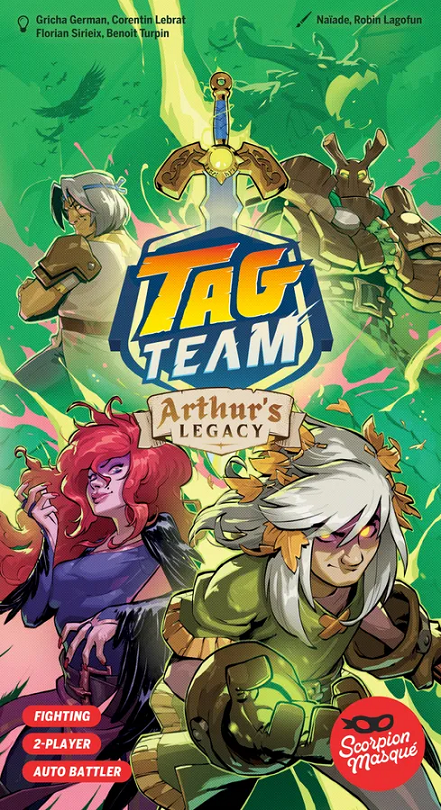
Off With Your Head – A Tag Team: Arthur’s Legacy Review

13. August 2026 um 15:00
Tag Team was a noteworthy competitor in 2025. Its combination of smooth card play with the unpredictable drama of auto-battling forms a compelling build. So compelling in fact, that it seized my affection previously allocated to games like Unmatched and Dice Throne. Anyone with eyes could see this new Scorpion Masqué title was not a one-off.…

Read more →

Providing the Complete Package for Customers

13. August 2026 um 09:57

I’m traveling in Iceland right now, and I despite doing lots of touristy things (while trying to be a respectful tourist), I’ve had nothing but amazing experiences with every Icelander. This ranges from tours to cafes to shopkeepers, among many others.

One of the best all-around experiences I had was at the Blue Lagoon hotel springs outside Reykjavik. My good impressions started at the entrance, a winding walkway lined by piles of volcano rock. It created a literal passage between the rest of the world and this relaxing escape.

At check in, we’re were each given a multi-use wristband. It gave us access to the faculty, it unlocked and linked to any available locker (as well as a panel that would remind you of your locker number if you forgot), and a quick scan informed the bartender of any drinks for which you prepaid (it also created a frictionless checkout if you wanted to add anything extra).

The hot spring area itself was essentially a massive wading pool through otherworldly milky blue warm water. I’m someone who greatly prefers land to water, but this felt really nice just to walk around in. There were a few interconnected pools, saunas, and other areas, as well as mud mask stations (another part of some prepaid packages; a quick wristband scan was all it took). The sheer volume of compatriots whose faces were also covered in green paste made the made for a delightfully silly shared experience.

At the end, there were swimsuit drying machines in the locker area and of course a gift shop to walk through on the way out (in case we wanted to buy more fancy mud). It was well positioned but not pushy.

I’ve heard there are many variations of this type of geothermal spring experience in Iceland, and I went to something similar (but much smaller) at a ryokan in Shibu Onsen in Japan a few years ago. I’m curious if you’ve tried anything designed to relax and rejuvenate while traveling—what stood out the most?

Quick Kickstarter Lesson Recaps: #171-175

10. August 2026 um 09:26
In today’s flashback post, we’ll look at articles about effectively communicating a timeline, what type of project to start with, being a project manager, making sure your project creates a splash, and the technical aspects of adding reward levels mid-campaign.
 
The Project Timeline (#171): Every time I see a timeline image on a project page, I feel better about the project. A good timeline tells the creator has carefully though over upcoming steps, sets clear expectations, and makes me look forward to updates as each milestone is reached. Creators can even take the timeline to the next level by not only showing the future, but also the past. This increases my confidence in the project, because it shows the amount of work they’ve already put into the product. Check out some examples in the full article.
 
Should Your First Project Be Epic or Humble? (#172): There are pros and cons to both. Here’s my overall recommendation to new creators: Choose the product that will sustain your interest, excitement, and passion for the next 1-2 years. You have to want this product to exist more than anything in the world. Some considerations include: A humble product is easier in almost every way, provides a lower barrier of entry for the backer, and can be a great teaching tool for a new creator. While an epic product typically has a great chance of capturing peoples’ hearts, imaginations, and wallets, as well as possibly aligning your fledgling company for future success and having a great chance attracting media attention.
 
The Hidden Job of Every Kickstarter Creator (#173): Even if you’re working alone (like I did), you’re still managing a whole slew of people tasks. That’s why the hidden job of a Kickstarter creator is Project Manager. For me, keeping track of different people and tasks requires a lot of different tools, including email, Basecamp, Discord, and Google Sheets. All the while, trying to communicate clear expectations, limiting needless meetings, testing the waters with someone new, consolidating communication, always compensating fairly, and not hiring unless I have to. Check out the full explanation for all of these in the article.
 
Creating a Spectacle (#174): I think we creators can learn about the idea of spectacle from the Super Bowl. Here are a few things to consider: Build up excitement in advance. Keep it short (a long campaign and reduce spectacle). Add live commentary (i.e., project updates). Keep the press informed. Emphasize your brand (a Kickstarter is the best possible time for you to let people know what you and your company are all about).  And finally, implement amazing art direction: the analogue for a well-choreographed sporting event is a Kickstarter campaign that communicates itself with effective imagery.
 
Adding New Rewards During a Campaign (#175): I have three cautionary tales on this subject. For Euphoria, I added a new reward level to include additional cards and dice. Due to minimum order quantities, just by having this option I was committed to making 1,000. And, I also risked human error by making such a large change midstream. The second tale is from my original Viticulture campaign: I offered a limited reward level related to art in the game. Adding more of this limited reward can be tricky, but there are multiple methods, the best of which is adding more of the same reward level within the campaign so you don’t clutter and confuse the rewards sidebar. And lastly, the third tale is adding more “early bird” rewards (a type of reward  I generally don’t recommend): This is something Isaac Childress did this for Forge War. Adding more of this reward can diminish the perceived value of the earliest pledges. Luckily in all 3 of these tricky situations, they worked out well, but it’s easy to cherry pick the successes. They definitely could have gone a different direction.
 
***
 
If you have any questions or thoughts about these topics, feel free to share in the comments!
 
If you gain value from the 100 articles Jamey publishes on this blog each year, please consider championing this content!

A Surprising Opinion About Promos (and Game Store Customers)

06. August 2026 um 21:27

I follow Games Unlimited PGH (@gamesunlimitedpgh) on Instagram, and Kylie frequently offers really helpful retailer perspectives for publishers to consider.

One of his recent videos (actually a repost from a few years ago) was both surprising and insightful in a few different ways, as Kylie reveals that he–a very successful retailer–does not like promos.

Even as a publisher that doesn’t make promos (it was something we tried up through Scythe’s release in 2016 and then stopped pursuing), I was really curious to hear his reasons. Especially since a survey I ran of retailers in 2017 indicated that 79% of friendly local game store (FLGS) owners liked promos at the time.

Kylie’s reasons are:

  • A lot of publishers send promos to his store, but it takes a lot of work to match them with the game (stores juggle a lot of different games, and promos aren’t always labeled well).
  • Many promos just end up in a general bin, making them hard to find and difficult for store employees to remember to pair with a game.
  • “A large part of our customers are not actually gamers,” so the idea of a promo is confusing to them. (This revelation was particularly interesting to me. Who are the majority of people who shop at local game stores, if they’re not into games?)
  • Even a well-meaning, FLGS-focused publisher who tries to encourage customers to go to a game store using promos as an incentive can actually create an awkward situation if the retailer doesn’t have or can’t find the promo for the customers.

Kylie concludes by simply asking publishers to put promos inside the game box. This seems viable in most cases: Even if you make a special promo card for an existing game to offer at a convention, a content creator, or any circumstance, you can include it in future printings of the game.

I really like that Kylie ends with this: “We’ll do the work of selling your game because it’s awesome, not because we have some rare or exclusive promo.” That 100% echoes my beliefs about actively welcoming people into our games instead of using FOMO/exclusivity tactics.

What do you think about this opinion about promos?


Also read:

If you gain value from the 100 articles Jamey publishes on this blog each year, please consider championing this content! You can also listen to posts like this in the audio version of the blog

This Question About Our Games Stumped Me

03. August 2026 um 17:53

On Sunday afternoon I received an email with a question that stumped me. I knew the answer, but I was at a complete lack of resources to provide an adequate response.

The question was, “Do you make any games other than Wingspan?”

There’s more context to the question: The person enjoys Wingspan and is looking for other competitive, engine-building games with lots of replayability. It was clear in the message that they were genuinely curious, and they simply didn’t know that we’ve published 25+ games over the last 14 years.

Now, of course they could have looked on the Stonemaier Games website or Googled the question. But I’m glad they asked, because I realized while responding that we don’t really have a single page that easily describes all of our games to someone who is completely unfamiliar to them. Here are the resources I ended up sharing:

The gift guide is probably the best resource for someone who wants to discover our games (for themselves or someone else), but I still found it lacking as I replied to this person. If you want to know the one-sentence summary for all of our games, you currently need to click through every single game page to see it. That’s a lot to ask someone to do–it isn’t particularly welcoming.

I think I’m going to approach this problem a few ways:

  1. Tomorrow I will film a video in which I talk about our games for a maximum of 1 minute each.
  2. I will write/compile a one-sentence summary for each of our games.
  3. I’ll talk to our web developer about creating an all-games page that uses a similar format to our third-party accessory showcase, which combines a user-selected filter with images and links about each product. This page is where the video and the one-sentence summaries will live.

What do you think about this solution? Any thoughts on how to group the games in the video (chronologically, alphabetically, weight, etc)? Have you seen other publishers implement something like this that provides a quick introduction to all of their games and is easily editable as they add new games?


If you gain value from the 100 articles Jamey publishes on this blog each year, please consider championing this content! You can also listen to posts like this in the audio version of the blog.

Folge 383 – malmö


Print and Play Bastelecke

Was habe ich gespielt?
boardgamearena.com:
Spiele im Urlaub:

Mogel Motte, Sea Salt and Paper, Regicide, Similo, Frisbee-Tennis (Windjammers RL), Shuffleboard

Podcast Hinweis

Bluesky – @vintersphrost.bsky.social
Mastodon – @vintersphrost@brettspiel.space
Boardgamearena.com – vintersphrost
Yucata.de – vintersphrost
tutti.ch: https://www.tutti.ch/de/seller?id=2079528265671090841
Instagram – https://www.instagram.com/vintersphrost/
YouTube Hörspiel Einspieler – https://www.youtube.com/playlist?list=PLCER_eNjl0R-Rzev5IMG2uufJSbXt01Mp

💾

The Proof-of-Play Model: My Thoughts

30. Juli 2026 um 18:04

I recently read an interesting announcement on Board Game Wire that Scott Brady (co-designer of one of my favorite party games, Caution Signs, along with some others I really enjoy like Boop and Hues & Cues), is trying a new “proof-of-play” model of publishing through his company, A Game Studio. Their goal and methodology is to make a single, small print run of selected games “to generate real-world sales, player feedback, and retail validation before presentation to larger publishing partners.”

In the interview, Scott mentions a few problems he is trying to solve through this model:

  • Publishers are passing on great games because they already have a full schedule for the next few years.
  • Publishers are wary of taking on risk for a big print run without knowing how people will respond to the game.
  • Mass-market games aren’t a good fit for crowdfunding.

I agree that those are all legitimate problems facing publishers (and designers). This certainly isn’t the only solution or approach, but I appreciate Scott for trying something different. He’s aiming for a single print run of these games at smaller quantities (1500-3000 units), then try to license the game to a studio that wants to invest in a bigger print run.

Of course, like any publisher, A Game Studio has limits as to how many games they can publish, so they may quickly run into the same issue that any publisher faces when they are inundated by submissions. Scott is starting with two games, and he says in the interview, “I am personally staking my reputation on the games I choose to help.”

I have some questions about the model, and I’m genuinely curious to see how it plays out.

  • If a game does extremely well in the proof-of-play model, wouldn’t A Game Studio prefer to keep it in house?
  • Are publishers actually looking for more games than they already have in their crowded release schedules?
  • Is this actually similar to a publisher signing the worldwide rights to a game that’s currently only found in one language or that had a single successful crowdfunding campaign?
  • Given the slim margins on selling games into distribution and retail, will publishers be willing to decrease their margins on these licenses? In this model, a publisher would pay both the designer and A Game Studio based on the sales they generate.

I 100% applaud Scott for trying to create a win-win-win situation for designers, publishers, and his studio, and I genuinely hope it works. I’m sorry I don’t have a link to his website or where publishers can submit to this process–I can’t find it on any of the articles, and web searches for “A Game Studio” aren’t providing accurate results.

What do you think? Will this approach work?


If you gain value from the 100 articles Jamey publishes on this blog each year, please consider championing this content! You can also listen to posts like this in the audio version of the blog.

Gen Con 2026: Stonemaier Games and 2 Hidden Gems

27. Juli 2026 um 17:16

Welcome to Gen Con week! In a similar way to Essen Spiel, the games, announcements, and events at Gen Con attract attention well beyond the tens of thousands of attendees (which is both a lot of people and also a very small percentage of people who play games worldwide).

Stonemaier Games and Meeple Source have again joined forces at Gen Con to share a booth (#2909). Wingspan Pocket, Duel of Meloch, Origin Story: Heroes & Villains, Wingspan Americas, Finspan: Sharks & Reefs, Viticulture Bordeaux, Euphoria Essential, and more will be available (see the full list of products here). You can walk up to the booth to buy any of those products, or you can place an order with Meeple Source now for pick up at Gen Con.

I was hoping to make a day trip over to Gen Con like last year, but a few circumstances–including a recent slipped disc in my back–have led me to decide that I won’t make to Indianapolis this year. However, you’re in great hands with the demo team at our booth and the events area, and you can also find designers for some of our games (Wingspan’s Elizabeth Hargrave on Thursday from 3-6pm and Finspan’s David Gordon on Thursday, Friday, and Saturday from 2-3pm) and even my podcast co-host, Mitchell Whitfield.

In addition to our games, I wanted to highlight two hidden gems that I highly recommend seeking out at Gen Con:

Kano by Matagot: This is one of the best abstract games I’ve ever played, largely because it doesn’t feel abstract thanks to how the theme (Japanese scroll painting) and components (resin painting jars, cloth board, stunning art on the tiles) intertwine with the mechanisms. Kano is the perfect combination of extrinsic motivations (goals presented by the game) and intrinsic motivations (creating a beautiful painted scroll), with each type of motivation feeding into the other. This is the type of gateway plus game that I would play with anyone. It’s brand new and has flown under the radar, but I think this will be a big hit once people see it and start to play it.

Trick to the Future by Gamehead: I love time travel fiction, and I love trick-taking games. Trick to the Future combines those two genres by structuring the card numbers in the format of a digital clock and giving players “fuel rods” to modify those numbers (e.g., with one rod, a 3 could become a 9). It’s such a clever system to increase player agency and immersion, and I highly recommend it to anyone who likes time travel fiction and/or trick-taking games.

If you’re attending Gen Con, I hope you stop by the Stonemaier booth, even if it’s just to say hi to the amazing demo team. If you’re not attending Gen Con, all Stonemaier products there are already on our webstore, and I hope you play some great games this week.

Do you have a recommendation for anyone who is attending a big convention for the first time?


Also read:

If you gain value from the 100 articles Jamey publishes on this blog each year, please consider championing this content! You can also listen to posts like this in the audio version of the blog.

Folge 382 – tromsø


Print and Play Bastelecke

Was habe ich gespielt?
boardgamearena.com:
Spiele im Urlaub:

Mogel Motte, Krasse Kacke, Magic Maze Pocket, Schadenfreude, Dame, Sea Salt and Paper

Jokkmokk 🇸🇪
Am Baksjötjärn

Podcast Hinweis

Bluesky – @vintersphrost.bsky.social
Mastodon – @vintersphrost@brettspiel.space
Boardgamearena.com – vintersphrost
Yucata.de – vintersphrost
tutti.ch: https://www.tutti.ch/de/seller?id=2079528265671090841
Instagram – https://www.instagram.com/vintersphrost/
YouTube Hörspiel Einspieler – https://www.youtube.com/playlist?list=PLCER_eNjl0R-Rzev5IMG2uufJSbXt01Mp

💾

What Puts You Over the Edge to Buy/Back a Game?

23. Juli 2026 um 17:55

Have you ever been on the fence about buying or backing a game? You’re following along, you’ve watched some playthroughs and reviews, you have trust in the publisher, and you can afford the price. The game intrigues you, but you’re just not sure yet. What questions do you ask to put you over the edge?

For example:

  1. Who will play this game with me?
  2. Will I be able to learn, teach, and retain this? Does the setup look cumbersome?
  3. If the game costs more than $25, will I play it more than once?
  4. Will I actually enjoy playing this?
  5. Will this fill a desired niche in my collection?
  6. Am I missing out on the next big thing if I don’t buy this?
  7. Among my friends, am I the only person local to me who will have this?
  8. Am I excited to have this on my table, or could I just play it digitally or at a convention?

Recently I’ve faced this conundrum with a few games. Sometimes simply being on the fence is indicative to me that the game might not be the right fit. But there are plenty of games that I was hesitant to explore and ended up loving, so I try to keep an open mind.

This type of decision is highly subjective, but I’m curious if publishers can do certain things to help on the product page:

  1. Who will play this game with me? –Showcase photos of people playing the game, potentially in different situations if the game scales well to various player counts (or focus on the most common situation in which this game will be played).
  2. Will I be able to learn, teach, and retain this? Does the setup look cumbersome? –Use a 3-step infographic to convey the core steps of the game and mention rulebook length and setup time.
  3. If the game costs more than $25, will I play it more than once? –Mention the strongest asset for replayability without overwhelming the customer with too many modes or options.
  4. Will I actually enjoy playing this? –Share playthrough videos and offer demo versions online and even pre-production copies at local game stores (IV Studios does this well).
  5. Will this fill a desired niche in my collection? –Accentuate 3 truly unique elements about the game.
  6. Am I missing out on the next big thing if I don’t buy this? –Direct attention toward social proof (i.e., the number of backers, if it is high).
  7. Among my friends, am I the only person local to me who will have this? –I’m not sure a publisher can answer this question.
  8. Am I excited to have this on my table, or could I just play it digitally, at a convention, or at a local game cafe? –Highlight great art and the component hook(s), and don’t offer the full version digitally until well after the tabletop release.

I try to do a few of these things in our infographics (see below), but I’m realizing that there’s a lot of “over the edge” questions not answered in this format. What do you think about these questions and how publishers can help to answer them when you’re on the fence?


Also read: The 10 Reasons I’ll Back a Kickstarter Project

If you gain value from the 100 articles Jamey publishes on this blog each year, please consider championing this content! You can also listen to posts like this in the audio version of the blog.
Xeno Counterstrike

23. Juli 2026 um 16:08

Following up the earlier post, I’ve now played a twice (once just the Frontier game, once the full Counterstrike game).

The Frontier Game (aka “only the regular cards, mostly”)

  • “A little bit more race” — 15 tableau, 15 VP/player and the frontier worlds.

The Counter Strike Game (Fight the Aliens!):

  • A wild dancing bear Ginger Rogers, doing everything a normal dancing bear does but in heels and backwards. Frankenstein’s monster splitting a hookah hit with Flash Gordon, fighting crime with Snoop Dog, tastes great AND less filling. Yet more filling.
  • In all seriousness, this has flaws. Race is fast enough that snowballing happens and sometimes you just shrug, but this version is long enough that it’s a problem. In my first game I easily beat the other two players …. only counting my VP chips and awards. Not even counting my tableau of 20-ish cards.
  • I agree that you are heavily incentivized to go military (for your start world), but hey, it’s the military Arc.
  • But I would happily play, and if I get snowballed, so be it.

A group I know in Boston has already banned a card.

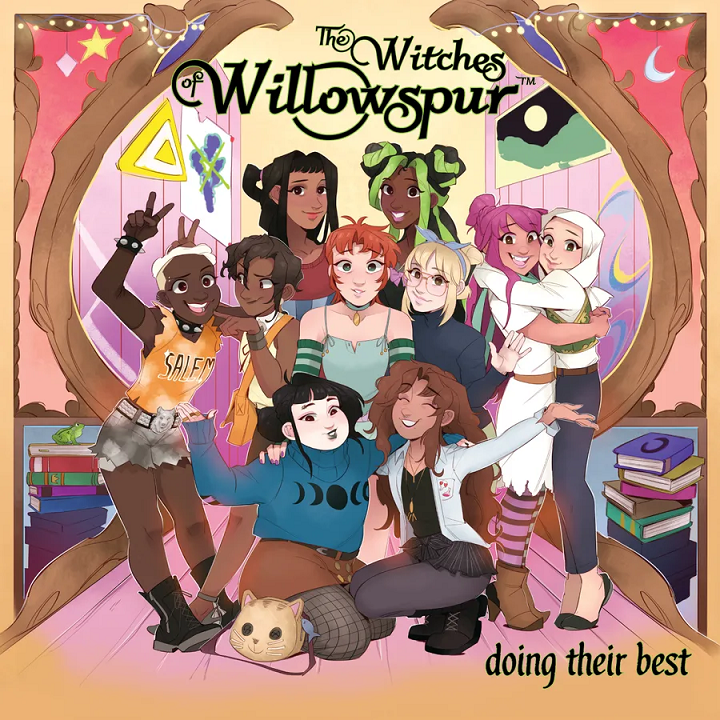
Rehabilitating Murray – The Witches of Willowspur in Review

21. Juli 2026 um 15:00
After a decade of work, Jenna Felli continues to evolve and shirk a single design style. One continuing trait that has stuck around since her origin is an embracement of the bizarre. But even that is possibly on the chopping block. From Shadows of Malice to Zimby Mojo to Cosmic Frog, I’d dare to say,…

Read more →

Folge 381 – oulu


Print and Play Bastelecke

Was habe ich gespielt?
boardgamearena.com:
Spiele im Urlaub:

Mogel Motte, Würfelwurst, Clear 4, Lost Cities, Oh my Socks, Pina Coladice, Magic Maze Pocket, Codenames, Similo, Memory, Squire for Hire

zu Besuch bei lautapelit.fi

Podcast Hinweis

Bluesky – @vintersphrost.bsky.social
Mastodon – @vintersphrost@brettspiel.space
Boardgamearena.com – vintersphrost
Yucata.de – vintersphrost
tutti.ch: https://www.tutti.ch/de/seller?id=2079528265671090841
Instagram – https://www.instagram.com/vintersphrost/
YouTube Hörspiel Einspieler – https://www.youtube.com/playlist?list=PLCER_eNjl0R-Rzev5IMG2uufJSbXt01Mp

💾

❌