Normale Ansicht

Best Week 2025! Heart of Darkness!

27. Dezember 2025 um 17:18

This will surprise absolutely nobody, but I am sometimes accused of being a big old bummer. A downer. A morose feel-bad baby. Nietzsche said that if you stare into the abyss it’ll gaze back, and I’ve found that to be true, but in locking eyes with the abyss I also find we come to an understanding. We’re poorer in spirit if we don’t lock eyes with the void now and again.

There were a number of void-locking titles this year. Today is a celebration of the best of them. Take my hand, abyss. It’ll be all right.
#6. Night Soil

Designed by Jon Moffat. Published by Grail Games

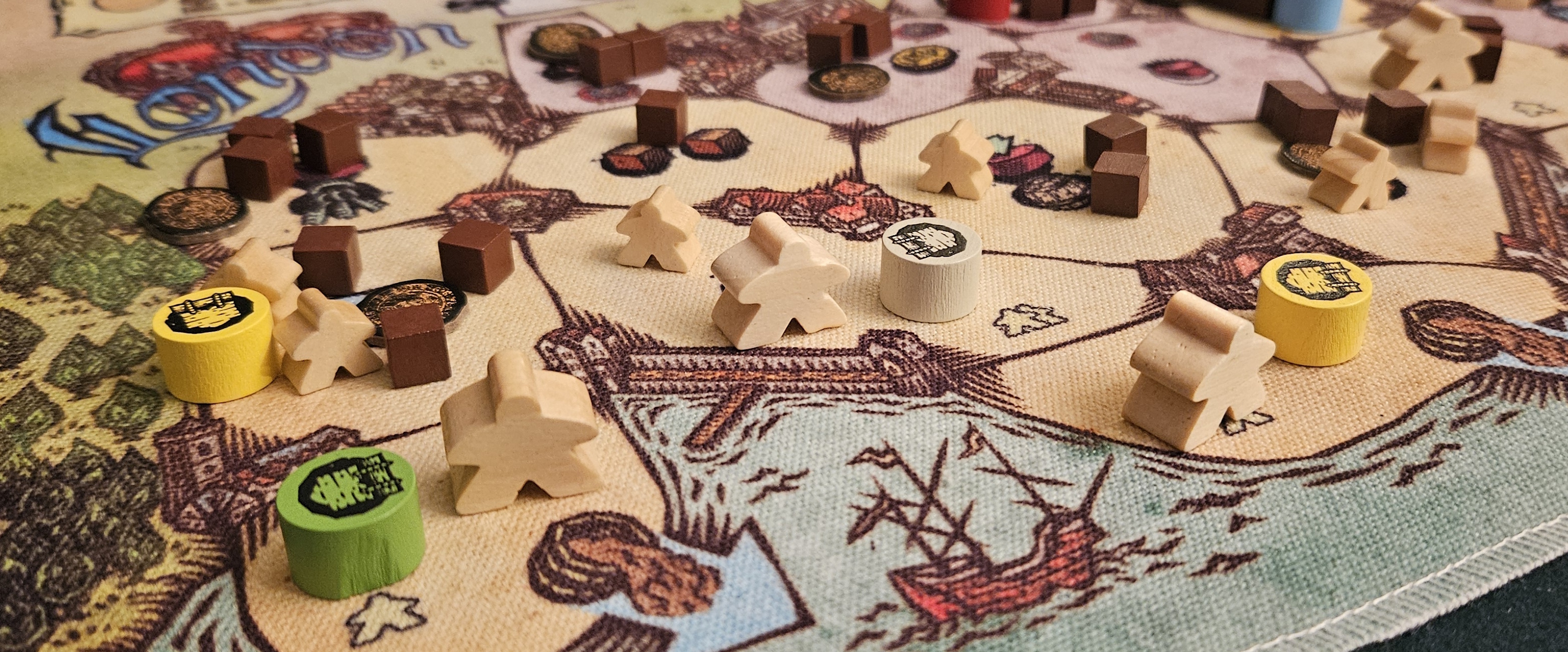
Poop! Night Soil begins with a joke, keeps on giving that joke, and then sneaks up on you with a point about the hidden work that keeps civilization chugging along while everybody sleeps. Set in a Tudor London that’s packed to the gills with human filth, players adopt the role of gong farmers and mudlarks, the dirty workers who muck out the gutters and cart it to the river. It’s grimy, greasy work, made all the grimier and greasier for Jesse Gillespie’s rancid card illustrations.

But what a game. Most human lives have gone overlooked, but not all of them have gone quite this overlooked. Which makes Night Soil not only a rollicking title about the dawn of sanitation, but also a work of social history that ought to be taught in science-starved classrooms. How do we keep civilization running? By carting the poop to the sea. Oh, and by the way: Poop!

Review: I Don’t Wanna Do Your Dirty Work

#5. Chicago ’68

Designed by Yoni Goldstein. Published by The Dietz Foundation.

If you have no right to protest, you have no rights. This truism is at the heart of Chicago ’68, a game that feels all too timely five decades and change after the events portrayed, when right-wing violence has been so normalized that masked thugs kidnap citizens and non-citizens alike in the streets without repercussion while every act of disagreement gets labeled the end of civilization by a complicit corporate media.

But that makes Chicago ’68 necessary. It’s a reminder that conscientious people have always struggled to craft a better world, have always marched uphill through teargas, have always founded awkward coalitions, have always, sometimes, suffered setbacks and loss. There’s more to say about the game — for instance, that it’s a good game — but for now, its potency as a reminder is enough.

Review: The Whole World Is Watching
#4. Fate of the Fellowship

Designed by Matt Leacock. Published by Z-Man Games.

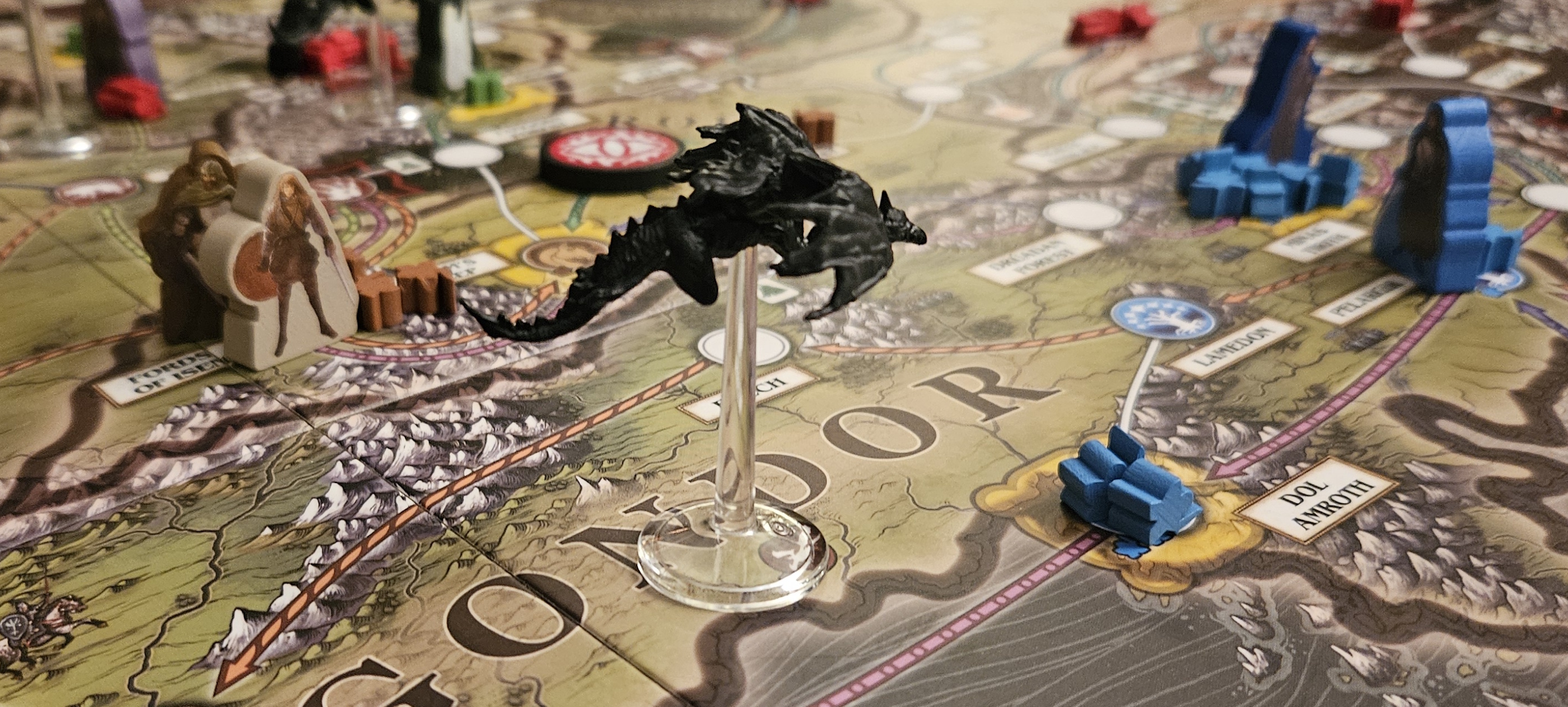
The Lord of the Rings has long been the modern world’s parable of resilience, a detail that sometimes gets overlooked in our hurry to strip-mine it for monsters and elves and general aesthetic. That it still retains its power is a testament to Tolkien’s skill as a writer.

Fate of the Fellowship understands that legacy. It’s a game about hope: its loss, its tenuousness, the way it stands firm or crumbles in an instant. Every time I play it, there’s at least one moment where I’m not sure we’ll pull through. The wraiths have backed Frodo and Sam into a corner. The hordes are descending on a beleaguered haven. Gondor can’t get its poop in a group. But then, a miracle. Reinforcements. A lucky roll. The horde blundering along the wrong path. When that happens, those prickles run up my legs, just like they did all those years ago when I read the trilogy for the first time. I’m a kid all over again, learning that I can slay dragons.

Review: Legend Became Tabletop
#3. Corps of Discovery

Designed by Jay Cormier and Sen-Foong Lim. Published by Off the Page Games.

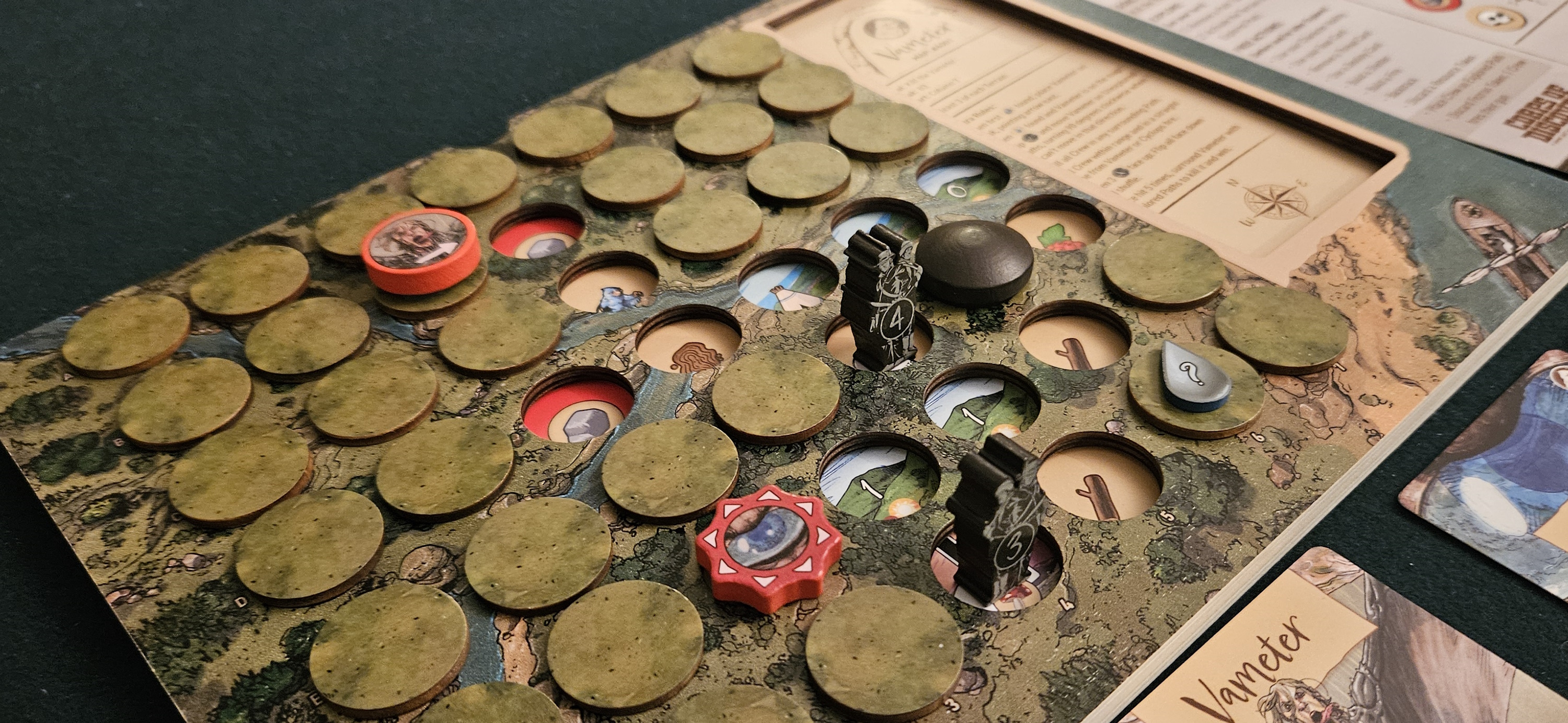
Corps of Discovery is a strange game, in no small part thanks to the strangeness of its source material. One part critique of the American colonial project, another part distasteful male gaze for Sacajawea, the comic series is an unsettling portrayal that sometimes doesn’t know where its head is at. The board game adaptation lingers in that headspace. Are we here to kill monsters? Yes. But also, we’re here to bend this land to our will. To remake it in our image.

Okay, some of this stuff is basement-level subtext. I don’t think the game fires on all cylinders without first reading the material it’s adapting. But in its proper context it hits many of the right notes, providing plenty of grisly work for its alt-history Lewis and Clark expedition. It’s grimy in a way that most board games never manage, with a wilderness that feels appropriately hostile and enemies that would rather eat us than become us. Heart of Darkness, indeed.
Review: Manifest Sudoku

#2. Purple Haze

Designed by Bernard Grzybowski. Published by PHALANX.

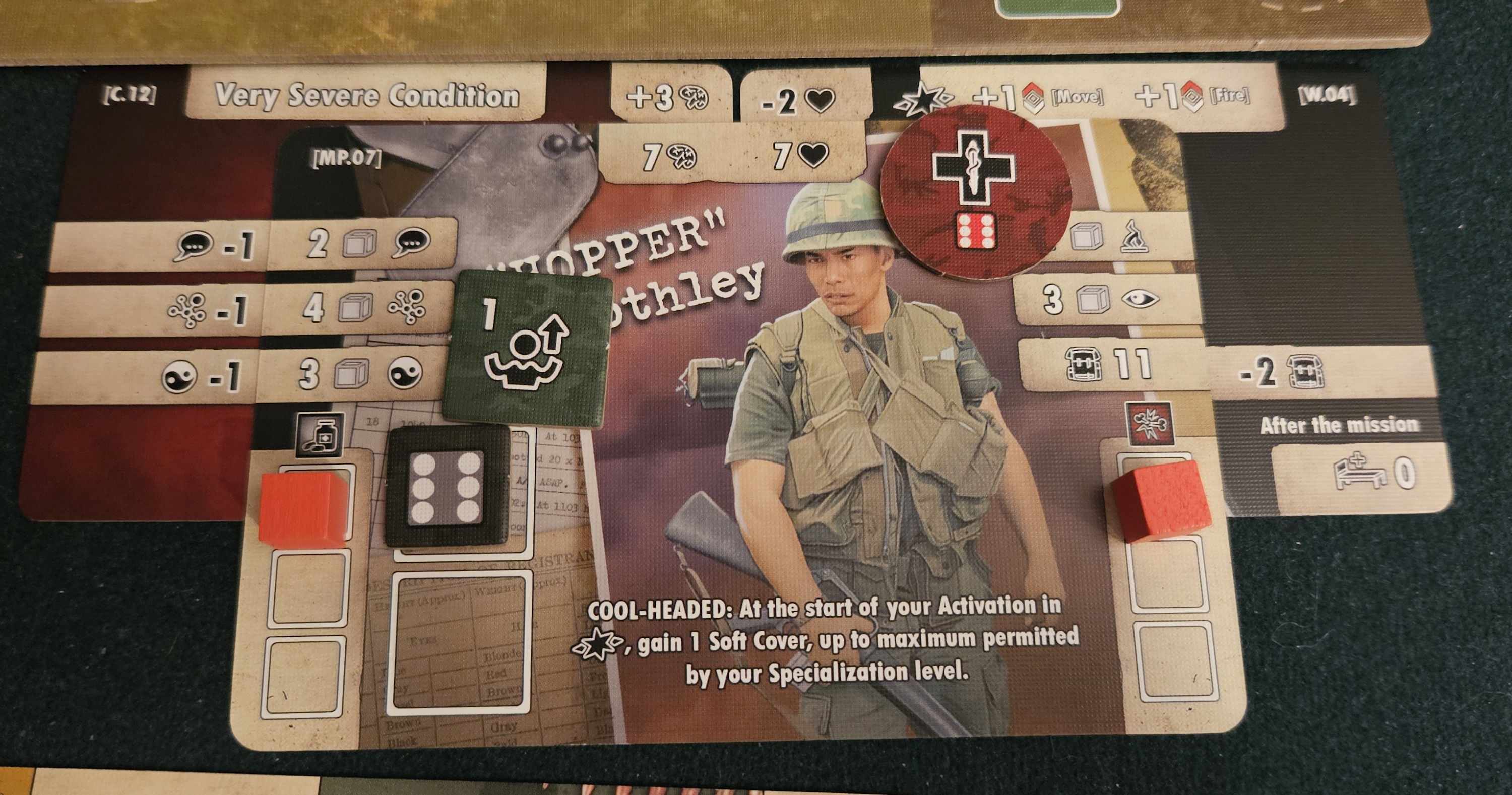
There’s a mode Purple Haze excels at, one where the player is invited to do terrible things and have terrible things done to them, one which leaves a sick feeling in the stomach, but does so without moralizing or offering an easy escape. As a squad of U.S. Marines, your troops are a tough match for their opposition. They’re well equipped, well trained, and have the advantage of artillery. But they’re also expendable to the machine that has sent them here. That expendability, both of body and spirit, is never far from mind. As the injuries accumulate, as hidden hurts become all too real, as the inability to tell friend from foe becomes uncomfortably present.

Like the rest of the titles on this list, the result is an imperfect game that still has a lot to say about our imperfect natures. Call it synchronicity, because I’m not sure a perfect game would fit in this company. Whatever the reason, Purple Haze is one of the most gripping and personal portrayals of infantry warfare ever put to cardboard.

Review: Don’t Know If It’s Day or Night

#1. Onoda

Designed by Francisco Gradaille. Published by Salt & Pepper Games.

Board games don’t often truck in obscurity. In a media ecosystem where ambiguity is already an imperiled species, this simply isn’t the strongest medium for muddy waters. Under normal circumstances, anyway. Francisco Gradaille’s Onoda asks us to inhabit the shabby boots of Hiroo Onoda, the second-longest holdout of WWII. Along the way, Onoda commits regular war crimes, steals and bullies and kills, and steadfastly refuses to face the reality that his empire has been shattered and his cause is futile.

Is this denial? Insanity? A last-ditch attempt to avoid prosecution? Gradaille doesn’t offer an answer. Instead, he walks us through Onoda’s daily life and the passing decades. Unlike many of the titles on this list, the landscape is bright and cheerful rather than overcast. It’s you, the protagonist of this tale, who falls like a dark cloud to steal a radio or hold villagers at gunpoint. As an examination of a man who insists he embodies manliness while fleeing from his responsibilities, Onoda provides a clear-eyed portrayal of a real-world horror story.

Review: On Banditry

Whew! What a big bummer we were today. What were your annual bummers, dear reader? Share all the bummers below. Let us become bummers together, and in being bummed, dispel the bumminess.


(If what I’m doing at Space-Biff! is valuable to you in some way, please consider dropping by my Patreon campaign or Ko-fi.)

Best Week 2025! Picture Perfect!

26. Dezember 2025 um 16:44

What a year. Best of times, worst of times, that’s what we’re supposed to say. For board games, though, 2025 was a banner year, full of tremendous titles both big and small.

As ever, Best Week is a celebration of the board games that struck me the most roundly, and today I’d like to cover the games that won me over thanks to their beauty, at least in part. These are the games that transported me to new places, that showed me wondrous sights, or that used their visual design in such a way that I found an old topic illuminated in a manner I hadn’t considered before.

#6. Skara Brae

Designed by Shem Phillips. Published by Garphill Games.

I have a thing for the Neolithic. Mesolithic, too. Chalcolithic, Paleolithic, Bronze, Iron, you name it, if it’s about humans I’m probably at least a little bit interested in what we were getting up to. Skara Brae is the tale of a human settlement that was old long before the period it covers. That’s the point. Its homes are dug into the midden left by centuries of human activity, that sediment of shells and bones becoming the foundations and walls of something new.

And it’s a looker. Not only for Sam Phillips’ illustrations, although they’re lovely. But also for the layout. Skara Brae is an inventory management game, your stockpile filling with tools and food but also waste. Everything has a use, if you bother to search for it. The result is a particular interpretation of human settlement that’s optimistic and vibrant, a counterpoint to more hard-pressed titles about human survival under harsh circumstances.

Review: Stuck in the Midden with You

#5. Nature

Designed by Dominic Crapuchettes. Published by North Star Games.

There’s a hint of sadness to Nature, at least in my reading of it. As the natural world retreats mile by mile, as microplastics crowd into raindrops and highways enclose the wilderness, the biomes and food chains that are the domain of Crapuchettes’ masterpiece recede like my hairline until all that remains are the fringes.

I’m being morose. Nature isn’t about such things. This is a card game, one descended from the competitive scene of Magic: The Gathering and a hundred other titles, worked and reworked until every card interaction is perfect, gorgeously illustrated to evoke a realm most of us will never get to encounter. Calories and population are the objective, evolution is the method. As your creatures develop more traits, hopefully they emerge better suited to tackle the challenges arrayed before them. Not often does a game leave me in awe of both its mechanical and visual purity; this is one such design.

Review: Apex Card Shark

#4. Vantage

Designed by Jamey Stegmaier. Published by Stonemaier Games.

Have we exited the phase of Vantage’s discourse where it’s cool to rag on this thing? Vantage is a shocking accomplishment, arguable weaknesses included, offering a multilayered world that unfolds like a map only to unspool like a ball of yarn only to peel apart like a sticker book. Every nook and cranny has something new to see, to touch, to taste. Sometimes to kiss. If those wonders should prove a little… undirected… well, that’s how actual adventures turn out sometimes. Even the principal criticism of Vantage reveals something wonderful about it.

And what a place. Part science fiction, part fantasy, all colorful dimensions, Vantage is both an illustration and a solution to the “map problem” that hounds pretty much every other adventure game. By offering a space you can actually get lost in, Stegmaier pulls the best trick of all: letting you find yourself.

Review: Life in First-Person

#3. Battlefields of the Napoleonic Wars

Designed by Paolo Mori and Alessandro Zucchini. Published by Ingenioso Hidalgo.

Somebody’s going to insist this is the mismatch of the list, but hear me out. Battlefields of the Napoleonic Wars is a revelation. Not so much of individual illustration, but of what a hex-and-counter wargame can accomplish. Rather than stacking its chits to the heavens, Mori and Zucchini limit each space to two pieces, their arrangement providing a visual shorthand for the unit’s capabilities. Two chits beside one another make a firing line; arranged in a square means a column; splayed apart communicates a broken unit in need of a good smashing.

It isn’t long before the battlefield, in all its complexity, lays itself as bare as a color-coded chart. By making its space legible, the game gives the player command of its shifting lines and flanking horses; in turn, it isn’t long before clever maneuvers and risky feints become possible. This isn’t how Napoleon saw the battlefield — it’s far too vertical for that — but in its own gamey way, it feels like it.

Review: Hex-and-Counter Meets Its Little Boney

#2. Harmonies

Designed by Johan Benvenuto. Published by Libellud.

In abstraction, clarity. Harmonies is another title about the natural world, albeit one where humans have some limited presence, their red houses sharing space with mountains, rivers, and forests. More than that, it’s a game about topography and elevation. Trees soon pile atop trunks, mountains crane upward, and rivers and prairies settle into their basins where they belong.

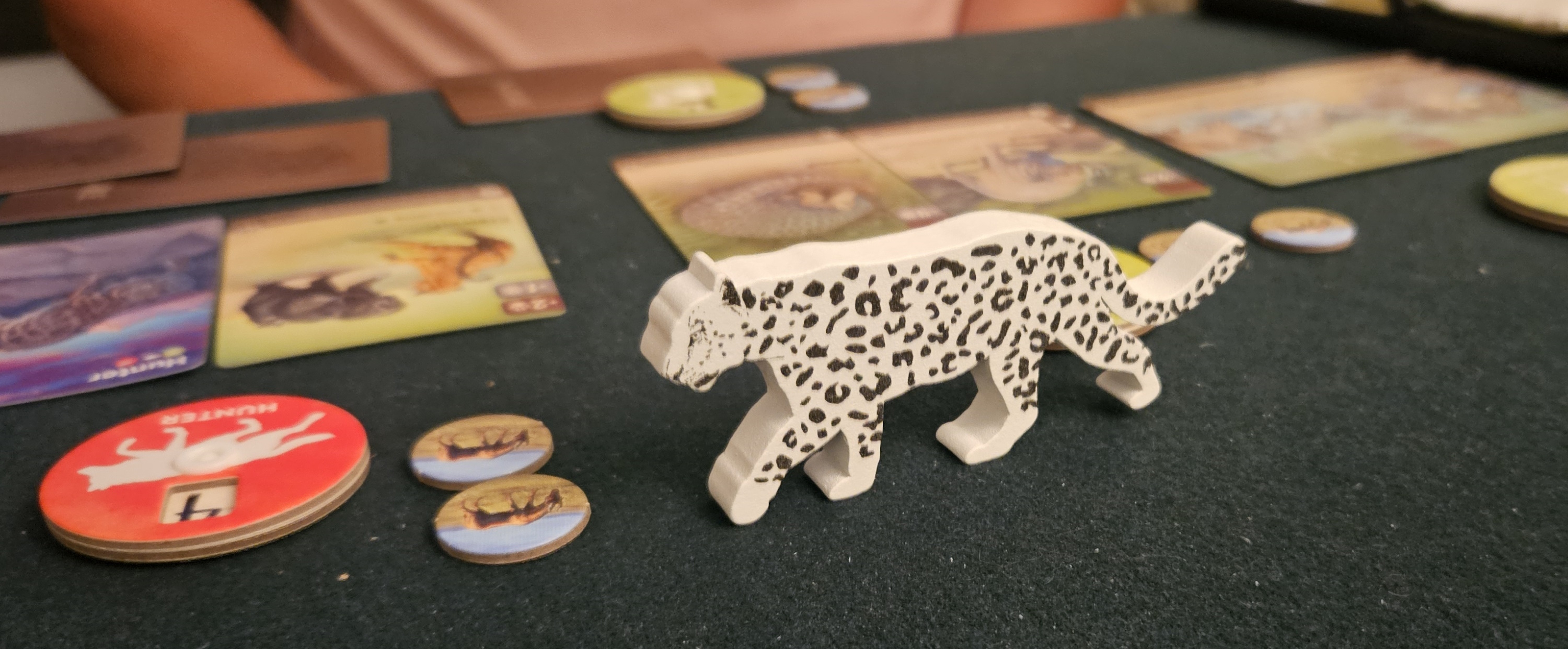
And into these niches wander creatures. Even represented as cards and cubes, Harmonies evokes a particular impression of nature, like seeing a model of the surrounding area at a natural park. Carving a river in between mountains in order to place otters in their proper habitat is its own sensory delight. Or maybe I just like stacking those wooden discs. They feel so good.

Review: Two Minds in the Wild

#1. The Old King’s Crown

Designed by Pablo Clark. Published by Eerie Idol Games.

I have a jealousy in me for The Old King’s Crown. It isn’t right that a single person be this talented. Pablo Clark designed, illustrated, world-built, balanced, you name it, and seems to have emerged on the other side with his sanity intact. Maybe he would say “relatively” intact. So now he’s humble and charming, too? What a world. What an unfair world.

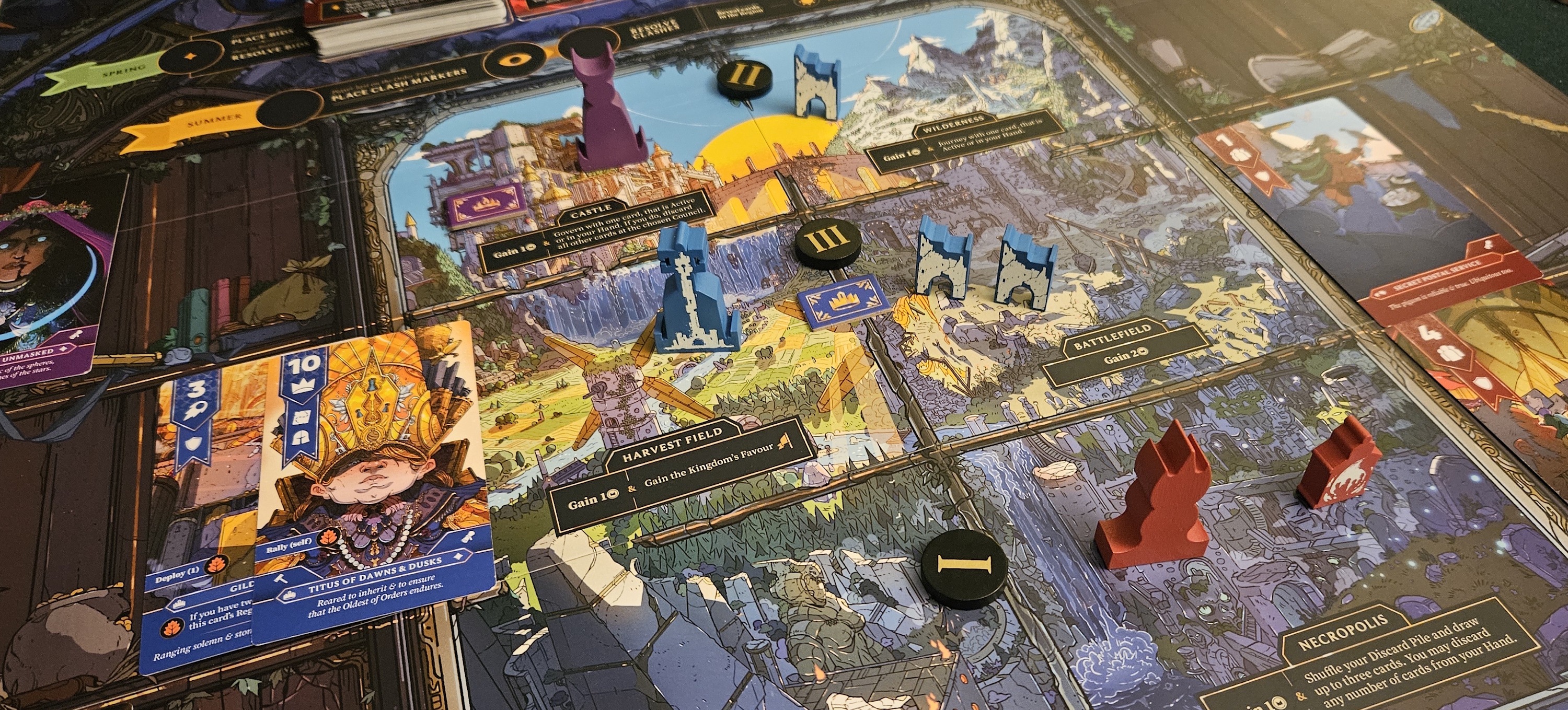
More seriously, The Old King’s Crown is perhaps the densest lane-battler ever made, which makes it all the stranger that it was never intended as a lane-battler. Two to four factions jostle to rule a kingdom that’s coming apart in the absence of its ruler, and each of them presents its own culture in miniature. Whether you’re playing as the old guard, the barbarians at the gates, the revolution, or another completely distinct revolution, everyone brings their own story to the table. It’s a game of bitter reversals and successes that are very hard to not whoop about. If I didn’t have to write about other games on occasion, I would try to play it one hundred times. For starters.

Review: All for Freedom and for Pleasure

There you have it: my top six beauties of the year. What were yours? Feed me that engagement. Drip it right into my veins by commenting below.


(If what I’m doing at Space-Biff! is valuable to you in some way, please consider dropping by my Patreon campaign or Ko-fi.)

❌