Normale Ansicht

Carceral Draftsman

06. März 2026 um 05:11

That's just a school! ... uh oh, wait.

The ‘Enlightenment,’ which discovered the liberties, also invented the disciplines.

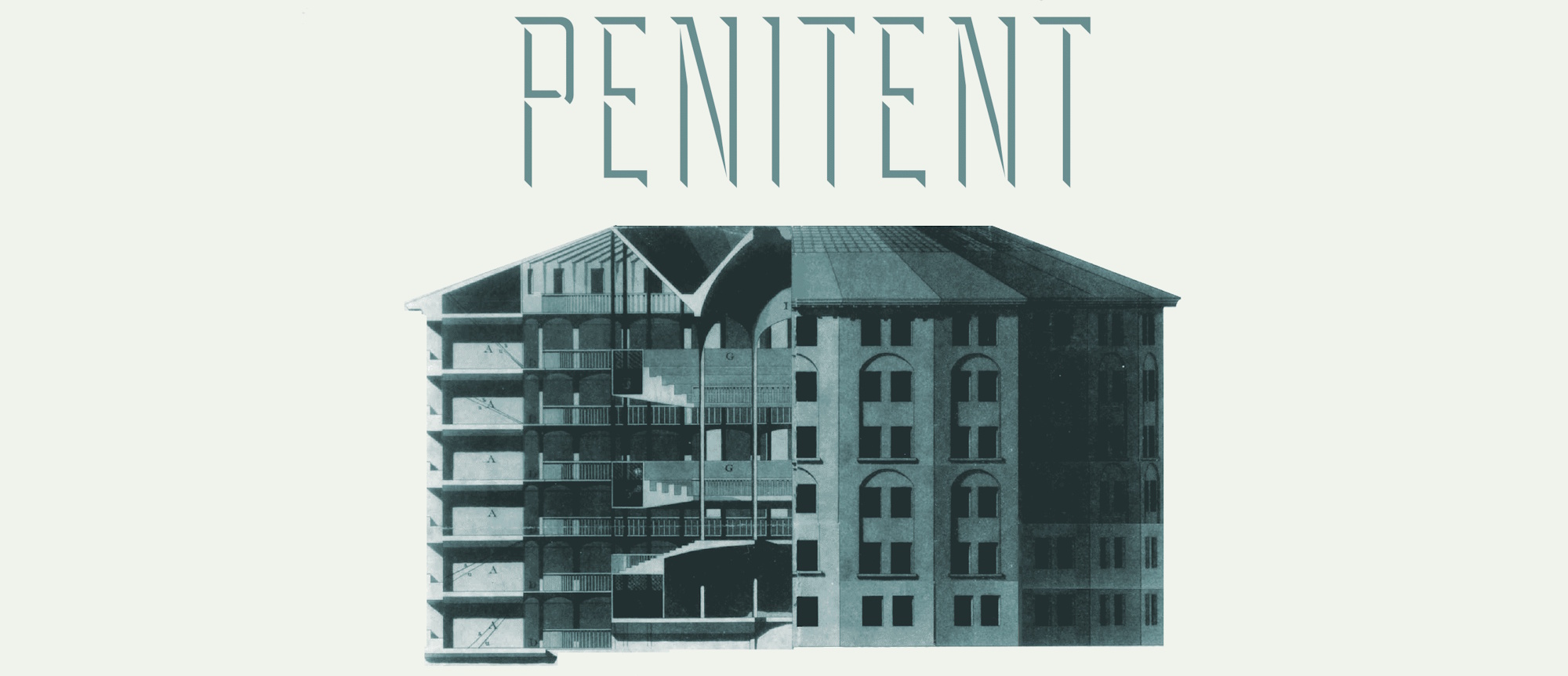
That’s the most oft-quoted line from Michel Foucault’s Discipline and Punish, probably because it’s such an apt summation from an author who, let’s face it, preferred discursive barrel-rolls to punchy thesis statements. Liberty and discipline are the topics of Dan Bullock’s latest board game, a term I’m employing loosely but not unfavorably. The game in question is called Penitent, it’s about constructing and managing a prison in the early 19th century in the United States, and it’s either the second or fifth of Bullock’s provocations on the issue of justice, depending on how liberally we stretch the concept.
This one is designed to look like the plasma rifle.

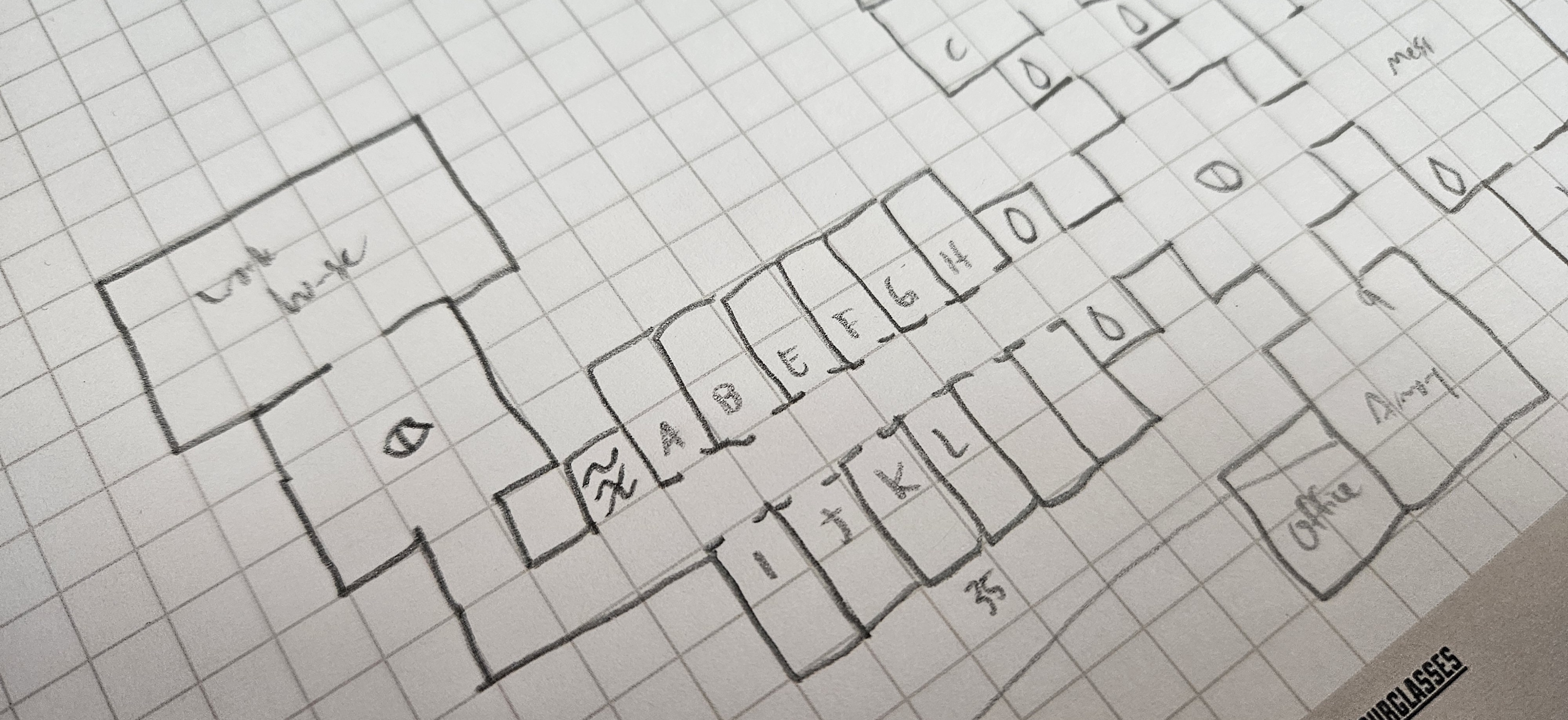
My first attempts looked more like Doom levels than actual prisons.

Back in 2021, Noralie Lubbers and Dávid Turczi revealed a collaborative board game project called Prison Architect, an adaptation of the 2015 Introversion Software video game about building and managing a private maximum-security prison. As the adaptation pursued funding on Kickstarter, the outcry from segments of the board gaming community was severe. Turczi apologized, noting that he and the rest of the game’s creators had been operating under the best of intentions, but also stating that he had come to believe that the topic was a bad fit for board games.

I never played Prison Architect, either the board or video game versions. Like many board game controversies, the announcement, pushback, and project cancellation passed at blink-and-you’ll-miss-it speed. From a distance, though, it struck me as overly gamey, too cute, to effectively communicate the nuances of such a loaded topic.

Penitent is anything but cute. It certainly isn’t gamey, at least not in the usual sense. But nuanced? It’s got nuance to the ceiling.

Your objective, as I stated earlier, is to construct and run a prison. Penitent is set in the early 19th century, a period of profound carceral transformation. Within the span of three decades, global society’s understanding of imprisonment and punishment would develop radically. Public punishment would go from the norm to unthinkable, at least in the sense that had reigned unquestioned since the Medieval period. Sanity would become a topic of public discussion, with reformers like Dorothea Dix founding no fewer than thirty-two hospitals across the U.S. and Europe for those suffering from mental ailments. Questions about racial, class, and gender justice were discussed openly in periodicals and congressional hearings. Bullock touches on every one of these issues and more, sometimes with a heavier or lighter touch, all within the span of perhaps an hour.

To regulate the game’s perspective, Bullock limits his examination to two systems of prison reform. The first is the Pennsylvania System, sometimes also called the “separate” or “silent” system for its strict solitary confinement of inmates and emphasis on moral reflection. The second is the Auburn System that evolved from it, which housed inmates separately but allowed them to work, eat, and exercise side by side, albeit often, still, in maddening silence. These reform projects existed side by side, often competing for attention and funding. Many of their fingerprints can still be found scattered throughout the penal system of the United States today.
Gosh, I haven't even described the way the game operates. Like, there are Scrabble tiles that get drawn from a bag to randomize prisoners and events and stuff. And by rehabilitating prisoners, you earn their tile score. But that's all... boring? To talk about? I'd rather just write about prisons and stuff.

There’s a press-your-luck quality to the event phase, but I’m being rather liberal in my definitions.

As a game, Penitent is divided into two distinct halves. Right away, this bifurcation is troublesome.

In the first half, you draw a prison on a sheet of graph paper. The rules describe the necessary dimensions and chambers: cells enough for twelve prisoners, divided into at least two separate wings; exercise yards and workhouses to provide for your prisoners’ fitness and labor; kitchens, armories, laundries, and a warden’s office, their dimensions negotiable to such a degree that the rules effectively tell you to eyeball them; perhaps a chapel to see to the spiritual needs and moral rectitude of the incarcerated; cisterns and ventilation and observation posts, each of which you are told is essential, but for precisely what you do not yet know.

One of my pet peeves comes when a game’s setup instructs the player to make a game-altering decision without fully understanding its ramifications. Usually this means selecting one of two scoring cards, picking a faction you have yet to see in action, or selecting a bonus whose import remains obscure. In Penitent, it means sketching an entire prison.

Not only that. You’re also invited to select the policies that will dominate both the day-to-day operations of your penitentiary and its from-the-cornerstones construction. Will your prison operate under the unitary command of a single warden or the divided responsibilities of business operator and disciplinary keeper? Will punishments be meted out via the whip or the more “humane” method of dousing by freezing water? Will your inmates exist in unending silence, or only silence most of the time? These questions and more are posed directly, often without any guidance as to their significance.

This absence is frustrating. Systemic clarity is one of the great strengths of board games. Since a game’s rules can’t be computed, but must instead be held in the player’s head, this is a medium that excels at compressing complex ideas into their most digestible format. Penitent is the opposite case. Going in unprepared is a fraught proposition, but it’s also inevitable. Before you even set pencil to paper, you’re asked to make sweeping decisions, told that those decisions will have radical outcomes, but not told what any of those outcomes will be.
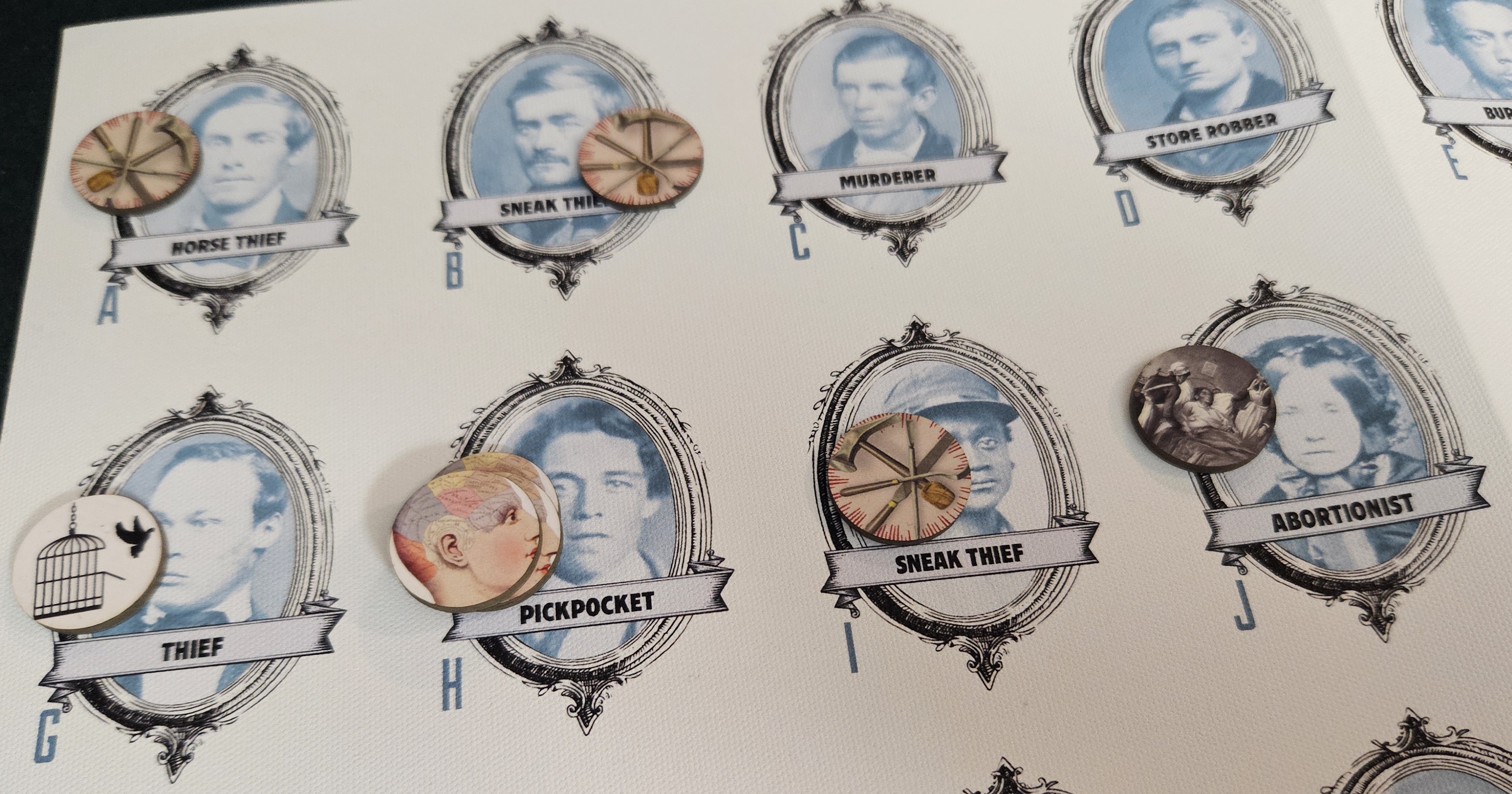
As you can see, I have trained three people in new manufacturing skills. This means they will never see freedom again.

At all points, Bullock invites us to think about the human lives being managed.

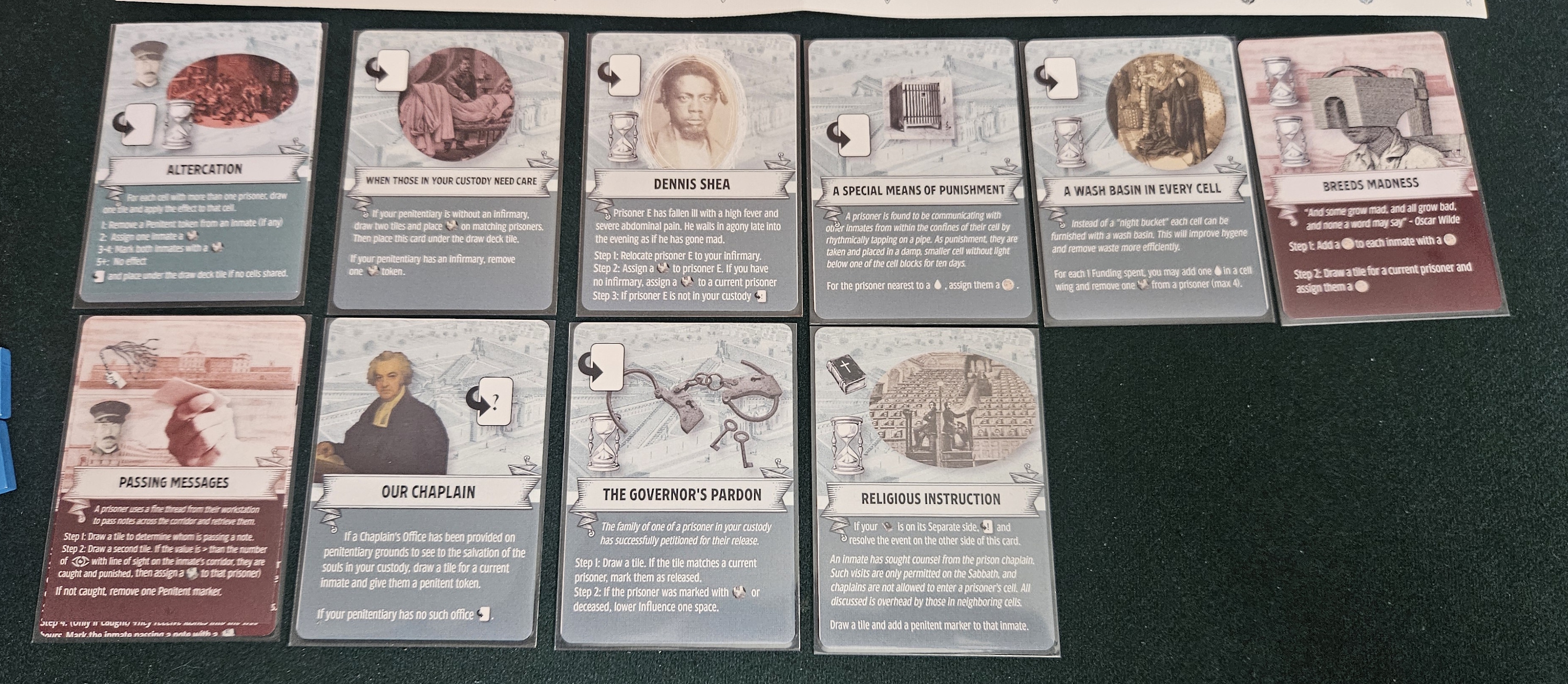
And those decisions matter. Oh, how they matter. The game’s second half is effectively an extended series of consequences. One by one, you draw event cards that put your prison, and by extension the bodies and lives housed within, through the wringer. Without enough cisterns, an outbreak of tuberculosis tears through the population. Housed multiple inmates to a cell, madness and brawls break out. A state inspector comes by for a looksie and comes away horrified. The locals in the nearby town go all NIMBY, complaining about how the prison’s barrel-hooping cuts into their home-grown business enterprises.

At times, these events present flashpoints. In the case of those business complaints, you might tell the locals to shut their yaps and keep your inmates hooping barrels as long as the margins are healthy. Or you could choose to divest the output of your workhouses, importing silkworms and training your laborers in spinning. Depending on which response you select, the event might present different outcomes. Sometimes it will shuffle back into the deck, threatening to come due at some future date. Maybe it will flip to its reverse side, growing more dire thanks to your inattention. At best, perhaps it’s thrown out of the game entirely. Consequences might come due. Or they might not. You can never know.

This uncertainty is at the heart of Penitent, for better and for worse.

For one thing, there’s Bullock’s entire approach to rules. In Penitent, it isn’t uncommon for the game to ask the player to use their own judgement. Is a horse thief a violent criminal or non-violent? How about a store robber? The bonneted abortionist on the board’s second row is surely a woman who ought to be housed separate from male offenders, but what about that effeminate-faced burglar on the bottom row? And what precisely is meant by “line of sight”? At least once per in-game year, an event will raise an issue that requires the player to settle a dispute that might go either way.

Bullock’s previous self-published title, The Gods Will Have Blood, asked similar questions about the uncomfortable distinction between justice and retribution. In that game, the player was asked to render judgement on accused royalists and collaborators, feeding some to madame guillotine and setting others free. Even more than that game, Penitent requires the players to make decisions on emotive and instinctual grounds rather than adhering to strict rules. The effect is often jarring.
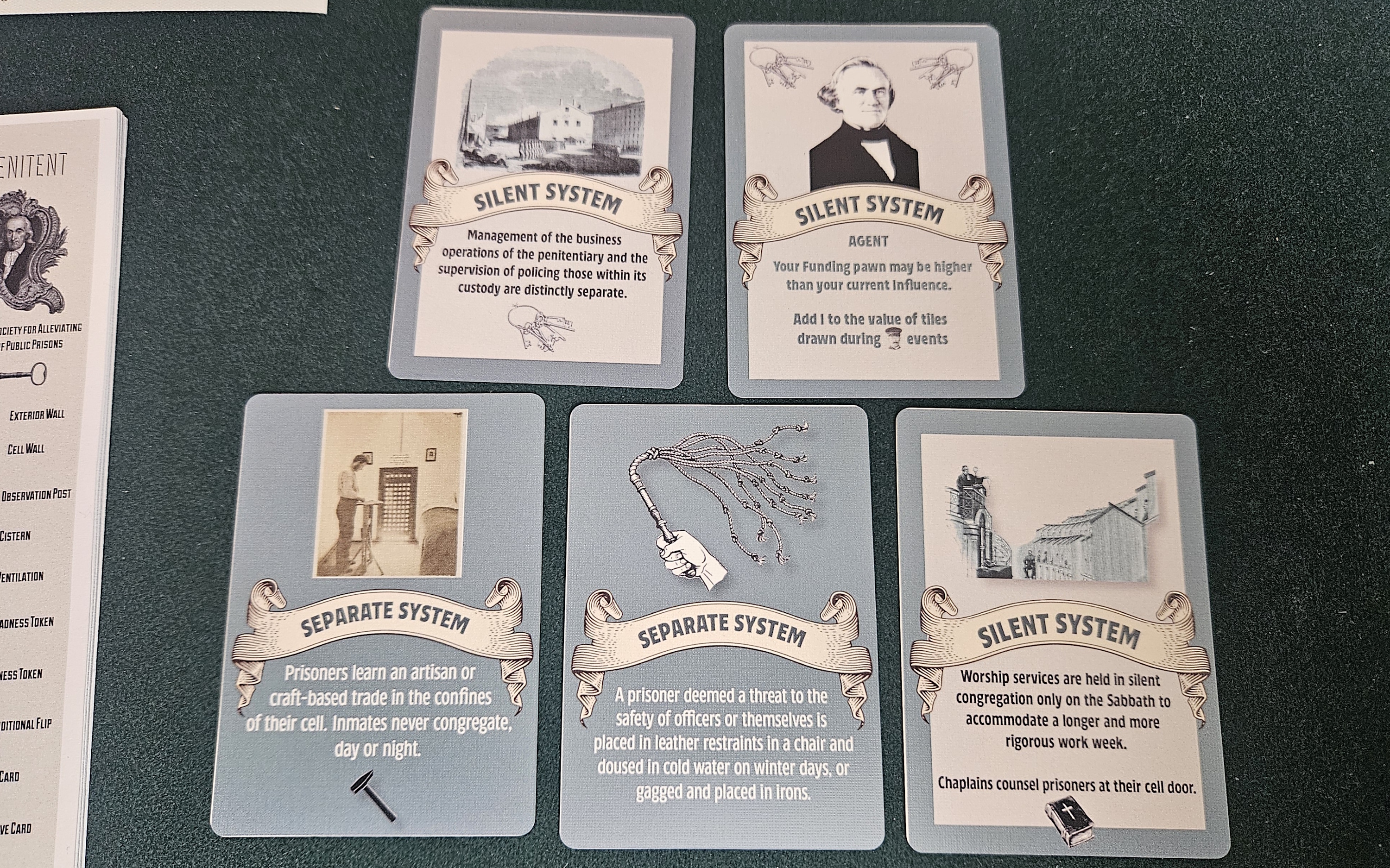
I've never taken a class on penology — that's the study of penal systems, not weenies — but you can't get far in discourse analysis without Foucault, so it sorta naturally comes up. Anyway, the real horror of these systems isn't that they happened in the 19th century. It's the degree to which they're still happening.

The Pennsylvania and Auburn Systems are put in tension.

But this absence of clarity is precisely what makes Penitent a worthwhile investigation. Something like Prison Architect may have proven a better game about moving cards and balancing a budget, but Penitent is the keenest possible study of the carceral experiment. Going into a session, one is provided only theory. The proper severity of punishments. Whether prison wings should contain washbasins. The nature of worship services. The physical dimensions of each cell. The placement of the institution’s watchmen. All that theory, all untested. So much theory you could choke on it.

Unlike the choice between two objective cards in some boilerplate eurogame, however, this tabula rasa is deliberate. It entrusts you with the drafting pencil of the reformers who crafted the modern prison system. You have no better idea of the outcome of one system over the other because you, like them, probably know very little about the distinctions between the Pennsylvania System and the Auburn System. Pop quiz: Which system proved more enduring? Which features are still present in modern penitentiaries? Here’s an easy one: which correctional facility is still in operation today that was built explicitly as an experiment in keeping prisoners in maximum isolation? It’s okay if you don’t know. For the most part, neither did the people who built them.

Not that this absolves those wardens and reformers of the role they played. If Penitent has anything close to protagonists, they are the prisoners themselves. Bullock has always imbued his work with a deep humanism, whether he’s asking us to consider the policies behind North Korean isolationism, revolution in Iran, or, sure, David Bowie’s artistic schizophrenia. As in some of his previous outings, Bullock puts the faces of the imprisoned on display. They quickly become cluttered with tokens: their injuries and illnesses, their fraying sanity from enforced isolation, their degree of penitence, the trades they’ve learned during their incarceration. All the while, their faces peer up from the board in daguerreotype. These are people who lived. They had dreams and aspirations. They suffered setbacks and failures. Now they are in your hands.
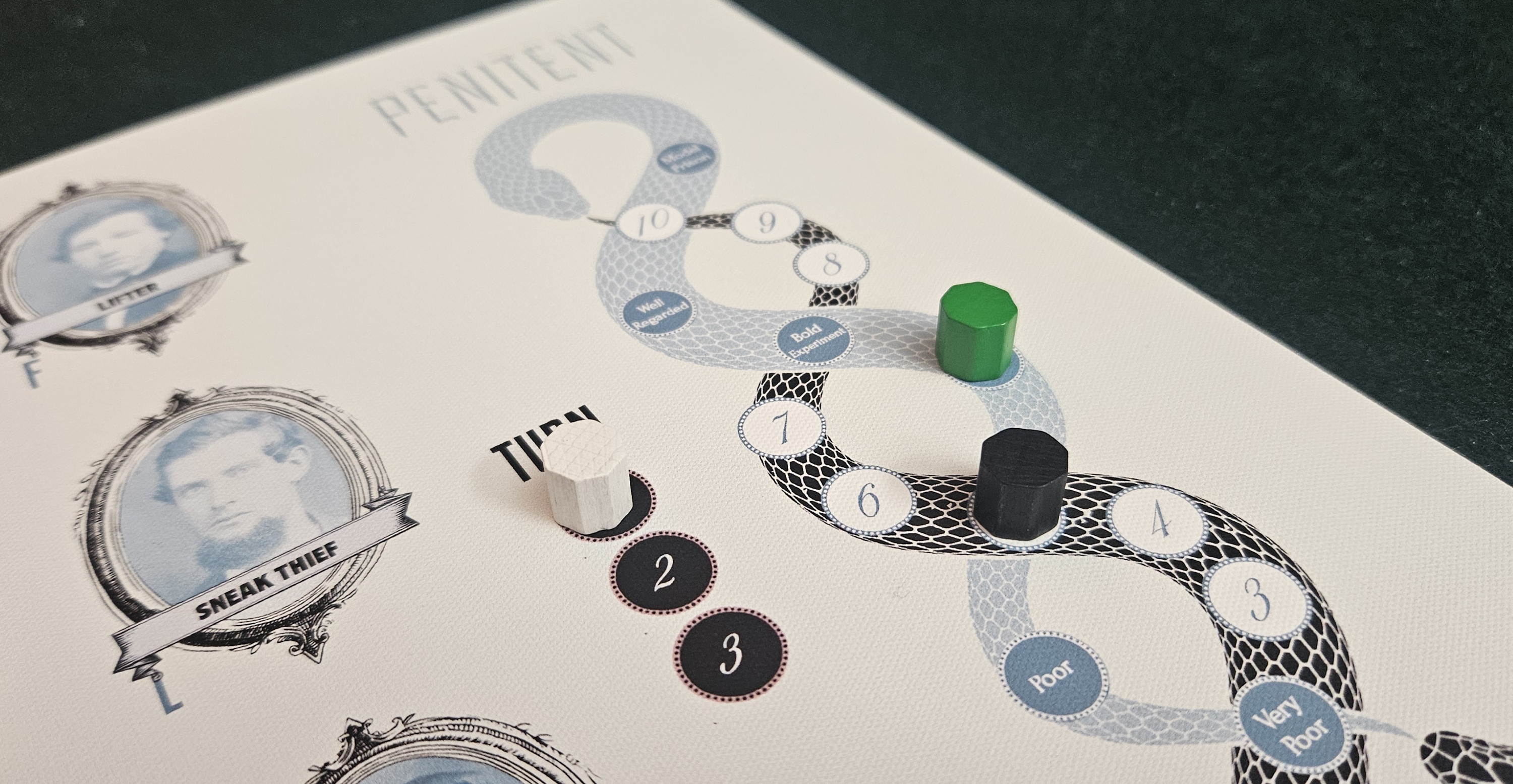
Foucault wrote that pretty much every institution gradually becomes a prison. This review, for example.

Your priorities are plainly spelled out: funding and influence — i.e. money and reputation.

Very quickly, too, their statuses become statements about the way your institution’s incentives become bent and perhaps broken entirely. Sick inmates are more easily isolated than treated. Prisoners with trades are profitable, encouraging you to keep them under lock and key. Once, when one of my prisoners died before their madness compounded, I caught myself exhaling in relief. How’s that for ludonarrative harmony?

Speaking of which, your own role as this prison’s warden is never far from mind. Victory requires you to care for your inmates to some degree, but they’re a means to an end. That end is your influence, which Penitent is careful to tie to your capacity to actually pay for this stuff. That’s another of the game’s many entangled incentives. No matter how sterling your intentions when the game opens, it soon becomes clear that there isn’t enough funding for everything. On my first attempt, I tried to fashion a more egalitarian prison. (Exactly like most of these reformers, by the way.) When my palatial twelve-by-twelve cells proved too expensive — and my lazy bones proved unwilling to sketch the whole blueprint all over again — I added a notation in the margins: “1/3 size.”

While Bullock refuses to let his wardens and reformers off the hook, he also declines to indict them too harshly. In Discipline and Punish, Foucault argued that modern discipline was pervasive, a co-opting of Enlightenment values that served to regiment and order human bodies, but that this was still gentler and more evenly applied than what came before it, so defined by public torture, disease-ridden dungeons, and irregular justice applied at the whims of sovereign rulers. For all their corrupted incentives, their horrifying theories, their abuses, their tourist-trap viewing holes (no, really), these prisons were still fashioned to be more humane than what came before. They didn’t prove as Whiggish as the, um, Whigs intended, but as a warden you’re still expected to provide some measure of care to your incarcerated bodies, to encourage their rehabilitation, to course-correct when your structure proves insufficient.

Is this an improvement? The answer isn’t a simple yes or no. Most of us would probably agree that we’d rather spend a stint in a cell, even one as cramped as those at Sing Sing, than have our ears sawed off and our cheeks branded with the initials for seditious traitor, only to be clapped in irons anyway. Then again, that latter punishment is arguably what sparked the Age of Revolution. Public punishments were awful, but they were also opportunities for public dissent. One of the functions of the Pennsylvania and Auburn Systems was the removal of any such possibility. Bodies under punishment would be placed where the public wouldn’t have to consider them; minds under punishment would be wiped through sheer silence and tedium. This, too, is torture. What good are ears when there’s nothing to hear?
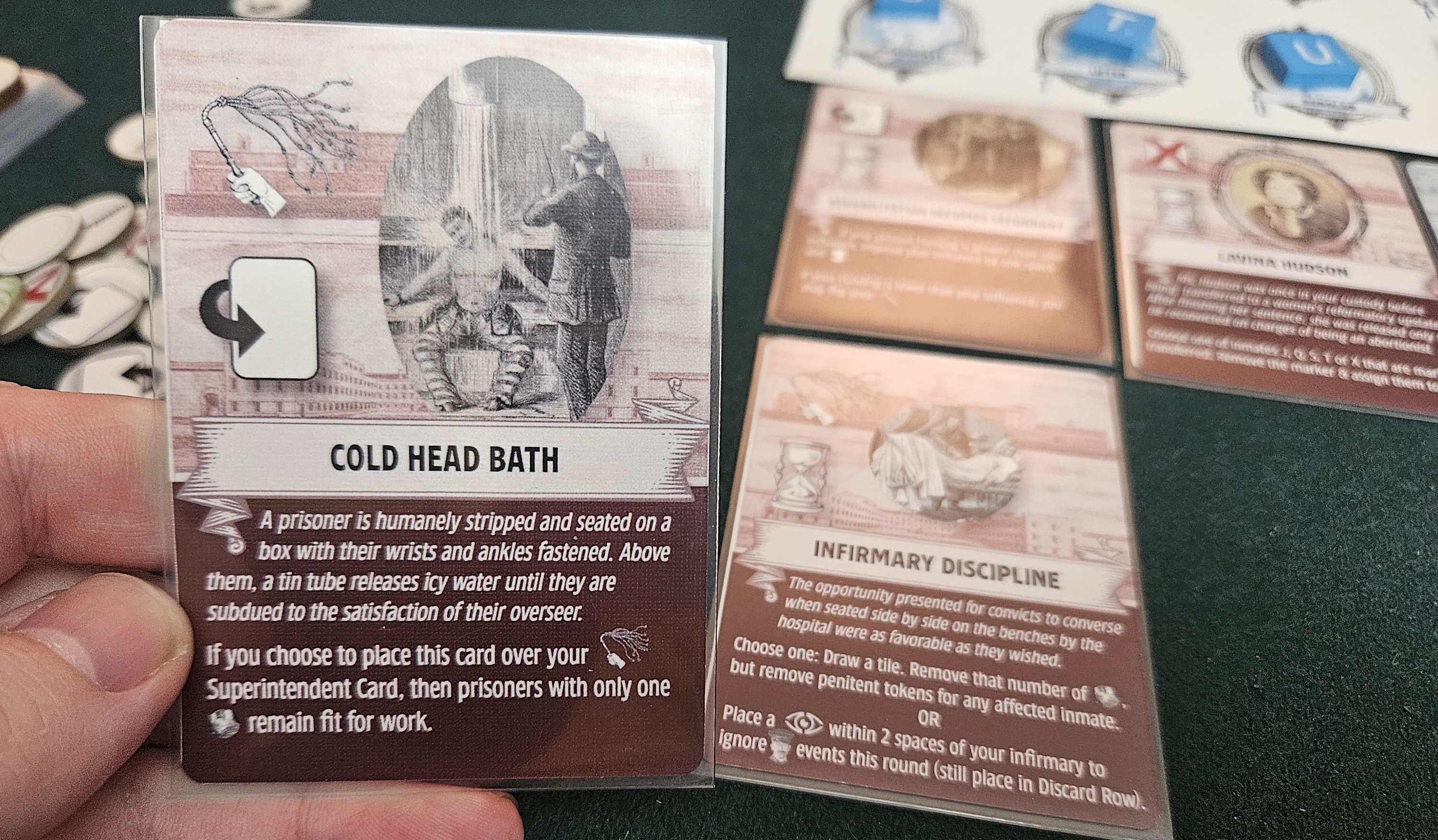
I felt awful, but this game has given me an ugly chortle at least twice.

Bullock’s dark humor is a constant guide.

This, ultimately, is the real function of Penitent.

Not the examination of Foucault, although there’s always fun to be had in asking an incoming grad student what old baldy actually meant by this or that treatise. Not the examination of the Pennsylvania and Auburn Systems, with their strict quietude and felt-lined shoes and years of solitary confinement. Not the realization that you’ve grown so callous toward the faces on the table that it’s a relief when one of them dies rather than cutting into your bottom line. Not even the chilling parallels to the under-regulated detention facilities springing up across the United States, the ones that would fail even Penitent’s most basic checks.

Rather, the function is to ask us to think about the bodies under our care. To consider how a person ought to be housed when we as a society have decided we’d rather put some distance between them and us. Should they be punished? Reformed? Left to rot? Helped back to their feet? Penitent doesn’t offer trite answers.

But it does ask the right questions. I’ve spent some time in prisons. Not as an inmate, to be clear. As a volunteer, a few times. As a tourist, once, for a school thing. As a minister, usually to somebody’s irritation. And certain images are burnt into my memory. An inmate standing at the glass, hands clasped and shoulders squared, chin jutted in defiance, putting himself on display as an act of resistance. Another prisoner, crying with relief that we, that anybody, came to visit. The blank, slow gaze of someone in the halfway house, overawed at the bigness of the world outside. My own personal daguerreotypes.
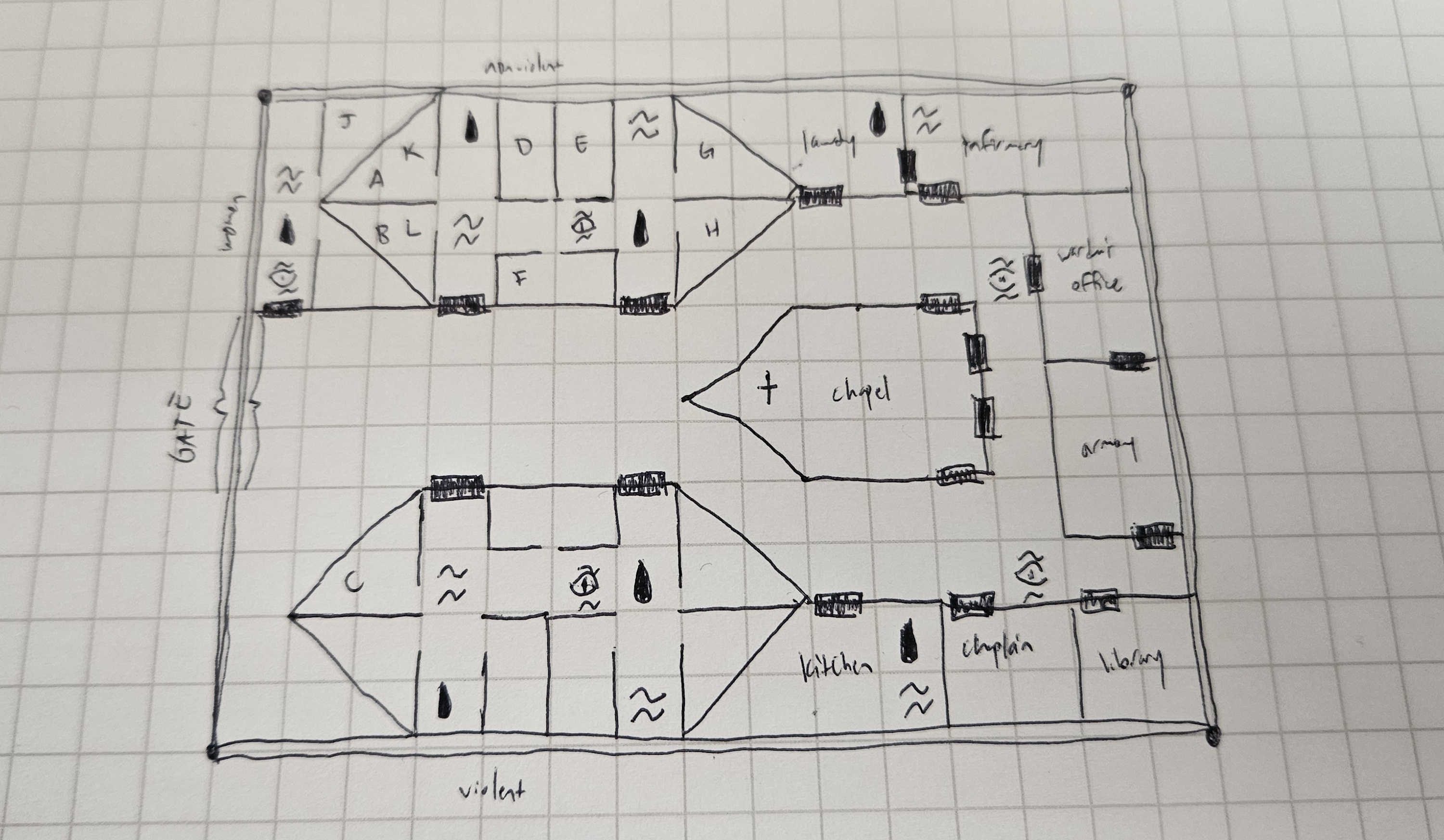
You caught me: this is actually docking starships.

My later prisons were more prison-ish.

Penitent is quite the thing. I’m hesitant to recommend it. The last time I said that one of Bullock’s games was essential, multiple readers informed me in no unclear terms that it was garbage. So let me be clear: Penitent is not a good game in the sense we usually mean when we say those words. It is awkward and wonky and full of moments that verge on role-play. It is frustrating. It lacks player agency, whatever that’s supposed to mean in this context. It made me draw a bunch of maps on grid paper. The nerve.

But it’s also a shockingly clear examination of some truly challenging subject matter. Sure, it’s educational. More than that, it’s an act of empathy, a witness, a dissection. In all regards, it is something like a surgeon, looking directly at one of our modern world’s hidden hurts, a rupture in the abdomen that we would rather ignore. “This might be infected,” it says, prodding uncomfortably at the reddened tissue.

As for the possibility of sutures… first, we’ve got to take a long hard look at the cut.


A complimentary copy of Penitent was provided by the designer.

(If what I’m doing at Space-Biff! is valuable to you in some way, please consider dropping by my Patreon campaign or Ko-fi. Right now, supporters can read about which films I watched in 2025, including some brief thoughts on each. That’s 44 movies! That’s a lot, unless you see, like, 45 or more movies in a year!)


Vibin’

05. März 2026 um 02:03

my king

Ah, solipsism. It’s always appreciated when a board game demonstrates that we exist in shocking isolation, our comprehension of the universe siloed from every other human being, loved ones and enemies alike, by an unspannable gulf. Usually it’s Dixit or Mysterium that performs the winnowing, but there are no shortage of titles for transforming everyday people into miniature versions of René Descartes.

But then there’s The Vibe. Crafted by Jacob Jaskov nearly a full decade after he exploded onto the scene with Fog of Love, The Vibe is… how shall I put this… it contains some really great public-domain artwork. Joseph Ducreux, history’s finest self-portraitist, was a wonderful choice for the cover.

I considered trying to squeeze Ducreux into every image, but the gimmick fell flat rather quickly. A commentary on the game itself? Perhaps.

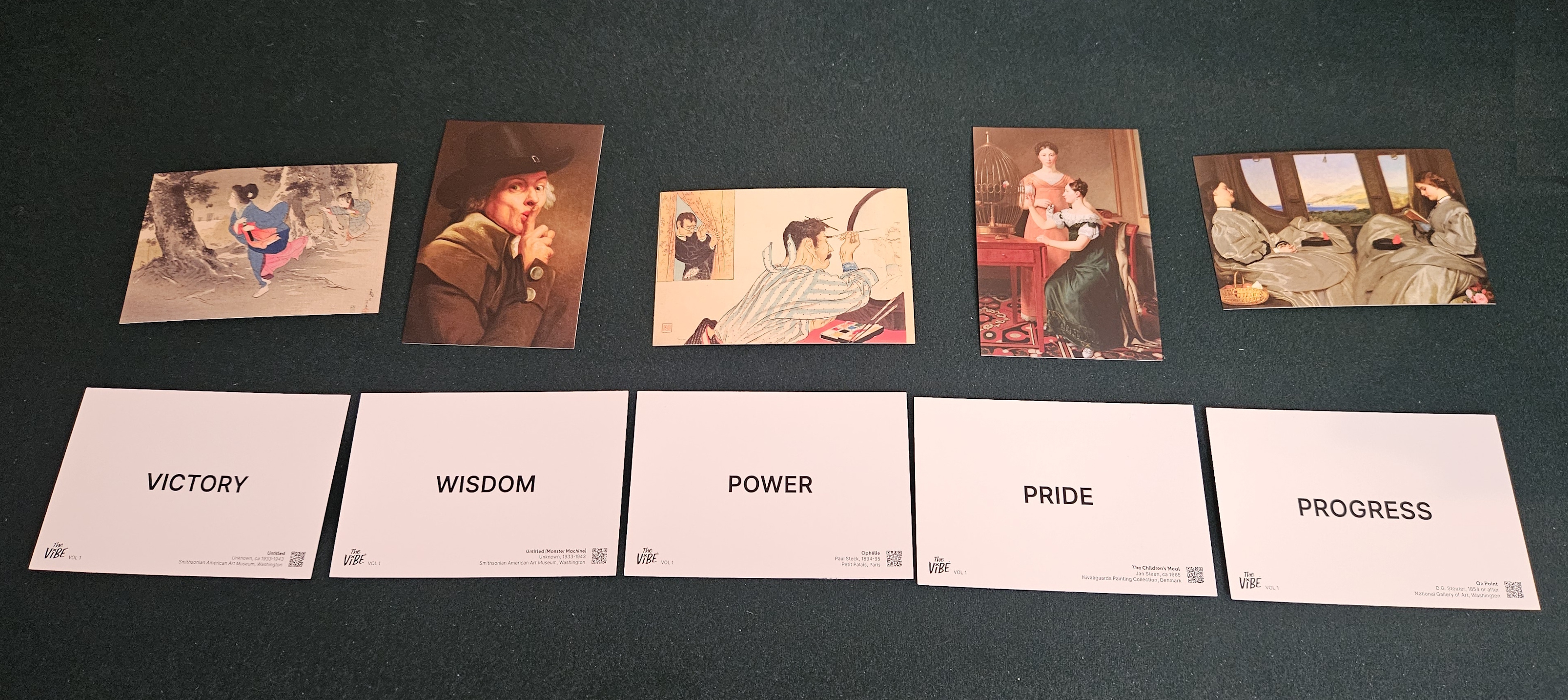
Which descriptor matches this sequence of images?

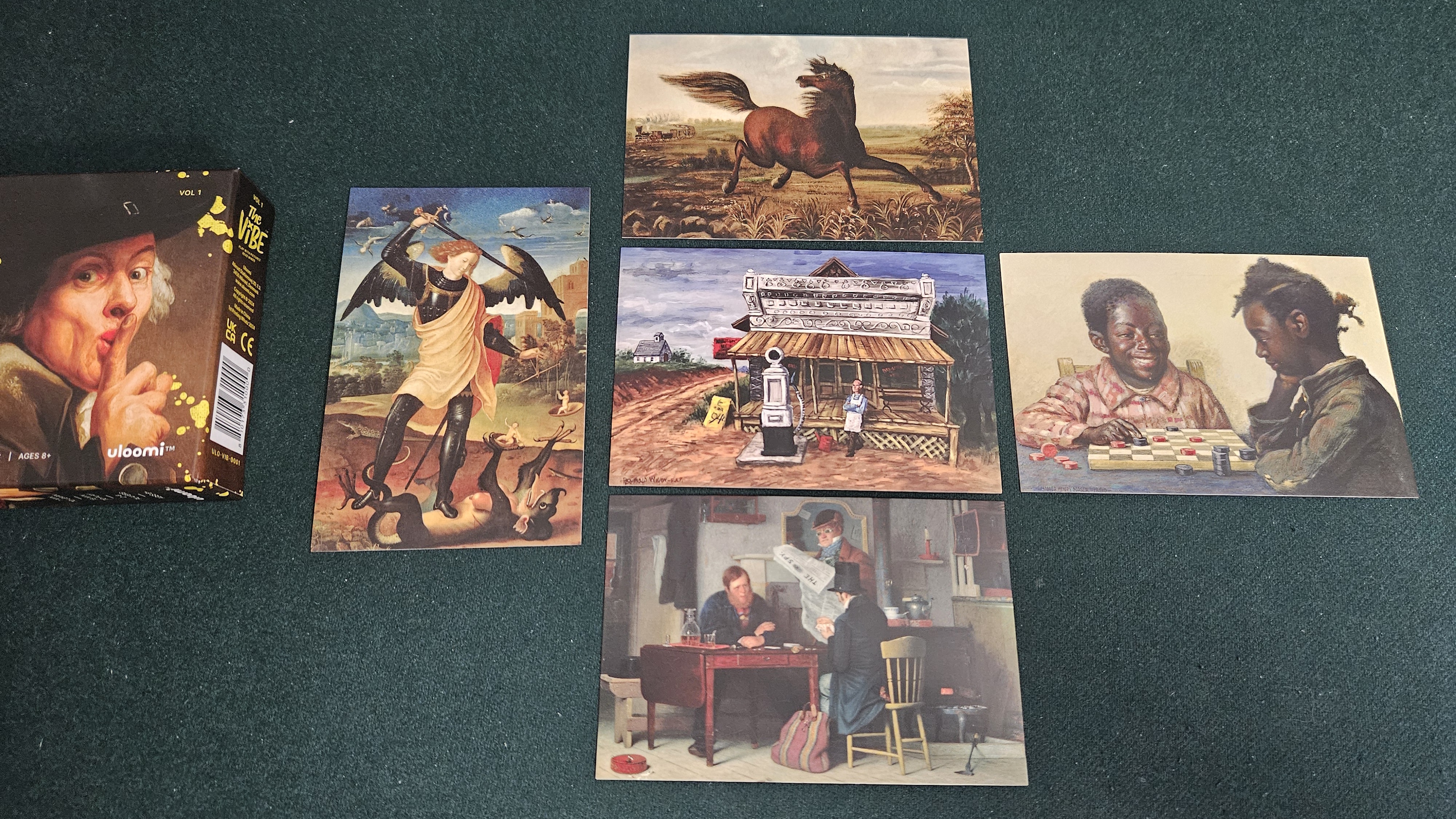
Really, I cannot applaud the art enough. The Vibe’s sixty-plus cards tour a virtual gallery, covering such works as Jacobus Doyer’s “Jan Van Speijk Debating Whether to Set Fire to the Gunpowder,” Eastman Johnson’s “The Pets,” and Unknown’s “Lover’s Eyes.” Actually, I think Unknown may be over-represented in this set. Give everyone else a chance, Unknown! Point is, opening the box presents the greatest hits from the postcard stands of a dozen art museum gift shops, drawing breathless exclamations of “Ooh, I think I remember this one!” from everyone at the table who took A.P. Art History twenty years ago.

On the back of each card, the art is titled, attributed, dated, and located in its modern museum or collection. There’s even a little barcode that promises to share more info, although at the time of writing they all lead to a generic page announcing that further details are forthcoming. Still, it’s a lovely collection. Poring over each image is a delight, and as a bonus it probably beats out any tourist shop in the world at per-postcard price. The last time I visited the Louvre, each one cost over a euro. What are the odds they’ve gotten cheaper?

But then I have to play the dang thing.

this is a board game picture about a picture about a board game

I’ve spent more time looking at the pictures than playing the game.

Picture this. In addition to the image title and author name and all that, the back of each card reveals a concept. Justice, perhaps. Loss. Passion. Surprise. On the table, you array five images, plus five more cards face-down to reveal a smattering of those concepts. Rebellion. Constipation. Transformation. Now somebody selects one of those ideas — in secret, mind you, in their brains, not aloud — and arranges the images in the order of how much they embody that idea. Left to right for all to see, from most to least. Grief. Relief. Justice. Oops, we’ve done that one. Shuffle it back into the deck. Betrayal. That’s better.

Now everybody else hems and haws and theorizes. Maybe Katsushika Hokusai’s “The Ghost of Kohada Koheiji” symbolizes anger? I mean, of course it does, but I mean right now, here, according to the five concepts on the table. But then we glance at the next image and it’s Brueghel’s “The Children of Planet Mercury.” Not very anger-y, y’know? Unless, perhaps, the arranger is struggling with their childhood faith, so any scene with a rooster-drawn chariots has certain connotations. Anger, then? Or maybe wisdom? The wisdom of the dead, the wisdom of rooster-drawn chariot-riders? Hmm. Humm.

It’s fine. Nothing incroyable, to pretend I know French. Too often it’s painfully obvious what the arranger intended to say; the rest of the time, it’s hopelessly obscure. Dixit was competitive, which ensured there were penalties for either extreme, the vague or the obvious. Mysterium was cooperative but muddied by the contrast between abstract images and concrete player actions. Here, the play is too straightforward to muster the necessary ambiguity.

Sure, there’s some of the usual apprehension that arises whenever we try to draw a box around things, to neatly cluster disparate ideas and images under shared headings. Is One Battle After Another just a social justice Star Wars? Is The Force Awakens just A New Hope for those who’ve misplaced their childlike sense of wonder? Is Star Wars just Vietnam? Are we just the Empire? Yes. I think so. Yes. I think I’m having more fun being discursive than actually talking about The Vibe. What I’m really trying to say is that the game wants to say something profound, only it doesn’t. It mostly prompts the occasional chuckle because somebody didn’t notice a detail when they examined the paintings.

There he is! My man.

The cross-four version is significantly more interesting.

There are sparks of brilliance in this game. Especially in the advanced mode. This sees the arranger making two rankings instead of just one, this time exhibited in cruciform. Now two of those five concepts are superimposed over the images, one of them situated so that it fulfills both criteria, but only as the middle spot in both rankings. This gives the enterprise a greater density, allowing for wider interpretations and broader misunderstandings. It isn’t enough to remake the game into something smarter, more like the artists it admires than the observers who flock to see their work, but it does nudge it a little closer to becoming an engaging plaything.

Sadly, The Vibe isn’t going to redefine the party game as we know it. I wish it would. I wish it had revolution in its bones. That way, we’d be guaranteed another few boxes of sixty postcards adorned with perfect examples of human creation. Instead, The Vibes is one of the finest packs of postcards ever assembled — and a weak imitation of better titles about the wiggly nature of perception and interpretation.


A complimentary copy of The Vibe was provided by the publisher.

(If what I’m doing at Space-Biff! is valuable to you in some way, please consider dropping by my Patreon campaign or Ko-fi. Right now, supporters can read about which films I watched in 2025, including some brief thoughts on each. That’s 44 movies! That’s a lot, unless you see, like, 45 or more movies in a year!)
The Old King’s Annulment

03. März 2026 um 20:10

Want to dump your bride but don't want to ask the Pope? Annulet!

No need to bury the lede: as of this morning, The Old King’s Crown is now in funding for its second printing. If you haven’t read my review, the short version is that Pablo Clark’s debut design was a stunning achievement on every level.

Except, ambush!, there’s a second game afoot, and that’s the real target of my interest today. Included as an option for the crowdfunding campaign, Annulet is a card game that ostensibly exists within the broken realm of The Old King’s Crown. What is an annulet, you might ask? Short of being a legal way to divorce one’s spouse without God getting frumpy about it, an annulet is a little ring one might stick on a coat of arms or a pinkie toe. Exactly the sort of paraphernalia you might expect from the well-garbed folk of Clark’s faraway kingdom.

But is Annulet the sort of card game those selfsame weary warmongers would actually splay atop a knife-scored tavern slab? That’s the pressing question.

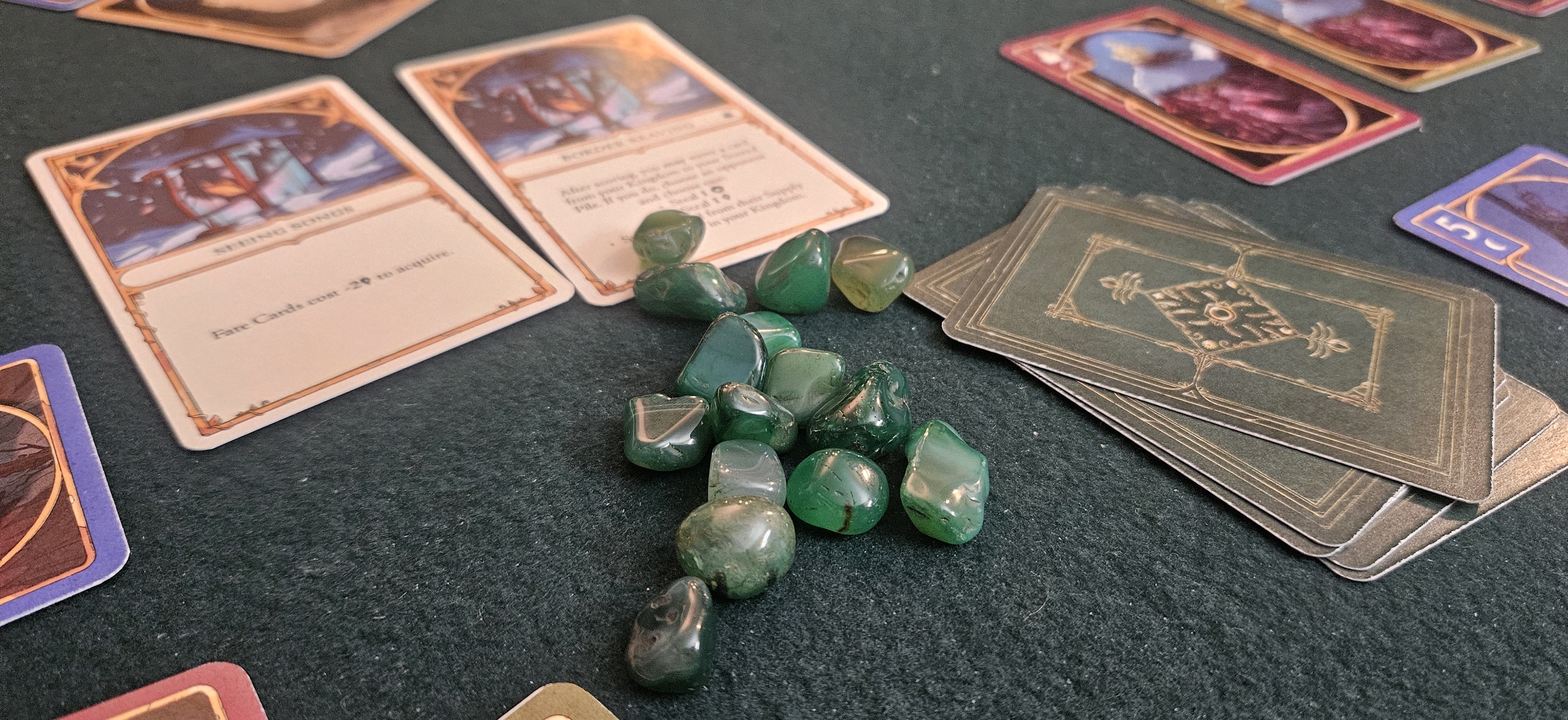
My kingdom is full of ghost animals.

Cards are arranged on a three-by-three grid; score whenever you like!

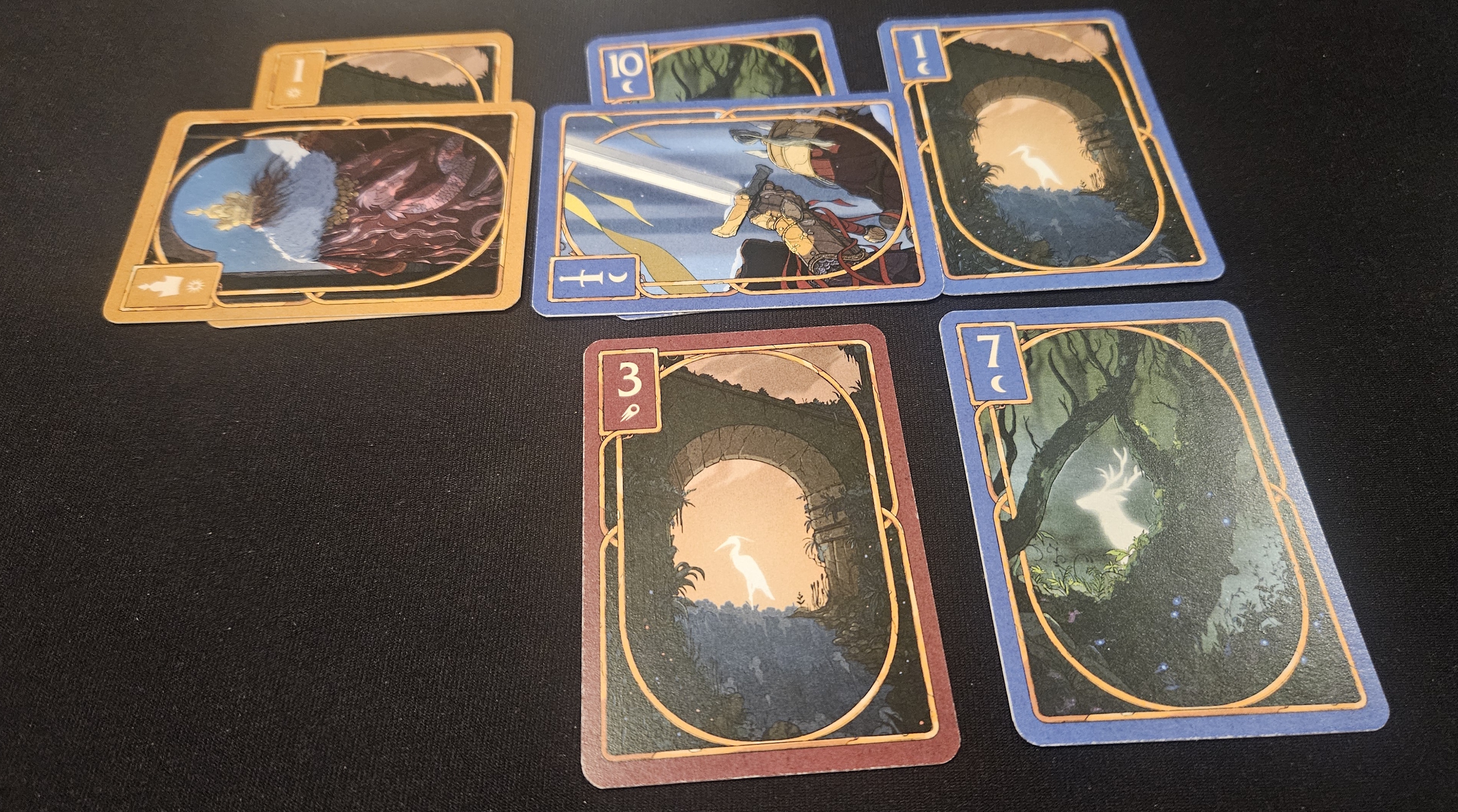
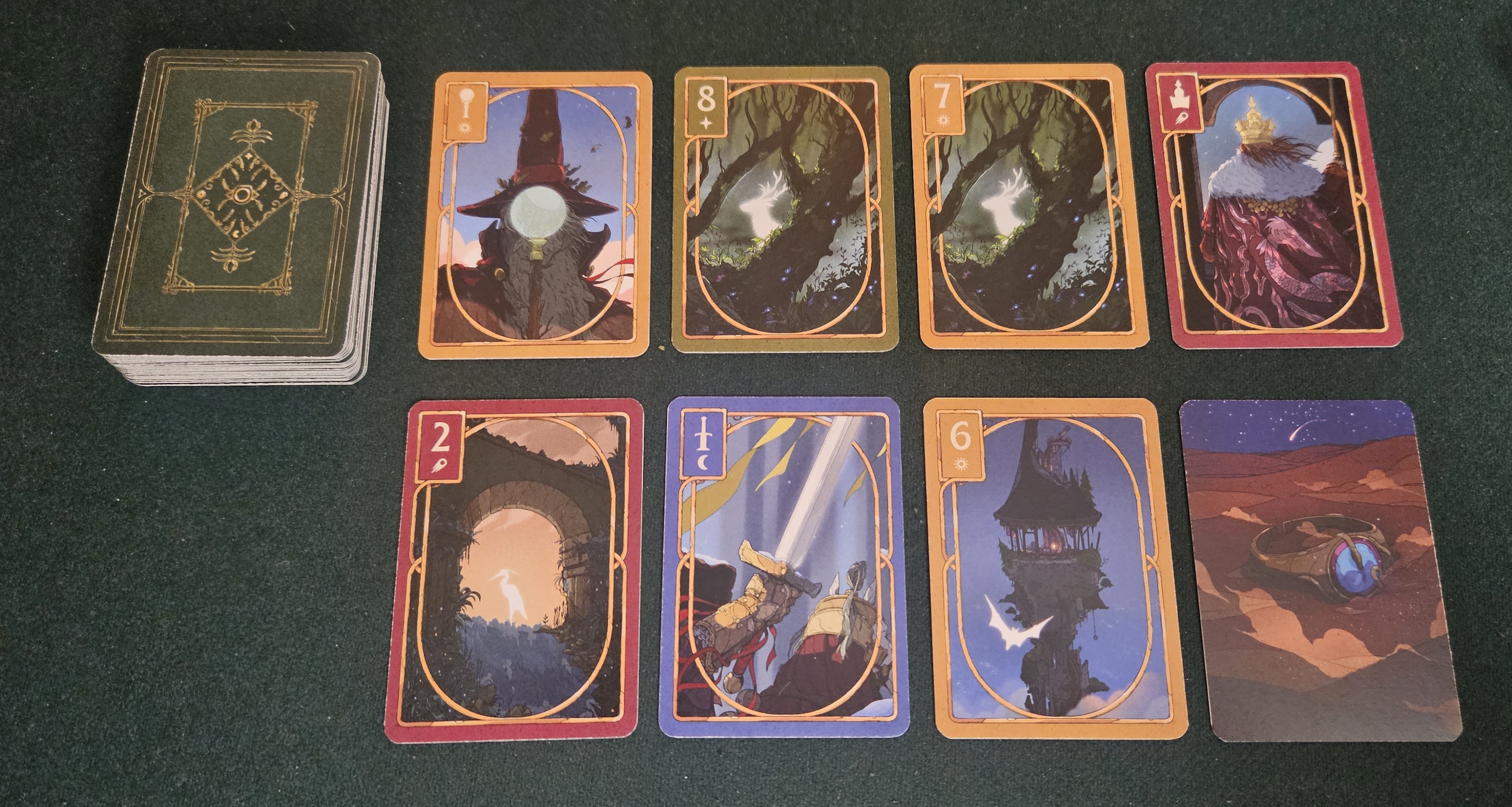
At a glance, Annulet, like everything else in the world of The Old King’s Crown, is downright gorgeous. Also illustrated by Pablo Clark, even the prototype calls to mind a plate from a favorite childhood book of myths and tall tales, all enigmatic figures and crumbling aqueducts and mossy forests. Sure, it takes all of ten seconds to realize the game must have been designed with a regular deck of playing cards, given its four suits and face cards. So what? I can buy the notion that everything in Clark’s universe is just like ours but better illustrated.

To Clark’s credit, Annulet doesn’t play quite like anything else out there. At core it’s a market selection game. Every round begins with a few cards on offer, from which the players will draft some number into their supply.

How many cards? That’s surprisingly hard to answer thanks to the way Annulet morphs according to player count. While the rules don’t undergo any substantive changes when swapping from two players to three or four, its underlying ethos is so transformed that it becomes something fundamentally different. We’ll circle back around to this question. For now, the answer is “two cards with two players, but only one with three or four players.”

All right. So you take either one or two cards. These are added to your supply. From there, cards can be installed in your kingdom, which swiftly shapes into a three-by-three grid of lands and characters. In the short-term, cards in your kingdom are secure. Unlike those still in your supply, they cannot be stolen by upstart rivals. Thinking ahead a bit, your kingdom is also the basis of your scoring. At some future moment of your choosing, every row, column, and diagonal may form points-earning sets. The rarer the better.

Secret Insider Info: originally the game was called Signet. I'm not sure if I'm allowed to say more than that.

The market shows which cards are available now and later.

As befits Annulet’s heritage, it manages to feel simultaneously old and new. Old because it doesn’t stray far from any number of card-gathering and set-forming games of yore. There’s a comforting familiarity to its percentages, that instinctual understanding that a straight flush is rarer and therefore deserves more coins than three-of-a-kind. Unlike The Old King’s Crown, which was sometimes burdened by keywords and concepts and special abilities, Annulet holds its cards closer to our shared cultural vest.

But it feels new, too, thanks to more modern flourishes that make its cardplay more dynamic and open-ended than most tavern games. There’s the game’s currency, river stones that must be spent and even exchanged between players in order to install additional cards into one’s kingdom or swipe juicy offerings from a rival’s supply. There’s the way face cards are arranged atop lands to alter their values. In the case of magicians and knights, this means adjusting their host land’s suit or rank. Monarchs are even more potent, increasing the scoring value of any set they’re part of, and all the better if you can score them in multiple directions at once. At absolute best, a single monarch in the middlemost space of a kingdom can score four times. That’s rare, but it’s hardly impossible.

Crucially, these flourishes tell something of a story, or at least they gesture at the outlines of Clark’s fantasy world. Just as different trick-takers might speak to the sensibilities of those who played them historically, whether as domestic parlor games or the pastimes of naval officers padding their peacetime income, Annulet speaks to a kingdom that’s always reshaping itself. Monarchs come and go. Treasures are gathered and plundered. Violence is so matter-of-course that the apex of a kingdom is also its dissolution.

The smartest of Clark’s inclusions are the tale cards. Each session opens with players selecting a pair, whether by choice or at random. At a gameplay level, these are modifiers. Textually, they’re regional variations. One session might feature “the People’s Game,” scoring extra points for sets that sum to a small number, while the next revolves around “Border Reaving” that adds junk cards to opposing kingdoms. The effect isn’t dissimilar from the many small variations in trick-taking or shedding games, leaving the core rules intact but tweaking the game’s breadth. The result is a title that feels as large as the world Clark penned to contain it.

Will these all have original illustrations? That depends on how badly Pablo Clark wants to ruin his next few months.

Regional variations keep each session fresh.

This isn’t to say that Annulet escapes wholly unscathed, either as a plaything or within its internal fiction, and those scathings are largely interrelated. The short version is that the game is simply too permissive — in one sense, too modern — to pass muster as something that might appear in a military camp or dimly lit roadhouse.

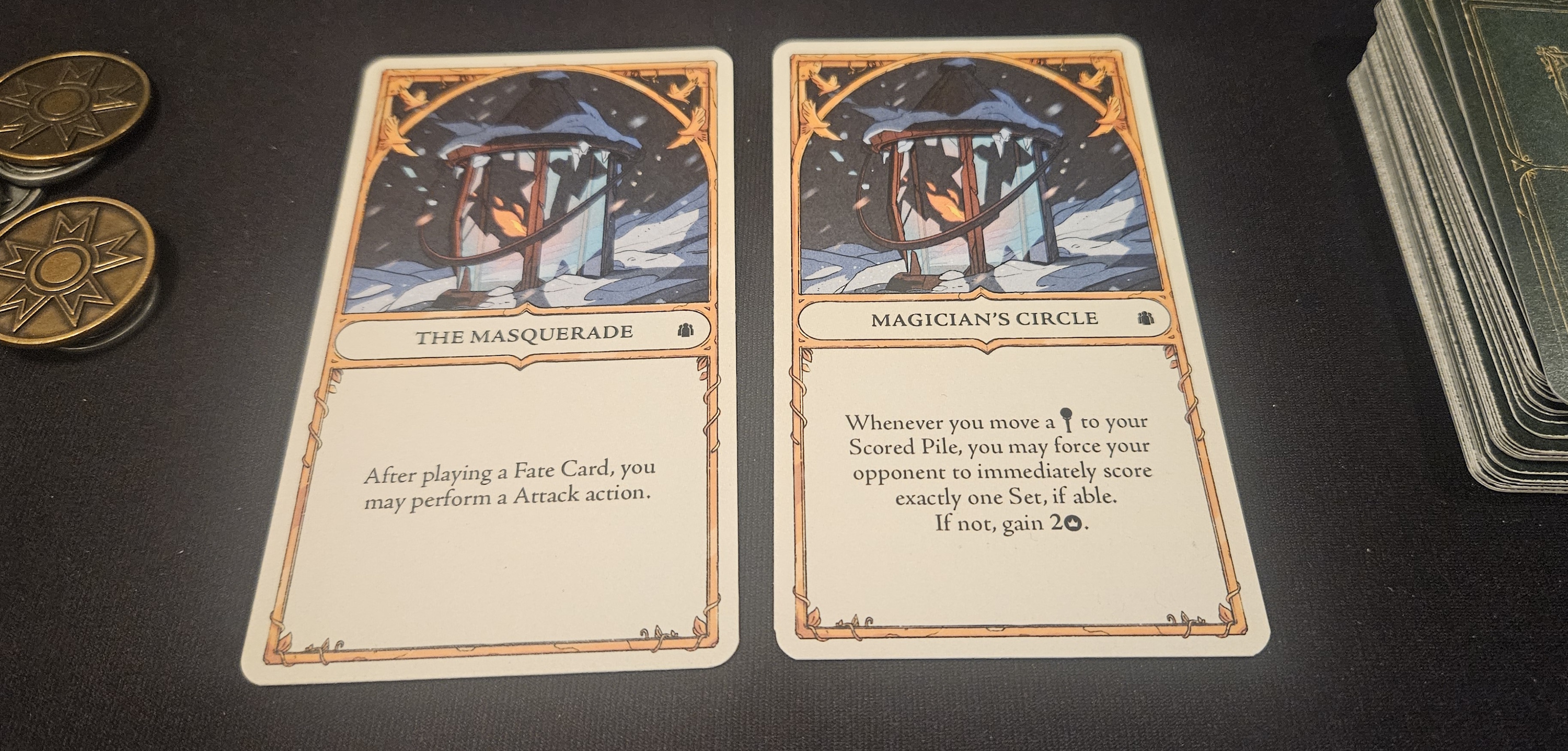
First of all, the scoring is tremendously intrusive, often requiring an extended pause to sum up every one of a kingdom’s angles. On its own, this isn’t such a bad thing; we share a reality with Germans who play Schafkopf, so it isn’t as though real-world tavern games haven’t ever belabored their scoring to the point of madness. But where Annulet slips is through the inclusion of special cards called fates. Everybody begins with a few of these and can purchase more for a heap of river stones. From there, fates pull multiple duty. They potentially add to one’s score at the conclusion of the game, and can be spent to place trash into a rival’s kingdom, seize the all-important initiative marker for yourself, or enter your own kingdom as a wildcard.

It’s this latter function that gives Annulet its bagginess. A fate can function as anything: any card, whether land or nobility. But in scoring, it must adopt a single posture — not always the easiest thing to visualize when there are a full eight sets that might be assessed at any given moment — and the problem only compounds in kingdoms with multiple fate cards fulfilling many roles. Too often, Annulet hinges more on how permissively one employs their fates than how sharply they draft their kingdom.

This is a small complaint, but it’s small the way a pebble is small when caught inside one’s shoe. Annulet is too broad, failing to quite capture the sensation of playing and mastering a truly great tavern game, one defined as much by chance and limitation as by the range of things a player might accomplish on their turn. It’s like playing a trick-taker with a bunch of wilds; thrilling the first time you steal a trick, obnoxious when everybody’s doing it all the time.

Perhaps more pronounced, the game is a different beast depending on player count. It will probably surprise nobody to hear that it’s strongest at two players, which affords greater numbers of drafted cards and a tighter focus all around. Higher counts clutter the decision space a bit, especially where initiative and drafting are concerned, but three-player is charming in its own way. Annulet is at its strongest when it presents that razor-wire choice of which cards to draft and how to use them. With each additional player, that sharpness is blunted.

I once owned a very nice river stone. True story.

I’m a sucker for river stones. (Disclaimer: not real river stones.)

Apart from that, however, Annulet is quite the production. Even at its flimsiest, it’s lively and exciting. More importantly, as a diegetic artifact it speaks to the breadth of this place Pablo Clark has envisioned, something Baron Cuttlefish might splay atop the camp-table on the eve of crushing the Speakers of the Wood. With one finger he traces the rim of his goblet, heedless that the Vial Sect has already dusted the brass with their bitterest toxin. By the time the Ornithopter Club swoops down from the hills, his pulse will have already stilled.

Ahem. Look, it’s good stuff, even when it doesn’t hang together quite as tightly as I had hoped. For a follow-up to what was perhaps last year’s most exciting debut title, that’s no small thing. The result is an imperfect game, but a lovely and evocative experience nevertheless.


A prototype copy of Annulet was provided by the publisher.

(If what I’m doing at Space-Biff! is valuable to you in some way, please consider dropping by my Patreon campaign or Ko-fi. Right now, supporters can read about which films I watched in 2025, including some brief thoughts on each. That’s 44 movies! That’s a lot, unless you see, like, 45 or more movies in a year!)

Re;MATCH One, Two, or Four

03. März 2026 um 00:50

I like to play games where every character is ten times cooler than me. Scratch that — fifty times cooler.

It hasn’t been all that long since we took a look at Re;ACT: The Arts of War, an intriguing but imperfect game about various artists manifesting their crafts into the physical world in order to determine which medium is the most artsy of them all. It’s like Bloodsport but with calligraphy versus spray paint versus film stock.

MingYang Lu’s forthcoming followup, Re;MATCH, isn’t exactly a sequel, although its peculiar capitalization and errant semicolon might lend one that impression. Instead, it’s something even better: a match-three game in which one must never, ever match three.

Okay, it isn’t only that, although I’ll confess I find that part amusing.

Match three? Straight to jail.

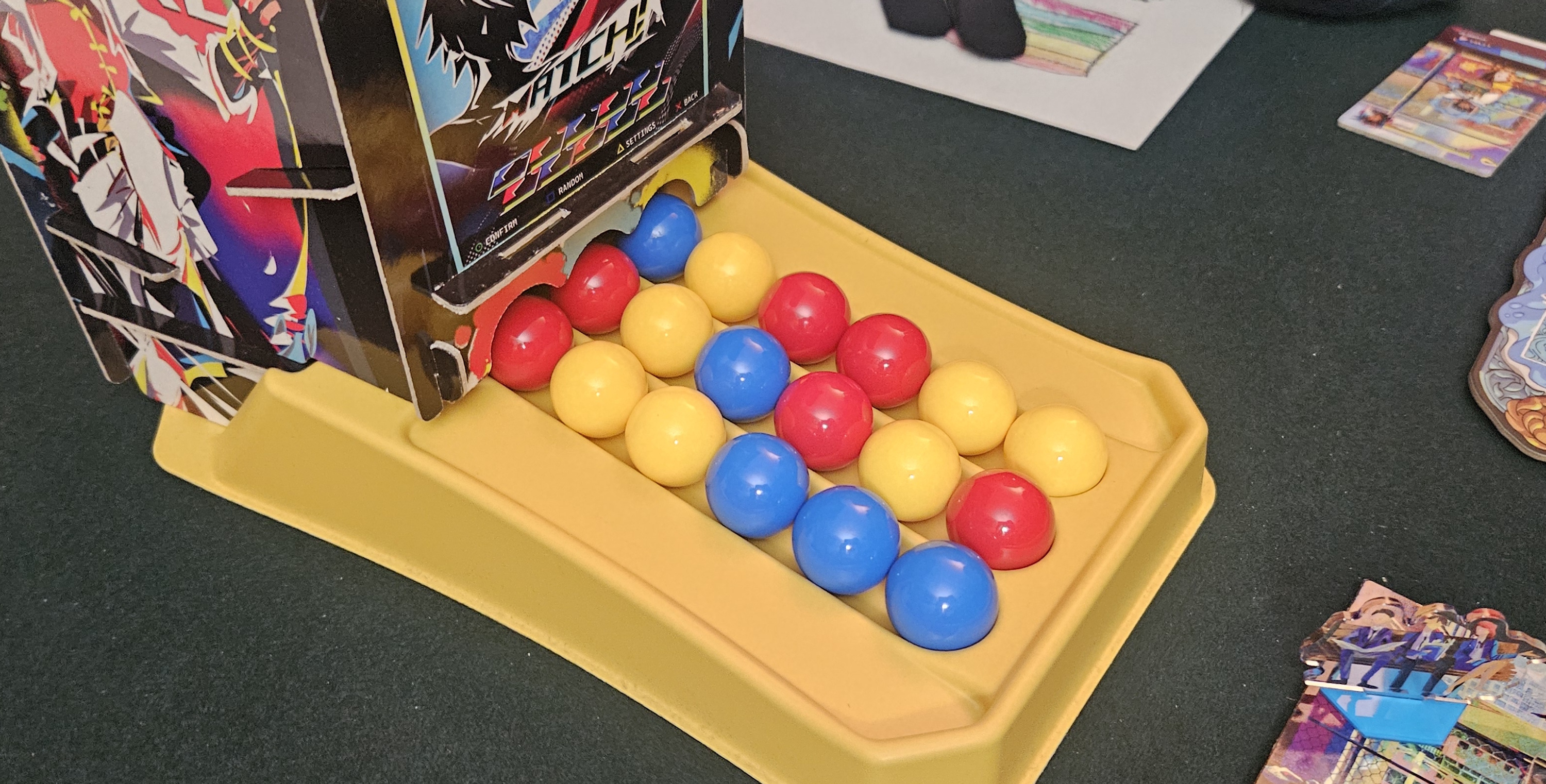
Match some number of balls, so long as you don’t match three.

Like Re;ACT before it, Re;MATCH begins with a settling of accounts between two careers, although this time the jobs are even more disparate. That’s right, no more squabbles between artists. Instead, one match might see an axe-wielding firefighter squaring off against a disc jockey. Perhaps that seems one-sided, but no, this is a competition of the minds.

Still seems one-sided? Okay, let’s leave the minds in the drawer. How about a battle of marbles?

The big visual draw is the marble tower. The closest touchstone is the box from Potion Explosion, which, if you’re in the mood to suddenly feel old, came out a lengthy eleven years ago. The marble tower in Re;MATCH is even simpler than that game’s, producing three lanes of balls in three colors. It’s marble-matching so simple a baby could do it, right before trying to eat the marbles.

But the matching is simple for a reason. For one thing, you aren’t permitted to use all three of those lanes. Instead, you’re always limited to two: the one closest to you and the shared middle lane. The decision space is compressed, but in such a way that even a fourth color would cause no shortage of problems.

And then, of course, there are the fighters.

Nobody ever does, like, optometrist versus baggy college professor. But that's basically my marriage.

Whose career is better in a fight? Go!

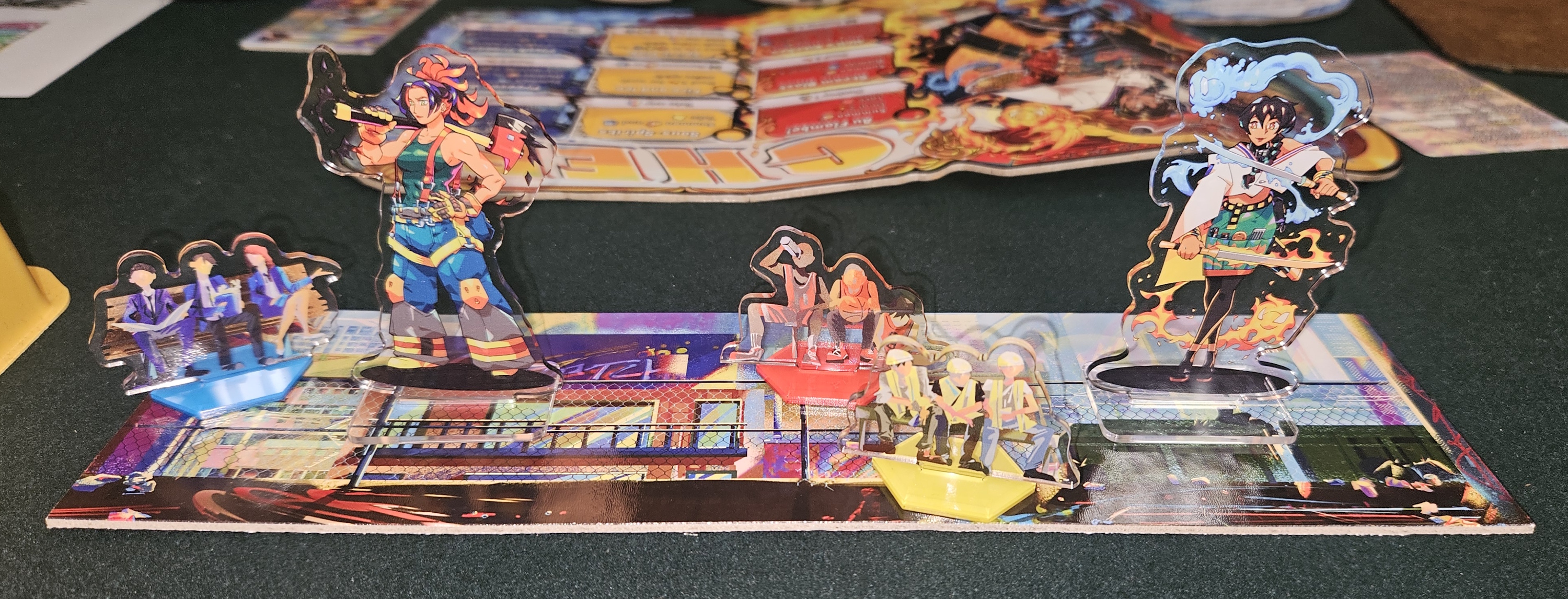
The gist behind Re;MATCH is that every fighter comes with their own arcade cabinet, complete with a standee — whose function, it must be said, is principally aesthetic — a few special tokens, and a fold-out broad displaying a unique set of moves.

Those moves are the important part. By making color-coded matches in the marble tower, your fighter triggers various effects. Each color permits three levels, one that triggers when you utilize a single ball, another for two balls, and a third that skips over three balls to instead trigger when you manage to string together four marbles at a time. It’s simple, but not as much as it initially seems. Sometimes you’ll want to forego a powerful move for the sake of setting up an even more potent combo later — or because you desperately need to block a move coming down your rival’s lanes. It feels surprisingly close to the fighting cabinets it strives to evoke visually, despite the turn-based limitations of its medium.

Now comes the tricky part, because I can’t give examples without delving into the fighters themselves. This will come as no surprise to anybody who played or even glanced at Re;ACT. In that game, the duelists were so different that they often used entirely distinct mechanisms. Bag-building versus card management, for example. The contestants in Re;MATCH boast a more robust shared foundation, in that nobody leaps away from the marble tower to shuffle a private deck or anything like that. But the breadth of their personal expression is still quite the thing to behold.

Maybe I can limit myself to only one or two examples.

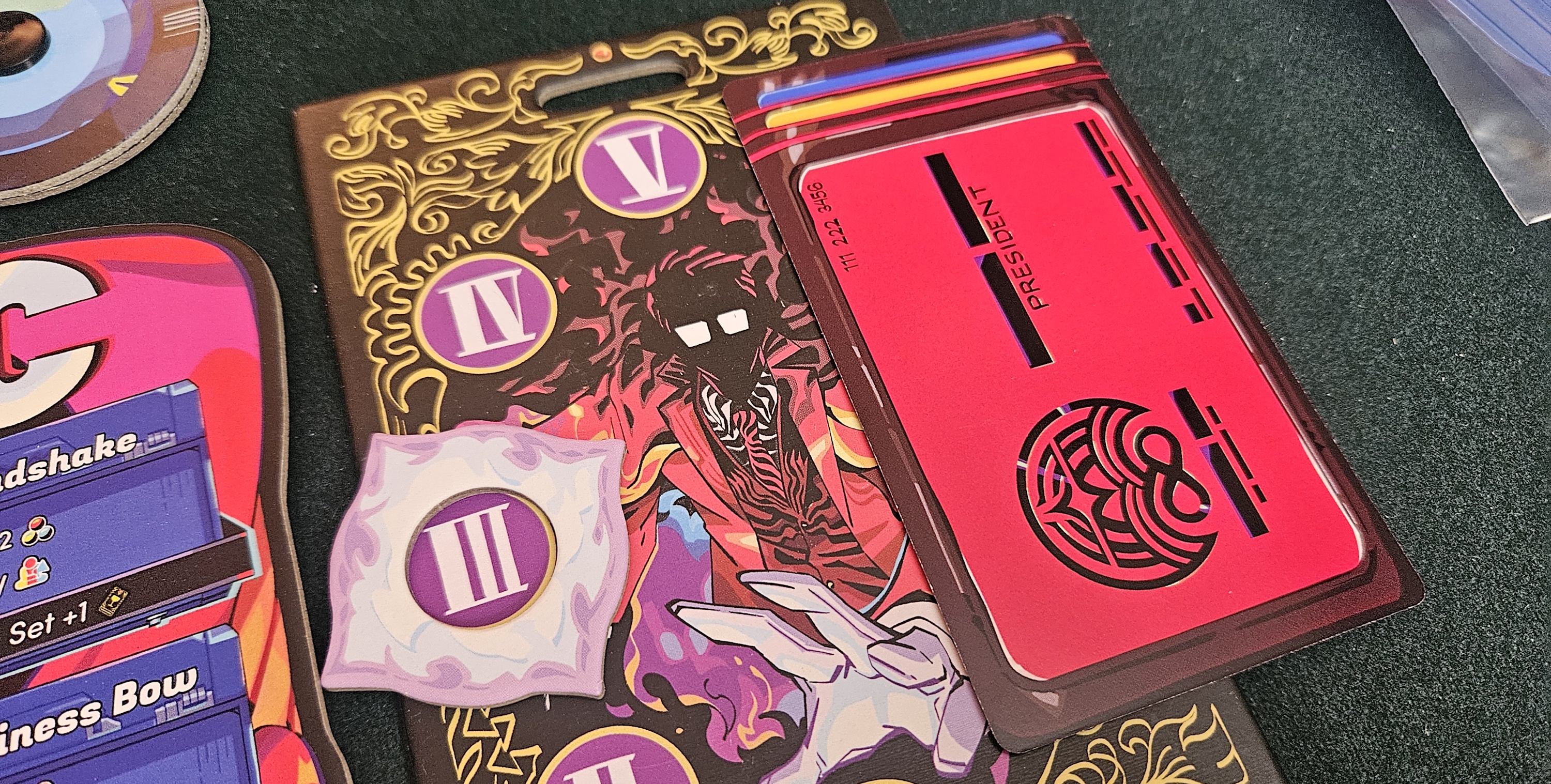
I wish I could wear spooky glowing glasses.

Predicting my opponent’s moves.

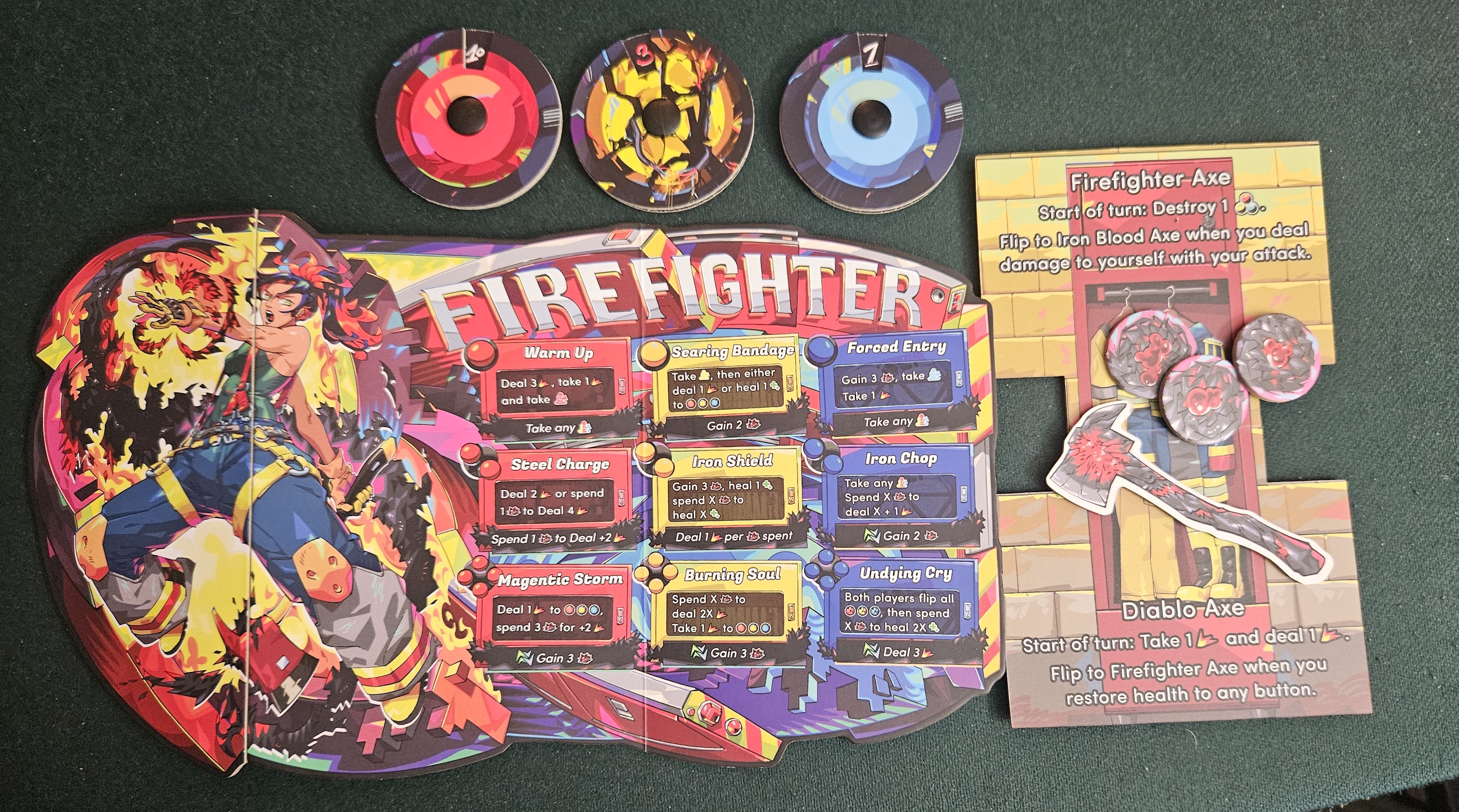
I wasn’t joking when I said there was a firefighter. That might sound silly. That’s because it is silly. But at the same time, this is a firefighter with a possessed axe that makes her take deadly risks, which pushes the character from silly to excellent. At various points, the firefighter’s moves might cause self-damage. This flips the axe to its other side, gains an “ironblood” token that can be spent to empower her moves, and changes how the firefighter operates in battle. Basically, she shifts between damage mode and defense mode, healing her injuries and destroying any combo-making balls in the marble tower before her opponent can pounce on them.

And this is reflected in those color-coded movesets. For instance, her red moves are all about dealing damage. One red marble deals three damage to her opponent and one to herself. Two marbles means she deals two damage, or else spends one of those ironblood tokens to deal twice as much. Four marbles deals only one damage, but does so to every color.

Did I mention that health is color-coded? It is. Both fighters have three health dials, one per color. Bottoming out a dial will “break” it, forcing its owner to spend a coin to stay in the game. This alters how the whole thing is played. Now the injured player can’t make matches with that color. Instead, it changes function for a bit. Instead of building matches, the broken color operates as a connector, letting its player trace through those busted marbles to connect other ones. This has the benefit of gradually ticking the broken dial upward, eventually restoring it to its healthy side.

In other words, as your moveset becomes more limited from suffering damage, your remaining colors grow even more formidable. At the same time, though, you’ll want to restore your broken dial as soon as possible, lest a second dial succumb. When that happens, it takes two coins to stay in the game. That’s bad. Coins are your “real” currency, you see. Lose all of them and it’s game over.

me: I don't think this is how firefighters— game: SHUT UP AND PUUUUUNCH

A closer look at the firefighter.

Okay, so the firefighter is all about tempo, switching between blasting both players and nursing her wounds. Let’s contrast that with another contestant, the D.J.

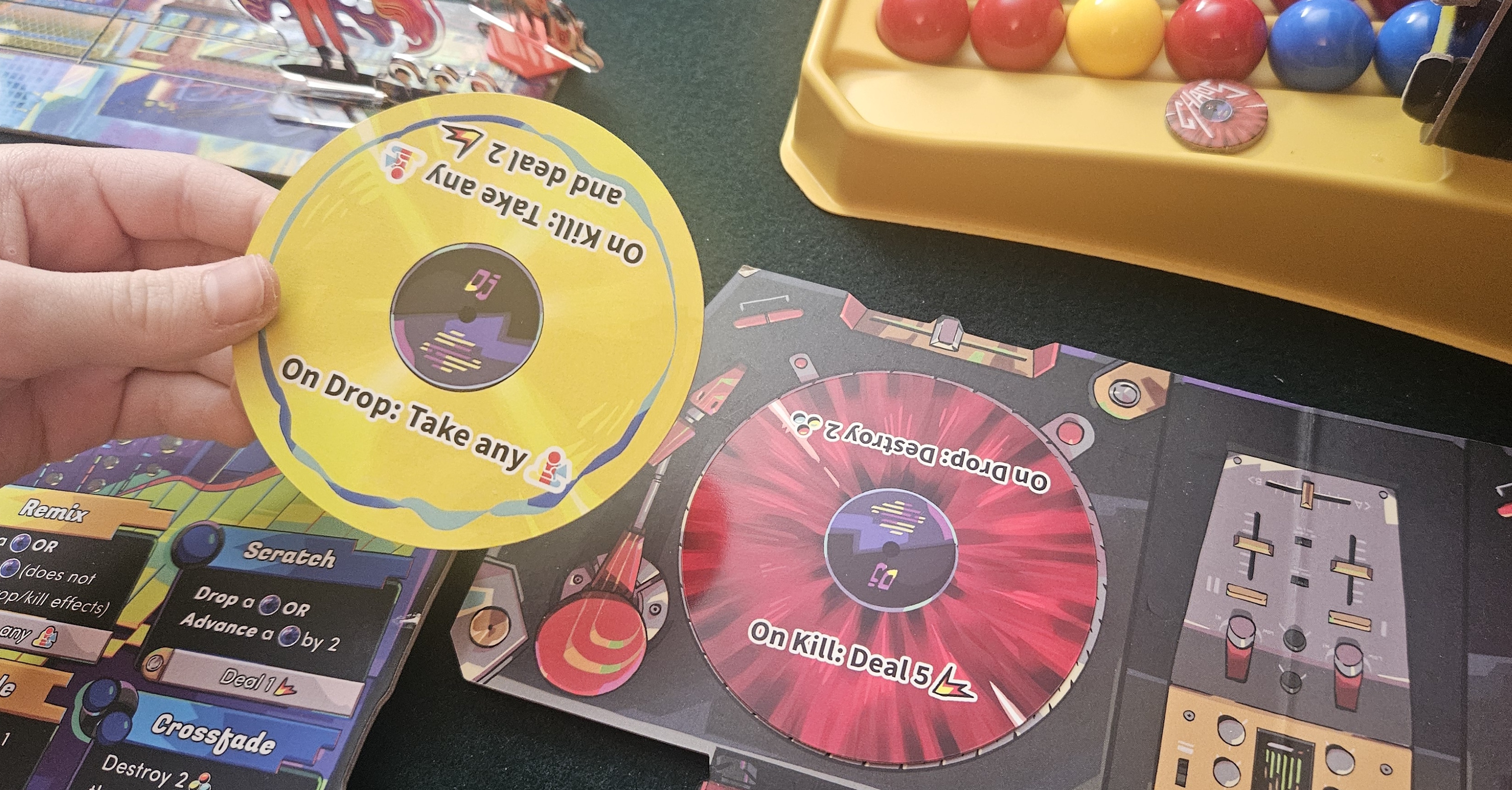
The D.J. loves to make noise. Her kit comes with a turntable and a selection of discs. Every so often, she’s allowed to drop a beat, physically taking one of those discs and placing it on the turntable. This might attract fans — a shared currency both players are grappling to control, and which increase the potency of every move in the game — or deal damage, or whatever. This also places a beat token on the marble tower. Row by row, the beat will advance. When it finally ends, another power triggers.

Naturally, the D.J.’s moveset includes normal stuff. She wins over fans. She deals damage. The usual. But her real abilities revolve around dropping, advancing, and killing beats. Her entire setup is one cacophonous wall of sound. Like the firefighter, she’s all about tempo. But the way those tempos function couldn’t be more different. The firefighter is all about managing two very different modes. The D.J. is the board game equivalent of a Shepard Tone, always ascending, always building momentum.

The other fighters tweak the formula in their own ways. Some, like the dancer and the chef, lay little traps on the marble tower, penalizing anyone who selects balls on the booby-trapped row. Others, such as the psychic and the trickster, are all about predicting and preempting their opponent’s moves. Like the firefighter and D.J., they share some similarities, but there’s an initial sense of discovery to seeing how they function, followed by the joy of figuring out how to leverage their strengths against an opponent with tricks and traps of their own.

I believe this turntable is incorrectly oriented, but neither I nor my 12yo actually know that much about turntables.

The D.J. battles via a turntable.

The effect isn’t all that dissimilar to something designed by Brad Talton, like some lighter marble-drop version of BattleCON or Exceed. Or, sure, Re;ACT, although Lu is in stronger form this time around. Unlike that earlier effort, which was full of sticky rules and questionable matchups, the fighters in Re;MATCH are sharply crafted — and I say this despite playing a prototype, with all the small tweaks and imbalances that always entails. Even so, my twelve-year-old was more than capable of figuring out the fighters’ intricacies. At the same time, they weren’t so breezy that she didn’t have to wrestle to overcome their various deficiencies, learning to mitigate a fighter’s shortage of healing or accurately predict my moves.

Are there depths here to plumb beyond the learning phase? I think so, although it’s hard to say after only a half-dozen matches with an in-progress prototype. I will say that I’m excited about the possibilities. Where Re;ACT was interesting to discover but also something of a chore, Re;MATCH doubles down on its strengths. Its systems are simpler, more tactile, and easier to master, but still reward clever combo-building. In the process, the randomization of the marble tower prevents it from feeling quite as process-bound as its predecessor. While some of the fighters still sport ambitious attacks, the game feels less like a race to trigger their two apparent combos.

Or maybe I just really enjoy fiddling with those balls. The game’s kineticism is admirable. Claiming marbles, studying your future options and those of your opponent, even jostling the prototype tower when the balls got caught within, everything about the production felt hefty and enjoyable. The game is pleasant in a way that Re;ACT only attempted.

And how one fondles them.

It’s about the balls.

But enough with the comparisons. Re;MATCH is one of those titles I’m excited to keep exploring. It’s colorful and diverse in its gameplay, fast-paced and hard-hitting, and above all, a pleasure to discover.

As a bonus, it made my kiddo go “wokka wokka.” I had no idea she’d ever seen a turntable. The more you know.

Re;MATCH launches on Kickstarter tomorrow.


A prototype copy of Re;MATCH was temporarily provided by the publisher.

(If what I’m doing at Space-Biff! is valuable to you in some way, please consider dropping by my Patreon campaign or Ko-fi. Right now, supporters can read about which films I watched in 2025, including some brief thoughts on each. That’s 44 movies! That’s a lot, unless you see, like, 45 or more movies in a year!)
❌